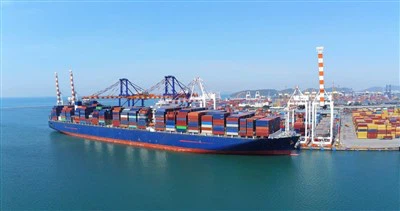
Shipping goods by sea freight from China to Sweden is one of the most practical options for importers moving large, heavy, bulky, or non-urgent cargo. Whether you are importing machinery, furniture, industrial products, retail inventory, temperature-sensitive goods, or project cargo, ocean freight provides the capacity and cost efficiency required for regular B2B supply chains.
At Zhejiang Wilson Supply Chain Management Co., Ltd., we arrange sea freight from major Chinese ports including Ningbo, Shanghai, Shenzhen, Guangzhou, Qingdao, and Tianjin to Sweden, with Gothenburg serving as the primary gateway and Stockholm and Helsingborg available depending on routing, cargo requirements, and the final delivery location.
For planning purposes, standard FCL shipments from China to Sweden generally require around 30–40 days port to port, while LCL shipments usually require around 35–45 days because of consolidation and deconsolidation procedures. Indicative ocean freight can be approximately USD 3,000–4,000 for a 20GP container and USD 4,000–5,500 for a 40GP or 40HQ container, although actual rates change with carrier capacity, season, port pair, equipment availability, and surcharges.
Founded in 2011 and headquartered in Ningbo, Wilson operates as a China freight forwarding company providing international freight forwarding, customs coordination, warehousing, consolidation, DDP and door-to-door solutions, as well as specialized logistics for machinery, vehicles, chemicals, dangerous goods, oversized cargo, reefer cargo, and other complex shipments.

Need a current China-to-Sweden shipping rate? Send us your cargo name, volume, weight, pickup location, destination, and cargo-ready date, and we will evaluate the most suitable sea freight solution for you.
Get Latest Ocean Freight Rates Now
How Much Does Sea Freight From China To Sweden Cost?
Sea freight rates between China and Sweden change regularly, so there is no single fixed price that applies to every shipment. Container size, cargo volume, origin port, destination port, carrier, season, available space, equipment supply, and local handling charges can all influence the final cost.
The following figures can be used as a general planning reference.
|
Shipping Service |
Estimated Freight Rate |
Suitable For |
|
LCL Sea Freight |
USD 80–150 / CBM |
Small and medium-volume shipments |
|
20GP FCL |
USD 3,000–4,000 |
Medium-volume dedicated shipments |
|
40GP / 40HQ FCL |
USD 4,000–5,500 |
Large-volume and bulk shipments |
These figures represent indicative freight levels rather than a guaranteed all-in quotation. If you want to understand how carriers, container type, volume, origin charges, and surcharges affect the final number, our guide to calculating sea freight costs explains the main cost components in more detail.
FCL vs. LCL: Which Is More Cost-Effective?
LCL, or Less than Container Load, allows your cargo to share container space with other shipments. It is normally the more practical option when you do not have enough cargo to justify a full container.
FCL, or Full Container Load, gives your shipment exclusive use of a 20GP, 40GP, or 40HQ container. It usually becomes increasingly attractive as cargo volume increases because the container price is fixed rather than charged according to each cubic meter.
When your shipment approaches approximately 13–15 CBM, it is worth comparing both FCL and LCL instead of automatically choosing consolidation. LCL may initially appear cheaper, but consolidation, deconsolidation, CFS handling, and destination charges can change the final cost.
If you are unsure which option fits your shipment, our explanation of FCL and LCL shipping covers the differences in cost structure, handling, capacity, and typical use cases.
We can compare both options based on your actual cargo volume and weight before you book.
What Determines Your Final Shipping Cost?
The ocean freight rate is only one part of the total logistics cost.
Your final China-to-Sweden shipping cost may include:
- Supplier pickup and inland transportation in China
- Origin warehouse or consolidation charges
- Export customs declaration
- Container loading and handling
- Ocean freight
- Carrier and seasonal surcharges
- Swedish terminal and destination handling
- Customs clearance
- Applicable customs duties and VAT
- Storage or demurrage if applicable
- Inland delivery to your warehouse or final destination in Sweden
Unexpected port storage can significantly increase landed cost. Importers unfamiliar with free-time rules may find our explanation of demurrage and detention charges useful when planning container pickup and return.
Your Incoterm also affects which of these costs are under your responsibility.
For example, under EXW, the buyer normally needs more support with China-side pickup and export customs clearance. Under FOB, the supplier generally handles the cargo to the agreed loading point while the buyer controls the main international transport. For customers who prefer fewer handovers, we can also arrange comprehensive DDP shipping solutions according to the agreed scope.
How Long Does Sea Freight From China To Sweden Take?
Transit time depends on the Chinese port of loading, Swedish port of discharge, carrier schedule, routing, and whether the service involves transshipment.
A practical planning range for most FCL cargo is approximately 30–40 days port to port. Some favorable sailings can be faster, while transshipment services or congested schedules can require additional time.
Typical planning estimates include:
|
Route |
Estimated Transit Time |
|
Shanghai to Gothenburg |
30–35 days |
|
Ningbo to Gothenburg |
33–40 days |
|
Shenzhen to Sweden |
32–40 days |
|
Qingdao to Sweden |
35–40 days |
|
LCL from China to Sweden |
35–45 days |
LCL generally requires more time than FCL because cargo needs to be consolidated with other shipments before departure and separated again after arrival.
What Can Affect Shipping Time?
Several factors can change the actual transit time.
- Direct or transshipment routing - A service involving a European transshipment hub may take longer than a more direct schedule.
- Port congestion - Waiting time at the loading port, transshipment terminal, or Swedish destination can delay vessel operations.
- Carrier schedules - Blank sailings, schedule adjustments, equipment repositioning, and missed connections can affect the planned arrival date.
- Peak season - High-volume periods can create pressure on container availability and vessel space.
- Weather - Severe weather may affect vessel schedules and port operations.
- Customs procedures - Incorrect documentation, cargo classification issues, valuation discrepancies, or customs inspection can extend clearance time.
- LCL handling - Consolidation and deconsolidation add additional handling stages.
If your shipment has a fixed delivery deadline, send us your cargo-ready date and Swedish destination. We can check current sailing schedules and help you build a more realistic logistics timeline.

Our Sea Freight Services From China To Sweden
We do more than book standard containers. Our sea freight services are designed for importers that need reliable transportation together with China-side coordination, customs support, cargo handling, and specialized logistics.
FCL Shipping
We arrange 20GP, 40GP, and 40HQ full-container shipments from major Chinese ports to Sweden.
FCL is particularly suitable for:
- Large-volume cargo
- Regular import programs
- Furniture and retail stock
- Industrial components
- Machinery
- Cargo that benefits from reduced handling
Once loaded and sealed, an FCL container normally remains intact until destination handling, helping reduce unnecessary cargo movement.
If you are comparing equipment, our guide to 20ft and 40ft container sizes and capacity can help you estimate which standard container is more appropriate for your cargo volume.
LCL Consolidation
For smaller shipments, we provide LCL services that allow you to pay for the space your cargo occupies rather than an entire container.
We can also coordinate cargo from multiple suppliers in China, receive the goods into a warehouse, consolidate them, and arrange one international shipment through our consolidation and distribution services.
This is particularly useful for Swedish importers purchasing different products from several Chinese factories.
Door-to-Door and DDP Shipping
When you do not want to coordinate multiple logistics providers, we can arrange an integrated shipping solution covering agreed stages such as:
Supplier pickup → warehouse handling → export customs → sea freight → destination clearance coordination → final delivery in Sweden
A door-to-door shipping service can be especially useful when you want one logistics partner to coordinate multiple stages from the supplier in China to the final delivery point.
DDP solutions can also be evaluated when suitable for the cargo, shipment structure, and destination requirements.
OOG, Flat Rack and Open Top Shipping
Standard containers cannot accommodate every shipment.
For oversized machinery, industrial equipment, project cargo, and irregular goods, we can evaluate:
- Flat Rack containers
- Open Top containers
- OOG solutions
- Breakbulk alternatives
- Customized loading and securing plans
Our overview of special container types explains how Flat Rack, Open Top, Reefer, and standard equipment are used for different cargo characteristics.
For cargo that cannot be containerized efficiently, breakbulk shipping may provide another option.
Dimensions, weight, center of gravity, lifting points, and securing requirements should be reviewed before booking.
Reefer Shipping
We arrange refrigerated container transportation for temperature-sensitive cargo, including frozen and chilled products.
Reefer shipments require careful coordination of equipment availability, temperature settings, shipping schedules, and cargo handling. Importers unfamiliar with temperature-controlled equipment can review how a reefer container works before planning the shipment.
Machinery, Vehicles and Heavy Cargo
Our team has experience handling:
- Construction machinery
- Heavy equipment
- Industrial machinery
- Trucks and vehicles
- Oversized equipment
- Project cargo
- High-value cargo
For complex shipments, we can evaluate loading configuration, container type, lifting requirements, support points, securing, and cargo protection before execution.
Machinery often requires more planning than ordinary general cargo. Our practical guide to shipping construction machinery from China covers common transport options and oversized cargo considerations.
Chemical and Dangerous Goods Shipping
Chemical and dangerous goods require a different level of preparation from ordinary general cargo.
Depending on the commodity, we may need to review:
- SDS
- Dangerous goods classification
- UN information
- Cargo composition or concentration
- Packing requirements
- Carrier acceptance rules
- Export and shipping documents
Because dangerous goods shipping is governed by cargo classification and carrier acceptance requirements, each shipment must be reviewed individually rather than assessed solely by product name.
How Our Sea Shipping Service Works
We keep the shipping process clear so you know what happens before, during, and after departure.
- Send Us Your Cargo Details - Provide:
- Cargo name
- Quantity
- Gross weight
- CBM
- Dimensions
- Supplier or pickup location
- Destination in Sweden
- Incoterm
- Cargo-ready date
- Any special handling requirements
- Route and Container Planning - We evaluate whether your cargo is better suited to:
- LCL
- 20GP
- 40GP / 40HQ
- Reefer
- Flat Rack
- Open Top
- Other special arrangements
- Quotation and Booking - We prepare a quotation based on the current freight market, available vessel space, equipment, routing, and required service scope. After confirmation, we arrange the booking.
- Pickup and Consolidation in China - When required, we coordinate pickup from your supplier or multiple suppliers and move the cargo to our selected warehousing facilities or loading point.
- Export Customs and Loading - We coordinate export documentation and customs procedures in China. For machinery, vehicles, OOG cargo, or other complex shipments, loading, support, securing, and cargo protection can be planned according to the cargo characteristics.
- Ocean Transport and Tracking - During transportation, we monitor key shipment milestones and keep you updated on the shipping status. If a schedule changes, our team works to identify practical alternatives and communicate the impact as early as possible.
- Sweden Customs and Final Delivery - Depending on your selected service scope, we can coordinate destination handling, import customs clearance, pickup, warehousing, and final delivery in Sweden.
Why Choose Wilson for Sea Freight From China To Sweden?
Choosing a freight forwarder is not only about finding the lowest freight rate. It is about whether your logistics partner can control the shipment from origin to destination and respond effectively when something changes.
If you are comparing logistics providers, understanding what a freight forwarder actually does can help you evaluate the difference between basic booking support and full supply chain coordination.
More Than a Decade of International Freight Experience
Wilson was established in 2011 and is headquartered in Ningbo, with branches in Shanghai, Shenzhen, and Hong Kong.
Our business has developed from traditional international freight forwarding into integrated supply chain and specialized logistics services.
Around 56,000 TEU Annual Handling Volume
We handle approximately 56,000 TEU annually, supporting regular container flows as well as specialized shipping projects.
Major Shipping Line Resources
We maintain business relationships with major carriers including:
- COSCO
- Hapag-Lloyd
- Maersk
- MSC
- Evergreen
These resources help us compare routing, sailing schedules, equipment, and freight options for different customer requirements.
Experienced Logistics Team
Our team consists of 26 experienced logistics professionals, with practical knowledge covering freight forwarding, supply chain coordination, special cargo, documentation, and shipment execution.
Specialized Cargo Capability
We are not limited to standard container bookings.
Our capabilities extend to:
- Vehicles
- Heavy machinery
- Chemical and dangerous goods
- OOG and project cargo
- Reefer cargo
- Special containers
- High-value boats and marine cargo
One-Stop Supply Chain Coordination
For customers purchasing from China, we can coordinate multiple logistics stages under one service structure, including supplier communication, pickup, warehousing, customs, international freight, tracking, destination coordination, and delivery.
Cargo Protection and Risk Control
For complex and high-value cargo, we pay close attention to:
- Pre-loading checks
- Cargo photos
- Loading position
- Supporting and securing
- Anti-slip and anti-movement measures
- Protection against scratches and impact
- Document review
- Shipment status monitoring
The objective is not simply to get the cargo onto a vessel, but to reduce avoidable operational risk throughout the shipment.
Common Cargo Shipped Between China and Sweden
The China-to-Sweden sea freight lane supports a wide variety of commercial and industrial goods.
Common shipments include:
- Machinery and industrial equipment
- Furniture
- Electronics
- Retail and wholesale goods
- Industrial components
- Manufactured products
- Heavy and bulky cargo
- Project cargo
The right shipping solution depends on the physical characteristics of the goods.
General merchandise can usually move by standard FCL or LCL. Temperature-sensitive cargo may require reefer equipment, while oversized machinery may need Flat Rack, Open Top, OOG, or project cargo planning.
For this reason, we recommend selecting the logistics method according to the total cargo volume, weight, dimensions, value, handling requirements, and final delivery location, rather than choosing a service based only on the lowest headline freight rate.
Importers seeking additional savings can also review practical methods for reducing ocean freight costs, especially when shipment timing and order volume are flexible.
Import Requirements and Customs Clearance in Sweden
Shipments entering Sweden are subject to Swedish and EU customs requirements.
Accurate documentation and cargo classification are important because mistakes can lead to additional inspections, corrections, or clearance delays.
Swedish VAT and Customs Duties
The standard VAT rate in Sweden is 25%.
Customs duty depends on the product and its HS classification under the applicable EU tariff system. Different commodities may therefore have different duty rates.
If you are uncertain how your goods should be classified, understanding how to identify the correct HS code is an important first step before preparing customs documents.
Import VAT and customs duties should be considered separately from the basic ocean freight rate when calculating your landed cost.
Common Import Documents
Depending on the shipment and commodity, commonly required documents include:
- Commercial Invoice
- Packing List
- Bill of Lading
- Customs Declaration
- Correct HS Code
- Accurate Customs Value
- Certificate of Origin where applicable
Our guide to documents required for sea freight from China provides additional background on preparing commercial and transport documents before shipment.
The Bill of Lading is particularly important because it serves as a key transportation document between the shipper, carrier, and consignee. Importers who want to understand the documentation process in more detail can review the requirements for sea freight bills of lading.
Swedish Customs, Tullverket, uses digital customs procedures, so complete and accurate shipment information is important for efficient processing.
Special Cargo Requirements
Additional documents or approvals may apply to controlled, regulated, chemical, or dangerous goods.
For dangerous cargo, information such as the SDS, classification, UN details, composition, packaging, and carrier requirements should be reviewed before shipment.
If you are unsure whether your cargo has special import or transportation requirements, send us the product information before booking so that the logistics requirements can be evaluated in advance.
FAQ
Q: 1. How much does it cost to ship a container from China to Sweden?
A: As a general planning reference, a 20GP container may cost around USD 3,000–4,000, while a 40GP or 40HQ may cost around USD 4,000–5,500 in ocean freight. Actual rates depend on the port pair, carrier, season, equipment availability, surcharges, and service scope.
Q: 2. How long does sea freight from China to Sweden take?
A: Most FCL shipments can be planned around 30–40 days port to port. LCL usually requires approximately 35–45 days because consolidation and deconsolidation add additional handling time.
Q: 3. What is the cheapest way to ship goods from China to Sweden?
A: For small shipments, LCL is usually more economical because you only pay for part of the container. For larger volumes, FCL often provides a lower cost per cubic meter. The best option depends on total volume, weight, destination charges, and inland delivery.
Q: 4. Should I choose FCL or LCL?
A: LCL works well for smaller cargo volumes. When your shipment approaches approximately 13–15 CBM, it is worth requesting both FCL and LCL quotations because a full container may become more economical after handling and destination charges are considered.
Q: 5. Which ports in China can Wilson ship from?
A: We can arrange shipments from major Chinese ports including Ningbo, Shanghai, Shenzhen, Guangzhou, Qingdao, and Tianjin, as well as other Chinese ports depending on your supplier location and cargo requirements.
Q: 6. Which ports in Sweden can you ship to?
A: Gothenburg is the main gateway for many China–Sweden ocean shipments. We can also arrange cargo to Stockholm, Helsingborg, and other Swedish ports depending on routing and the final delivery location.
Q: 7. Can Wilson collect cargo from multiple suppliers in China?
A: Yes. We can coordinate pickup from different suppliers, receive cargo into a warehouse, consolidate the shipments, prepare them for export, and arrange international transportation to Sweden.
Q: 8. Can you ship machinery, dangerous goods, or oversized cargo to Sweden?
A: Yes, subject to cargo assessment and carrier acceptance. We can evaluate machinery, vehicles, chemical cargo, dangerous goods, reefer cargo, OOG cargo, Flat Rack, Open Top, and other specialized sea freight requirements. For special shipments, please provide dimensions, weight, cargo photos, and relevant technical or safety documents before booking.
Get a Sea Freight Quote From China To Sweden
If you are planning a shipment from China to Sweden, send us the following information:
- Cargo name
- Quantity
- Weight
- CBM
- Dimensions
- Pickup city or supplier location
- Destination in Sweden
- Incoterm
- Cargo-ready date
- Special handling requirements
Our team will evaluate the cargo, compare suitable shipping options, and provide a current freight solution based on your cost, transit-time, and delivery requirements.
Contact Zhejiang Wilson Supply Chain Management Co., Ltd. for your China-to-Sweden sea freight quotation.
Hot Tags: Sea Freight From China To Sweden [Updated October 2026]