Break Bulk Shipping, as an indispensable part of the global trade system, bears the heavy responsibility of transporting bulk commodities across borders. From grains and fertilizers in the agricultural sector, to coal and ores in the industrial sector, and crude oil and liquefied gas in the energy sector, bulk shipping forms the blood network of modern industrial society. This article will comprehensively analyze the definition, advantages and disadvantages of bulk shipping transportation, helping readers gain a deeper understanding of this maritime transportation method that supports the operation of the global economy.
What is Break Bulk Shipping?
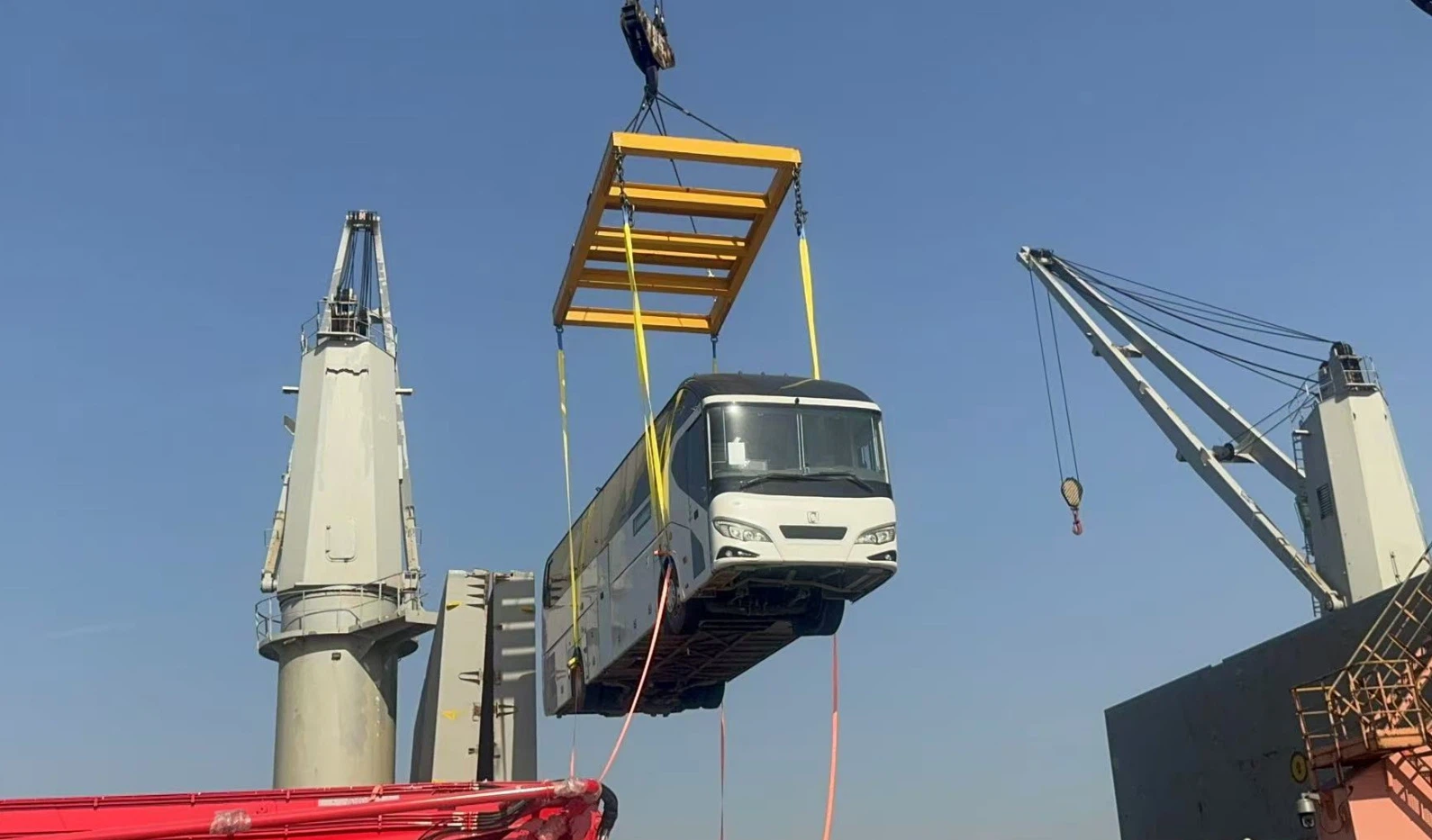
Break Bulk Shipping refers to the transportation of cargo that is neither containerized nor shipped in bulk form. Instead, goods are handled and stowed individually-sometimes as large units, sometimes secured on pallets, crates, or skids. Typical examples include steel pipes, generators, turbines, or prefabricated structures. Unlike container shipping, where goods are sealed inside standardized boxes, break bulk involves direct handling of cargo pieces.
To clearly distinguish, it is useful to compare Bulk vs Break Bulk:
- Bulk Shipping: Designed for unpackaged commodities in granular, powder, or liquid form-coal, grain, ores, crude oil. These goods are poured or pumped directly into the vessel's holds.
- Break Bulk Shipping: Intended for cargo that naturally exists as individual units or requires specialized securing, such as wind turbine blades, ship engines, or long steel beams. These items demand lifting equipment and careful planning to ensure safe loading, stowage, and discharge.
In essence, break bulk serves as the bridge between standardized container trade and raw bulk commodity shipping, providing the flexibility to move goods that fall outside either category.
Common Types of Break Bulk Cargo
The variety of goods classified as Break Bulk Cargo highlights its strategic role in international shipping. Some of the most common examples include:
- Heavy machinery and industrial equipment: Excavators, drilling rigs, turbines, and transformers.
- Steel structures and materials: Long pipes, steel coils, beams, and prefabricated modules.
- Wind energy and renewable equipment: Blades, towers, nacelles, and related Heavy Lift Shipping components.
- Shipbuilding parts and oversized vehicles: Hull sections, engines, or non-standard vehicles that cannot be transported by Ro-Ro.
- Out of Gauge Cargo (OOG): Any cargo that exceeds container dimensions in length, width, or height, requiring custom handling solutions.
These examples illustrate why break bulk continues to be essential in supporting major infrastructure projects, energy developments, and cross-border industrial trade.

The Break Bulk Shipping Process: How It Works
Unlike containerized cargo, which follows a standardized process, break bulk operations demand a higher degree of customization and technical expertise. A typical Break Bulk Shipping process can be outlined in four stages:
Pre-shipment preparation
Cargo is surveyed for exact dimensions, weight, and center of gravity. From this, a lifting plan is designed to determine crane specifications, lifting gear, and rigging methods. Simultaneously, a lashing and securing plan ensures the cargo will be properly fastened to withstand sea conditions.
Port operations
At the port of loading, the cargo is delivered to the terminal and prepared for stowage. Specialized handling equipment such as ship's gear, shore-based cranes, spreader beams, and lifting frames is deployed. The stowage plan dictates how each piece will be positioned to optimize stability and space utilization.
Sea transport and monitoring
During transit, the vessel's crew regularly inspects the lashings and securing arrangements. Adjustments may be required to prevent shifting, especially in rough seas. Certain cargoes, such as wind blades or delicate machinery, demand extra monitoring to minimize the risk of damage.
Discharge at destination
On arrival at the discharge port, cranes or derricks are again employed to unload the cargo piece by piece. The consignee is then notified to arrange inland transport, often requiring additional heavy-haulage solutions.
This workflow demonstrates how Break Bulk Shipping works in practice: meticulous preparation, specialized port handling, continuous supervision, and precise delivery.
Advantages and Disadvantages of Break Bulk Shipping
Like any transport mode, break bulk has strengths and limitations. Understanding both helps shippers decide when it is the right choice.
Advantages of Break Bulk Shipping
- Capability for oversized and non-containerized cargo: Provides solutions for equipment and structures that simply cannot fit into standard containers.
- Flexibility for project logistics: Ideal for large-scale infrastructure and energy projects where diverse cargo types must be handled.
- Direct handling of individual units: Eliminates the restrictions of container dimensions, allowing single large items to be loaded without dismantling.
Disadvantages of Break Bulk Shipping
- Complex and time-intensive handling: Each unit requires individual loading, stowing, and securing, extending port operations.
- Higher costs: Charges accumulate from crane operations, lashing materials, labor, insurance premiums, and longer port stays.
- Schedule uncertainty: Fewer liner services and greater reliance on specialized vessels make sailing schedules less predictable.
- Risk exposure: With more handling steps, cargo is subject to increased risks of damage, delays, and operational challenges.
In summary, break bulk remains indispensable for certain cargo categories, but shippers must weigh the risks and costs against the unique advantages it delivers.

Comparison with Other Shipping Methods
To fully appreciate the role of break bulk in international trade, it is useful to compare it with other major modes of ocean transport. Each method has its own strengths, but none can completely replace the others.
Break Bulk vs Bulk Shipping
Bulk shipping is designed for raw commodities such as coal, grain, or iron ore. Its advantage lies in low cost and economies of scale, as vast quantities of uniform cargo can be loaded and discharged with specialized equipment. By contrast, Break Bulk Shipping serves cargoes of higher unit value or irregular dimensions. Although costs are typically higher, it provides solutions for goods that simply cannot be poured or pumped into a hold. Without break bulk, many critical industrial projects would face insurmountable logistics barriers.
Break Bulk vs Container Shipping
Containerization revolutionized global logistics by offering speed, efficiency, and standardized handling. For most manufactured products, Container Shipping remains the most economical and secure method. However, containers impose strict dimensional and weight limits. Break Bulk Cargo fills this gap by accommodating oversized machinery, steel beams, or wind turbine blades that exceed container capacities. In this sense, break bulk does not compete with containers; it complements them by addressing the cargoes they cannot accommodate.
Break Bulk vs Ro-Ro
Ro-Ro shipping is highly efficient for vehicles, trailers, or any cargo that can move on wheels. Yet it has no answer for immobile or non-rolling items. Break Bulk Shipping, on the other hand, is ideal for large equipment, structural modules, and fabricated parts that require lifting rather than rolling. Together, Ro-Ro and break bulk provide the heavy-lift segment of the maritime industry with flexible solutions tailored to different types of project cargo.
Cost and Pricing Factors
The cost structure of Break Bulk Shipping is more complex than that of container or bulk transport. Several layers of expenses contribute to overall pricing, including:
- Ocean freight: The base rate charged for space on the vessel.
- Port charges: Terminal handling, berthing fees, and storage costs.
- Stevedoring and handling fees: Costs for cranes, lifting gear, and labor.
- Lashing and securing expenses: Materials and manpower to properly fasten cargo.
- Insurance premiums: Higher due to the elevated risk profile of non-standard cargo.
Beyond these base elements, several key factors determine the final Break Bulk freight rates:
- Cargo dimensions and weight – The larger and heavier the cargo, the more demanding the lifting and stowage operations, directly increasing costs.
- Complexity of securing and lifting – Unusual shapes or delicate machinery require specialized rigging equipment and skilled labor.
- Port infrastructure – Facilities with modern cranes and heavy-lift capacity reduce handling time and cost, while smaller ports may necessitate costly auxiliary equipment.
- Trade lane and destination port – Remote ports, shallow drafts, or limited infrastructure raise expenses compared to well-equipped hubs.
- Market volatility – Like all shipping markets, break bulk is subject to fluctuations driven by vessel availability, fuel costs, and demand for project cargo transport.
In short, Break Bulk Shipping cost is highly variable. Accurate pricing requires a detailed assessment of cargo characteristics and operational requirements, making early consultation with an experienced freight forwarder essential.
Challenges and Trends
Despite its unique value, break bulk shipping faces operational and market challenges that shippers must recognize.
Challenges
- Limited schedule flexibility: Break bulk vessels sail less frequently than container liners, making planning more difficult.
- Port equipment constraints: Not all terminals possess heavy-lift cranes or sufficient storage space, which can restrict routing options.
- Higher costs and lower efficiency: Piece-by-piece loading takes longer and requires more resources, raising total expense.
- Greater risk exposure: Multiple handling operations increase the chance of cargo damage or delays, necessitating stricter risk control.
Trends
- Regulatory impact: IMO environmental rules such as the 2020 Sulphur Cap, Carbon Intensity Indicator (CII), and Energy Efficiency Existing Ship Index (EEXI) are reshaping vessel operations and influencing chartering practices.
- Rising demand from project cargo: Global infrastructure development, renewable energy projects, and mining expansions are fueling steady demand for break bulk and heavy-lift services.
- Port modernization: Terminals worldwide are investing in advanced cranes and heavy-lift infrastructure, enabling faster and safer handling of oversized shipments.
- These Break Bulk Shipping challenges and trends illustrate a sector in transition: while efficiency pressures and regulations create hurdles, growing demand for specialized project logistics secures its long-term relevance.
Why Choose a Freight Forwarder
Because break bulk operations are inherently complex, partnering with an experienced freight forwarder is not optional-it is a necessity. Successful execution requires a combination of technical expertise, global network access, and strong on-the-ground partnerships.
A specialized Break Bulk Freight Forwarder provides advantages such as:
Global port coverage: Access to a wide network of terminals with the necessary heavy-lift capabilities.
Technical know-how: Teams trained in lifting, lashing, and securing, ensuring compliance with international safety standards.
Tailored solutions: Customized routing and stowage plans designed around the unique specifications of each project cargo.
End-to-end visibility: Continuous monitoring and coordination across all stages, from origin to final delivery.
Engaging a professional forwarder ensures that Break Bulk Shipping services are executed with maximum safety, efficiency, and cost control, minimizing risk for the cargo owner.
Looking for a freight forwarding company in China?
Zhejiang Wilson Supply Chain Management Co., Ltd. Founded in 2011 and headquartered in Ningbo, China, it has grown to become a leading international freight forwarder and supply chain solutions provider in China. With offices in Shanghai, Shenzhen and Hong Kong, we offer a full range of transportation services from China to key global markets such as the Americas, Europe, the Middle East, Africa, Oceania and Asia. We work with industries as diverse as chemical, automotive, food and energy to streamline their supply chains and build sustainable and efficient global logistics networks. Contact us today to discuss your requirements and get a tailored quote for Break Bulk Shipping that ensures safe, efficient, and cost-effective delivery of your critical cargo. Email: gm@wilson-cargo.com
Conclusion
Break Bulk Shipping is a cornerstone of modern project logistics, enabling the movement of cargo that neither containers nor bulk carriers can accommodate. From heavy machinery and steel structures to wind energy components, break bulk provides the flexibility and capability required to deliver large-scale infrastructure and industrial projects.
While it comes with higher costs, complex operations, and stricter risk management requirements, its strategic importance cannot be overstated. Whenever cargo is too large, too heavy, or too irregular for conventional shipping methods, break bulk becomes the indispensable solution.
If your business faces the challenge of moving oversized or out-of-gauge equipment, our expertise in Break Bulk Shipping services can help.