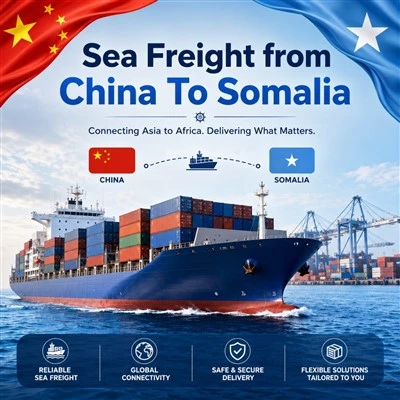
Door-to-door shipping is an end-to-end logistics service that moves cargo from the shipper's specified location to the consignee's final address. A freight forwarder coordinates pickup, export handling, international transportation, customs procedures and final delivery under one shipment plan.
The service can use ocean freight, air freight, rail freight, trucking or a combination of transport modes. It reduces the number of logistics providers an importer must manage, but it does not automatically include import duties, taxes, cargo insurance or unloading at the destination.

What Is Door-to-Door Shipping?
Door-to-door shipping means that cargo is collected from a shipper's nominated address and delivered to a consignee's nominated address.
The pickup point may be a factory, supplier warehouse, distribution center or commercial location. The delivery point may be an importer's warehouse, retail facility, construction site, production plant or another approved address.
The word "door" does not mean that the shipment must start or end at a residential property.
Door-to-door shipping describes the scope of the logistics service. It is not a separate method of transportation. A door-to-door shipment from China to Europe, for example, may involve a truck from the supplier's factory to a Chinese port, ocean freight to Europe and another truck from the destination port to the buyer's warehouse.
A freight forwarder normally acts as the main coordinator. The forwarder may arrange services with trucking companies, warehouses, shipping lines, airlines, customs brokers and overseas delivery partners.
This gives the customer one primary point of contact, although several parties may physically handle the shipment.
Door-to-door shipping also does not mean direct transportation without transfers. LCL cargo, air freight and multimodal shipments may pass through several terminals, warehouses or consolidation centers before delivery.
Its main value is coordinated shipment management from origin to destination.
How Does Door-to-Door Shipping Work?
A door-to-door freight shipment normally moves through three broad stages: origin handling, international transportation and destination delivery.
Origin Pickup and Export Handling
The process begins with accurate cargo information. The freight forwarder needs the commodity name, number of packages, dimensions, weight, cargo value, pickup address and final delivery address.
The forwarder then arranges pickup from the factory, supplier or warehouse. Depending on the shipment, the cargo may move directly to a port, airport or railway terminal, or first enter a freight warehouse.
At the origin facility, operators may:
- Check the number and condition of packages
- Measure the cargo and confirm its weight
- Apply labels and shipping marks
- Add pallets, wrapping or protective materials
- Consolidate LCL or air freight cargo
- Load FCL cargo into a container
- Prepare the shipment for customs inspection
The exporter must provide accurate commercial and customs information. A freight forwarder can prepare and submit documents, but it cannot replace the shipper's responsibility to describe the goods correctly.
Export customs clearance is completed before the cargo leaves the origin country. Common documents include the commercial invoice, packing list, export declaration and transport document. Certain products may also require certificates, licenses or dangerous goods documentation.
Main International Transport
After export clearance, the cargo enters the main transportation stage.
The choice of transport mode depends on the shipment's size, value, urgency, destination and handling requirements. Ocean freight is normally used for large or heavy shipments. Air freight is used when speed matters. Rail freight is available on selected China–Europe and Eurasian routes.
A shipment may also use multimodal transport. Common combinations include:
- Truck, ocean freight and truck
- Truck, air freight and truck
- Truck, rail freight and truck
- Ocean freight, rail and local delivery
During this stage, the freight forwarder monitors departure, transit, arrival and any schedule changes. Traditional international freight usually provides milestone-based updates rather than continuous real-time tracking.
Import Clearance and Final Delivery
When the cargo arrives at the destination port, airport or railway terminal, it must complete destination handling and import customs clearance.
The importer or its appointed customs broker may need to submit:
- Commercial invoice
- Packing list
- Bill of lading or air waybill
- HS code
- Certificate of origin
- Import license
- Product compliance documents
- Customs authorization
- Dangerous goods or safety documents
The customs authority may release the cargo immediately, request additional documents or arrange an inspection. Applicable duties, import VAT, GST or other taxes must normally be paid before release.
After customs clearance, the cargo moves to the final delivery stage. LCL shipments may first be unloaded and separated at a destination warehouse. FCL containers may move directly from the port to the consignee, subject to local regulations and delivery conditions.
The local delivery provider then transports the cargo to the agreed address and obtains proof of delivery.
Delivery to an address does not always include unloading. A tail-lift truck, forklift, crane, appointment delivery or inside delivery may need to be booked separately.
What Is Included in Door-to-Door Shipping?
The exact scope of a door-to-door shipping service depends on the quotation and transport agreement.
A typical door-to-door freight quote may include:
- Pickup from the supplier or factory
- Origin trucking
- Warehouse or terminal handling
- Export customs clearance
- Freight booking
- Ocean, air, rail or road transportation
- Destination terminal handling
- Import customs clearance assistance
- Final-mile delivery
- Shipment status updates
- Proof of delivery
Additional services may also be available, including packaging, palletizing, cargo consolidation, insurance, temperature monitoring, special equipment and storage.
However, the phrase "door-to-door" does not guarantee that every possible cost is included.
The following charges may be excluded:
- Import duties and taxes
- VAT, GST or sales tax
- Customs inspection fees
- Storage charges
- Demurrage and detention
- Cargo insurance
- Remote-area delivery surcharges
- Residential delivery fees
- Tail-lift, forklift or crane charges
- Unpacking and installation
- Penalties caused by incorrect documents
- Costs caused by delayed customs instructions
An "all-in" quotation can improve cost visibility, but it still has conditions. Customs inspections, port storage and delays caused by the importer are often outside the forwarder's control.
Before booking, the shipper should ask four direct questions:
- Are import duties and taxes included?
- Is customs clearance included at both origin and destination?
- Does final delivery include unloading?
- Which charges are specifically excluded?
A clear quotation should define the service scope, delivery address, validity period, cargo assumptions and possible additional charges.
Door-to-Door vs. Port-to-Port Shipping
Door-to-door, port-to-port, door-to-port and port-to-door services differ mainly in where the freight forwarder's responsibility begins and ends.
| Service Type | Starting Point | Ending Point | Customer Usually Arranges |
|---|---|---|---|
| Port-to-Port | Origin port | Destination port | Origin pickup, export handling, import clearance and local delivery |
| Door-to-Port | Shipper's address | Destination port | Import clearance and destination delivery |
| Port-to-Door | Origin port | Consignee's address | Origin pickup, export handling and delivery to the origin port |
| Door-to-Door | Shipper's address | Consignee's address | Responsibilities depend mainly on customs and tax terms |
Port-to-port shipping may appear cheaper because the quotation covers fewer stages. It is suitable for importers that already have reliable customs brokers, warehouses and trucking companies in both countries.
Door-to-door shipping is more practical for companies that do not want to coordinate each part of the route separately. It is also useful for first-time importers and businesses without an internal logistics department.
The correct comparison is not door-to-door price versus ocean freight price.
The importer should compare the total logistics cost, including pickup, terminal charges, customs brokerage, taxes, destination handling, delivery and internal coordination.
Is Door-to-Door Shipping the Same as DDP?
Door-to-door shipping is not the same as DDP.
Door-to-door describes the physical and operational scope of the logistics service. DDP and DAP are Incoterms® rules that allocate costs, risks and responsibilities between the seller and buyer.
Door-to-Door Describes the Shipping Scope
A door-to-door quotation identifies where the shipment will be collected and where it will be delivered.
By itself, it does not determine:
- Who acts as the importer of record
- Who completes import customs clearance
- Who pays customs duties
- Who pays import VAT or GST
- Who bears the commercial risk at each stage
- Who unloads the cargo at the destination
These responsibilities must be defined in the sales contract, Incoterm and freight quotation.
DAP vs. DDP Door-to-Door Shipping
Under DAP, or Delivered at Place, the seller arranges transportation to the named destination. The buyer normally handles import customs clearance and pays import duties and taxes.
Under DDP, or Delivered Duty Paid, the seller assumes broader responsibility. The seller is generally responsible for transportation, import clearance and applicable import duties and taxes.
DDP does not automatically require the seller to purchase cargo insurance. Insurance must be agreed separately.
DDU, or Delivered Duty Unpaid, is still used informally in the market, but it is not a current Incoterms® 2020 rule. DAP is the more appropriate term for current contracts.
A DDP arrangement also requires legal and tax planning. Some countries require a local entity to act as the importer of record. A foreign seller or freight forwarder may not always be permitted to complete import procedures in its own name.
Never assume that a door-to-door quote is duty paid. The quotation must state clearly whether customs duties and import taxes are included.
Types of Door-to-Door Shipping
Door-to-door shipping can be arranged through several transport modes. The correct choice depends on cargo volume, budget, urgency and destination.
Ocean Freight Door-to-Door
Ocean freight door-to-door is suitable for heavy cargo, large orders, machinery and cost-sensitive shipments.
It can be arranged as FCL or LCL.
FCL, or full container load, is generally suitable when the shipper needs most or all of a container. It can also be used for lower-volume cargo that requires separation, security or easier loading.
LCL, or less than container load, allows several shippers to share container space. It is useful when cargo volume is too small for a full container, but it involves consolidation, deconsolidation and additional warehouse handling.
LCL customers should review destination charges carefully. A low ocean freight rate may be offset by high handling, documentation and delivery fees.
Air Freight Door-to-Door
Air freight door-to-door is suitable for urgent, high-value or relatively lightweight cargo.
Typical uses include:
- Production components
- Urgent replacement parts
- Samples
- Electronics
- Medical or time-sensitive goods
- High-value commercial shipments
The service normally includes pickup, airport transfer, export customs clearance, air transportation, import clearance and final delivery.
Air freight is faster than ocean freight, but the complete transit time still depends on flight availability, customs processing and destination delivery. A flight time of one or two days does not mean the shipment will be delivered door to door within the same period.
Rail and Multimodal Door-to-Door Shipping
Rail freight can offer a middle option between ocean and air freight on selected China–Europe routes.
It is usually faster than ocean freight and less expensive than air freight, although route availability is more limited.
Multimodal door-to-door shipping combines different forms of transport under one coordinated plan. It is useful when no single transport mode can provide the required balance of cost, transit time and inland coverage.
Courier Door-to-Door Delivery
International courier services are designed for documents, samples and small parcels. They use standardized networks, frequent tracking scans and simplified booking procedures.
Traditional freight forwarding is more suitable for pallets, containers, commercial quantities, dangerous goods, machinery and cargo requiring customized handling.
How Much Does Door-to-Door Shipping Cost and How Long Does It Take?
There is no single standard door-to-door shipping rate. Each quotation is based on the cargo, route and service scope.
Main Cost Factors
The main price factors include:
- Actual weight and chargeable weight
- Package dimensions and total volume
- FCL or LCL service
- Ocean, air, rail or road transport
- Pickup and delivery locations
- Final delivery postcode
- Commodity and HS code
- Cargo value
- Customs requirements
- Import duties and taxes
- Dangerous goods classification
- Oversized or overweight cargo
- Fuel surcharges
- Seasonal demand
- Remote-area delivery
- Special unloading equipment
- Cargo insurance
Air freight is often charged according to the greater of actual weight and volumetric weight. LCL ocean freight is commonly based on weight or volume, depending on the carrier's charging rule. FCL pricing depends mainly on container type, route, equipment availability and carrier surcharges.
Packaging also affects the rate. Reducing unnecessary volume can lower air freight chargeable weight and improve LCL shipping efficiency.
Main Transit-Time Factors
Door-to-door transit time includes more than the international voyage or flight.
It may include:
- Pickup scheduling
- Origin warehouse handling
- Export customs clearance
- Waiting for vessel, flight or train departure
- International transportation
- Transshipment
- Destination handling
- Import customs clearance
- LCL deconsolidation
- Final delivery appointment
Delays are commonly caused by incorrect documents, customs inspections, port congestion, weather, missed sailings, flight cancellations and late duty payments.
Door-to-door service may reduce avoidable coordination delays, but it is not automatically faster than every other service model.
Information Needed for an Accurate Quote
A reliable quotation requires:
- Complete pickup address
- Final delivery address and postcode
- Commodity name and intended use
- HS code, if available
- Number and type of packages
- Weight and dimensions of each package
- Total cargo value
- Packaging method
- Expected shipping date
- Preferred transport mode
- Applicable Incoterm
- Battery, liquid, powder or chemical information
- Dangerous goods classification
- Unloading requirements
Vague cargo descriptions lead to vague pricing. Accurate shipment information is the fastest way to obtain a usable door-to-door freight quote.
Advantages, Limitations and Best Use Cases
Door-to-door shipping is designed to reduce operational complexity for the shipper and importer.
Main Advantages
Its main advantages include:
- One primary logistics contact
- Less coordination between service providers
- Better visibility across the shipment
- Easier customs and document management
- More predictable total logistics costs
- Better support for complex routes
- Practical handling of special cargo
- Clearer management of delivery exceptions
For companies purchasing from several Chinese suppliers, a forwarder may also consolidate cargo before export and arrange one international shipment.
Potential Limitations
Door-to-door shipping is not a guarantee against delays or extra charges.
Potential limitations include:
- A higher quoted price than basic port-to-port freight
- Different service definitions between providers
- Duties and taxes may be excluded
- Importer documents are still required
- Customs inspections cannot be controlled
- Port congestion and weather may affect schedules
- Remote delivery may cost more
- Special unloading may require separate booking
- Cargo may still pass through several warehouses or carriers
Cargo insurance is also not always included. The freight forwarder's legal liability may be limited and may not cover the full commercial value of the goods.
Who Should Use Door-to-Door Shipping?
The service is particularly suitable for:
- First-time importers
- Small and medium-sized businesses
- E-commerce sellers
- Wholesalers and distributors
- Companies without an internal logistics team
- Businesses sourcing from several Chinese suppliers
- Machinery and project cargo importers
- Chemical and dangerous goods shippers
- Companies without local customs or trucking resources
Experienced importers with their own destination network may prefer port-to-port shipping. For most smaller businesses, however, the management simplicity of door-to-door service is more valuable than saving on one isolated freight charge.
How to Choose a Door-to-Door Shipping Provider
A capable door-to-door freight forwarder must manage more than the international freight booking.
The provider should be able to coordinate origin pickup, export customs, transportation, destination clearance and final delivery without leaving unclear gaps between services.
Check whether the provider:
- Has pickup coverage in major Chinese manufacturing regions
- Can handle shipments from the required Chinese port or airport
- Has reliable destination agents
- Can coordinate import customs clearance
- Offers FCL, LCL, air freight and multimodal services
- Has experience with the cargo type
- Can handle chemicals, dangerous goods or oversized cargo when required
- Provides clear quotation inclusions and exclusions
- Offers milestone tracking and exception updates
- Can arrange cargo insurance
- Holds relevant freight forwarding or NVOCC qualifications
- Understands destination-country import restrictions
Do not select a provider based only on the lowest freight rate.
Compare the full service scope, destination charges, customs support, transit plan, communication process and handling of unexpected costs.
Frequently Asked Questions
Does door-to-door shipping include customs clearance?
It often includes customs clearance coordination, but the scope varies. Some quotations include both export and import brokerage, while others include only export clearance. The importer may still need to provide licenses, authorizations and tax information.
Does door-to-door shipping include import duties?
Not automatically. Duties and import taxes are included only when the quotation or commercial term states this clearly. DDP may include these charges, while DAP normally leaves them to the buyer.
Is door-to-door shipping the same as DDP?
No. Door-to-door describes the pickup and delivery scope. DDP defines the seller's responsibility for transportation, import clearance and applicable duties and taxes.
Can LCL cargo be shipped door to door?
Yes. LCL door-to-door shipping is common for cargo that does not fill a container. The shipment is consolidated at origin, separated at destination and then delivered locally.
Is door-to-door shipping cheaper than port-to-port shipping?
The quoted price is usually higher because more services are included. The total logistics cost may still be lower or more predictable when customs, delivery and internal coordination are considered.
Final Thoughts
Door-to-door shipping is a coordinated logistics service that moves cargo from the shipper's location to the consignee's final address. It can include pickup, export handling, international freight, customs support and final delivery through one managed shipment plan.
The service is not automatically DDP, duty paid, insured or inclusive of unloading. Those details must be confirmed before booking.
Zhejiang Wilson Supply Chain Management Co., Ltd. coordinates door-to-door shipments from China by ocean, air and multimodal transport, including factory pickup, customs support, special cargo handling and destination delivery. Contact our team with your cargo details, pickup address and delivery postcode to receive a tailored shipping plan and quotation.