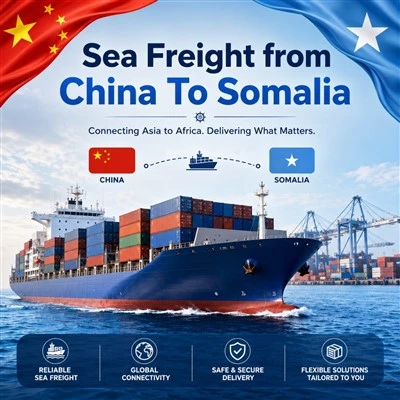
A freight forwarder organizes and coordinates the international movement of goods for shippers, especially importers. They act as logistics experts who arrange transportation, handle documentation, manage customs processes, and ensure goods move from supplier to your door without you dealing with every carrier directly.
Most forwarders do not own ships, planes, or trucks. They leverage networks of carriers to book space, negotiate rates, and oversee the entire supply chain. For importers, this means less exposure to delays, paperwork errors, or unexpected fees when bringing goods across borders.

Why Importers Rely on Freight Forwarders
International shipping involves multiple parties: suppliers overseas, ocean or air carriers, trucking companies, customs authorities, and warehouses. Importers often lack the time, expertise, or volume to manage it all efficiently.
A good forwarder steps in as your single point of contact. They handle pickup from the supplier's factory, book ocean freight (or air if time-sensitive), coordinate inland delivery, clear customs at your port of entry, and arrange final delivery to your warehouse. This setup lets you focus on sales and inventory rather than chasing updates or fixing compliance issues.
Many importers start with small volumes or new suppliers and quickly face problems like missing documents, incorrect HS codes, or demurrage charges. Forwarders prevent most of these by knowing the rules in advance.
Core Services Freight Forwarders Provide to Importers
Freight forwarders offer a range of services tailored to import needs. Here are the main ones:
- Transportation Arrangement
They book space on vessels or flights, select the best route based on cost, transit time, and reliability, and coordinate multimodal moves (ocean + truck, air + truck).
- Documentation Preparation
Commercial invoices, packing lists, bills of lading (or air waybills), certificates of origin, and other export/import docs get prepared correctly to avoid holds.
- Customs Clearance Support
They file entries, calculate duties and taxes, classify goods under HS codes, and work with customs brokers (or act as one if licensed) to clear shipments quickly.
- Cargo Consolidation (LCL)
For smaller shipments, they combine your cargo with others in a shared container to reduce costs compared to full container load (FCL).
- Insurance Coordination
They arrange cargo insurance to cover loss or damage during transit, often at competitive rates through their volume.
- Tracking and Visibility
Real-time updates on shipment status, from pickup to delivery, via portals or direct communication.
- Warehousing and Distribution
Some provide storage at origin or destination, plus deconsolidation and last-mile delivery.
These services vary by forwarder. Larger ones offer end-to-end door-to-door; smaller ones may focus on specific trade lanes or modes.

Freight Forwarder vs. Other Logistics Roles
People often confuse forwarders with similar roles. Here's a clear breakdown:
|
Role |
Primary Focus |
Issues Own Bill of Lading? |
Modes Covered |
Legal Responsibility for Cargo |
|
Freight Forwarder |
Coordinates entire shipment, docs, customs |
Usually no (uses carrier's) |
Ocean, air, inland |
Limited (agent role) |
|
Customs Broker |
Customs entry filing and compliance |
No |
N/A (focus on border) |
Handles clearance only |
|
NVOCC |
Ocean freight, acts as carrier |
Yes (House B/L) |
Ocean only |
Higher (carrier liability) |
A freight forwarder often partners with a customs broker for import clearance. Many forwarders hold both licenses. An NVOCC issues its own bill of lading and takes on carrier-like responsibility for the ocean leg, which can simplify claims if issues arise at sea.
Choose based on your needs. If you ship only ocean FCL and want stronger liability coverage, an NVOCC might fit. For mixed modes or complex customs, a full-service forwarder usually works better.
The Import Process with a Freight Forwarder Step by Step
- You share details: product description, volume, origin, destination, Incoterms, and timeline.
- Forwarder quotes rates, suggests options (FCL vs LCL , ocean vs air ), and confirms carrier space.
- They arrange pickup from supplier and issue booking confirmation.
- Documentation gets prepared and shared for approval.
- Cargo moves to port/airport; forwarder tracks progress.
- At destination, they handle arrival notice, customs filing, duty payment, and clearance.
- Goods get delivered to your location, with final invoice.
Delays usually happen at customs or due to incomplete docs. A solid forwarder anticipates these and pushes for corrections early.
How to Choose the Right Freight Forwarder for Your Imports
- Not all forwarders suit every importer. Focus on these factors:
- Experience in your trade lanes and product types (e.g., electronics from Asia, perishables from Europe).
- Network strength-strong carrier relationships mean better space availability during peak seasons.
- Customs expertise-licensed brokerage or reliable partners reduce border delays.
- Transparency in pricing-avoid vague "all-in" quotes; ask for breakdowns of ocean freight, fees, duties.
- Communication and tech-real-time tracking portals and responsive account managers matter more than flashy websites.
- References and reliability-check how they handle claims or disruptions.
Start by requesting quotes from 3–5 forwarders for a sample shipment. Compare not just price but response time, detail level, and willingness to explain trade-offs.
A forwarder who asks detailed questions about your cargo and compliance needs usually performs better than one who rushes to the lowest quote.
Final Thoughts
Freight forwarders simplify international importing by managing the complex parts most importers prefer to avoid. They save time, reduce risks, and often lower overall costs through better rates and fewer errors.
For most importers-especially those scaling or dealing with multiple suppliers-a reliable forwarder becomes an extension of your team. Pick one that understands your business, communicates clearly, and delivers consistently. That partnership turns shipping from a headache into a predictable process.
Zhejiang Wilson Supply Chain Management Co., Ltd. Founded in 2011 and headquartered in Ningbo, China, it has grown to become a leading international freight forwarder and supply chain solutions provider in China. We are a global shipping forwarder.As one of the biggest shipping agents for MSK, CMA, EMC, HAMBURG SUD, HANJIN etc,our service covers all of ports in China.
Our core freight forwarder services include ocean freight, air freight, land transportation, warehousing, customs clearance, and supply chain management. serving industries such as chemicals, automotive, food, energy, and container trade, while also bringing extensive experience in fertilizers and oversized cargo logistics.
Please Drop a comment or contact us for a quick quote.