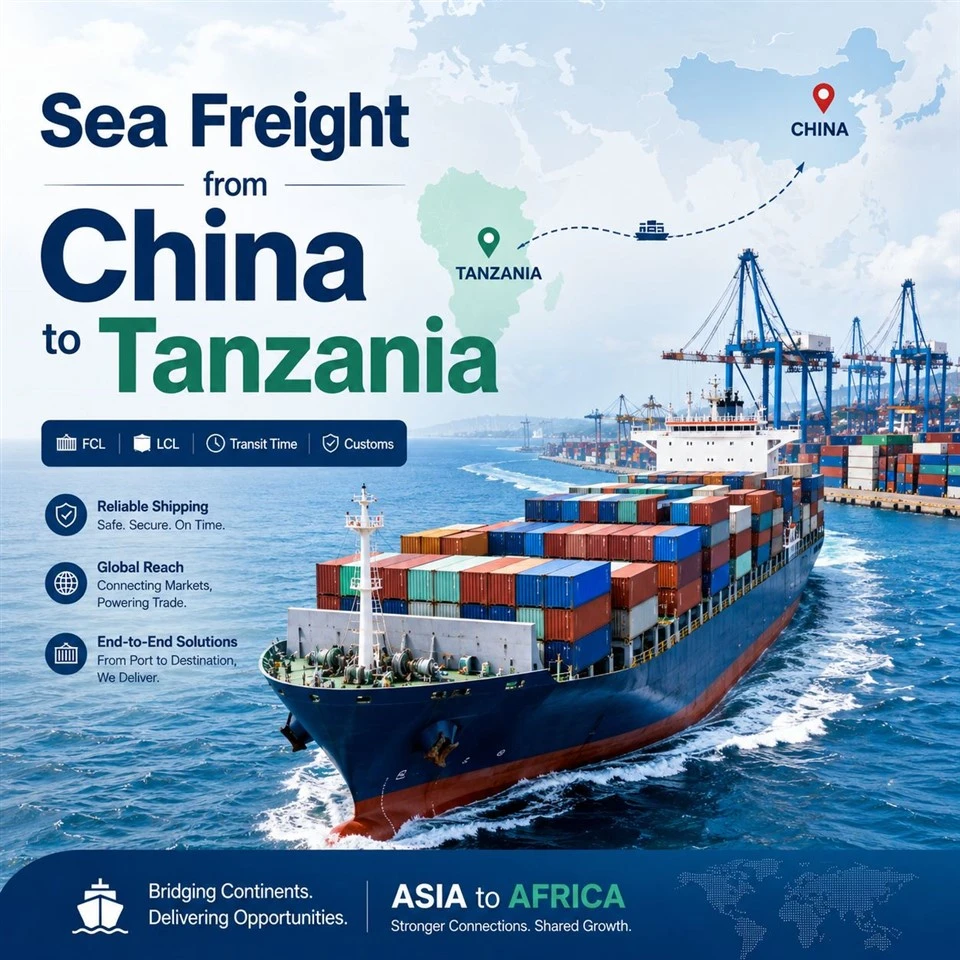
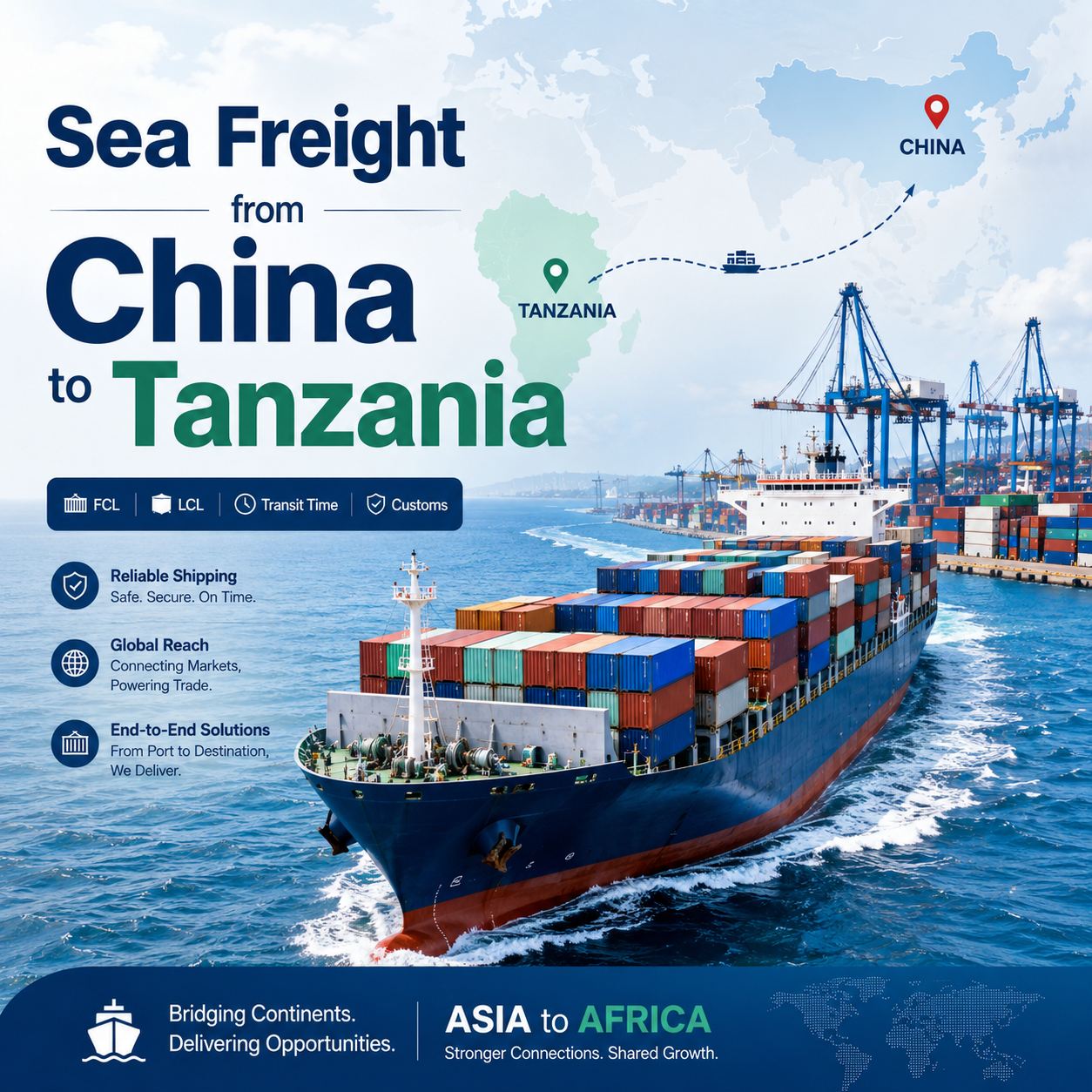
Shipping goods from China to Tanzania by sea is one of the most economical and practical options for commercial cargo, machinery, vehicles, building materials, industrial products, and other high-volume shipments. For importers that do not require the speed of air freight, ocean shipping provides greater cargo capacity and lower transportation costs per unit.
Zhejiang Wilson Supply Chain Management Co., Ltd. provides sea freight services from major Chinese ports, including Shanghai, Ningbo, Shenzhen, and Guangzhou, to Tanzania, with Dar es Salaam as the primary destination port. Depending on your cargo size and characteristics, we can arrange FCL, LCL, special containers, oversized cargo, breakbulk, vehicle shipping, reefer transportation, and related supply chain services.
For most shipments from China to Dar es Salaam, the estimated port-to-port transit time is approximately 28–38 days, depending on the origin port, carrier, routing, transshipment arrangement, and vessel schedule.
Wilson was established in 2011 and is headquartered in Ningbo, China, with branches in Shanghai, Shenzhen, and Hong Kong. Our team coordinates supplier pickup, warehousing, consolidation, booking, export customs clearance, documentation, ocean transportation, shipment tracking, and destination-side logistics according to the scope required by each customer.
Need an updated sea freight quote from China to Tanzania? Send us your cargo name, quantity, weight, dimensions or CBM, pickup location, destination, and expected shipping date. We will recommend a suitable shipping solution and provide current rate and schedule options.
Get an Updated China–Tanzania Sea Freight Quote
How Much Does Sea Freight from China to Tanzania Cost?
Sea freight rates from China to Tanzania change frequently. The actual cost depends on the origin port, container type, shipping line, cargo characteristics, equipment availability, sailing date, and market conditions.
For budgeting purposes, the following ranges can be used as general planning references for standard dry cargo shipped to Dar es Salaam.
| Shipping Type | Estimated Sea Freight Reference |
|---|---|
| 20GP Container | USD 1,500–3,500 |
| 40GP Container | USD 2,000–4,200 |
| 40HQ Container | USD 2,200–4,500 |
| LCL Shipping | Quoted by CBM / chargeable volume |
These figures are indicative ocean freight estimates rather than fixed quotations. Special cargo, heavy cargo, dangerous goods, reefer cargo, oversized equipment, or shipments requiring special containers will be quoted separately.
What Determines the Shipping Cost?
The freight rate is only one part of the total logistics cost. The final quotation may depend on several factors.
Origin port and pickup location: Shipping from Shanghai, Ningbo, Shenzhen, Guangzhou, or another Chinese port may produce different freight and inland transportation costs.
Container type: 20GP, 40GP, and 40HQ equipment have different rates and loading capacities.
FCL or LCL: FCL is quoted for the entire container, while LCL normally depends on cargo volume, weight, and applicable consolidation charges.
Cargo type: Standard general cargo is usually simpler to handle than vehicles, chemicals, machinery, oversized equipment, reefer cargo, or other special commodities.
Shipping line and sailing date: Carrier capacity, vessel schedules, container availability, seasonal demand, and fuel-related adjustments can all affect rates.
Origin and destination charges: Documentation, terminal handling, customs-related services, CFS charges, local carrier charges, storage, and inland transportation may be charged separately.
A typical total logistics calculation may include:
Ocean Freight + China Origin Charges + Documentation + Customs Services + Destination Charges + Optional Inland Delivery
For an accurate quotation, send us your cargo description, total weight, dimensions or CBM, container requirement, China pickup location, Tanzania destination, Incoterm, and expected shipping date.
Request an Accurate Sea Freight Quote
Sea Freight Transit Time from China to Tanzania
Ocean freight from China to Tanzania generally requires around 28–38 days port to port when shipping to Dar es Salaam.
Estimated transit times from major Chinese ports are:
| Origin Port | Destination Port | Estimated Port-to-Port Transit Time |
|---|---|---|
| Shanghai | Dar es Salaam | 28–35 days |
| Ningbo | Dar es Salaam | 28–35 days |
| Shenzhen | Dar es Salaam | 30–38 days |
| Guangzhou | Dar es Salaam | 30–38 days |
These are planning estimates rather than guaranteed schedules.
Port-to-Port vs. Door-to-Door Transit Time
Port-to-port transit time normally refers to the ocean transportation stage between the Chinese loading port and Dar es Salaam.
Door-to-door shipping includes additional operations such as supplier pickup, consolidation, export handling, waiting for vessel departure, Tanzania customs clearance, container release, and inland delivery.
A typical door-to-door shipment may require approximately 30–45 days or longer, depending on the pickup location, vessel schedule, customs processing, and final delivery address.
Transit time can be affected by:
- carrier and vessel schedule;
- direct or transshipment routing;
- transshipment port operations;
- container and vessel availability;
- weather conditions;
- peak-season congestion;
- port congestion;
- customs clearance time;
- final inland delivery arrangements.
Before booking, Wilson can check available sailing schedules and recommend a routing based on your required delivery timeline.
Our Sea Freight Services from China to Tanzania
Different cargo requires different shipping solutions. Wilson provides more than standard container booking and can coordinate both conventional and specialized ocean freight.
FCL Shipping
Full Container Load is suitable for importers with enough cargo to use an entire container or customers who prefer dedicated container space.
We can arrange common equipment including:
- 20GP;
- 40GP;
- 40HQ.
FCL is widely used for machinery, building materials, manufactured goods, textiles, spare parts, consumer products, and recurring commercial shipments.
LCL Shipping
Less than Container Load is suitable when your cargo does not justify booking a complete container.
Multiple shipments are consolidated into one container, allowing smaller importers to ship based on cargo volume rather than paying for an entire container.
Wilson can coordinate supplier pickup, warehousing, consolidation, export documentation, and LCL shipment to Tanzania.
Door-to-Door Shipping
For customers who need more than port-to-port transportation, we can coordinate a broader logistics chain, including:
supplier pickup → warehousing → consolidation → export customs clearance → sea freight → destination clearance coordination → inland delivery.
Heavy Equipment and OOG Shipping
We handle machinery, construction equipment, industrial equipment, and oversized cargo that may not fit into standard containers.
Depending on cargo dimensions and weight, suitable solutions may include:
- Flat Rack;
- Open Top;
- Breakbulk;
- project cargo arrangements.
For complex shipments, we assess dimensions, weight, lifting requirements, loading position, securing points, and cargo protection before arranging transportation.
Vehicle Shipping
Wilson has experience handling passenger vehicles, SUVs, pickups, trucks, buses, engineering vehicles, and other vehicle cargo.
Depending on the vehicle dimensions, quantity, and destination requirements, we can evaluate container shipping, RoRo, Flat Rack, or other appropriate transportation methods.
Breakbulk and Project Cargo
Large machinery, irregular equipment, and cargo that cannot be efficiently containerized may require breakbulk transportation.
Our service can include loading planning, lifting coordination, support structures, lashing, securing, cargo protection, and port-to-destination coordination.
Reefer and Special Cargo
For temperature-sensitive cargo or commodities requiring specialized equipment, reefer container solutions can be arranged subject to cargo specifications and carrier acceptance.
Cargo insurance, shipment tracking, and exception management can also be incorporated into the transportation plan.
How Our Sea Shipping Service Works
Our objective is to make the transportation process clear and manageable from the beginning.
1. Send Your Cargo Details
Provide the commodity, quantity, weight, dimensions or CBM, pickup location, Tanzania destination, Incoterm, and required shipping date.
2. Shipping Solution and Quotation
We evaluate whether FCL, LCL, standard containers, special containers, Flat Rack, Breakbulk, or another option is more suitable.
We then prepare a quotation and available sailing options.
3. Pickup and Consolidation
Wilson can coordinate collection from your Chinese supplier, warehouse delivery, temporary storage, consolidation, cargo inspection, and related origin operations.
4. Booking and Space Confirmation
We arrange booking based on carrier schedules, available equipment, routing, freight rates, and your delivery requirements.
5. Loading, Customs and Documentation
Our team coordinates loading and, where necessary, cargo securing and protection. We also assist with export customs declaration and shipping documentation.
6. Ocean Transportation and Tracking
After departure, we monitor important shipment milestones and provide transportation updates.
If schedule changes or operational exceptions occur, our team communicates the situation and evaluates available alternatives.
7. Tanzania Customs Coordination
Depending on the agreed service scope, destination-side partners can coordinate customs documentation, cargo release, local charges, and clearance arrangements.
8. Inland Delivery
Cargo can also be coordinated onward from Dar es Salaam to inland destinations such as Dodoma, Arusha, Mwanza, and other locations according to the shipment requirements.
Why Choose Wilson for China–Tanzania Sea Freight?
Experienced China-Origin Operations
Wilson was established in 2011 and is headquartered in Ningbo, with branches in Shanghai, Shenzhen, and Hong Kong.
This network helps us coordinate cargo from suppliers across major Chinese manufacturing and export regions.
Carrier and Equipment Resources
We maintain business cooperation with major international shipping lines such as COSCO, Hapag-Lloyd, Maersk, MSC, and Evergreen.
This allows us to evaluate different sailing schedules, equipment options, and routing alternatives according to each shipment.
Specialized Cargo Experience
In addition to ordinary FCL and LCL cargo, Wilson handles vehicles, engineering machinery, heavy equipment, chemical cargo, oversized shipments, special containers, reefer cargo, and high-value project shipments.
Cargo Protection and Risk Control
Complex cargo requires more than simply booking space.
For machinery, vehicles, boats, and oversized equipment, our operational focus can include loading inspection, support positioning, lashing, anti-shifting measures, surface protection, and post-loading checks.
One Point of Contact
International shipping can involve suppliers, truckers, warehouses, customs brokers, shipping lines, port operators, and destination agents.
Wilson coordinates these activities through one logistics workflow, reducing unnecessary handoffs and giving customers clearer accountability.
End-to-End Supply Chain Support
Our services can extend from supplier pickup and warehousing to customs clearance, international transportation, destination coordination, and inland delivery.
Proactive Shipment Management
Our team monitors key logistics milestones, communicates shipment status, and responds to schedule changes or operational exceptions rather than leaving customers to coordinate different parties independently.
What Goods Are Commonly Shipped from China to Tanzania?
China supplies Tanzania with a broad range of manufactured products, machinery, vehicles, industrial goods, construction materials, consumer products, and commercial supplies.
Typical China–Tanzania ocean freight cargo includes:
| Cargo Type | Common Shipping Option |
|---|---|
| Machinery and spare parts | FCL / LCL / OOG |
| Building materials | FCL |
| Textiles and consumer goods | FCL / LCL |
| Electronics | FCL / LCL |
| Manufactured goods | FCL / LCL |
| Agricultural inputs | FCL |
| Cars, pickups, trucks and buses | Container / RoRo |
| Heavy and oversized equipment | Flat Rack / Open Top / Breakbulk |
| Temperature-sensitive cargo | Reefer |
The correct shipping method should be selected based on the cargo dimensions, weight, value, packaging, dangerous-goods status, loading requirements, and destination delivery conditions.
For example, a standard shipment of spare parts may move efficiently by FCL or LCL, while a large excavator may require Flat Rack or Breakbulk transportation. Vehicles may be shipped by container or RoRo depending on quantity and routing.
Providing accurate cargo dimensions and weight before booking is especially important for machinery and oversized cargo.
Tanzania Import Regulations and Customs Requirements
Importers should prepare documentation and product compliance requirements before the cargo arrives in Tanzania. Incorrect or incomplete documents can result in customs delays and additional storage, demurrage, or detention costs.
EAC Customs Framework
Tanzania is a member of the East African Community and applies the relevant EAC customs framework to imports from countries outside the community, including China.
Import duty varies according to the product classification and HS code.
Common Import Documents
Typical shipping and customs documentation may include:
- Commercial Invoice;
- Packing List;
- Bill of Lading;
- Certificate of Origin where applicable;
- import licence or permit where applicable;
- product-specific certificates or compliance documents.
Document requirements vary depending on the commodity.
PVoC and Product Compliance
Certain regulated products may require Pre-Shipment Verification of Conformity (PVoC) or other applicable conformity documentation.
The requirement should be confirmed before the goods leave China because product-specific compliance problems are often more difficult and expensive to resolve after the cargo reaches Tanzania.
Consignee TIN Information
Import manifest information may require the Tanzanian consignee's Taxpayer Identification Number (TIN) under the customs processing system.
The consignee's company and tax information should therefore be confirmed before manifest submission.
Import Duties, VAT and Other Charges
Tanzania applies import duties according to product classification, and a standard VAT rate of 18% applies to imports under the applicable tax rules.
Other customs-related charges or levies may also apply depending on the shipment and current regulations.
The final tax amount should be determined according to the HS code, customs value, cargo type, and applicable Tanzania customs rules.
Avoiding Demurrage and Detention
Importers should prepare clearance documents before the vessel arrives.
Delayed customs clearance or container return can generate storage, demurrage, and detention charges. Reefer cargo is particularly time-sensitive because storage and equipment-related costs can rise quickly.
Wilson can coordinate shipping documentation and arrival information so the importer or appointed customs agent can prepare for destination clearance in advance.
FAQ
Q: 1. How much does it cost to ship a container from China to Tanzania?
A: For planning purposes, a standard 20GP may typically fall around USD 1,500–3,500, while a 40GP may be around USD 2,000–4,200. Actual rates change according to origin port, carrier, sailing date, equipment availability, cargo type, and market conditions. Contact us for a current quotation.
Q: 2. How long does sea freight from China to Tanzania take?
A: Most shipments to Dar es Salaam require approximately 28–38 days port to port. Shanghai and Ningbo services may take about 28–35 days, while Shenzhen and Guangzhou may take around 30–38 days depending on routing and carrier schedules.
Q: 3. Which ports in China can I ship from?
A: Wilson can coordinate shipments from major Chinese ports including Shanghai, Ningbo, Shenzhen, and Guangzhou, as well as other Chinese ports depending on the supplier location and cargo requirements.
Q: 4. Which port is normally used in Tanzania?
A: Dar es Salaam is the main destination for containerized sea freight into Tanzania. Tanga and Mtwara may also be considered depending on cargo type, final destination, and available shipping services.
Q: 5. Should I choose FCL or LCL?
A: FCL is generally suitable for larger shipments or customers who want an entire container. LCL is suitable for smaller shipments that do not require a full container. The most economical choice depends on cargo volume, weight, and related origin and destination charges.
Q: 6. Can you pick up cargo from my supplier in China?
A: Yes. We can coordinate supplier pickup, warehouse delivery, consolidation, export customs declaration, and transportation to the port as part of the shipping solution.
Q: 7. Can Wilson ship machinery, vehicles or oversized cargo to Tanzania?
A: Yes. We handle machinery, vehicles, trucks, engineering equipment, heavy cargo, and oversized shipments. Depending on dimensions and weight, we can evaluate standard containers, Flat Rack, Open Top, RoRo, or Breakbulk solutions.
Q: 8. What information do you need for a sea freight quote?
A: Please provide your cargo name, quantity, total weight, dimensions or CBM, pickup city or origin port, destination in Tanzania, Incoterm, and expected shipping date. For machinery or oversized cargo, photos and detailed dimensions are also helpful.
Q: 9. Can you arrange customs clearance and inland delivery in Tanzania?
A: Destination customs coordination and inland transportation can be incorporated according to the agreed service scope. Delivery from Dar es Salaam to locations such as Dodoma, Arusha, Mwanza, and other destinations can also be evaluated.
Q: 10. Does ocean freight include Tanzania import duties and taxes?
A: Not unless they are specifically included in the quotation. Ocean freight normally refers to international transportation, while Tanzania import duties, VAT, customs charges, local carrier fees, and inland delivery may be separate items.
Get an Updated Sea Freight Quote from China to Tanzania
Whether you are shipping regular commercial cargo, a full container, several cubic meters of LCL cargo, vehicles, machinery, or oversized equipment, Wilson can evaluate the shipment and recommend an appropriate transportation plan.
Send us:
Cargo name + quantity + weight + dimensions/CBM + China origin + Tanzania destination + Incoterm + expected shipping date
and our team will review your requirements and provide suitable FCL, LCL, special-container, or project-cargo options together with an updated freight rate and sailing schedule.
Hot Tags: Sea Freight From China To Tanzania