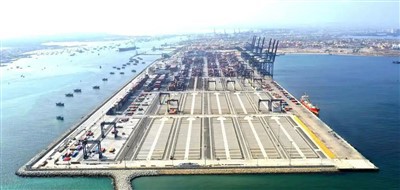
Sea freight from China to the Netherlands is a practical and cost-effective solution for importers moving large volumes, heavy cargo, machinery, consumer products, chemicals, and other commercial goods.
Most containerized shipments enter the Netherlands through the Port of Rotterdam, one of Europe's most important logistics gateways. From Rotterdam, cargo can be delivered throughout the Netherlands or distributed to nearby European markets by truck, rail, or inland waterway.
Port-to-port sea freight from China to Rotterdam generally takes around 28–42 days. Door-to-door shipments commonly require 35–50 days, depending on the departure port, sailing route, customs clearance, and final delivery address.
As a China-based freight forwarder established in 2011, Zhejiang Wilson Supply Chain Management Co., Ltd. provides FCL, LCL, special container, dangerous goods, oversized cargo, customs, warehousing, insurance, and door-to-door logistics services.
Send us your cargo details, pickup location, destination postcode, weight, dimensions, and expected shipping date. Our logistics team will prepare a shipping plan and quotation based on your actual requirements.
Get Latest Ocean Freight Rates Now

How Much Does Sea Freight From China to the Netherlands Cost?
The cost of shipping from China to the Netherlands depends on the container type, cargo volume, departure port, sailing schedule, market conditions, and services included in the quotation.
The following prices are general planning estimates rather than fixed offers.
| Shipping Method | Estimated Freight Cost |
|---|---|
| 20GP FCL | USD 1,800–3,200 |
| 40GP FCL | USD 2,800–4,800 |
| 40HQ FCL | USD 3,000–5,000 |
| LCL Shipping | USD 90–200 per CBM |
| Cargo Insurance | Usually around 0.3%–0.5% of the insured cargo value |
These estimates normally represent the main freight range. They may not include every origin charge, destination charge, customs fee, tax, inspection expense, or inland delivery cost.
Information Required for an Accurate Quote
To prepare a reliable quotation, please provide:
- Cargo name and description
- Pickup city or factory address
- Destination city and postcode
- Number of packages
- Packaging type
- Gross weight
- Dimensions of each package
- Total volume in CBM
- HS code, if available
- Incoterm
- Dangerous goods status
- Required container type
- Expected cargo-ready date
- Required delivery date
For chemicals or dangerous goods, an SDS or MSDS should also be provided.
Get Latest Ocean Freight Rates Now
How Long Does Sea Freight From China to the Netherlands Take?
Port-to-port transit time from China to Rotterdam is generally between 28 and 42 days.
The exact duration depends on the departure port, carrier schedule, route, transshipment arrangements, weather, port congestion, and equipment availability.
Estimated Port-to-Port Transit Times
| Route | Estimated Transit Time |
|---|---|
| Shanghai to Rotterdam | 28–38 days |
| Ningbo-Zhoushan to Rotterdam | 28–38 days |
| Shenzhen/Yantian to Rotterdam | 30–42 days |
| Guangzhou/Nansha to Rotterdam | 30–42 days |
| Qingdao to Rotterdam | 32–42 days |
| Tianjin to Rotterdam | 32–45 days |
| LCL from China to the Netherlands | Around 35–50 days |
| Door-to-door sea freight | Around 35–50 days |
These times are estimates and do not represent guaranteed delivery dates.
Typical Door-to-Door Timeline
| Shipping Stage | Estimated Time |
|---|---|
| Supplier pickup and delivery to port | 2–5 days |
| Export declaration and loading preparation | 1–3 days |
| Main ocean transit | 28–42 days |
| Dutch customs clearance | 1–3 days |
| Inland delivery in the Netherlands | 1–3 days |
LCL shipments may require additional time for cargo consolidation in China and deconsolidation after arrival.
Direct and Transshipment Services
A direct service usually involves fewer operational stages and may provide a more predictable schedule.
A transshipment service moves the container through one or more intermediate ports. It may offer a lower rate or more departure options, but the overall transit time is often longer.
Wilson compares available routes based on:
- Cargo-ready date
- Required delivery time
- Available equipment
- Carrier reliability
- Transshipment risk
- Total transportation cost
What Can Delay a Shipment?
Common causes of delay include:
- Carrier schedule changes
- Late cargo delivery to the port
- Missed customs or terminal deadlines
- Port congestion
- Adverse weather
- Transshipment delays
- Customs inspections
- Incorrect shipping documents
- Dangerous goods approval delays
- LCL consolidation schedules
- Delayed payment of duty and VAT
- Unavailable delivery appointments
Planning additional time is recommended when shipping during major Chinese holidays, European holidays, or peak retail seasons.
Main Shipping Ports in China and the Netherlands
Major Chinese Departure Ports
Wilson can arrange sea freight through China's main export ports.
Ningbo-Zhoushan
Ningbo-Zhoushan is one of China's principal container ports and an important departure point for cargo produced in Zhejiang, Jiangsu, Anhui, and surrounding regions.
Wilson is headquartered in Ningbo, giving our team strong operational access to suppliers, warehouses, customs services, and container facilities around the port.
Shanghai
Shanghai serves manufacturers and exporters throughout the Yangtze River Delta. It provides frequent services to Northern Europe and is suitable for a wide range of containerized and industrial cargo.
Shenzhen and Yantian
Shenzhen and Yantian are major gateways for cargo produced in Guangdong and southern China. Common shipments include electronics, electrical products, furniture, machinery, and consumer goods.
Guangzhou and Nansha
Nansha is another important southern China port, offering container services for manufacturers across Guangzhou, Foshan, Dongguan, and nearby industrial areas.
Qingdao
Qingdao is a key departure port for Shandong and northern China. It handles containers, machinery, chemicals, agricultural products, and industrial materials.
Tianjin
Tianjin serves Beijing, Tianjin, Hebei, and other parts of northern China. It is suitable for containerized cargo, vehicles, machinery, and project shipments.
Xiamen
Xiamen serves exporters in Fujian and nearby regions. It handles footwear, textiles, stone products, consumer goods, electronics, and machinery.
The most suitable departure port is not always the port closest to the supplier. Sailing schedules, inland trucking costs, equipment availability, cargo type, and carrier rates should all be compared.
Port of Rotterdam
Rotterdam is the main destination for containerized cargo shipped from China to the Netherlands.
Its location and transport connections make it suitable for deliveries to:
- Rotterdam
- Amsterdam
- The Hague
- Utrecht
- Eindhoven
- Tilburg
- Breda
- Groningen
- Other Dutch commercial and industrial areas
Rotterdam also supports onward distribution to Germany, Belgium, France, and other European markets.
After customs clearance, cargo can be moved by:
- Truck
- Rail
- Inland barge
- Multimodal transport
Other Dutch Ports
Amsterdam handles energy products, industrial materials, bulk cargo, and selected project shipments.
Zeeland, Moerdijk, Delfzijl, and other regional ports may be considered for chemicals, industrial cargo, project logistics, or specialized supply chains.
For standard container imports from China, Rotterdam remains the primary destination in most cases.
Our Sea Freight Services From China to the Netherlands
Wilson provides transportation solutions for standard, temperature-controlled, dangerous, and oversized cargo.
FCL Shipping
Full Container Load shipping gives one shipper the use of an entire container.
Available standard equipment includes:
- 20GP
- 40GP
- 40HQ
FCL is suitable for:
- Large-volume shipments
- Regular purchase orders
- Heavy cargo
- Fragile products
- High-value cargo
- Goods that should not be mixed with other shipments
- Shipments requiring fewer cargo-handling stages
An FCL container normally remains sealed during the main transport process unless customs or security inspection is required.
LCL Shipping
Less than Container Load shipping combines cargo from several shippers in one container.
LCL is suitable when:
- The cargo does not justify the cost of a full container.
- Shipment volume is relatively small.
- The customer wants to pay for the space used.
- Delivery is not extremely urgent.
- The cargo can tolerate additional warehouse handling.
LCL is usually charged according to weight or measurement, whichever produces the higher charge.
Additional LCL expenses may include:
- Consolidation
- Warehouse handling
- Documentation
- Deconsolidation
- Destination handling
- Minimum shipment charges
Strong export packaging is especially important because LCL cargo is handled more frequently than FCL cargo.
Door-to-Door Shipping
Wilson can coordinate the entire shipment from the supplier in China to the consignee in the Netherlands.
A door-to-door solution may include:
- Supplier communication
- Factory pickup
- Export customs declaration
- Container loading
- Main ocean freight
- Shipment tracking
- Import clearance coordination
- Duty and VAT support
- Destination trucking
- Final delivery
The exact division of responsibilities depends on the selected Incoterm and whether the importer or Wilson's destination partner handles customs formalities.
Open-Top Container Shipping
Open-top containers are designed for cargo that is too high to enter through standard container doors.
They are commonly used for:
- Machinery
- Industrial equipment
- Large components
- Steel products
- Over-height cargo
The cargo may be loaded from the top by crane and protected with a suitable cover after loading.
Flat-Rack and OOG Shipping
Flat-rack containers are suitable for cargo that exceeds standard container dimensions in width, height, or length.
Typical cargo includes:
- Construction machinery
- Factory equipment
- Heavy vehicles
- Large tanks
- Steel structures
- Industrial components
- Boats
OOG transportation requires accurate dimensions, lifting points, weight distribution, lashing plans, and carrier approval.
Reefer Container Shipping
Reefer containers provide temperature-controlled transportation for products such as:
- Frozen food
- Seafood
- Fruit and vegetables
- Dairy products
- Pharmaceuticals
- Temperature-sensitive chemicals
- Flowers and agricultural products
Depending on the cargo, the shipping plan may need to address:
- Temperature setting
- Ventilation
- Humidity
- Pre-cooling
- Controlled atmosphere
- Temperature monitoring
Break Bulk and Project Cargo
Some oversized or extremely heavy items cannot be transported in standard or special containers.
Break bulk and project cargo solutions may be used for:
- Factory production lines
- Large cranes
- Heavy machinery
- Steel beams
- Large pipes
- Industrial modules
- Construction equipment
Each shipment requires an individual loading, lifting, securing, and routing plan.
Vehicle and RoRo Shipping
Wilson can coordinate transportation for:
- Passenger vehicles
- Trucks
- Buses
- Trailers
- Agricultural machinery
- Construction vehicles
- Other wheeled equipment
RoRo transportation may be available when the cargo can be driven or towed onto the vessel. Availability depends on the departure port, destination terminal, carrier schedule, and cargo condition.
Container, flat-rack, or break bulk transportation may be more suitable when a direct RoRo service is unavailable.
Chemical and Dangerous Goods Shipping
Wilson has practical experience handling chemical and dangerous goods, including ammonium sulfate, calcium chloride, hydrogen peroxide, potassium nitrate, and refrigerants.
Dangerous goods services may include:
- SDS or MSDS review
- UN number confirmation
- Dangerous goods classification
- Packing group review
- Carrier approval
- Dangerous goods declaration
- Packaging and labelling checks
- Container selection
- Routing and stowage coordination
Dangerous goods must be declared before booking. Documentation deadlines and approval requirements vary by carrier, port, and cargo classification.
Customs, Warehousing, and Insurance
Additional services include:
- Chinese export declaration
- Dutch customs broker coordination
- Warehousing
- Cargo consolidation
- Container loading
- Inland transportation
- Cargo insurance
- Logistics liability insurance
- Claims assistance
- Supply chain planning
- Logistics compliance support
FCL or LCL: Which Option Should You Choose?
The right choice depends on cargo volume, weight, value, packaging, delivery requirements, and destination charges.
| Factor | FCL | LCL |
|---|---|---|
| Recommended Volume | Often 12–15 CBM or more | Usually below 12–15 CBM |
| Charging Method | Per container | By CBM or chargeable ton |
| Container Use | Dedicated to one shipper | Shared with other cargo |
| Transit Time | Usually faster | Usually longer |
| Handling Stages | Fewer | More |
| Cargo Independence | Higher | Lower |
| Damage Exposure | Generally lower | Higher due to additional handling |
| Best For | Large or regular shipments | Smaller shipments |
The 12–15 CBM point is only a general reference.
In some cases, FCL becomes more economical at a lower volume because of LCL destination charges. In other cases, dense or heavy cargo may still be better suited to LCL.
Wilson compares the complete cost rather than the base freight rate alone.
How Our Sea Shipping Service Works
Step 1: Submit Your Cargo Details
Provide the cargo description, dimensions, weight, pickup location, destination, Incoterm, and expected shipping date.
For chemicals, batteries, dangerous goods, or regulated products, supporting documents should be submitted during the first review.
Step 2: Receive a Tailored Shipping Plan
Our team evaluates:
- Suitable departure port
- FCL or LCL
- Container type
- Carrier options
- Direct or transshipment route
- Pickup arrangement
- Customs requirements
- Destination delivery
You receive a quotation based on the selected scope of service.
Step 3: Confirm the Quote and Booking
After confirmation, Wilson reserves space with the selected carrier and provides the required booking instructions.
Important deadlines may include:
- Cargo cutoff
- Customs cutoff
- Shipping instruction cutoff
- Verified gross mass cutoff
- Dangerous goods documentation cutoff
Step 4: Coordinate With the Supplier
Our team communicates with the supplier to confirm:
- Cargo-ready date
- Packaging
- Number of packages
- Weight and dimensions
- Loading arrangement
- Required export documents
This reduces the risk of missed vessel deadlines or incorrect booking information.
Step 5: Arrange Pickup and Export Declaration
Depending on the service, we arrange factory pickup, warehouse delivery, container loading, and Chinese export declaration.
Shipping documents are checked before submission.
Step 6: Load and Ship the Cargo
The cargo is delivered to the terminal or consolidation warehouse, loaded, and shipped according to the confirmed plan.
For special cargo, loading and securing may require lifting equipment, lashing materials, surveyors, or engineering support.
Step 7: Track the Shipment
Wilson monitors key milestones, including:
- Booking confirmation
- Container pickup
- Customs release
- Vessel departure
- Transshipment
- Estimated arrival
- Actual arrival
- Customs release
- Final delivery
Customers receive regular status updates throughout the shipment.
Step 8: Prepare Dutch Import Clearance
Before arrival, the importer and customs representative should prepare the necessary customs information.
This may include:
- Commercial invoice
- Packing list
- Bill of lading
- HS code
- EORI number
- Customs value
- Product certificates
- Import licences
- Dangerous goods documents
Early document preparation can reduce avoidable delays after arrival.
Step 9: Arrange Final Delivery
After customs release, the container or cargo is collected from the terminal and delivered to the consignee.
For FCL shipments, the container must usually be unloaded and returned within the applicable free-use period to avoid detention charges.
Why Choose Wilson for China–Netherlands Sea Freight?
More Than a Decade of Logistics Experience
Wilson was established in 2011 and has developed from a small local team into an international supply chain company serving customers across Europe, Asia, Africa, the Middle East, and the Americas.
Operational Presence in China
Wilson is headquartered in Ningbo and has branches in Shanghai, Shenzhen, and Hong Kong.
This structure supports supplier coordination, port operations, documentation, and shipment planning across major manufacturing regions in China.
Experienced Logistics Team
Our team includes 26 logistics professionals with an average of more than eight years of industry experience.
Customers work with staff who understand shipping schedules, customs documentation, special cargo requirements, and operational risk.
Long-Term Carrier Relationships
Wilson maintains long-term working relationships with major carriers, including:
- COSCO
- Hapag-Lloyd
- Maersk
- MSC
- Evergreen
This allows our team to compare schedules, routes, equipment availability, and market rates for different shipment requirements.
Approximately 56,000 TEU Handled Annually
Wilson handles approximately 56,000 TEU per year across its logistics network.
This operating volume supports established procedures for booking, documentation, customs coordination, tracking, and exception management.
Strong Special Cargo Capability
In addition to standard containers, Wilson handles:
- Open-top containers
- Flat-rack containers
- Reefer containers
- OOG cargo
- Heavy machinery
- Vehicles
- Chemicals
- Dangerous goods
- Project cargo
This is particularly valuable for manufacturers and industrial importers whose cargo requires more than a standard container booking.
Customs and Compliance Support
Wilson's logistics and compliance framework includes FIATA, IATA, AEO, ISO, and NVOCC-related qualifications.
Our team supports HS code review, document preparation, export declaration, destination customs coordination, and product-specific logistics planning.
Integrated Supply Chain Services
Customers can combine sea freight with:
- Supplier coordination
- Customs services
- Warehousing
- Inland transportation
- Insurance
- Logistics consulting
- Claims support
- Compliance guidance
This reduces the need to manage multiple service providers separately.
Shipment Tracking and Status Updates
Wilson uses logistics management and cargo-tracking systems to monitor key shipment milestones.
Customers receive timely updates from booking and departure through arrival, clearance, and final delivery.
Request a Tailored China-to-Netherlands Shipping Plan
Main Goods Traded Between China and the Netherlands
China and the Netherlands trade a wide range of consumer, industrial, agricultural, and chemical products.
Common Goods Shipped From China to the Netherlands
Frequently transported cargo includes:
- Electronics
- Electrical equipment
- Machinery
- Industrial components
- Automotive parts
- Batteries and energy equipment
- Textiles and garments
- Furniture
- Household products
- Toys
- E-commerce goods
- Construction materials
- Chemicals
- Refrigeration products
- Solar and renewable energy equipment
The transport method should be selected according to the cargo's value, dimensions, weight, regulatory status, and sensitivity to moisture or impact.
Common Goods Exported From the Netherlands to China
Common Dutch exports include:
- Agricultural products
- Food products
- Dairy-related products
- Chemicals
- Industrial machinery
- Medical and technical equipment
- Specialized manufacturing products
Although this page focuses on sea freight from China to the Netherlands, Wilson can also coordinate import and export logistics in both directions.
How to Import Goods From China to the Netherlands
Importing goods successfully requires more than arranging transportation. The importer must also confirm product eligibility, customs classification, taxation, and EU compliance.
Step 1: Confirm That the Product Can Be Imported
Before placing an order, confirm whether the product is:
- Freely importable
- Subject to licensing
- Covered by EU product legislation
- Subject to safety or labelling requirements
- Restricted or prohibited
- Controlled as a chemical or dangerous good
Certain foods, plants, animal products, medical devices, chemicals, and controlled goods may require additional approvals.
Step 2: Identify the Correct HS Code
The HS code is used to classify goods for customs purposes.
It affects:
- Import duty
- Customs declaration
- Product controls
- Anti-dumping measures
- Import licensing
- Statistical reporting
- Documentation requirements
The classification should be based on the product's material, function, composition, and intended use.
Step 3: Confirm the Importer and EORI Number
Businesses carrying out customs activities in the European Union generally require a valid EORI number.
The Dutch importer should confirm its registration before the shipment arrives.
Step 4: Check EU Product Compliance
Depending on the product, the importer may need to confirm:
- CE marking
- EU declaration of conformity
- Technical documentation
- REACH compliance
- CLP classification and labelling
- Product safety requirements
- Energy labelling
- Food labelling
- Health certificates
- Phytosanitary certificates
- Import licences
CE marking is not required for every product. It applies only to products covered by specific EU legislation.
Step 5: Select the Incoterm
The Incoterm defines which party is responsible for transportation, insurance, customs, risk, and cost.
Common options include:
- EXW
- FOB
- CFR
- CIF
- DAP
- DDP
The parties should clearly understand who handles:
- Factory pickup
- Chinese export declaration
- Ocean freight
- Cargo insurance
- Dutch import clearance
- Import duty
- VAT
- Final delivery
Step 6: Choose the Shipping Method
Select FCL, LCL, reefer, open-top, flat-rack, RoRo, or another solution based on:
- Cargo volume
- Weight
- Dimensions
- Value
- Delivery deadline
- Packaging
- Temperature requirements
- Dangerous goods status
Step 7: Prepare the Shipping Documents
Common documents include:
- Commercial invoice
- Packing list
- Bill of lading
- Sales contract or purchase order, where required
- Certificate of origin, where applicable
- Product certificates
- Import licence
- Insurance certificate
- Dangerous goods declaration
- SDS or MSDS
- Packaging certificates
A standard certificate of origin does not automatically provide preferential EU duty treatment for goods originating in China.
Step 8: Book the Shipment and Arrange Pickup
Confirm the sailing schedule, cutoff dates, container type, loading method, and pickup plan.
All cargo information should match the actual shipment.
Step 9: Complete Chinese Export Procedures
The cargo must be declared for export and delivered to the port before the applicable cutoff.
Incorrect descriptions, weights, package counts, or customs information may result in delays.
Step 10: Ship the Cargo to Rotterdam
During transportation, Wilson monitors the vessel schedule and provides shipment updates.
Step 11: Complete Dutch Customs Clearance
The importer or customs representative submits the import declaration and supporting documents.
Customs may:
- Release the shipment
- Request additional information
- Inspect the documents
- Inspect the cargo
- Verify the customs value
- Review the HS classification
- Check product compliance
Step 12: Pay Duty and VAT
Import duty depends on the HS code, customs value, origin, and applicable EU trade measures.
The standard Dutch VAT rate is generally 21% for many products, although different treatment may apply to specific goods or qualified importers.
The importer should confirm the current tax treatment with a Dutch customs or tax professional.
Step 13: Arrange Final Delivery
After customs release, the cargo can be collected from the terminal and delivered to the final address.
Dutch Import Regulations and Shipping Terms
Commercial Invoice
The commercial invoice should normally contain:
- Seller and buyer details
- Clear product description
- Quantity
- Unit price
- Total value
- Currency
- Country of origin
- HS code
- Incoterm
- Payment terms, where applicable
Descriptions such as "parts," "samples," or "accessories" may be too vague for customs purposes.
Packing List
The packing list should include:
- Number of packages
- Packaging type
- Package contents
- Gross weight
- Net weight
- Dimensions
- Total CBM
- Marks and numbers
Bill of Lading
The bill of lading should be checked carefully for:
- Shipper
- Consignee
- Notify party
- Port of loading
- Port of discharge
- Cargo description
- Package count
- Gross weight
- Container number
- Seal number
Information on the invoice, packing list, and bill of lading should remain consistent.
EORI Number
An EORI number identifies businesses carrying out customs activities in the European Union.
The importer should ensure that its EORI registration is active before the cargo arrives.
Import Duty
Import duty is normally based on:
- HS classification
- Customs value
- Country of origin
- Applicable EU trade measures
The customs value may include more than the product invoice value, depending on the Incoterm and costs incurred before entry into the EU.
Import VAT
Dutch import VAT is calculated according to the applicable tax rules.
The standard rate is generally 21% for many products, while certain goods may receive different treatment.
Some qualified importers may use a local VAT deferment arrangement, subject to Dutch tax requirements.
CE Marking
Products covered by applicable EU legislation may require CE marking and supporting conformity documentation.
Examples may include:
- Machinery
- Electrical equipment
- Radio equipment
- Toys
- Personal protective equipment
- Medical devices
A freight forwarder does not issue CE certification. Product compliance remains the responsibility of the relevant manufacturer, importer, or economic operator.
Chemical and Dangerous Goods Requirements
Chemical cargo may require:
- SDS
- REACH compliance
- CLP classification
- Hazard labels
- UN number
- Packing group
- Dangerous goods declaration
- Approved packaging
- Carrier approval
Transport classification and EU market compliance are separate requirements and should both be reviewed.
Wooden Packaging and ISPM 15
Wooden pallets, crates, and dunnage used in international trade may need to comply with ISPM 15 treatment and marking requirements.
Non-compliant wood packaging may be inspected, treated, returned, or destroyed.
Cargo Insurance
Ocean carriers operate under limited liability rules. Their liability may not cover the full commercial value of lost or damaged cargo.
Cargo insurance is recommended for:
- High-value goods
- Fragile cargo
- Customized machinery
- Electronics
- Temperature-sensitive products
- Project cargo
Premiums are often calculated as a percentage of the insured value, but coverage, exclusions, and deductibles depend on the insurance policy.
Key Sea Freight Terms
| Term | Meaning |
|---|---|
| FCL | Full Container Load; one shipper uses an entire container |
| LCL | Less than Container Load; cargo shares a container with other shipments |
| CBM | Cubic meter, used to measure cargo volume |
| W/M | Weight or measurement charging method |
| TEU | Twenty-foot equivalent unit |
| B/L | Bill of lading |
| HS Code | Customs classification code |
| EORI | EU customs identification number |
| Incoterms | Trade terms defining buyer and seller responsibilities |
| OOG | Out of Gauge cargo exceeding standard container dimensions |
| Reefer | Temperature-controlled container |
| Flat Rack | Container equipment used for oversized cargo |
| Open Top | Container with a removable top for over-height cargo |
| Demurrage | Charge for a container remaining inside the terminal beyond free time |
| Detention | Charge for keeping a container outside the terminal beyond free time |
| Storage | Charge for cargo or containers stored beyond the permitted period |
| Rolled Cargo | Cargo moved to a later vessel after missing the planned sailing |
| Customs Value | Value used to calculate import duty and taxes |
Frequently Asked Questions
How long does sea freight from China to the Netherlands take?
Port-to-port shipping to Rotterdam generally takes around 28–42 days. Door-to-door transportation commonly takes around 35–50 days.
The actual time depends on the departure port, carrier, sailing route, customs clearance, and final destination.
How much does it cost to ship a container from China to the Netherlands?
A 20GP container may cost approximately USD 1,800–3,200, while a 40GP or 40HQ may cost around USD 2,800–5,000.
These are general market estimates. The final cost depends on the route, carrier, cargo, equipment, season, and included services.
What is the main port in the Netherlands for cargo from China?
Rotterdam is the principal destination for containerized cargo shipped from China to the Netherlands.
It also provides strong road, rail, and inland waterway connections for distribution across Europe.
Should I choose FCL or LCL?
LCL is normally suitable for smaller shipments. FCL may become more economical when cargo volume approaches 12–15 CBM, although the break-even point varies.
The decision should be based on total origin, freight, and destination costs rather than the base ocean rate alone.
What documents are required for Dutch customs clearance?
Common documents include:
- Commercial invoice
- Packing list
- Bill of lading
- EORI information
- HS code
- Product certificates
- Import licence, where required
- Dangerous goods documents, where applicable
Does the Dutch importer need an EORI number?
Businesses involved in EU customs activities generally require a valid EORI number.
The importer should confirm its registration before shipment.
How are Dutch import duty and VAT calculated?
Duty depends on the HS code, customs value, product origin, and applicable EU trade measures.
Dutch import VAT is calculated according to local tax rules. The standard rate is generally 21% for many products, although exceptions and special arrangements may apply.
Can Wilson arrange door-to-door delivery?
Yes. Wilson can coordinate supplier pickup, export declaration, sea freight, customs clearance support, and delivery to the consignee.
The exact service scope depends on the Incoterm and destination requirements.
Can Wilson ship chemicals and dangerous goods?
Yes, subject to cargo review and carrier approval.
Please provide the SDS or MSDS, UN number, dangerous goods class, packing group, packaging details, and shipment quantity.
Can Wilson handle oversized machinery?
Yes. Available options may include open-top containers, flat-rack containers, OOG transportation, break bulk, and project cargo services.
Accurate dimensions, weight, lifting points, and technical drawings may be required.
Is cargo insurance included in the freight quotation?
Insurance is not automatically included unless it is listed in the quotation.
Wilson can arrange cargo insurance based on the product, cargo value, packaging, route, and required coverage.
What information is needed for a freight quote?
Please provide:
- Cargo description
- Pickup location
- Destination postcode
- Package count
- Weight
- Dimensions
- Total CBM
- HS code, if available
- Incoterm
- Dangerous goods status
- Cargo-ready date
Get a Sea Freight Quote From China to the Netherlands
A reliable shipping plan begins with accurate cargo information.
Send Wilson the following details:
- Cargo name
- Pickup city in China
- Destination postcode in the Netherlands
- Number and type of packages
- Dimensions
- Gross weight
- Total CBM
- Container type, if known
- Dangerous goods information
- Incoterm
- Expected shipping date
Our team will review the cargo and provide a suitable route, container option, estimated transit time, and cost breakdown.
Hot Tags: Sea Freight From China To Netherlands [Updated September 2026]