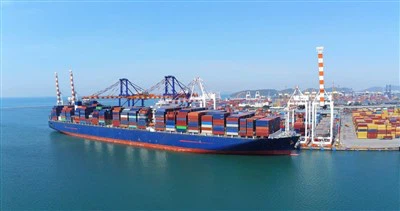
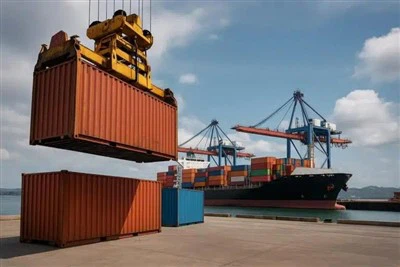
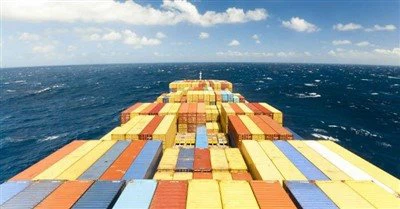
When you source heavy machinery from China - whether it's an excavator, bulldozer, CNC machine, or a full production line - the biggest headache often hits at the shipping stage. The machine fits in the factory, but suddenly the dimensions or weight create problems at the port.
Standard containers work in many cases, yet plenty of equipment exceeds those limits. That's when you face the real choice: keep it in some form of container as Oversized Cargo (OOG), switch to Break Bulk, or find another way.
At Zhejiang Wilson Supply Chain Management Co., Ltd., we handle these decisions every week. There is no single "best" method. The right one depends on your machine's exact specs, how urgently you need it, and what you're willing to spend on handling and protection. This guide walks through the practical differences so you can make a clear call.
Standard Container Shipping
Standard container shipping means loading your machinery into a regular 20ft or 40ft dry container. These are the workhorses of ocean freight because they move on fixed schedules, stack easily, and keep cargo protected from weather and handling damage.
A typical 40ft container has internal dimensions of roughly 12.03m long, 2.35m wide, and 2.39m high, with a payload limit around 28–30 metric tons (depending on the carrier and route). If your machine - or its disassembled parts - fits inside those limits and can be properly secured, this is usually the simplest and cheapest route.
When it works well
- Smaller industrial parts or machines that can be broken down at the factory.
- Equipment under 30 tons that doesn't have awkward protrusions.
- Projects where you want frequent sailings and lower handling risk.
Where it falls short
Once the piece exceeds the width, height, or weight limits, or cannot be safely disassembled without damaging precision components, you start adding extra costs for modifications or risk rejection at the terminal.
Many buyers try to force a machine into a container to save money, only to discover later that improper disassembly causes alignment issues on arrival. If your equipment is already built as a single heavy unit, forcing it into a standard box is rarely worth the trouble.
Oversized Cargo (OOG) – Flat Rack and Open Top Containers
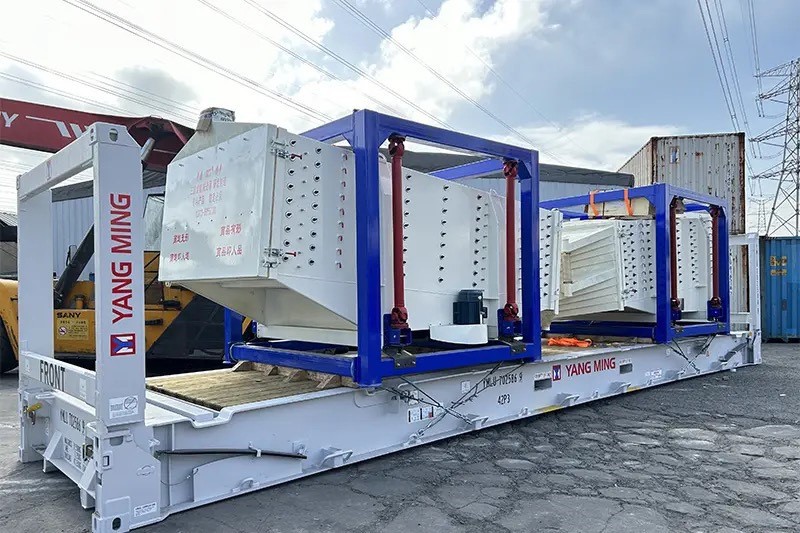
OOG cargo, or Out of Gauge, refers to shipments that exceed the standard internal or external dimensions of a regular container but can still ride on specialized container equipment - usually flat rack or open top containers.
Flat racks have no side walls or roof, allowing cargo to overhang in width or length. Open tops lack a roof, making them suitable for tall loads that can be crane-loaded from above. Both still move on regular container vessels, which means more predictable schedules than pure break bulk.
Typical limits (approximate, always confirm with carrier):
- 40ft flat rack payload often reaches 35–40 tons, with over-width up to about 2.4–4m depending on the route and how much "lost slot" surcharge the carrier applies.
- Over-height is more forgiving on open tops, though tarpaulins may not fully cover extreme cases.
Best suited for
- Mid-size construction machines like excavators or loaders (often 30–40 tons range).
- CNC machines or presses that are wider or taller than standard but not extremely heavy.
- Items that benefit from container liner networks rather than waiting for a break bulk sailing.
Practical realities
These shipments still need proper lashing and often third-party surveyor approval before the terminal accepts them. Exposure to salt spray becomes a real issue, so corrosion protection (such as VCI materials or shrink wrap) is non-negotiable on flat racks. You also face "lost slot" charges when the overhang blocks adjacent container spaces.
OOG strikes a balance for many machinery shipments from China. It keeps some of the speed and network advantages of containers while handling moderate oversize. But once the piece grows much beyond 40 tons or has extreme dimensions, the economics and handling complexity shift quickly toward break bulk.
Break Bulk Shipping
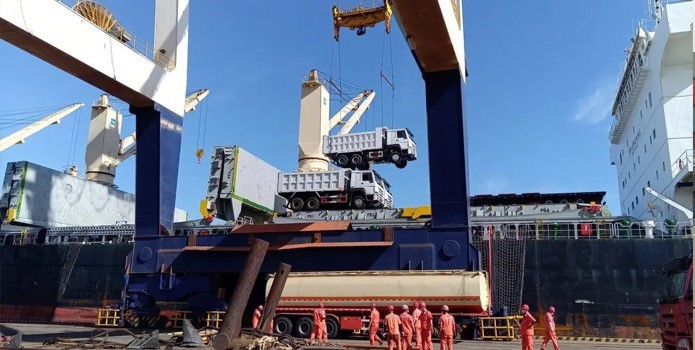
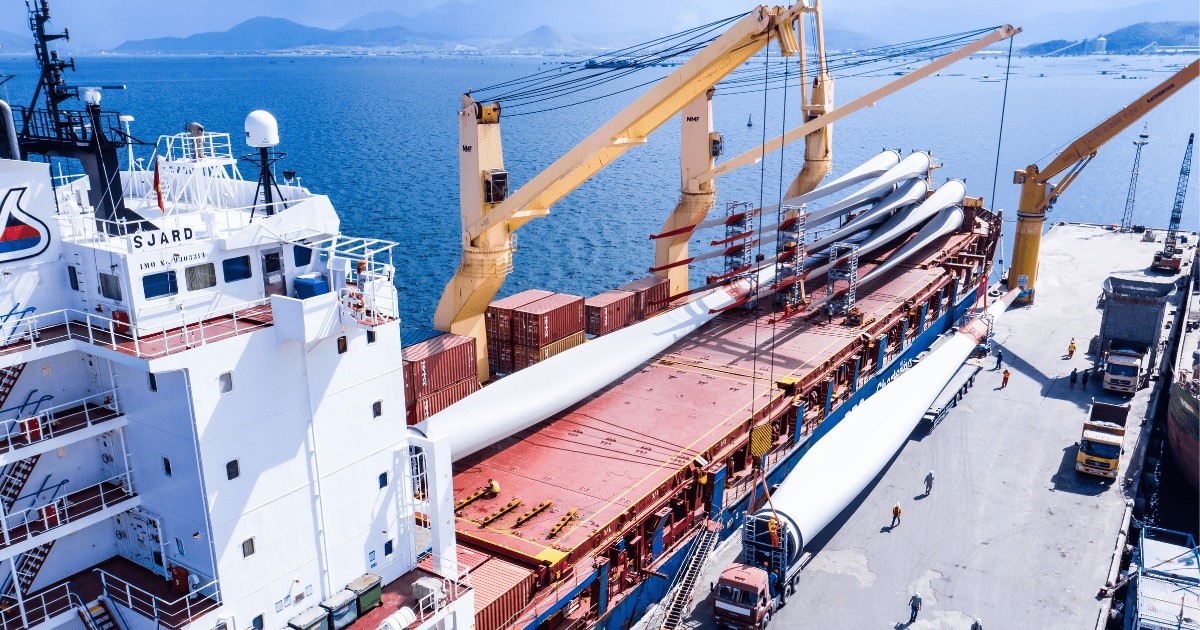
Break bulk (sometimes called conventional or project cargo) means the machinery is not stuffed into any container. Instead, it is lifted individually - either into the ship's hold or lashed directly onto the deck - using the vessel's own cranes or shore heavy-lift equipment.
This method has no fixed container size limits. It handles irregular shapes, extreme weights (100 tons and well above), and pieces that simply will not fit any container variation.
When break bulk makes sense
- Very heavy industrial plant equipment or turbines.
- Large construction machines or fully assembled units that exceed 40 tons and cannot be safely dismantled.
- Cargo with awkward dimensions that would cause major lost-slot penalties or lashing problems on flat racks.
Trade-offs
Sailings are less frequent, often requiring coordination with specific vessels. Loading and unloading take more time and involve more heavy cranes, which drives up port charges. Exposure to the elements is higher, so packaging and lashing plans must be engineered carefully.
RoRo (Roll-on/Roll-off) deserves a quick mention here for wheeled or tracked equipment. If the machine can drive or be towed onto the vessel, RoRo often provides better protection and simpler handling than deck-stowed break bulk, though available routes are more limited.
How to Choose the Right Method
There is no universal formula, but a clear decision path usually emerges from four practical questions:
- Exact dimensions and weight - Measure the packed machine, including any skids or brackets. Compare against standard 40ft limits (roughly 12m × 2.35m × 2.39m and 28–30 tons payload). Anything significantly over pushes you toward OOG or break bulk.
- Can it be disassembled? - Some machines survive disassembly and re-assembly without losing accuracy. Others (especially precision CNC or fully integrated lines) do not. Forcing disassembly can create bigger problems downstream.
- Time pressure - Container and OOG options generally offer more frequent sailings and shorter port stays. Break bulk often involves longer lead times and more coordination.
- Total landed cost - Look beyond base ocean freight. Factor in heavy-lift charges, lashing and surveying, lost-slot surcharges, inland permits in China, and corrosion protection. Sometimes the apparently cheaper container route ends up more expensive once all extras are added.
Quick reference thresholds (real-world experience, always verify current limits):
- Under ~30 tons and fits inside → Standard container.
- 30–40 tons with width/height overrun → OOG (flat rack or open top).
- Well over 40 tons or extreme irregular shape → Break bulk territory.
We run these calculations for clients every week. The numbers matter, but so does the destination port's crane capacity and your tolerance for delays.
Practical Operations and What Actually Happens
Once the method is chosen, execution follows a fairly consistent sequence.
First comes factory survey: we check exact measurements, center of gravity, and certified lifting points against the manufacturer's drawings. Getting this wrong is one of the most common causes of loading failures.
Next is inland movement from the Chinese factory to the port. Over-dimensional cargo often needs special low-bed hydraulic trailers and road permits. Starting this process early avoids last-minute surprises.
At the port, loading and securing take center stage. For OOG, the cargo goes onto flat racks or open tops with calculated lashing using chains, turnbuckles, and dunnage. Surveyors (often SGS or similar) inspect before gate-in. For break bulk, the ship's crew or port heavy-lift team handles stowage planning directly.
Throughout the voyage, corrosion protection matters most on exposed shipments. We routinely use VCI films, vacuum sealing, and heavy shrink wrap on bare metal surfaces.
Finally, destination handling and customs clearance. Pre-filing documents and coordinating final-mile heavy haul can save days of demurrage.
Key Risks and How Experienced Shippers Handle Them
Most problems with machinery shipments do not happen in the middle of the ocean. They occur during lifting, securing, or terminal transfers.
- Off-center gravity - Many industrial machines are not evenly balanced. Using standard slings without proper lifting diagrams can cause tipping. We always insist on manufacturer lifting schematics and calculate points in advance.
- Lashing failures - Chains or straps that look tight on land can loosen under dynamic sea forces, damaging hydraulic lines or housings. Professional lashing plans with correct tension and third-party certification reduce this risk sharply.
- Corrosion - Flat rack and break bulk cargo sit exposed. Without proper barriers, a 30–40 day transit from China can leave expensive rust damage.
- Route and permit issues - Over-width loads in China may require police escorts and specific routes. Missing permits delays everything.
These risks are manageable when you plan them early rather than reacting at the port.
Final Thoughts
Shipping heavy machinery from China comes down to matching the equipment's physical reality to the right transport mode. Standard containers remain the default for anything that fits. OOG extends that window for moderate oversize with decent speed. Break bulk opens the door for the truly large and heavy pieces that no container can handle.
Getting the choice right saves time, money, and headaches. Getting it wrong usually costs more than people expect.
If you have a machine ready to move - or even just preliminary dimensions and photos - we can review the options quickly and give you a realistic comparison. At Zhejiang Wilson Supply Chain, we manage the full chain: factory survey, packaging engineering, booking, and door-to-door delivery.
Feel free to reach out with your specs. We'll tell you straight which route makes sense and why.
Zhejiang Wilson Supply Chain Management Co., Ltd.
Global Project Cargo & Heavy Machinery Logistics