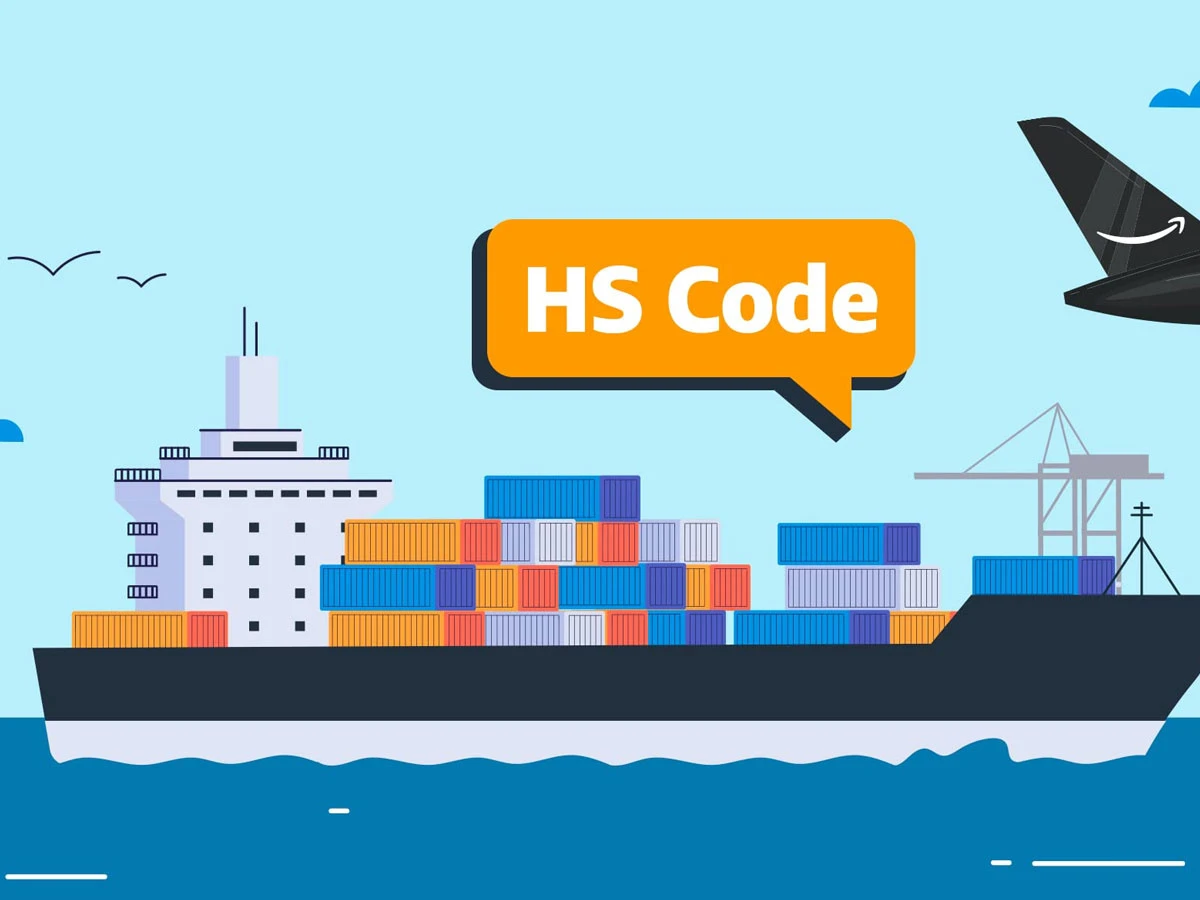
In the complex network of global freight and international trade, the HS Code (Harmonized System Code) serves as an indispensable "universal language." It provides a standardized framework for classifying goods, calculating tariffs, streamlining customs clearance, and ensuring trade compliance. Whether you're a cross-border e-commerce seller, an importer/exporter, or a logistics professional, understanding the definition, structure, functions, and proper application of HS Codes can help you avoid risks and optimize your supply chain. As a professional global freight forwarding service provider, we present this comprehensive guide to HS Codes and share how our expertise can enhance your trade efficiency.
What is an HS Code?
The HS Code, or Harmonized System Code, is an international commodity classification system developed and maintained by the World Customs Organization (WCO). Implemented in 1988, it is adopted by over 200 countries and regions, covering more than 98% of global trade goods, ensuring consistent classification worldwide and reducing trade disputes due to differing definitions. Known as the "universal identity document" for traded goods, the HS Code is a critical tool for international commerce.
Origin of the HS Code
Before the HS Code, countries used their own classification systems, such as the Customs Cooperation Council Nomenclature (CCCN) and the UN's Standard International Trade Classification (SITC), leading to confusion and inefficiencies in trade data. In June 1983, the Customs Cooperation Council (now WCO) harmonized these systems to create the HS Code, a multipurpose standard for global trade classification.
Core Features of the HS Code
Global Uniformity: The first six digits are universally standardized, ensuring consistent classification across countries.
Structured Coding: HS Codes consist of six digits, organized into 22 sections, 98 chapters, 1,244 headings, and 5,224 subheadings. Examples include:
0101.21: Pure-bred breeding horses
8517.12: Mobile phones (smartphones)
6206.20: Women's cotton blouses
Hierarchical Extensibility: Countries can extend the six-digit code to meet local needs (e.g., China uses 10 digits, the EU 8 digits, and the US 10 digits).
Structure Breakdown:
- First two digits (Chapter): Indicate the broad category, e.g., "62" for non-knitted apparel, "61" for knitted apparel. Chapters are arranged with primary products first, followed by industrial products; raw materials before finished goods; and simple processing before complex.
- Middle two digits (Heading, 3rd-4th): Specify the product type within a chapter, e.g., "6204" for women's suits.
- Last two digits (Subheading, 5th-6th): Provide precise classification, e.g., "6109.10" for cotton knitted T-shirts.
This "general-to-specific" structure makes HS Codes both globally unified and adaptable to local requirements.

Core Functions of HS Codes in International Trade
HS Codes are more than a classification tool; they are the backbone of international trade, customs regulation, and logistics management. Below are their primary functions:
1. Customs Clearance and Tariff Calculation
HS Codes are used by customs authorities to determine tariff rates, regulatory conditions (e.g., licenses, inspections), and rules of origin. They form the basis of tariff systems, directly impacting business costs and competitiveness. For example:
Case Study: A company misclassified "cotton women's blouses" (HS 6206.20, 5% tariff) as "synthetic blouses" (HS 6206.30, 15% tariff), resulting in a 10% tariff overpayment and a five-day clearance delay.
2. Trade Statistics and Policy Formulation
Countries use HS Codes to collect import/export data, analyze trade trends, and formulate economic policies, such as tariff adjustments or trade agreement negotiations. The standardized codes enable cross-country and cross-period trade data comparisons, aiding businesses in optimizing global supply chains.
3. Rules of Origin and Trade Agreements
In free trade agreements (e.g., RCEP , CPTPP), HS Codes determine whether goods qualify for preferential tariffs based on origin rules. Accurate HS Codes are essential for obtaining certificates of origin.
Case Study: A company exporting to ASEAN countries used correct HS Codes and origin certificates to reduce tariffs from 5% to 0%, significantly boosting competitiveness.
4. Inspection, Quarantine, and Compliance
HS Codes are linked to regulatory requirements, such as import/export licenses or inspection mandates. Certain goods (e.g., food contact materials, chemicals) have strict HS Code-specific regulations. Errors can lead to fines or cargo detention.
Case Study: An exporter of decorative items failed to secure a required export license due to an incorrect HS Code, resulting in cargo detention at the destination port.
5. Logistics and Supply Chain Management
Freight forwarders and customs brokers rely on HS Codes to process shipping documents (e.g., bills of lading, packing lists) and optimize clearance processes. HS Codes help predict clearance times, arrange inspections, and calculate logistics costs, especially for hazardous or temperature-controlled goods.
Case Study: A company used pre-classification to reduce clearance time from three days to one, saving over $100,000 annually in logistics costs.
How to Correctly Find and Apply HS Codes?
Selecting the right HS Code is critical for smooth trade operations. Here's a detailed guide:
1. Understand Product Characteristics
Analyze the product's material, function, use, and production process to avoid misclassification. For example, mixed-material products should be classified based on primary components or usage. Use the General Rules for the Interpretation of the Harmonized System for accurate classification. Detailed search terms (e.g., "cotton men's shirt" vs. "shirt") yield more precise results.
2. Use Authoritative Tools and Resources
- Official Resources: Access WCO databases, national customs websites (e.g., China Customs Service's Import and Export Tariff), or local customs systems.
- Online Tools: Platforms like hsbianma.com, HS Tracker, or Customs Info offer quick searches. Focus on the HS Code, tariff rate, and regulatory conditions (e.g., codes marked "B" require export clearance documents; "O" requires import licenses).
- Professional Consultation: For complex products (e.g., smart wearables), consult customs or freight forwarders.
3. Apply for Pre-Classification
Submit a pre-classification request (e.g., China's "pre-ruling" system) before shipment to confirm HS Codes and reduce clearance uncertainties. Freight forwarders can assist with preparing technical documentation to expedite reviews.
Case Study: A company using pre-classification cut clearance time from three days to one, saving $100,000 annually.
4. Stay Updated on Code Revisions
HS Codes are revised every 5–6 years (e.g., the 2022 sixth edition introduced codes for drones and lithium batteries). Businesses must stay informed to avoid using outdated codes. Freight forwarders can provide revision updates and adjustment advice.
Tip: When querying, provide detailed product information (material, composition, use, processing method). For example, a client misclassified a "stainless steel insulated cup" as 96170090 (other containers) but corrected it to 73101000 (stainless steel vacuum containers) with our help, saving 5% in tariffs.
Consequences of HS Code Errors and Mitigation Strategies
HS Code errors can lead to severe consequences. Below are common issues and solutions:
1. Customs Clearance Delays
Mismatched HS Codes trigger customs inspections, adding 3–5 days to clearance. For time-sensitive goods, this can be costly.
Case Study: An electronics exporter faced a two-week delay due to an incorrect HS Code, missing a critical production window and compensating clients with tens of thousands of dollars.
2. Tariff Discrepancies
Different HS Codes carry different tariff rates, and errors may lead to additional taxes or penalties, sometimes exceeding 20% of the goods' value.
Case Study: A client misclassified "glass decorations" (HS 7020.00.00, 5% tariff) as "glassware" (HS 7013, 15% tariff), incurring a 10% tariff overpayment.
3. Compliance Penalties
Intentional or repeated errors may be deemed smuggling, leading to fines or blacklisting. Even unintentional errors can flag businesses as high-risk, increasing scrutiny.
Case Study: A company misreported "aluminum alloy profiles" to avoid anti-dumping duties, was charged with smuggling, and fined tens of thousands of dollars.
4. Increased Logistics Costs
Delays cause additional storage and demurrage fees. Returns or destruction of goods can double transport costs.
Case Study: A food exporter faced 10 days of refrigerated container fees due to an HS Code error, exceeding budget by 30%.
Mitigation Strategies
- Internal Review Mechanisms: Implement dual checks for high-risk goods, involving classification specialists and compliance teams. Regular staff training enhances HS Code proficiency.
- Pre-Classification: Apply for customs pre-rulings to secure legally binding codes.
- Leverage Professional Resources: Use customs databases or AI tools (e.g., Customs Info, Zonos) to reduce errors.
- Collaborate with Supply Chain Partners: Share detailed product information with forwarders and brokers to avoid miscommunication. Our services reduced a client's error rate by 90%.
- Contingency Plans: Prepare technical documents, test reports, and past clearance records to address customs queries swiftly.
How Freight Forwarders Enhance HS Code Management
As a global freight forwarding service provider, we offer specialized support to optimize HS Code usage:
- Accurate Classification and Consultation: Our experienced team handles complex classifications (e.g., smart wearables with health and communication functions), saving clients up to 7% in tariffs.
- Global Code Variation Management: We coordinate HS Code differences across countries, ensuring consistency in multinational trade.
- Compliance Audits: Our secondary reviews reduce customs query rates by 60%. For high-risk goods, we recommend pre-classification or technical documentation.
- Dynamic Updates: We track HS Code revisions (e.g., 2022 updates) and notify clients three months in advance to adjust declarations.
- Logistics Optimization: We select optimal shipping methods based on HS Codes and streamline documentation, reducing clearance times.
Case Study: A client exporting chemicals to the Middle East used our HS Code guidance to reduce tariffs from 5% to 0%, increasing annual profits by $200,000.
FAQ
1. Are HS Codes the same in every country?
The first six digits are globally standardized, but additional digits vary by country (e.g., China uses 10 digits, the EU 8). Freight forwarders can assist with code conversions.
2. How can I quickly find an HS Code?
Use customs databases (e.g., hsbianma.com) or forwarder services, providing detailed product descriptions (material, use) for accuracy. Check tariff rates and regulatory conditions (e.g., "B" for export clearance, "O" for import licenses).
3. What happens if I use the wrong HS Code?
Errors can cause clearance delays, additional tariffs, fines, or cargo detention. Severe cases may lead to legal disputes.
4. How do freight forwarders improve HS Code efficiency?
We offer code lookup, pre-classification, document optimization, and compliance consultation, reducing clearance times and costs. Our audits cut customs query rates by 60%.
Conclusion
The HS Code is the cornerstone of international trade, enabling standardized classification, smoother clearance, and compliance. Zhejiang Wilson Supply Chain Management Co., Ltd., established in 2011 and headquartered in Ningbo, China, leverages its global network and 26 experienced logistics experts to deliver tailored HS Code solutions. Handling 56,000 TEUs annually with a 10% growth rate and 150 million RMB in revenue, we help clients optimize supply chains, reduce tariffs, and ensure compliance. Contact us to thrive in global markets!