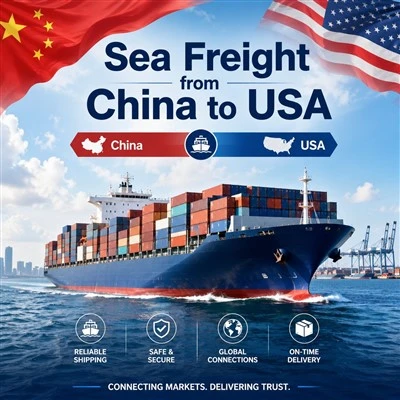
In global trade, the shipping route between China and the United States is one of the busiest trade corridors in the world. With intensifying international trade competition and evolving global economic conditions, controlling logistics costs has become a critical challenge for many import-export businesses. This article provides a comprehensive analysis of the factors influencing China-US shipping costs and offers practical strategies to effectively reduce transportation expenses, thereby enhancing product competitiveness.

Understanding the Components of Shipping Costs
Understanding the components of ocean freight costs is the first step to reducing them. Container shipping costs from China to the US typically include:
- Base freight rate: The core cost, varying by route, cargo type, container type, and quantity. For example, a 40-foot container (FCL) from Shanghai to Los Angeles fluctuates with market supply and demand. Heavy cargo is charged by weight, while light, voluminous goods (e.g., clothing) are charged by volume, impacting freight cost calculations.
- Fuel surcharge (BAF): Tied to oil price fluctuations. Since 2024, the EU Emissions Trading System (EU ETS) has added carbon costs, estimated at €2.6 billion in 2024 and projected to exceed €6.7 billion by 2026, making fuel efficiency and carbon emissions key cost drivers.
- Port surcharges: Vary by port, with efficient ports like Singapore charging less and less-developed ports charging more.
- Peak season surcharge (PSS): Applied during high-demand periods, like pre-Christmas rushes.
- Currency adjustment factor (CAF): Balances exchange rate risks.
Understanding these cost components is the foundation for developing effective cost-saving strategies. Only by knowing "where the money is spent" can businesses identify opportunities for savings.
Monitor Market Trends and Choose Optimal Shipping Timing
The ocean freight market exhibits clear cyclical patterns, with rates fluctuating based on supply and demand. Monitoring freight rate indices is an effective way to track market trends. For instance, the Drewry World Container Index (WCI) indicates that spot freight rates on major routes declined in 2025. Such market downturns present ideal opportunities for arranging shipments.
For businesses with consistent shipping needs, securing long-term contracts to lock in freight rates is a wise strategy. During periods of stable rates, long-term agreements with shipping lines can shield businesses from volatile market fluctuations. These contracts often offer more favorable rates than the spot market, especially for shippers with large cargo volumes.
Avoiding peak season shipping can also significantly reduce costs. The third quarter (July–September) is the traditional peak season for ocean freight, as retailers stock up for the year-end shopping season, leading to higher rates and peak season surcharges. If production schedules permit, shifting shipments to the off-season (e.g., first quarter) can yield substantial savings.
Additionally, staying informed about special events and policy changes is crucial. For example, adjustments to US tariff policies may affect overall trade volumes, altering the supply-demand balance in shipping. In 2025, the potential repeal of the T86 rule in the US could raise the average tariff rate for low-value parcels from China from 0% to 25%–30%. Such policy changes can influence shipping volumes and, consequently, freight rates.
Optimize Transportation Plans and Logistics Network Design
- Choose cost-effective inland transport:
Choosing the right inland transportation method significantly impacts total costs. The most expensive option is loading containers directly at factories or warehouses, suitable for goods that cannot withstand multiple handlings. For general cargo, optimizing inland transport and port operations can lead to considerable savings.
- Plan efficient routes:
Route planning is equally critical. For shipments from China to the US, utilizing routes like the Panama Canal can reduce transit distances and costs. Comparing cost differences across port combinations is also important-sometimes, choosing a slightly farther port with higher efficiency or lower fees can result in overall savings.
- Opt for LCL or FCL:
For small and medium-sized enterprises (SMEs) or shippers with smaller cargo volumes, less-than-container-load (LCL) shipping may be more economical. However, LCL shipping involves more complex procedures and less predictable rates compared to full-container-load (FCL) shipping. While FCL rates are relatively transparent, LCL rates offer more room for negotiation. If cargo volume is close to a full container, upgrading to FCL shipping may be more cost-effective.
- Explore multimodal options:
Multimodal transportation is another option worth considering. In some cases, combining rail and ocean transport can offer a better cost-efficiency balance. For example, shipping goods to the US West Coast by sea, then transferring to rail or truck for inland destinations, may be more economical than direct ocean transport to East Coast ports.

Enhance Operational Efficiency and Cargo Management
- Optimize container loading:
Optimal container loading is an effective way to reduce per-unit shipping costs. In container shipping, strategic cargo placement maximizes space utilization. For bulk cargo vessels, placing heavy cargo at the bottom and light cargo at the top ensures vessel stability while fully utilizing cargo capacity. Such optimization reduces the number of containers or cargo space needed, directly lowering freight expenses.
- Align inventory and transport:
Inventory and transportation planning integration is vital for controlling total logistics costs. Adjusting inventory levels based on demand and sales data can minimize urgent shipping needs, avoiding costly expedited freight charges. Implementing Sales and Operations Planning (S&OP) processes to align production, inventory, and transportation decisions is a proven practice among multinational companies.
- Refine cargo classification and packaging:
Cargo classification and packaging optimization can also yield savings. Accurate cargo declarations are critical, as different cargo types may incur varying rates. Optimizing packaging to reduce volumetric weight is particularly important for light, voluminous cargo charged by volume. For instance, vacuum packaging for clothing can significantly reduce volume, lowering freight costs.
- Streamline documentation:
Digitization and documentation preparation should not be overlooked. Complete and accurate documentation prevents port delays and additional fees. Investing in logistics information systems enhances supply chain visibility, identifying further optimization opportunities. Digital document exchange can also expedite customs clearance, reducing container detention times and associated costs.
Leverage Policy Benefits and Innovative Business Models
China's export tax rebate policy can effectively reduce tax burdens, enhancing the competitiveness of exported products. Fully understanding and utilizing such policies can indirectly lower the proportion of logistics costs in total sales revenue.
Export credit insurance is another valuable tool, offering protection against risks such as buyer insolvency or political instability. While not directly reducing shipping costs, it improves overall financial performance by mitigating trade risks.
The innovative ocean freight + overseas warehouse model is particularly suitable for cross-border e-commerce and business-to-consumer (B2C) operations. Reports indicate that this model can reduce US last-mile delivery costs by 40% while improving delivery times to three days. Although overseas warehouses require upfront investment, economies of scale in transportation and localized inventory management can significantly lower per-unit logistics costs.
Flexible selection of trade terms also impacts cost structures. Terms like FOB (Free on Board), CIF (Cost, Insurance, and Freight), and CFR (Cost and Freight) determine the division of responsibilities and costs between buyers and sellers. Choosing the right trade term based on financial conditions and risk tolerance is a key component of international logistics strategy.
Build Strategic Partnerships
Supplier selection and management profoundly influence logistics costs. Partnering with reliable, cost-effective suppliers not only reduces procurement costs but also ensures stable delivery schedules, minimizing the need for urgent shipments. Long-term partnerships can also yield economies of scale in transportation.
Strategic collaboration with Freight Forwarding company is equally important. Providers with self-operated fleets or overseas warehouses may offer more stable services and competitive pricing. For businesses with significant cargo volumes, signing service contracts with shipping lines, rather than relying on the spot market, can secure better rates and service guarantees.
Strengthening collaboration with downstream partners like distributors and retailers to optimize the entire supply chain is a higher-level strategy for reducing logistics costs. Through information sharing and joint planning, businesses can reduce inventory fluctuations and urgent transportation needs.
Participation in industry associations is also beneficial. Joining associations provides access to market intelligence, best practices, and opportunities for collective bargaining to secure better freight rates. Collective action through associations can also enhance influence in addressing policy changes, such as environmental regulations.
Conclusion
Reducing China-US logistics costs requires ongoing, multifaceted efforts. Regulatory shifts, like EU ETS expansion or US tariff changes, and technologies like digitization and automation, will shape future costs. Businesses should tailor strategies to their cargo, volume, and budget-SMEs can focus on spot rates and efficiency, while larger firms invest in contracts or overseas warehouses.
Cost-cutting must not sacrifice reliability. Low freight rates can lead to hidden costs from delays or damage. Balancing cost, quality, and customer needs through data-driven logistics management ensures sustainable savings and competitiveness in global trade.
Zhejiang Wilson Supply Chain Management Co., Ltd., founded in 2011 and headquartered in Ningbo, China, stands as a leading international freight forwarder and supply chain solutions provider. With offices in Shanghai, Shenzhen, and Hong Kong, we deliver a comprehensive range of transportation services from China to key global markets, including the Americas, Europe, the Middle East, Africa, Oceania, and Asia.
Serving diverse industries such as chemical, automotive, food, and energy, we specialize in streamlining supply chains and building sustainable, efficient global logistics networks. Our intermodal and customized services design optimal transportation plans tailored to SME needs, ensuring cost-effective and reliable solutions. Contact us now to get a quote for sea freight services from China to the United States. Email: gm@wilson-cargo.com