Requesting a freight quote is the first concrete step in any international shipment. Yet many importers and traders are surprised when an initial freight cost estimate changes after more shipment details become available. In many cases, the difference comes down to missing or incomplete information at the inquiry stage.
A freight forwarder can prepare a more accurate freight quote when they understand the cargo, route, commercial terms, timing, and any special handling requirements. The more complete your shipping quote request is, the easier it is to compare options, identify the right transport method, and reduce avoidable rate revisions after booking.
For most international freight quotes, the essential information includes origin, destination, commodity, quantity, dimensions, weight, cargo value, Incoterm, cargo-ready date, and any special transport requirements.

Cargo Description and Commodity Details
Everything starts with the cargo itself. Your freight forwarder needs to know exactly what you are shipping before a reliable freight rate quote can be prepared. A vague description such as "goods," "merchandise," or "machine parts" may not provide enough information to determine the correct handling, equipment, carrier acceptance, or customs requirements.
Commodity Name and Type
Provide the precise commercial name of your goods-for example, "stainless steel pipes," "LED lighting fixtures," or "used excavators."
The commodity can affect:
- Carrier acceptance
- Packaging requirements
- Handling procedures
- Customs documentation
- Transport restrictions
- Available shipping modes
For standard cargo, the commodity description may be relatively straightforward. For chemicals, machinery, vehicles, oversized equipment, reefer cargo, or high-value goods, the product description becomes part of the transport feasibility assessment rather than simply a line on the quotation.
HS Code
Provide the HS code or destination-country tariff classification if you already know it. The Harmonized System (HS) classification, administered by the World Customs Organization, provides the international framework used to classify traded goods.
The correct classification can help with customs declaration, import requirements, duty assessment, and identifying whether certificates, permits, inspections, or other documents may be required. If you are unsure about the classification, our guide on how to find the right HS code explains the process in more detail.
If the final classification has not yet been confirmed, provide a detailed product description, intended use, material or composition, and any available product documentation rather than guessing.
Declared Value
The commercial invoice value is relevant to customs declaration, cargo insurance, and certain destination-country tax calculations. Provide the true transaction value and let your forwarder know if you require cargo insurance.
Cargo value can also matter from a risk-management perspective. A high-value machine, vehicle, or yacht may require additional loading supervision, protective measures, support, lashing, photographic records, or insurance even when its basic ocean freight rate is similar to lower-value cargo.
Weight, Dimensions, and Volume
Accurate weight and dimensions are among the most important pieces of information needed for a shipping quote.
For air freight, chargeable weight is generally determined by comparing actual gross weight with volumetric weight according to the applicable airline or carrier rules. The IATA cargo standards and handling guidance provides useful industry context for international air cargo operations.
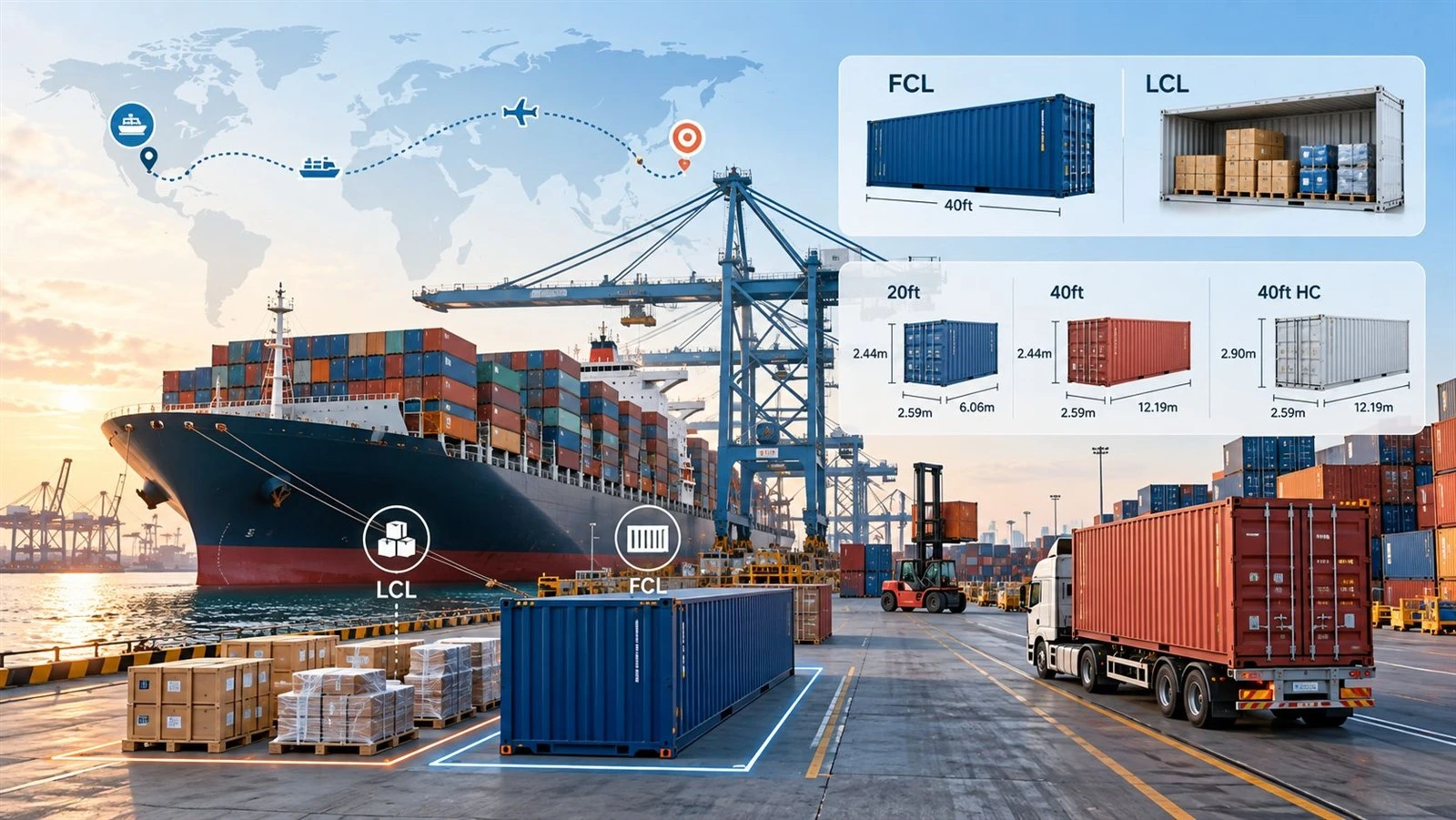
For LCL sea freight, pricing commonly depends on weight or measurement, while FCL pricing is based primarily on container equipment and routing. Even so, cargo weight and dimensions still determine whether the cargo can be safely and legally loaded.
|
Parameter |
What to Provide |
Why It Matters |
|
Gross Weight |
Total weight including packaging (kg) |
Affects rate calculation, equipment selection, and loading limits |
|
Net Weight |
Product weight without packaging (kg) |
May be required for customs and product documentation |
|
Dimensions |
Length × Width × Height per piece |
Determines cargo volume and equipment suitability |
|
Total Volume |
Total CBM for the shipment |
Important for LCL and space planning |
|
Package Count |
Number of cartons, pallets, cases, or units |
Affects handling and loading plans |
|
Packaging Type |
Carton, wooden pallet, crate, etc. |
May affect handling and compliance requirements |
For the most accurate freight quote, measurements should reflect the final packed cargo, not the unpacked product dimensions.
If you only remember one thing, measure the shipment after packaging. Your forwarder and carrier need the dimensions and weight of the cargo as it will actually be tendered for transport.
For machinery, vehicles, boats, and other non-standard cargo, dimensions alone may not be enough. Project planning may also need to consider weight distribution, center of gravity, whether the cargo can be dismantled, whether it is self-propelled, and how it can be lifted and secured.
Origin and Destination
An international freight quote needs clearly defined endpoints. "China to Europe" or "China to the USA" may be enough for a rough indication, but it is not enough for an accurate shipping quote.
Origin: Pickup Address or Port of Loading
Specify the factory or warehouse city if you need pickup service, or provide the named port of loading for port-to-port transportation.
For shipments from China, common departure points include Ningbo, Shanghai, Shenzhen, Guangzhou, Tianjin, and Qingdao.
If your Incoterm is EXW or your forwarder is responsible for origin pickup, the pickup location matters because inland trucking can become a significant part of the total logistics cost.
Destination: Port or Final Delivery Address
Provide the destination port and, when door delivery is required, the complete delivery address and postal code.
This allows the forwarder to calculate:
- Destination terminal charges
- Customs clearance requirements
- Local trucking
- Remote-area surcharges
- Equipment availability
- Final-mile delivery costs
A port-to-port freight rate and a door-to-door freight quote are not interchangeable. If you need a full delivery service, our guide to door-to-door shipping costs and process explains the typical service scope in more detail.
Direct or Transshipment Service
If you require a direct sailing or want to avoid a particular transshipment arrangement, mention this when requesting the quote.
Direct services may offer shorter transit times and fewer handling points, while transshipment services can sometimes provide better rates or more frequent schedules. The best option depends on your priorities for cost, transit time, reliability, and cargo risk.
Incoterms: Confirm Exactly What the Quote Should Include
Incoterms® rules define how transportation responsibilities, costs, and certain risks are divided between buyer and seller.
The same cargo moving on the same route can produce very different quotation scopes depending on whether the transaction is EXW, FOB, CIF, or DDP.
|
Incoterm |
Typical Freight Quote Considerations |
|
EXW |
Origin pickup, export arrangements, international freight, destination services, and delivery may need to be included |
|
FOB |
The international freight quote normally begins from the agreed port of loading, with destination services added according to the buyer's requirements |
|
CIF |
Main carriage and insurance to the named destination port are generally arranged by the seller; import clearance, duties, and final delivery normally remain on the buyer's side |
|
DDP |
The quote may need to cover an extensive door-to-door scope, including destination clearance and applicable duties and taxes, subject to local regulatory feasibility |
These are simplified examples. The exact responsibilities should follow the agreed Incoterms rule, named place, sales contract, and local import regulations.
Tell your freight forwarder the agreed Incoterm at the beginning of the inquiry. Otherwise, two quotes that appear to cover the same shipment may actually include completely different services.
One of the most important questions when comparing freight quotations is therefore not simply:
"Which freight rate is cheaper?"
It is:
"What exactly is included in each quote?"
Shipping Mode and Container Type
Your chosen transport method determines the pricing structure, transit time, equipment, and available routing options.
Sea Freight: FCL or LCL
For Sea Freight from China, one of the first decisions is whether the shipment should move as a full container or as consolidated cargo.
For FCL ocean freight, specify the expected container type if you already know it-for example:
- 20GP
- 40GP
- 40HQ
- Open Top
- Flat Rack
- Reefer
If you are unsure which container is appropriate, provide the cargo dimensions and weight and let the forwarder evaluate the equipment.
For LCL ocean freight, provide the total number of packages, gross weight, individual package dimensions, and total CBM. LCL freight rates are normally based on weight/measurement rules and can also include origin and destination handling charges.
If you are deciding between the two, this guide to FCL vs LCL shipping explains how cargo volume, cost structure, handling, and shipment size affect the choice.
Air Freight
Air Freight from China is commonly used for time-sensitive, high-value, or relatively lightweight cargo.
Air freight rates normally use chargeable weight-the greater of actual gross weight and volumetric weight under the applicable carrier calculation method.
Air rates can also change at different weight breaks, so accurate dimensions and weight are especially important when requesting an air freight quote.
Rail and Multimodal Transport
Rail freight and multimodal combinations may provide a useful balance between cost and transit time on certain routes.
Sea-rail, road-rail, and other transport combinations can be evaluated against cargo characteristics, delivery requirements, cost, and available routing instead of assuming that one mode is always the best choice.
Service Level
Specify the required service scope, such as:
- Port-to-port
- Port-to-door
- Door-to-port
- Door-to-door
Adding pickup, customs clearance, warehousing, or final-mile delivery changes the freight quotation substantially.
Information Needed for Dangerous, Oversized, and Special Cargo
Standard cargo can often be quoted from a relatively simple set of dimensions, weight, routing, and commercial terms.
Special cargo is different.
For dangerous goods, OOG cargo, heavy machinery, vehicles, reefer shipments, or high-value cargo, the quotation process may begin with transport feasibility before the forwarder can accurately determine the price.
|
Cargo Type |
Information to Provide |
|
Dangerous Goods |
SDS/MSDS, UN number where applicable, dangerous goods class, packing group, flash point where relevant, packaging details |
|
Oversized / OOG Cargo |
Exact dimensions, total weight, weight distribution, center of gravity if available, lifting points, drawings and photos |
|
Vehicles & Machinery |
Make/model, dimensions, weight, running or non-running condition, photos, and preferred shipping method if known |
|
Temperature-Controlled Cargo |
Commodity, required temperature range, ventilation or other temperature-control requirements |
|
High-Value Cargo |
Declared value, insurance requirements, packaging details, handling restrictions, and additional protection requirements |
Dangerous Goods Need Documentation Before Pricing
For chemicals and dangerous goods, a product name alone is usually not enough.
The forwarder may need to review factors such as the SDS, dangerous goods classification, carrier acceptance requirements, and compliance documents before shipment.
This leads to a useful rule:
For dangerous goods, documentation is part of the quotation data.
A carrier may accept one chemical classification while rejecting another, and the available carrier, routing, equipment, and surcharge structure may all change accordingly.
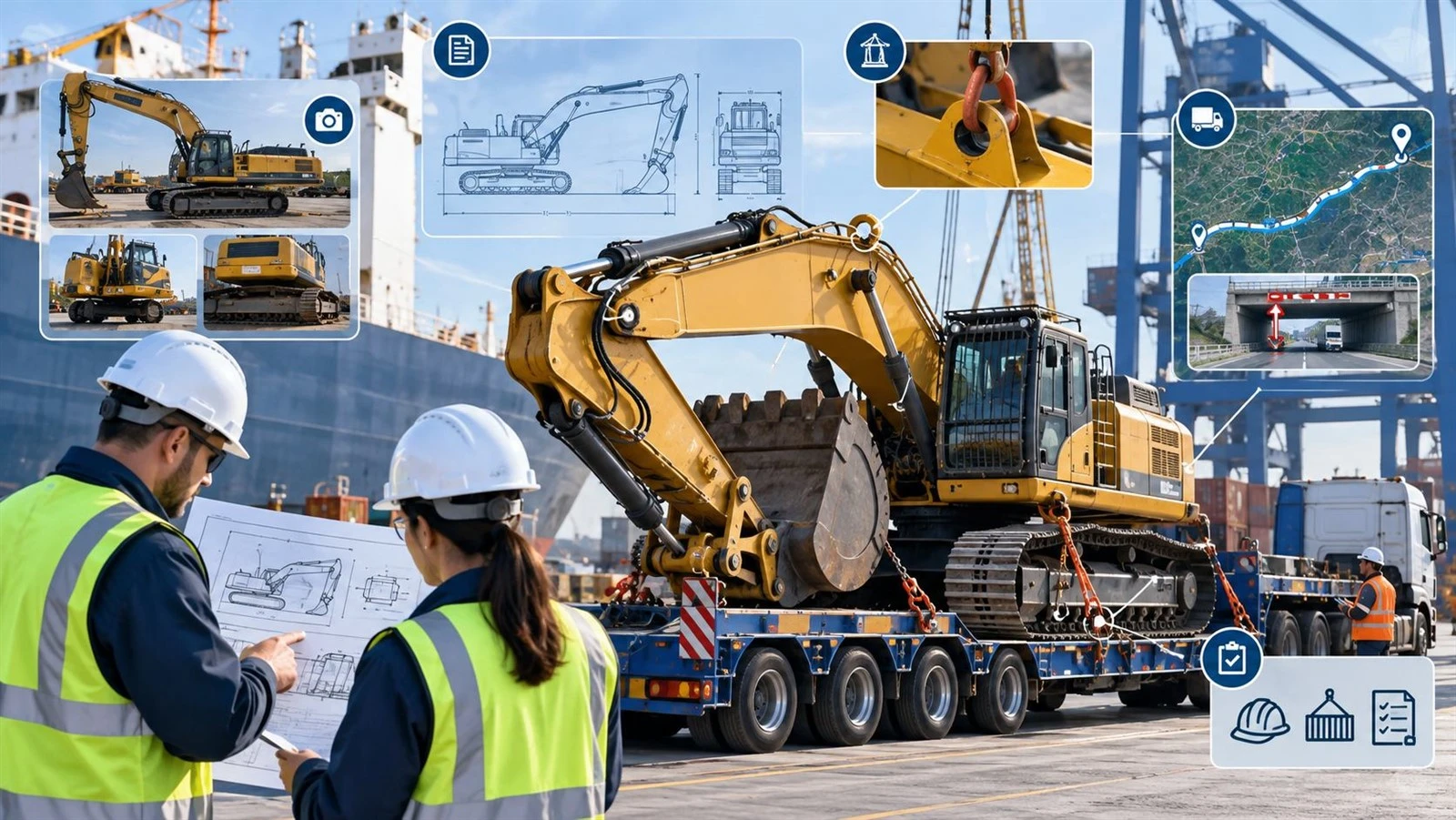
Oversized and Heavy Cargo Needs More Than Length × Width × Height
For an ordinary pallet, dimensions and weight may be enough.
For a 53-ton piece of equipment, crawler drilling rig, crane, excavator, or irregular industrial machine, they are only the beginning.
In this type of freight quote, the forwarder may also need to know:
- Center of gravity
- Lifting points
- Support points
- Whether parts can be dismantled
- Whether the machine can move under its own power
- Loading location conditions
- Crane requirements
- Lashing requirements
Wilson has practical experience with heavy machinery and used excavator shipping from China, where selecting the correct equipment and loading method depends on more than basic cargo dimensions.
For standard cargo, quoting is primarily a pricing exercise. For oversized or highly specialized cargo, quoting is first a feasibility exercise and then a pricing exercise.
Photos Can Improve Quotes for Vehicles, Machinery, and Boats
For irregular or high-value cargo, send clear photographs with your freight quote request.
Photos can help identify exposed components, lifting constraints, packaging conditions, support requirements, wheels or tracks, and other details that may not be obvious from a spreadsheet.
For vehicles or rolling cargo, RORO transport may be another option depending on cargo type, route, port availability, and carrier acceptance.
For yachts and boats, cargo protection, lifting, supporting, lashing, and movement prevention become particularly important.
Hiding or omitting special cargo information to obtain a lower initial rate is unlikely to save money. If the cargo is reclassified or rejected during acceptance, the resulting storage, rebooking, handling, or equipment costs can be considerably higher.
Shipping Date, Customs, Warehousing, and Insurance
An accurate international freight quote also depends on when the shipment will move and which supporting services are required.
Cargo Ready Date and Required Delivery Date
Tell your forwarder when the cargo will be ready for pickup and, if applicable, the latest acceptable delivery date.
Freight rates and space are time-sensitive. Vessel schedules, flight capacity, equipment availability, peak seasons, carrier surcharges, and market conditions can change.
That is why every freight quotation should also have a clear quote validity period.
Customs Clearance and Documentation
State whether you need assistance with:
- Export customs declaration
- Destination customs clearance
- Import documentation
- Certificates
- Duty and tax handling
- DDP service
If certificates of origin, inspection documents, licenses, fumigation documents, product certificates, or dangerous goods documentation are relevant to your shipment, mention them at the inquiry stage.
For ocean shipments, reviewing the documents required for sea freight from China before booking can help reduce documentation delays later in the process.
Warehousing and Distribution
Include any additional services that need to be part of the shipping quote, such as:
- Supplier coordination
- Cargo pickup
- Consolidation
- Temporary storage
- Repacking
- Labeling
- Photography
- Inspection
- Distribution
- Final delivery
These services can materially change the final logistics cost, especially when multiple suppliers, warehouses, or destination delivery points are involved.
Cargo Insurance
If you want the forwarder to arrange cargo insurance, provide the declared value and cargo description so the appropriate coverage and premium can be assessed.
Insurance should be considered especially carefully for high-value, fragile, specialized, or difficult-to-replace cargo.
Quick Freight Quote Checklist: What to Send Your Freight Forwarder
Before asking for a freight shipping quote, prepare as much of the following information as possible:
|
Category |
Information to Have Ready |
|
Cargo |
Commodity name, HS code if known, declared value |
|
Measurements |
Gross weight, net weight where required, dimensions per piece, total CBM, package count, packaging type |
|
Routing |
Origin city/address or port, destination port, final delivery address and postal code if applicable |
|
Commercial Terms |
Agreed Incoterm such as EXW, FOB, CIF, or DDP |
|
Transport |
Sea/air/rail/road/multimodal, FCL/LCL, preferred equipment if known |
|
Special Cargo |
SDS, DG classification, UN number, OOG dimensions, vehicle specs, temperature requirements, drawings/photos |
|
Timeline |
Cargo ready date and required delivery date |
|
Additional Services |
Customs clearance, warehousing, delivery, insurance, labeling, inspection or other requirements |
For many ordinary shipments, the minimum information can be reduced to:
Origin + Destination + Commodity + Quantity + Dimensions + Weight + Incoterm + Cargo Ready Date
For specialized cargo, the quotation checklist should expand according to the actual risks and operating requirements.
Why Complete Information Can Reduce Your Total Shipping Cost
It can be tempting to ask for a quick freight cost estimate with only partial information and provide the rest later.
That may work for an early budget indication, but it should not be confused with a final, actionable freight quote.
When a forwarder has to make assumptions about dimensions, equipment, pickup location, cargo classification, or destination services, the quotation may need to be revised when the real shipment details become available.
Revisions can also create timing problems. If new cargo information changes the equipment or carrier requirement, the original sailing or flight may no longer be suitable.
Special cargo discovered after booking can be even more costly. Dangerous goods, overweight cargo, or over-gauge dimensions may require different equipment, carrier approval, terminal handling, or rebooking.
There is another important distinction when comparing freight forwarders:
The cheapest freight quote is not necessarily the lowest total logistics cost.
The base ocean or air rate is only one part of an international shipment. If you want to understand how the individual components fit together, see our guide on how sea freight costs are calculated.
The real cost may also include:
- Origin charges
- Pickup
- Export customs
- Documentation
- Terminal charges
- Special equipment
- Destination charges
- Import clearance
- Storage
- Duties and taxes
- Last-mile delivery
- Waiting or detention
- Insurance
The most useful freight quote is not necessarily the one that arrives first. It is the one based on complete shipment information, a clearly defined service scope, and realistic transport conditions.
How Wilson Supply Chain Can Help with Your Freight Quote
Zhejiang Wilson Supply Chain Management Co., Ltd. is a China-based international freight forwarder and supply chain company founded in 2011 and headquartered in Ningbo, with branches in Shanghai, Shenzhen, and Hong Kong.
As a China freight forwarder, Wilson provides sea freight, air freight, rail, road and multimodal transportation, together with customs clearance, warehousing, DDP, supplier coordination, and destination delivery.
Wilson also has practical experience with chemical and dangerous goods, vehicles, heavy equipment, OOG/project cargo, reefer shipments, and high-value yacht and boat logistics.
When reviewing a quote request, we first define the shipment accurately-what the cargo is, where it starts and ends, how large and heavy it is, when it needs to move, which Incoterm applies, and whether any special operating requirements exist. From there, the transport method, equipment, route, carrier options, and quotation scope can be evaluated.
The objective is not to promise that freight rates will never change. International shipping markets do change. The practical goal is to reduce avoidable revisions, identify important costs upfront, and provide a quotation with a clearly defined scope and validity period.
FAQ
What information is required to get a freight quote?
For most shipments, provide the origin, destination, commodity description, number of packages, gross weight, package dimensions, Incoterm, and cargo-ready date. For door-to-door shipping, also provide pickup and delivery addresses. Special cargo may require SDS documents, photos, technical drawings, temperature requirements, or other specifications.
Why does my freight quote change after I provide the cargo dimensions?
Dimensions can change the chargeable weight, container requirement, LCL volume, special-equipment requirement, or loading feasibility. If the original quote was based on estimated measurements, verified packed dimensions may therefore change the final shipping rate.
Can I get a freight quote without an HS code?
Usually, yes. A forwarder can often provide an initial transport quote from a detailed commodity description. However, an HS code or accurate product classification may be necessary when customs clearance, duties, import restrictions, or DDP costs need to be included.
How long is a freight quote valid?
Quote validity depends on the carrier, route, transport mode, season, and market conditions. Some freight rates may be valid for only a short booking window. Always check the quotation's validity date and whether space, equipment, local charges, and surcharges are subject to reconfirmation.
What should I send for an oversized or heavy equipment freight quote?
Send the exact packed dimensions, gross weight, photos, technical drawings if available, center of gravity, lifting points, support requirements, and information about whether components can be removed. The forwarder may need these details before deciding between a standard container, Flat Rack, Open Top, RoRo, Breakbulk, or another project-cargo solution.
Conclusion
To get an accurate freight quote, give your freight forwarder enough information to define the shipment rather than simply asking for a price between two countries. At minimum, that means providing accurate cargo details, weight and dimensions, origin and destination, Incoterm, shipping date, and required service scope. Dangerous, oversized, temperature-controlled, or high-value cargo requires additional technical and compliance information.
A good freight quotation should tell you not only how much the shipment may cost, but also what transportation solution the price is based on, what the quote includes, and what assumptions or validity conditions apply.
If you are planning a shipment from China and want help determining what information is needed before requesting a rate, Zhejiang Wilson Supply Chain Management Co., Ltd. can review your cargo details and discuss the available transport options with you. Send us your shipment specifications to start building a practical freight solution and a more accurate shipping quote.