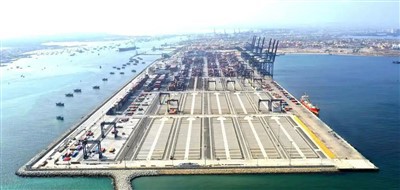
Shipping goods from China to Djibouti by sea is a practical solution for machinery, construction materials, vehicles, industrial products, chemicals, consumer goods, and other commercial cargo. Djibouti is an important maritime gateway in the Horn of Africa and also supports cargo moving to Ethiopia and other inland markets in the region.
Typical sea freight from China to Djibouti costs approximately USD 80–130 per CBM for LCL cargo, USD 1,900–2,800 for a 20ft container, and USD 3,200–4,800 for a 40ft or 40HQ container. Estimated port-to-port transit time is generally 25–40 days for FCL and 30–45 days for LCL.
These figures are general market estimates rather than fixed quotations. Actual rates and schedules depend on the Chinese origin port, cargo volume, container type, carrier, sailing date, transshipment arrangement, and destination charges.
Zhejiang Wilson Supply Chain Management Co., Ltd. provides FCL, LCL, special-container, dangerous-goods, oversized-cargo, and door-to-door shipping services from China to Djibouti. Founded in 2011 and headquartered in Ningbo, Wilson also operates offices in Shanghai, Shenzhen, and Hong Kong.
Send us your cargo description, weight, dimensions, supplier location, and final delivery address to receive a customized shipping plan from China to Djibouti.
Get Latest Ocean Freight Rates Now

How Much Does Sea Freight from China to Djibouti Cost?
The cost of sea freight from China to Djibouti depends on more than the basic ocean freight rate. Container size, cargo volume, cargo type, origin location, port charges, customs requirements, and inland delivery all affect the final landed cost.
The following figures can be used for preliminary budget planning.
Estimated FCL and LCL Shipping Rates
| Shipping Method | Estimated Cost | Best Used For |
|---|---|---|
| LCL Sea Freight | USD 80–130 per CBM | Small commercial shipments and trial orders |
| 20ft FCL | USD 1,900–2,800 | Heavy or medium-volume cargo |
| 40ft / 40HQ FCL | USD 3,200–4,800 | High-volume and lightweight cargo |
| Open-Top Container | Custom quotation | Overheight machinery and equipment |
| Flat Rack Container | Custom quotation | Oversized or heavy cargo |
| Reefer Container | Custom quotation | Temperature-controlled products |
| Breakbulk / Project Cargo | Individually quoted | Large equipment and non-containerized cargo |
| Door-to-Door Shipping | Individually quoted | Cargo requiring pickup, customs support, and final delivery |
The rates above are broad market estimates for planning purposes only. They may not include origin handling charges, export customs services, insurance, destination port fees, import taxes, inspections, storage, or inland delivery.
Estimated Container Rates by Chinese Origin Port
| Origin Port | 20ft Container | 40ft / 40HQ Container |
|---|---|---|
| Shanghai | USD 2,000–2,800 | USD 3,400–4,800 |
| Ningbo-Zhoushan | USD 1,900–2,700 | USD 3,300–4,700 |
| Shenzhen | USD 1,900–2,600 | USD 3,200–4,500 |
| Guangzhou | USD 1,900–2,600 | USD 3,200–4,500 |
| Qingdao | USD 2,100–2,800 | USD 3,500–4,800 |
| Xiamen | USD 1,900–2,700 | USD 3,200–4,600 |
Rates can change quickly. A shipment from a lower-cost port may not produce the lowest total cost if the supplier is located far away and requires expensive domestic trucking.
The best origin port should be selected after comparing:
- Supplier location
- Inland pickup cost
- Sailing frequency
- Container availability
- Direct or transshipment routing
- Cargo acceptance requirements
- Total transit time
- Destination charges
What Is Included in a Sea Freight Quote?
A sea freight quotation may include only the port-to-port ocean freight, or it may cover a broader service package. Importers should always confirm the scope before comparing prices.
Depending on the agreed service, a Wilson quotation may include:
- Pickup from the Chinese supplier
- Domestic trucking in China
- Warehousing and cargo consolidation
- Export customs declaration
- Container loading
- Documentation
- Ocean freight
- Cargo tracking
- Destination customs coordination
- Cargo insurance
- Port pickup
- Inland delivery in Djibouti
- Transit delivery to Ethiopia or another regional destination
A low ocean freight rate does not always mean a low total shipping cost. Destination handling, customs clearance, storage, and final delivery may represent a significant part of the overall budget.
Factors That Affect Shipping Costs
Cargo volume and weight
LCL cargo is normally charged by cubic meter or revenue ton. FCL pricing is based mainly on the container type, route, and carrier rate.
Heavy cargo may also be subject to container weight restrictions, overweight surcharges, or special trucking requirements.
Container type
Standard 20ft, 40ft, and 40HQ containers are generally less expensive than open-top, flat rack, or refrigerated equipment.
Special containers require additional planning and may have limited availability.
Origin port
Shanghai, Ningbo, Shenzhen, Guangzhou, Qingdao, and Xiamen all offer international shipping options to Djibouti. The most suitable port depends on cargo location and current carrier schedules.
Cargo type
Chemicals, dangerous goods, refrigerated products, high-value cargo, vehicles, and oversized machinery may require additional documentation, special equipment, or carrier approval.
Shipping season
Freight rates often become less predictable before major holidays, during peak export periods, or when regional congestion reduces available capacity.
Fuel and carrier surcharges
Bunker Adjustment Factors and other carrier surcharges may change in response to fuel prices, route conditions, and market demand.
Destination services
Djibouti port charges, customs clearance, inspection, inland transport, and container return arrangements must be included when calculating the complete landed cost.
Common Additional Charges
Importers may need to budget for:
- Origin terminal handling charges
- Export customs declaration fees
- Documentation fees
- Warehouse receiving and handling
- LCL consolidation charges
- Dangerous-goods surcharges
- Special equipment charges
- Cargo insurance
- Destination terminal handling charges
- Customs clearance fees
- Import duties and taxes
- Customs inspection charges
- Storage
- Demurrage
- Detention
- Inland delivery
Wilson provides a clear breakdown of the agreed service scope so that customers can identify which costs are included and which costs remain payable at destination.
How Long Does Sea Freight from China to Djibouti Take?
Sea freight transit time from China to Djibouti depends on the origin port, shipping method, carrier schedule, transshipment route, and destination handling process.
FCL is usually faster than LCL because the cargo does not require consolidation with shipments from other customers. However, the actual schedule must still be checked against the selected vessel and route.
Estimated FCL and LCL Transit Time
| Shipping Service | Estimated Port-to-Port Transit Time |
|---|---|
| FCL Sea Freight | 25–40 days |
| LCL Sea Freight | 30–45 days |
| Breakbulk Sailing | Approximately 20–30 days on selected sailings |
| Project Cargo | Approximately 30–50 days or longer |
| Door-to-Door Shipping | Port transit plus customs clearance and inland delivery |
Breakbulk sailing time may appear shorter on a specific voyage, but the full project schedule can be longer. Large cargo may require port assembly, lifting plans, customs preparation, cargo securing, and vessel coordination before loading.
Transit Time by Chinese Origin Port
| Origin Port | FCL Transit Time | LCL Transit Time |
|---|---|---|
| Shanghai | 25–35 days | 30–40 days |
| Ningbo-Zhoushan | 25–35 days | 30–42 days |
| Shenzhen | 23–33 days | 28–40 days |
| Guangzhou | 25–35 days | 30–42 days |
| Qingdao | 30–40 days | 35–45 days |
| Xiamen | 25–36 days | 30–42 days |
These times are estimates for port-to-port transportation. They are not guaranteed delivery dates.
Port-to-Port vs. Door-to-Door Transit Time
Port-to-port transit covers the period between vessel departure from China and arrival at the destination port.
It normally does not include:
- Supplier pickup
- Warehouse receiving
- LCL consolidation
- Container loading
- Export customs clearance
- Waiting for vessel departure
- Djibouti import clearance
- Customs inspection
- Port pickup
- Inland delivery
- Transit procedures for Ethiopia
Door-to-door shipping may take several additional days or longer, depending on customs processing and the final delivery location.
Factors That May Cause Delays
Common causes of delay include:
- Carrier schedule changes
- Blank sailings
- Port congestion
- Transshipment delays
- Severe weather
- Container shortages
- Chinese public holidays
- Incomplete documentation
- Customs inspections
- LCL consolidation and deconsolidation
- Late payment of destination charges
- Delays in container pickup or return
- Regional road or border conditions
Wilson monitors major shipment milestones and provides customers with regular status updates when vessel schedules or estimated arrival times change.
Our Sea Freight Services from China to Djibouti
Wilson provides a range of ocean freight solutions for standard commercial cargo, small shipments, chemicals, machinery, vehicles, and oversized equipment.
FCL Shipping
Full Container Load shipping is suitable when a customer has enough cargo to use a complete container or wants to avoid sharing container space with other shippers.
Available equipment includes:
- 20ft general-purpose containers
- 40ft general-purpose containers
- 40ft high-cube containers
- Open-top containers
- Flat rack containers
- Refrigerated containers
FCL is commonly used for:
- Machinery
- Construction materials
- Furniture
- Auto parts
- Industrial products
- Textiles
- Consumer goods
- Chemicals
- Large commercial orders
Because the container is assigned to one shipper, FCL normally involves less cargo handling than LCL and may reduce the risk of cargo mixing or damage.
LCL Shipping
Less than Container Load shipping is suitable when the cargo does not fill a complete container.
Wilson can coordinate:
- Pickup from one or more suppliers
- Warehouse receiving
- Cargo measurement
- Consolidation
- Export declaration
- LCL booking
- Destination deconsolidation
- Final delivery coordination
LCL is often a practical option for:
- Trial orders
- Small commercial shipments
- Spare parts
- Mixed supplier cargo
- Regular low-volume replenishment
- Cargo that does not justify a full container
Importers should compare the total cost rather than only the rate per CBM. LCL destination charges can be relatively high, especially for very small shipments.
Door-to-Port and Door-to-Door Shipping
Wilson can arrange transport from a Chinese factory or warehouse to Djibouti Port or to an agreed final destination.
A door-to-door service may include:
- Supplier pickup
- Domestic trucking
- Export customs clearance
- Ocean transportation
- Destination customs coordination
- Port pickup
- Final delivery
The available service scope depends on the product, importer qualifications, customs requirements, and delivery address.
For cargo moving onward to Ethiopia, Wilson can coordinate with relevant logistics partners for road or rail transportation under an appropriate customs transit arrangement.
Special Container Shipping
Not every shipment fits into a standard container.
Wilson provides special-container solutions for cargo with unusual dimensions, weight, temperature, or loading requirements.
Open-top containers
Open-top containers are suitable for cargo that is too tall for a standard container or must be loaded from above by crane.
Typical cargo includes:
- Machinery
- Industrial equipment
- Steel products
- Large components
Flat rack containers
Flat racks are designed for cargo that exceeds the width or height of a standard container.
They are often used for:
- Construction machinery
- Vehicles
- Generators
- Transformers
- Steel structures
- Industrial equipment
Refrigerated containers
Reefer containers are used for cargo that requires controlled temperature during transportation.
Temperature settings, ventilation, cargo packaging, and pre-cooling requirements must be confirmed before booking.
Breakbulk and Project Cargo
Breakbulk or project cargo shipping may be appropriate when the goods cannot be loaded into standard or special containers.
Wilson can support:
- Cargo dimension and weight review
- Route evaluation
- Port and vessel selection
- Lifting plans
- Loading diagrams
- Heavy-lift coordination
- Cargo securing and lashing
- Waterproof protection
- Loading supervision
- Destination unloading coordination
Typical project cargo includes:
- Mobile cranes
- Construction equipment
- Mining machinery
- Industrial production lines
- Steel structures
- Generators
- Transformers
- Large vehicles
- Oversized components
For oversized cargo, Wilson compares flat rack, open-top, RoRo, breakbulk, and other options before recommending a practical solution.
Chemical and Dangerous Goods Shipping
Wilson has experience handling industrial chemicals and dangerous goods, including selected Class 2 and Class 5.1 cargo.
Our support may include:
- MSDS review
- UN number verification
- Dangerous-goods classification
- Packaging checks
- Labeling requirements
- Carrier application
- Dangerous-goods declaration
- Export customs documentation
- Container loading and segregation
- Shipment tracking
Cargo acceptance is subject to the UN number, hazard class, concentration, packaging, carrier policy, port rules, and Djibouti import requirements.
Customers should provide complete product information before requesting a quotation. A trade name alone is not sufficient for dangerous-goods approval.
Cargo Insurance and Value-Added Services
Wilson can also provide or coordinate:
- Cargo transportation insurance
- Logistics liability insurance
- Warehousing
- Repacking
- Labeling
- Palletization
- Container loading
- Lashing and securing
- Documentation review
- Customs support
- Shipment tracking
- Claims assistance
- Logistics compliance guidance
Cargo insurance is recommended for high-value, fragile, temperature-sensitive, chemical, or project cargo. The coverage, exclusions, deductible, and insured value should be reviewed before shipment.
How Our Sea Shipping Service Works
Wilson manages each shipment through a structured process designed to reduce avoidable delays and improve cost control.
Step 1: Submit Cargo Details
Provide:
- Commodity name
- HS code, if available
- Number of packages
- Gross weight
- Dimensions
- Total volume
- Packaging type
- Supplier address
- Final destination
- Expected cargo-ready date
- Required service scope
For chemicals or dangerous goods, also provide the MSDS, UN number, hazard class, and packaging information.
Step 2: Select the Shipping Method
We compare available options based on cargo volume, dimensions, urgency, risk, and budget.
Possible solutions include:
- LCL
- 20ft FCL
- 40ft FCL
- 40HQ FCL
- Open-top container
- Flat rack container
- Refrigerated container
- Breakbulk
- Project cargo
- Door-to-door service
Step 3: Receive a Shipping Proposal
Wilson prepares a shipping plan covering:
- Recommended origin port
- Container or service type
- Carrier and routing options
- Estimated freight cost
- Estimated transit time
- Required documents
- Service inclusions
- Potential additional charges
- Alternative sailing options
Step 4: Book Vessel Space
After confirmation, we arrange:
- Vessel booking
- Container release
- Trucking
- Warehouse receiving
- Loading schedule
- Customs cut-off
- Port cut-off
- Documentation deadlines
Space and equipment remain subject to carrier confirmation.
Step 5: Pickup and Cargo Consolidation
Wilson can collect goods from one or multiple Chinese suppliers.
For multi-supplier cargo, we can consolidate goods at a warehouse before loading them into one container. This can reduce separate shipment costs and simplify export handling.
Step 6: Documentation and Export Customs Clearance
Common export documents include:
- Commercial Invoice
- Packing List
- Sales contract
- Customs declaration documents
- Certificate of Origin
- Export license, when required
- Inspection or compliance certificates
- Dangerous-goods documents, when applicable
Our team reviews the available documentation before export declaration to reduce errors involving product descriptions, quantities, values, and HS codes.
Step 7: Loading, Securing and Ocean Transportation
Depending on the cargo, we coordinate:
- Standard container loading
- Warehouse loading
- Factory loading
- Crane loading
- Lashing and securing
- Waterproof protection
- Weight distribution
- Container sealing
- Shipment departure
After departure, Wilson monitors major transport milestones and provides status updates.
Step 8: Arrival and Customs Coordination
Before arrival, the consignee or local customs representative should prepare for import clearance.
Wilson can provide shipment documents and coordinate with the relevant destination parties. Final customs approval remains subject to Djibouti customs requirements, product compliance, document accuracy, and payment of applicable duties and taxes.
Step 9: Final Delivery
After customs release, cargo can be collected from the port and delivered to:
- A warehouse
- A distributor
- A construction site
- A factory
- A retail location
- Another agreed address in Djibouti
For cargo continuing to Ethiopia, additional customs transit and inland transportation arrangements are required.
Why Choose Wilson for Shipping to Djibouti?
Established Freight Forwarding Experience
Wilson was founded in 2011 and has developed from a small forwarding team into an international supply chain company handling approximately 56,000 TEUs annually.
Our operations team has an average of more than eight years of industry experience.
Local Support in Major Chinese Logistics Centers
Wilson is headquartered in Ningbo and has offices in:
- Shanghai
- Shenzhen
- Hong Kong
This network helps us coordinate suppliers, trucking, warehousing, customs declarations, and port operations across major export regions in China.
Strong Africa Route Capabilities
Africa is one of Wilson's key service regions.
We help customers compare:
- Origin ports
- Sailing schedules
- Transshipment routes
- Container availability
- Special equipment options
- Destination delivery requirements
Our East Africa project experience also supports cargo planning for Djibouti and inland destinations.
Major Carrier Network
Wilson works with major international carriers, including:
- COSCO
- Hapag-Lloyd
- Maersk
- MSC
- Evergreen
This network helps us compare schedules, equipment availability, routing options, and market rates. Final space and pricing remain subject to carrier confirmation.
Experience with Complex Cargo
Wilson handles more than standard dry containers.
Our experience includes:
- Chemical cargo
- Dangerous goods
- Vehicles
- Heavy machinery
- Oversized equipment
- Open-top containers
- Flat rack containers
- Refrigerated containers
- Breakbulk cargo
- Project logistics
This allows us to evaluate cargo risk before booking and select equipment according to actual loading requirements.
Compliance and Documentation Support
Wilson maintains relevant freight forwarding, customs, quality-management, and aviation-related qualifications, including NVOCC, FIATA, IATA, AEO, and ISO credentials.
These qualifications support our internal compliance and documentation capabilities. They do not replace the importer's obligations or local permits required in Djibouti.
Shipment Visibility
Wilson uses logistics management and cargo tracking systems to monitor:
- Booking confirmation
- Pickup status
- Warehouse receiving
- Customs clearance
- Vessel departure
- Transshipment
- Estimated arrival
- Schedule changes
- Final delivery progress
Customers receive regular milestone updates throughout the shipment.
Insurance and Risk Support
We can assist with:
- Cargo insurance
- Logistics liability insurance
- Claims documentation
- Damage reporting
- Compliance guidance
- Logistics legal consultation
This support is particularly valuable for machinery, vehicles, chemicals, high-value cargo, and project shipments.

Sea Freight from China To Djibouti
Get in touch with our sea freight experts now to discuss your requirements and receive a quick quote while you're at it!
Trade Between China and Djibouti
China and Djibouti maintain active trade links covering infrastructure, consumer products, industrial materials, machinery, and regional logistics.
Djibouti imports a wide range of products from China, including:
- Machinery
- Electrical equipment
- Construction materials
- Vehicles
- Auto parts
- Textiles
- Household goods
- Furniture
- Industrial products
- Chemicals
- Steel products
- Project equipment
Sea freight is generally the preferred method for these goods when shipment volume, weight, or unit value makes air freight uneconomical.
Djibouti as a Gateway to Ethiopia and East Africa
Djibouti serves as an important maritime gateway for Ethiopia and other inland markets in the Horn of Africa.
Cargo arriving in Djibouti may continue by road or rail, subject to:
- Customs transit procedures
- Import documentation
- Border requirements
- Container return arrangements
- Inland transport capacity
- Final delivery location
- Cargo insurance requirements
Importers should identify the actual final destination before booking. A shipment ending in Djibouti requires a different logistics plan from cargo that will continue to Addis Ababa or another inland destination.
Cargo Planning for Regional Transit
For cargo moving beyond Djibouti, confirm:
- Final importing country
- Importer of record
- HS code
- Customs transit arrangement
- Bill of Lading destination
- Container return location
- Border clearance responsibility
- Final delivery address
- Inland transportation insurance
Wilson can coordinate the China-side export and work with destination partners to develop an appropriate regional transport plan.
How to Import Goods from China to Djibouti
Step 1: Verify the Chinese Supplier
Before placing an order, confirm:
- Business registration
- Production capacity
- Product specifications
- Quality standards
- Packaging method
- Delivery schedule
- Export experience
Third-party inspection may be useful for machinery, industrial equipment, consumer goods, and high-value orders.
Step 2: Confirm That the Product Can Be Imported
Some goods may require:
- Import permits
- Health certificates
- Product conformity documents
- Safety certificates
- Technical documents
- Dangerous-goods approvals
- Special labeling
Confirm the requirements before production or shipment.
Step 3: Determine the HS Code
The HS code affects:
- Product classification
- Customs duty
- Tax calculation
- Import permits
- Inspection requirements
- Product controls
An incorrect HS code may cause clearance delays, reassessment, inspections, or penalties.
Step 4: Choose the Incoterm
Common terms include:
EXW
The buyer takes responsibility from the supplier's premises and normally arranges pickup, export clearance, freight, insurance, and destination delivery.
FOB
The seller delivers the goods on board the nominated vessel at the agreed Chinese port. The buyer normally arranges the main ocean freight and destination services.
CFR
The seller arranges and pays for freight to the named destination port, while cargo insurance remains the buyer's responsibility unless otherwise agreed.
CIF
The seller arranges freight and the required minimum level of insurance to the named destination port. The risk transfer still occurs at the shipment stage under the applicable Incoterms rules.
DAP
The seller arranges transportation to the named destination, but the buyer normally remains responsible for import clearance, duties, and taxes.
DDP
The seller assumes extensive responsibility, including delivery and applicable import obligations. DDP should only be used when the customs, tax, importer, and compliance arrangements have been confirmed in advance.
Step 5: Choose FCL, LCL, or Special Cargo Shipping
Use LCL for smaller shipments and FCL for larger commercial cargo.
For oversized machinery or equipment, compare:
- Open-top
- Flat rack
- RoRo
- Breakbulk
- Project cargo
The cheapest base freight option is not always the safest or most economical total solution.
Step 6: Prepare Shipping Documents
Common documents include:
- Commercial Invoice
- Packing List
- Bill of Lading
- Certificate of Origin
- Import permit, when required
- Insurance Certificate
- Product certificates
- Inspection documents
- Dangerous-goods documents
Requirements vary according to the product, HS code, customs value, and applicable regulations.
Step 7: Complete Export Customs Clearance in China
The exporter or appointed customs broker submits the required declaration to Chinese customs.
Certain products may require:
- Export licenses
- Inspection documents
- Product certificates
- Dangerous-goods declarations
- Additional customs approvals
Not all exports are subject to the same taxes or controls.
Step 8: Arrange Ocean Transportation
After customs clearance and loading, the container or cargo is delivered to the port and loaded onto the scheduled vessel.
The route may be direct or may involve transshipment, depending on the carrier and origin port.
Step 9: Prepare for Djibouti Customs Clearance
The consignee should prepare before cargo arrival.
Confirm:
- Importer registration
- Customs representative
- Product classification
- Import permits
- Customs value
- Duties and taxes
- Original or electronic documents
- Port pickup arrangements
Early preparation reduces the risk of unnecessary storage, demurrage, and customs delays.
Step 10: Pay Charges and Arrange Delivery
After customs release, complete the port pickup and arrange inland delivery.
The consignee must also manage container return within the applicable free period to avoid detention charges.
Customs Rules and Shipping Terms
Documents Commonly Required
The documents typically required for sea freight include:
- Commercial Invoice
- Packing List
- Bill of Lading
- Certificate of Origin
- Import permit, when applicable
- Insurance Certificate
- Product compliance documents
- Inspection or health certificates
- Dangerous-goods documents
The exact requirements depend on the commodity and current customs rules.
Import Duties and Taxes
Import duties and taxes in Djibouti depend on:
- HS code
- Customs value
- Product category
- Country of origin
- Applicable exemptions
- Current customs regulations
The customs value may be based on the CIF value, but the applicable duty, tax, statistical charge, excise duty, and other fees must be confirmed before shipment.
Wilson does not recommend relying on a single general duty percentage for all products.
FCL
FCL means Full Container Load. The shipper uses a complete container for one shipment.
It is often suitable for:
- Large volumes
- Heavy cargo
- High-value cargo
- Goods requiring limited handling
- Regular commercial orders
LCL
LCL means Less than Container Load. Cargo from several shippers is consolidated into one container.
It is suitable for smaller shipments but normally requires additional handling at both origin and destination.
FOB
FOB means Free On Board.
The seller delivers the goods on board the nominated vessel at the agreed port. The buyer normally takes responsibility for the main freight, insurance, and destination services.
CIF
CIF means Cost, Insurance and Freight.
The seller arranges freight and the required insurance to the named destination port. CIF does not mean that the seller carries the cargo risk until arrival.
DDP
DDP means Delivered Duty Paid.
It places extensive obligations on the seller, including delivery and import-related responsibilities. DDP should not be agreed until the importing entity, tax treatment, customs procedure, product compliance, and delivery address are confirmed.
FILO
FILO means Free In / Liner Out.
It is commonly used in certain breakbulk or charter shipping arrangements. The cargo interests are responsible for loading costs at origin, while discharge is handled under the carrier's liner terms.
FILO is not the standard pricing basis for all container shipments.
BAF
BAF means Bunker Adjustment Factor.
It is a fuel-related surcharge applied by carriers and may change according to fuel prices and route conditions.
Demurrage
Demurrage generally refers to charges incurred when a container remains inside the port or terminal beyond the allowed free period.
Detention
Detention generally refers to charges incurred when a container remains outside the port beyond the allowed free period after pickup.
Storage
Storage refers to charges for occupying space at a terminal, port, or warehouse.
Demurrage, detention, and storage may be charged separately.
HS Code
The Harmonized System code is used to classify goods for customs purposes.
It affects duties, taxes, licenses, inspections, and documentation requirements.
Bill of Lading
The Bill of Lading is an important transport document that records cargo details and serves as evidence of the carriage contract.
Depending on the type issued, it may also control the release of cargo at destination.
Cargo Insurance
Cargo insurance can cover specified physical loss or damage during transportation.
"All Risks" insurance does not literally cover every possible event. Exclusions may apply to:
- Inadequate packaging
- Ordinary leakage or wear
- Delay
- Inherent product defects
- Intentional acts
- Undeclared dangerous goods
- Certain war and strike risks
Review the insurance terms before shipment.
Frequently Asked Questions
How much does sea freight from China to Djibouti cost?
Estimated LCL shipping costs approximately USD 80–130 per CBM. A 20ft container may cost around USD 1,900–2,800, while a 40ft or 40HQ container may cost approximately USD 3,200–4,800.
Actual rates depend on the origin port, cargo, shipping date, carrier, and destination charges.
How long does shipping from China to Djibouti take?
FCL normally takes around 25–40 days port to port. LCL generally takes around 30–45 days because consolidation and deconsolidation require additional handling.
Which Chinese ports ship cargo to Djibouti?
Common origin ports include Shanghai, Ningbo-Zhoushan, Shenzhen, Guangzhou, Qingdao, and Xiamen.
The best port depends on supplier location, trucking cost, equipment availability, and carrier schedule.
Is FCL or LCL better for my shipment?
LCL is normally suitable for smaller shipments. FCL becomes more practical when the cargo volume is larger, the goods are heavy, or the customer wants to reduce cargo handling.
The decision should be based on total cost, not only the ocean freight rate.
Can Wilson provide door-to-door shipping?
Yes. Wilson can arrange pickup in China, export customs clearance, sea freight, destination coordination, and final delivery where operationally available.
The final service scope depends on the product, importer qualifications, customs requirements, and delivery address.
Can cargo be delivered from Djibouti to Ethiopia?
Wilson can coordinate onward road or rail transportation through appropriate destination partners.
Transit cargo requires additional customs procedures, importer information, and final delivery planning.
What documents are required for Djibouti customs clearance?
Common documents include a Commercial Invoice, Packing List, Bill of Lading, Certificate of Origin, and any required permits or product certificates.
Requirements vary by commodity.
Can Wilson ship chemicals and dangerous goods?
Wilson can handle selected chemicals and dangerous goods, subject to carrier and regulatory acceptance.
Provide the MSDS, UN number, hazard class, concentration, packaging, weight, and destination before requesting a quotation.
Can Wilson ship oversized machinery?
Yes. Depending on the dimensions and weight, Wilson can compare flat rack, open-top, RoRo, breakbulk, and project cargo solutions.
Are destination charges included in the ocean freight rate?
Not always.
Destination handling, customs clearance, duties, inspection, storage, port pickup, and final delivery may be charged separately. The quotation should clearly state what is included.
How can I avoid demurrage and storage charges?
Prepare customs documents before arrival, confirm the importer and customs representative, pay duties promptly, collect the container within the free period, and return empty equipment on time.
How do I get an accurate shipping quote?
Provide:
- Commodity name
- HS code
- Number of packages
- Weight
- Dimensions
- Total volume
- Supplier location
- Cargo-ready date
- Required container type
- Final destination
- Required customs and delivery services
- MSDS and dangerous-goods information, when applicable
Request a Sea Freight Quote from China to Djibouti
Wilson provides practical sea freight solutions for standard containers, LCL cargo, chemicals, dangerous goods, machinery, vehicles, oversized equipment, and project shipments from China to Djibouti.
Our team can help you evaluate:
- The most suitable Chinese origin port
- FCL or LCL shipping
- Standard or special containers
- Direct or transshipment routes
- Estimated transit time
- Origin and destination services
- Customs documentation
- Cargo insurance
- Inland delivery
- Regional transit to Ethiopia
Send us your cargo details, supplier address, final destination, and expected shipping date. Wilson will prepare a tailored route proposal, estimated transit time, and clear cost breakdown for your shipment from China to Djibouti.
Get Latest Ocean Freight Rates Now
Hot Tags: Sea Freight from China To Djibouti [Updated September 2026]