If your shipment needs to cross continents in days rather than weeks, air freight is often the most practical option. But speed comes at a price, and choosing air over sea or rail should be driven by your cargo, delivery deadline, and total logistics cost-not by habit.
Air freight shipping moves commercial cargo by aircraft through international airport networks. This guide explains what air freight is, how air cargo moves from origin to destination, how air freight costs are calculated, and when Air Freight from China provides better business value than slower transport modes.
What Is Air Freight?
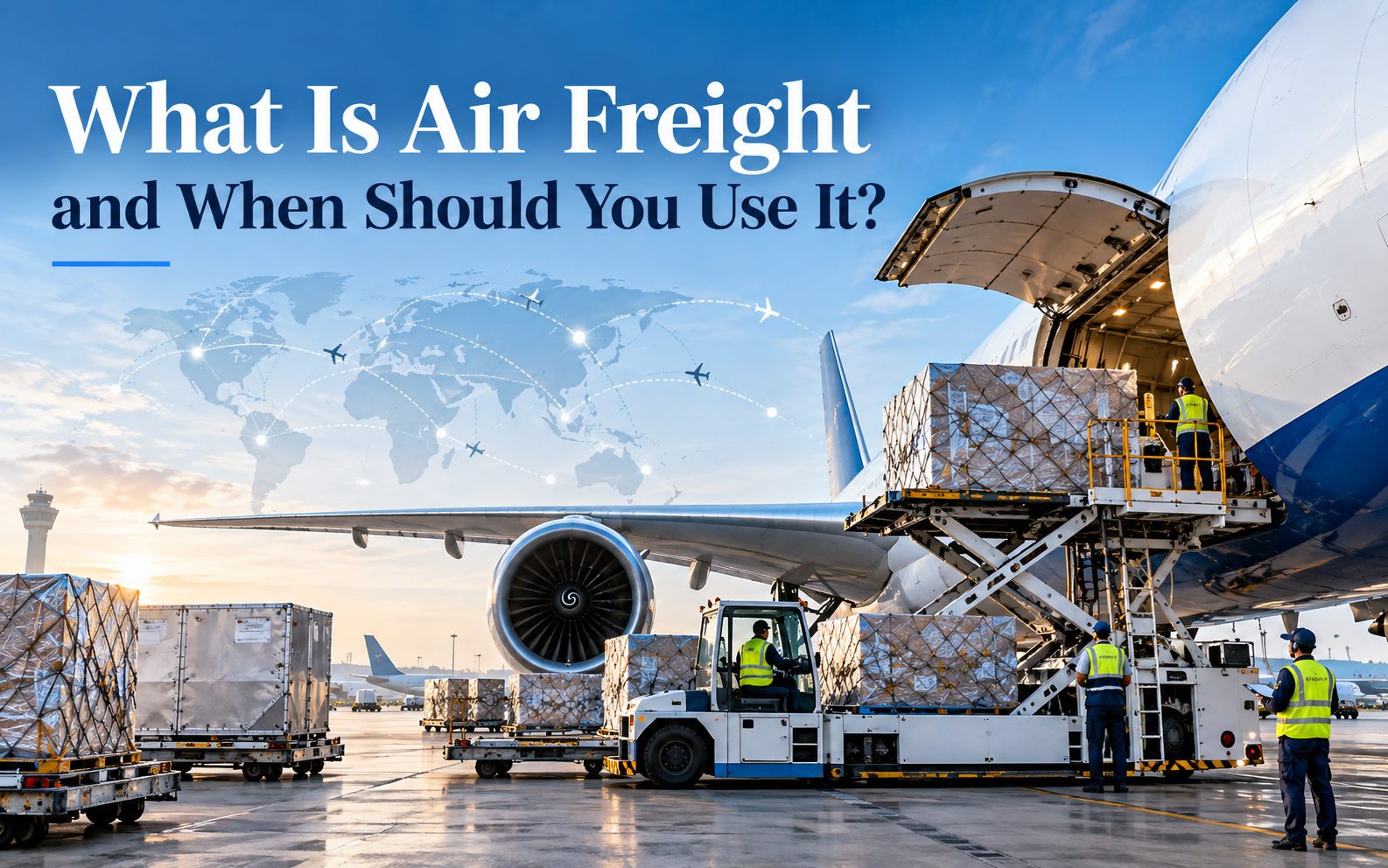
Air freight is the transportation of goods by aircraft, either in the belly hold of passenger flights or on dedicated freighter aircraft. It is the fastest major mode of international cargo transportation, moving goods between major airports worldwide in a matter of hours to a few days, depending on routing, ground handling, customs clearance, and final delivery.
What distinguishes air freight from other transport modes is not just speed but the operational system around it. Airlines operate on fixed schedules, cargo must pass security screening, and shipments are tracked through a standardized Air Waybill, or AWB. IATA provides industry standards for Air Waybill and e-AWB documentation, helping standardize shipment information across the air cargo chain.
Air freight accounts for roughly 2% of global cargo by weight but over 35% by value-it carries many of the goods where time, reliability, and cargo value matter most.
For importers and supply chain managers, the more useful question is not simply whether air freight is faster. It is whether the commercial value of saving time is greater than the additional air freight cost.
How Air Freight Works Step by Step
A typical air freight shipment from China to an overseas destination moves through a well-defined chain. Understanding each step helps you identify where delays can occur and why the actual air freight transit time should be measured from supplier pickup to final delivery-not simply by the number of hours the aircraft spends in the air.
1. Booking and Space Allocation
Your air freight forwarder books cargo space with an airline and confirms the flight, routing, schedule, and available capacity.
Aircraft capacity is much more limited than ocean vessel capacity, so available space can tighten quickly during peak periods. Booking early is especially important for time-sensitive cargo, high-volume shipments, and special cargo requiring carrier approval.
2. Pickup and Origin Handling
Goods are collected from the factory or warehouse and transported to the origin warehouse or airport cargo terminal.
The shipment is weighed and measured before acceptance. Depending on the cargo and routing, goods may also be palletized or built into unit load devices, or ULDs, before aircraft loading.
3. Security Screening and Documentation
Air cargo must pass mandatory security screening. International aviation authorities maintain detailed air cargo security standards covering how cargo is screened, protected, and handled before loading.
Typical documents include:
- Air Waybill
- Commercial invoice
- Packing list
- Customs declaration documents
- Certificates or permits required for specific products
- Dangerous goods documentation where applicable
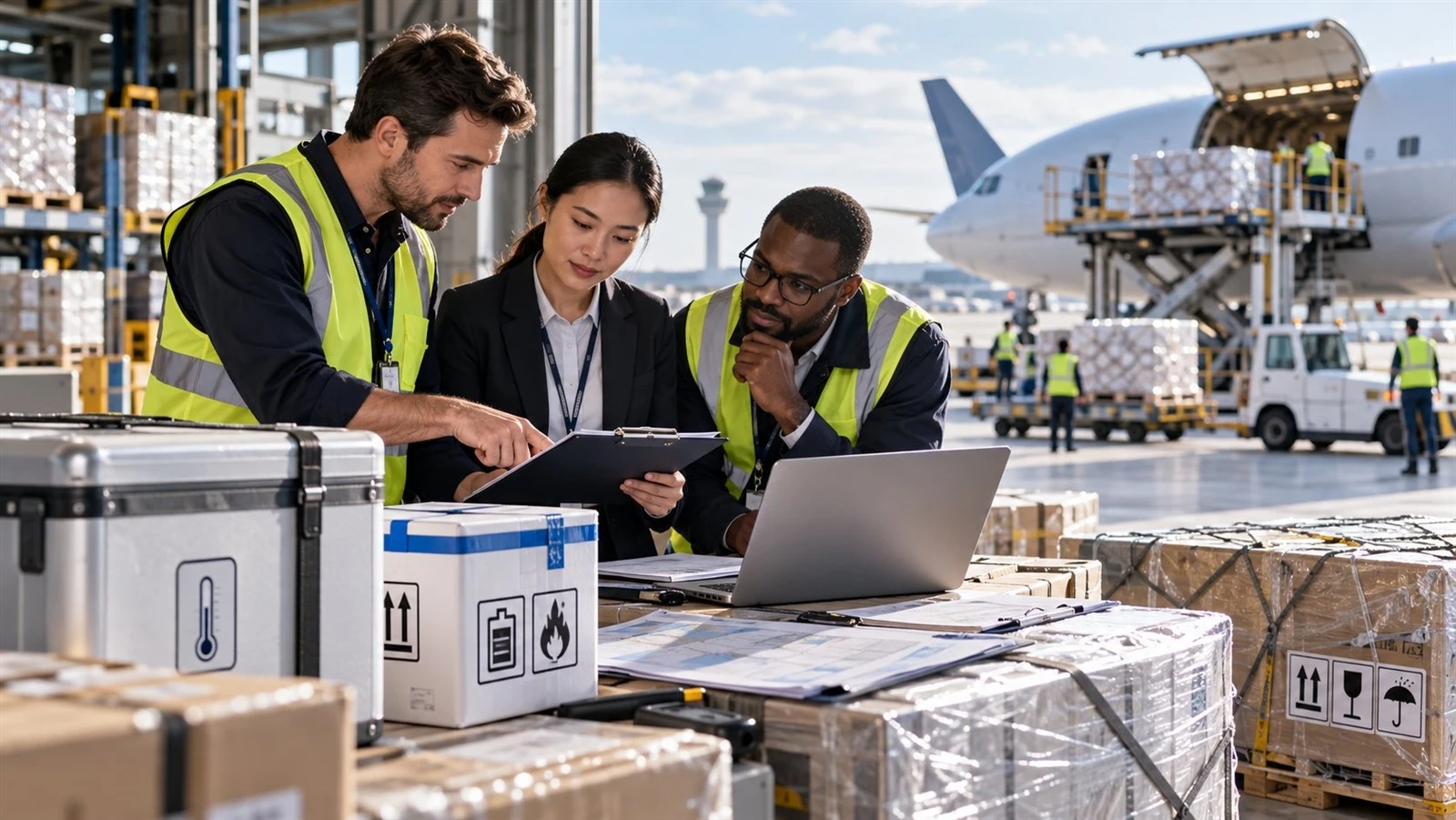
Incomplete or inaccurate documents can cause cargo rejection, missed flights, customs delays, or additional storage costs.
4. Flight and Transit
Cargo is loaded onto the aircraft and transported to the destination airport.
Depending on the route, the shipment may move on a direct flight or through one or more transit hubs. Total flight time for major China-to-Europe or China-to-North America routes is typically 8 to 15 hours.
A short flight time, however, does not mean the entire shipment will arrive within the same day. Warehouse cutoff times, export customs, transfer handling, destination clearance, and final delivery all contribute to the real end-to-end lead time.
5. Destination Customs and Delivery
After arrival, the goods enter the destination cargo terminal and complete import customs clearance.
Once released, the cargo can be collected by the consignee or transferred to a local delivery provider. The entire door-to-door shipping from China cycle by air typically takes around 3 to 7 days on major international routes.
6. Tracking and Shipment Visibility
Modern international air freight shipments are normally tracked by AWB number, with updates at major milestones such as:
- Booking confirmation
- Cargo acceptance
- Flight departure
- Transit
- Destination arrival
- Customs release
- Final delivery
For shipments originating in China, Wilson can coordinate international air freight services from major cities and airport gateways including Shanghai, Ningbo, Hangzhou, Beijing, Guangzhou, and Shenzhen. The service can extend beyond the flight itself to supplier coordination, pickup, warehousing, export customs, shipment tracking, destination clearance coordination, and final delivery where required.
Types of Air Freight Services
Not all air freight services work the same way. The right option depends on shipment size, urgency, cargo characteristics, routing, and budget.
|
Service Type |
How It Works |
Best For |
|
General Cargo |
Standard goods move on scheduled passenger or freighter aircraft. |
Electronics, apparel, machinery parts, consumer goods |
|
Express Courier |
Small parcels move through international express networks with integrated door-to-door handling and very short delivery times. |
Samples, documents, urgent small parcels under 45 kg |
|
Consolidated Freight |
A freight forwarder combines cargo from multiple shippers under a master AWB, helping spread transport costs. |
Small-to-medium shipments, often around 45–500 kg, where cost matters |
|
Charter Service |
An aircraft is chartered for a specific shipment or project, providing greater control over routing and timing. |
Oversized cargo, humanitarian cargo, major projects, peak-capacity requirements |
|
Special Cargo |
Cargo receives dedicated handling based on product characteristics and regulatory requirements. |
Pharmaceuticals, perishables, lithium batteries, chemicals, valuables |
For most B2B importers, standard or consolidated air freight provides the best balance between speed and cost. Charter and special cargo services are more situation-specific and require a detailed feasibility assessment before booking.
When Should You Choose Air Freight?
Choosing air freight should be a calculated decision based on urgency, cargo value, shipment size, inventory requirements, and the financial consequences of delay.
A useful way to approach the decision is to stop asking only:
"Is air freight expensive?"
and instead ask:
"How expensive would it be if this shipment arrived too late?"
1. When You Have a Tight Delivery Deadline
If your customer needs delivery within 5–10 days, sea freight-which typically takes 20–45 days on major routes-may simply be unable to meet the required schedule.
Air freight's typical 3-to-7-day door-to-door transit makes it one of the most practical options for urgent international shipments.
Common examples include:
- Emergency production materials
- Replacement components
- Urgent customer orders
- Product launches
- Contract-critical deliveries
- Time-sensitive project cargo
2. When Shipping High-Value Goods
Air freight is particularly suitable for products with a high value-to-weight or value-to-volume ratio.
Examples include:
- Semiconductors
- Medical devices
- High-value electronics
- Pharmaceuticals
- Luxury products
- Precision components
For these shipments, air freight cost may represent only a small percentage of the cargo value.
Value density is often more useful than cargo value alone. A compact product worth tens of thousands of dollars can economically justify air freight much more easily than a bulky, low-value product with the same total invoice value.
3. When Shipping Perishable or Temperature-Sensitive Cargo
Fresh produce, seafood, flowers, vaccines, biologics, and other temperature-sensitive products may have limited shelf life or strict cold-chain requirements.
Air freight reduces transportation time and can be combined with temperature-controlled packaging, active containers, monitoring systems, and specialized handling. IATA's CEIV Pharma program is one widely recognized framework supporting consistent standards for pharmaceutical air cargo handling.
For these products, faster transit is not simply a convenience. It can directly reduce spoilage risk and help preserve product quality.
4. When Preventing a Stockout Is Worth More Than the Freight Cost
Air freight can function as an inventory management tool, not just a transportation method.
If a product is selling faster than expected and inventory is about to run out, the cost of a stockout-including lost sales, production delays, customer dissatisfaction, and lost market opportunities-can exceed the additional air freight charge.
A common strategy is split shipping.
For example:
- 20% of the shipment moves by air to restore inventory quickly.
- 80% moves by sea at a lower transportation cost.
This means air freight does not always need to replace sea freight. In many supply chains, it works best as a selective solution for the portion of cargo where speed creates the most commercial value.
5. When Shipping Samples, Prototypes, or Trade Show Cargo
Air freight is also a natural choice when shipment value comes from speed rather than shipment volume.
Examples include:
- Product samples
- Engineering prototypes
- Buyer approval samples
- Exhibition materials
- Replacement display equipment
- Pre-production parts
Getting a sample to a customer several weeks earlier can shorten sales cycles and accelerate product approval.
6. When the Shipment Is Lightweight and Compact
Air freight is charged according to chargeable weight-the greater of actual gross weight and volumetric weight.
A common volumetric weight calculation is:
Length × Width × Height in centimeters ÷ 6,000
Some carriers use a divisor of 5,000.
This means compact, dense cargo can be more suitable for air freight than large, lightweight products.
Packaging design therefore matters. Reducing unnecessary carton size can lower volumetric weight and, in some cases, materially reduce air freight costs.
Air Freight vs. Sea Freight: A Practical Comparison
For international importers, one of the most common decisions is whether to use air freight or sea freight. For a more detailed modal comparison, see our guide to air freight vs sea freight.
|
Dimension |
Air Freight |
Sea Freight |
|
Transit Time |
3–7 days door-to-door |
20–45 days port-to-port |
|
Cost per kg |
Higher, typically 4–10× sea freight |
Lowest unit cost for bulk cargo |
|
Charge Basis |
Chargeable weight: actual or volumetric weight, whichever is greater |
CBM or container-based FCL/LCL pricing |
|
Cargo Capacity |
Limited; a single freighter may carry around 100 tons |
Extremely large; major container vessels may carry up to 24,000 TEU |
|
Reliability |
High, with frequent scheduled flights |
More exposed to port congestion, vessel schedules, weather, and canal disruptions |
|
Best Suited For |
High-value, time-sensitive, compact cargo |
Heavy, bulky, lower-value, non-urgent cargo |
|
Carbon Footprint |
Higher per kg |
Lower per kg for full container loads |
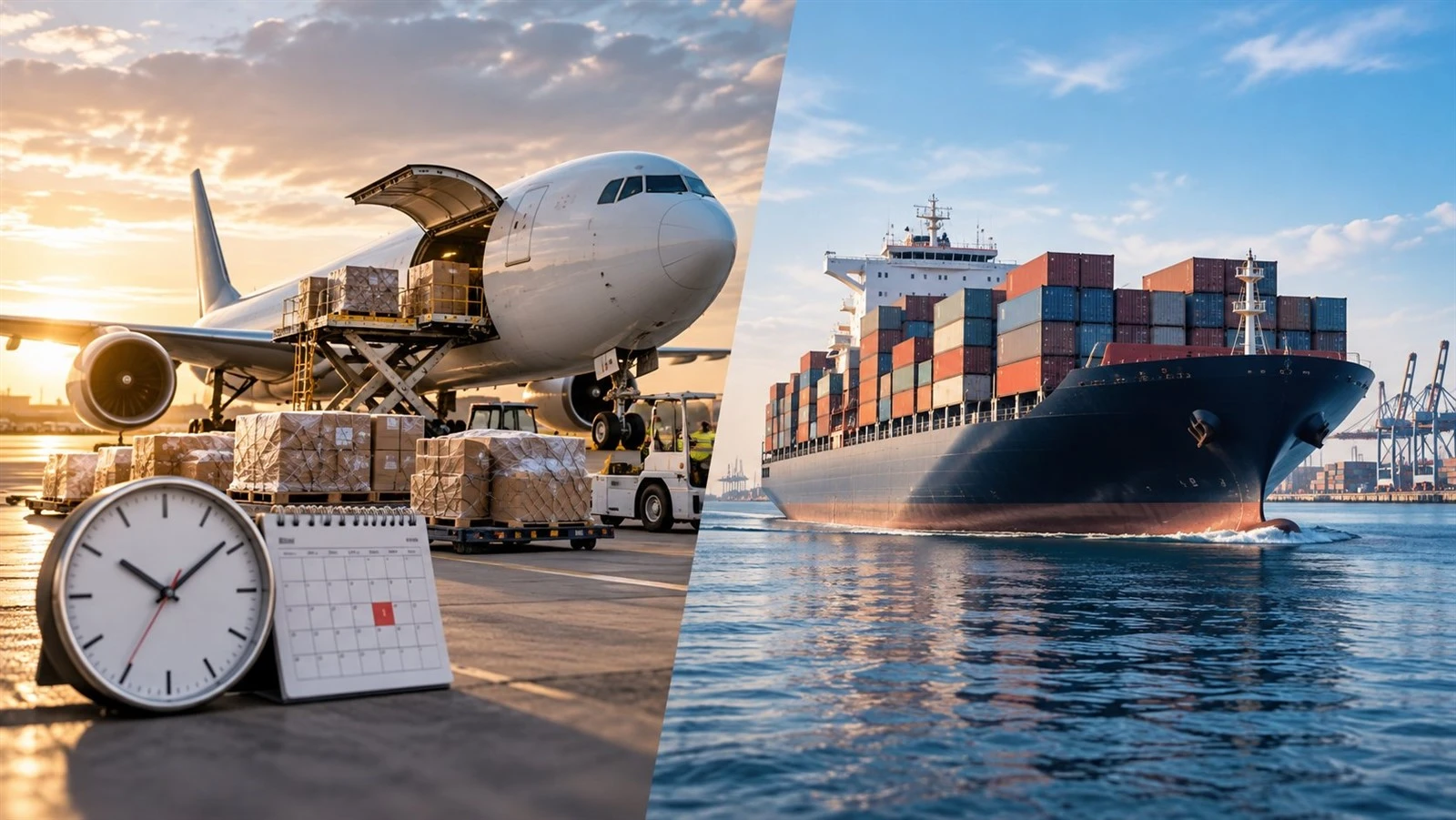
A practical rule of thumb: if your cargo's value exceeds roughly USD 5 per kilogram and you need it within two weeks, air freight may be more cost-effective once inventory carrying costs and time-to-market are considered.
The important point is that transportation decisions should not be based only on the quoted freight rate.
A more useful comparison considers:
Freight Cost + Inventory Cost + Storage Cost + Delay Risk + Stockout Cost + Lost Sales + Production Downtime
Sea freight may have the lower transportation rate, while air freight may still produce the lower total business cost.
This is particularly relevant when a delayed shipment could stop production, miss a retail season, postpone installation, or affect a contractual delivery date.
How Air Freight Pricing Works
Air freight pricing is more complex than a single rate per kilogram.
The most important concept is chargeable weight.
Airlines charge based on whichever is greater:
- Actual gross weight
- Volumetric weight
Volumetric weight is commonly calculated by dividing shipment dimensions-length × width × height in centimeters-by 6,000. Some carriers use 5,000.
A shipment that is physically large but lightweight can therefore cost more than a smaller shipment with a higher actual weight.
Beyond the basic air freight rate, a quote may contain the following charges:
|
Fee Component |
What It Covers |
|
Base Air Freight Rate |
Core airline transportation cost per kg, varying by route, season, and capacity |
|
Fuel Surcharge |
Adjustment linked to aviation fuel costs; typically 10–30% of the base rate |
|
Security Screening Fee |
Mandatory X-ray or other cargo security screening |
|
Terminal Handling Charges |
Airport cargo terminal receiving, storage, loading, and unloading |
|
Customs Clearance and Documentation |
Export/import declarations, AWB processing, and associated documentation |
|
Pickup and Last-Mile Delivery |
Trucking from supplier to airport and from destination airport to consignee |
|
Special Handling Surcharges |
Additional handling for dangerous goods, perishables, live animals, oversize cargo, or temperature-sensitive shipments |
When comparing air freight rates, avoid comparing only the headline price per kilogram.
A lower airport-to-airport rate may not be cheaper after adding:
- Supplier pickup
- Export customs
- Warehouse handling
- Terminal charges
- Destination customs
- Storage
- Final delivery
For procurement and supply chain planning, the better metric is the all-in logistics cost for getting the shipment from supplier to final destination.
What Special Cargo Can Be Shipped by Air?
Air freight can handle a wide range of cargo, but certain products require special documentation, packaging, screening, handling, and airline acceptance.
For special cargo, the first question should usually be:
"Can this cargo be accepted for air transport, and under what conditions?"
Only after that should the shipper focus on price.
Dangerous Goods
Lithium batteries, chemicals, flammable materials, and other hazardous cargo are regulated under the IATA Dangerous Goods Regulations (DGR).
Depending on the product, requirements may include:
- Dangerous goods classification
- Safety Data Sheet, or SDS
- Shipper's Declaration for Dangerous Goods
- UN-certified packaging
- Required markings and labels
- Airline approval
- Trained personnel
- Supporting test reports or certifications
Your air freight forwarder plays an important role in checking cargo classification, reviewing documentation, and confirming whether the selected carrier can accept the shipment. For a broader explanation of regulated cargo, see our guide to dangerous goods shipping.
Wilson's broader chemical and dangerous goods experience includes particular attention to SDS documentation, cargo classification, carrier acceptance requirements, and regulatory compliance. For cargo-specific solutions, our chemical air freight service covers chemical shipments requiring more detailed acceptance and documentation review.
Lithium batteries require an especially careful pre-shipment assessment because classification, battery configuration, packaging, state of charge, documentation, and carrier acceptance can all affect whether cargo can move by air. More details are available in our guide to shipping lithium batteries by air.
Perishables and Pharmaceuticals
Temperature-sensitive cargo such as fresh produce, seafood, vaccines, and biologics may require active cold-chain containers, temperature monitoring, validated packaging, and controlled handling.
For these shipments, the forwarder should verify handling requirements at origin, transit points, and destination rather than focusing only on flight time.
Oversized and Heavy Cargo
Aircraft have strict limits on cargo dimensions, individual piece weight, door size, floor loading, and loading equipment.
Large machinery, industrial equipment, vehicles, and oversized cargo may require:
- Main-deck freighter capacity
- Specialized loading equipment
- Aircraft charter assessment
- Alternative packaging
- Partial disassembly
- A different transport mode
For non-standard cargo, an experienced freight forwarder should first evaluate dimensions, weight, center of gravity, handling requirements, and route feasibility before recommending air freight.
How to Choose the Right Air Freight Forwarder
Choosing the right air freight forwarder is just as important as choosing the transport mode itself. If you are new to international logistics, understanding what a freight forwarder does can help clarify which responsibilities should be handled by your logistics partner.
1. Check Air Cargo and Dangerous Goods Compliance
If you ship special or dangerous cargo, confirm that the freight forwarder understands the applicable air cargo rules, documentation requirements, packaging standards, and handling procedures.
For dangerous goods, relevant IATA DGR training and operational experience are particularly important.
2. Check Available Capacity and Routing Options
A capable air freight partner should be able to evaluate multiple routing options rather than presenting a single flight as the only solution.
Ask about:
- Direct versus connecting flights
- Alternative airport gateways
- Peak-season capacity
- Transit hubs
- Backup routes
- Flight frequency
Routing flexibility becomes especially valuable during disruptions.
3. Look for End-to-End Service Capability
The best freight forwarder for an international shipment should be able to coordinate more than the flight itself.
Services may include:
- Supplier pickup
- Warehousing
- Export customs clearance
- Air freight booking
- Documentation
- Destination customs coordination
- Last-mile delivery
- DDP shipping where appropriate
For a buyer sourcing from multiple Chinese suppliers, having one party coordinate the entire process can reduce communication gaps and avoid unnecessary handoffs.
4. Require Shipment Visibility
Air freight is normally used because time matters.
That makes communication and shipment tracking particularly important.
A suitable forwarder should provide updates at critical milestones and respond quickly when a flight, customs issue, document problem, or routing change affects delivery.
Wilson uses logistics management and cargo tracking systems to manage orders and transportation milestones, supporting more consistent shipment visibility and exception communication.
5. Match the Forwarder's Experience to Your Cargo
General air freight experience is not always enough.
If you ship:
- Dangerous goods
- Chemicals
- Temperature-sensitive cargo
- High-value goods
- Heavy or oversized equipment
ask whether the forwarder has relevant experience with that cargo category.
Wilson's 26-member professional logistics team has an average of more than eight years of industry experience, with broader operational exposure to standard freight, chemical and dangerous goods, heavy equipment, oversized cargo, cold-chain shipments, and other specialized logistics.
6. Ask for a Transparent, Itemized Quote
A reliable air freight quote should make it clear what you are paying for.
Ideally, the quotation separates:
- Base freight
- Fuel surcharge
- Security fee
- Origin handling
- Documentation
- Customs services
- Destination handling
- Trucking
- Special cargo surcharges
Comparing itemized quotations makes it easier to identify whether one offer is genuinely cheaper or simply excludes costs that will appear later.
Common Air Freight Mistakes to Avoid
|
Mistake |
Consequence |
How to Prevent It |
|
Incomplete or inaccurate documentation |
Customs hold, missed flight, penalties |
Have your forwarder check the documents before cargo is tendered |
|
Misclassifying dangerous goods |
Cargo rejection, airline penalties, legal liability |
Confirm DG classification and use a qualified dangerous goods logistics provider |
|
Underestimating volumetric weight |
Final invoice significantly higher than expected |
Calculate chargeable weight before booking and optimize packaging |
|
Booking too close to flight cutoff |
Missed flight and 24–48 hour delay |
Tender cargo to the origin terminal at least 4–8 hours before cutoff |
|
Ignoring peak-season capacity |
No space, higher rates, or forced rerouting |
Book 1–2 weeks ahead during Q4 and the pre-Chinese New Year rush |
One of the most common mistakes is focusing exclusively on the rate per kilogram.
A slightly cheaper air freight option can become more expensive if it adds an extra transit stop, creates a customs problem, misses the required delivery date, or generates additional storage and handling charges.
For time-sensitive shipping, reliability and total logistics cost should be evaluated together.
FAQ
What is air freight in simple terms?
Air freight is the transportation of commercial goods by aircraft. Cargo normally moves from the supplier to an origin warehouse or airport, completes export customs and security screening, flies to the destination airport, clears import customs, and is then collected or delivered to the consignee.
How long does international air freight take?
Major international air freight shipments commonly take around 3 to 7 days door-to-door, although the exact transit time depends on origin, destination, flight availability, routing, customs clearance, cargo type, and final delivery arrangements.
The flight itself may take only several hours, but total logistics lead time also includes pickup, warehouse handling, customs, airport processing, and delivery.
How is air freight cost calculated?
Air freight is usually charged according to chargeable weight, which is the greater of actual gross weight and volumetric weight.
The final air freight cost can also include fuel surcharges, security screening, terminal handling, customs clearance, documentation, pickup, delivery, and special cargo handling fees.
Is air freight better than sea freight?
Neither mode is always better.
Air freight is usually more suitable for urgent, high-value, compact, perishable, or inventory-critical cargo. Sea freight generally provides a lower unit cost for heavy, bulky, large-volume, and non-urgent shipments.
The best choice depends on total logistics cost, delivery requirements, cargo value, shipment size, and the financial impact of delay.
Can dangerous goods be shipped by air?
Yes, many dangerous goods can be transported by air, but they are subject to strict classification, packaging, labeling, documentation, handling, and airline acceptance requirements.
Lithium batteries, chemicals, liquids, powders, and other regulated products should be reviewed before booking to confirm whether they are accepted and what documentation is required.
Conclusion
Air freight is not designed to be the cheapest transportation mode. Its value is speed.
You should consider air freight when the cost of waiting is greater than the premium you pay to move the cargo faster-especially for urgent orders, high-value products, perishable goods, production-critical components, samples, and inventory replenishment.
For larger or less urgent shipments, sea freight may remain the more economical choice. In many real supply chains, the most effective solution is not choosing air or sea exclusively, but combining them strategically according to urgency, cargo value, inventory requirements, and total logistics cost.
Zhejiang Wilson Supply Chain Management Co., Ltd. provides international air freight from major Chinese origin cities together with pickup, customs clearance, warehousing, tracking, DDP, and destination coordination. If you are deciding whether a shipment should move by air, sea, or a combination of transport modes, contact our team to discuss your cargo, timeline, and delivery requirements.