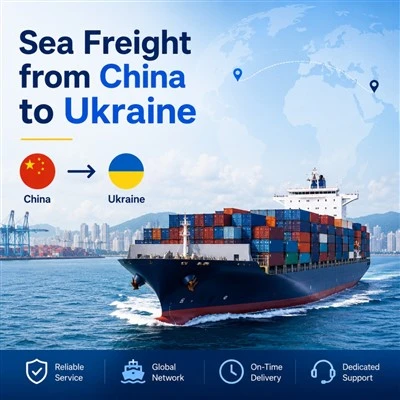
Sea freight from China to Belgium is a practical and cost-effective solution for businesses importing machinery, electronics, furniture, chemicals, automotive parts, textiles, industrial materials, and other commercial cargo.
Most containerized shipments enter Belgium through Antwerp or Zeebrugge. These ports provide access to Belgium's road, rail, barge, warehousing, and distribution networks, making them suitable not only for Belgian deliveries but also for cargo moving to the Netherlands, Germany, France, Luxembourg, and other European markets.
Typical port-to-port transit time ranges from 28 to 42 days for FCL shipments and approximately 32 to 48 days for LCL shipments. Actual shipping costs and transit times depend on the Chinese departure port, container type, cargo volume, sailing schedule, seasonal demand, and final delivery requirements.
Zhejiang Wilson Supply Chain Management Co., Ltd. provides FCL, LCL, special container, oversized cargo, chemical cargo, customs coordination, warehousing, and door-to-door shipping services from China to Belgium.
Founded in 2011 and headquartered in Ningbo, Wilson also operates through branches in Shanghai, Shenzhen, and Hong Kong. Our local presence in major Chinese export regions allows us to coordinate supplier pickup, cargo consolidation, customs documentation, container loading, and international transportation under one service plan.
Request a sea freight quote from China to Belgium.
To receive an accurate shipping proposal, please provide:
- Cargo name and HS code, if available
- Total weight and volume
- Number and type of packages
- Cargo dimensions
- Supplier or pickup location in China
- Delivery address in Belgium
- Preferred Incoterm
- Expected shipping date
- SDS or transport classification documents, where applicable

Sea Freight Cost from China to Belgium
The cost of shipping from China to Belgium changes regularly. Ocean freight rates are affected by carrier capacity, equipment availability, fuel-related surcharges, port conditions, seasonal demand, and the selected sailing date.
The following figures provide a general reference for budgeting.
| Sea Freight Service | Estimated Ocean Freight Cost |
|---|---|
| LCL shipping | USD 45–100 per CBM |
| 20GP container | USD 2,000–3,500 |
| 40GP container | USD 3,500–5,800 |
| 40HQ container | USD 3,700–6,200 |
These rates are indicative port-to-port estimates rather than fixed quotations. They may not include origin handling, destination charges, customs clearance, import duties, Belgian VAT, insurance, inspection charges, or final delivery.
What Affects Sea Freight Costs?
Cargo volume and weight
LCL shipments are generally charged according to the greater of cargo volume or chargeable weight. FCL shipments are quoted by container type, although overweight cargo may require additional handling or transport arrangements.
FCL or LCL service
LCL is usually more economical for smaller shipments because the customer pays only for the space used. However, LCL shipments may involve additional consolidation, deconsolidation, and warehouse charges.
FCL is normally more suitable for larger shipments, fragile cargo, high-value goods, or cargo requiring greater control over loading and handling.
Departure and destination ports
Shipping costs vary between routes such as:
- Ningbo to Antwerp
- Shanghai to Antwerp
- Shenzhen or Yantian to Antwerp
- Qingdao to Antwerp
- Shanghai to Zeebrugge
- Shenzhen or Yantian to Zeebrugge
The most suitable departure port usually depends on the supplier's location, inland trucking cost, sailing frequency, and available carrier services.
Container type
Standard 20GP, 40GP, and 40HQ containers are generally less expensive than specialized equipment.
Open-top containers, flat-rack containers, refrigerated containers, and other special equipment require separate quotations.
Cargo type
Chemicals, batteries, liquids, powders, dangerous goods, oversized machinery, and temperature-controlled cargo may require carrier approval, special packaging, additional declarations, or specialized containers.
Seasonal and market conditions
Rates may rise before Chinese New Year, during peak retail seasons, or when container equipment and vessel capacity are limited.
A quotation may therefore have a limited validity period.
Main Components of a Sea Freight Quote
A complete China-to-Belgium shipping quotation may contain several cost categories.
China origin costs may include:
- Supplier pickup
- Inland trucking
- Warehousing
- Cargo consolidation
- Export customs declaration
- Container loading
- Terminal handling
- Documentation and seal fees
International freight costs may include:
- Basic ocean freight
- Fuel-related surcharges
- Peak-season surcharges
- Equipment-related charges
- Dangerous goods surcharges
- Special container charges
Belgian destination costs may include:
- Terminal handling
- Port documentation
- LCL deconsolidation
- Customs broker fees
- Customs inspection
- Port storage
- Demurrage and detention
- Container pickup and return
Import and delivery costs may include:
- Customs duty
- Import VAT
- Inland trucking
- Special unloading
- Remote-area delivery
- Cargo insurance
To compare quotations correctly, importers should confirm whether each offer is port-to-port, port-to-door, or fully door-to-door.
How to Reduce Shipping Costs
Book early when your delivery schedule is fixed. Early planning provides more sailing options and reduces the risk of peak-season space shortages.
Consolidate products from several Chinese suppliers into one shipment where practical. Cargo consolidation can reduce repeated pickup, documentation, and handling costs.
Optimize packaging without weakening cargo protection. Reducing unnecessary volume can lower LCL charges and improve container utilization.
Compare LCL and FCL before booking. Once cargo reaches a certain volume, an FCL container may provide a lower cost per unit and reduce handling.
Prepare accurate shipping and customs documents. Incorrect weights, cargo descriptions, HS codes, or consignee details can create amendment fees, inspections, and storage costs.
Arrange Belgian customs clearance and delivery before vessel arrival. Delayed paperwork or trucking appointments may lead to port storage and container-related charges.
Sea Freight Transit Time from China to Belgium
Typical sea freight transit time from China to Belgium depends on the departure port, destination terminal, carrier schedule, and whether the service is direct or involves transshipment.
| Shipping Service | Estimated Transit Time |
|---|---|
| FCL port-to-port | 28–42 days |
| LCL port-to-port | 32–48 days |
| Door-to-door shipping | 38–55 days |
| Belgian customs clearance | Usually 2–5 working days when documents are complete |
LCL generally takes longer than FCL because cargo must be received at a consolidation warehouse before departure and separated at a destination warehouse after arrival.
Estimated Transit Time by Route
| Chinese Port | Belgian Port | Estimated Port-to-Port Time |
|---|---|---|
| Shanghai | Antwerp | 28–38 days |
| Ningbo | Antwerp | 30–40 days |
| Shenzhen/Yantian | Antwerp | 32–42 days |
| Qingdao | Antwerp | 35–45 days |
| Shanghai | Zeebrugge | 30–40 days |
| Shenzhen/Yantian | Zeebrugge | 32–42 days |
These are planning estimates rather than guaranteed delivery times.
Factors That Can Delay a Shipment
Transit time may change because of:
- Vessel schedule changes
- Transshipment arrangements
- Port congestion
- Adverse weather
- Route disruptions
- Container equipment shortages
- Customs inspections
- Incorrect or incomplete documents
- Delayed duty or VAT payment
- Port pickup and trucking availability
For time-sensitive cargo, Wilson can compare available schedules and provide a main routing option together with practical alternatives. Actual departure and arrival remain subject to carrier and port conditions.
Our Sea Freight Services from China to Belgium
FCL Shipping
Full Container Load shipping gives one customer the use of an entire container.
Wilson can arrange:
- 20GP containers
- 40GP containers
- 40HQ containers
- Factory loading
- Warehouse loading
- Export customs declaration
- Port-to-port transportation
- Port-to-door or door-to-door delivery
FCL is suitable for large shipments, fragile goods, high-value cargo, industrial products, or shipments requiring controlled loading.
It also reduces the number of handling stages compared with LCL transportation.
LCL Shipping
Less than Container Load shipping is designed for cargo that does not require a full container.
Wilson can coordinate:
- Supplier pickup in China
- Cargo receiving at the warehouse
- Cargo measurement and checking
- Consolidation from multiple suppliers
- Export customs processing
- International LCL transportation
- Destination deconsolidation
- Belgian customs clearance coordination
- Final delivery
LCL is commonly used for smaller commercial orders, samples, spare parts, packaged machinery components, furniture, and general merchandise.
Before booking, customers should review both the basic ocean freight and destination deconsolidation charges.
Door-to-Door Shipping
Door-to-door shipping connects the Chinese pickup location with the final address in Belgium.
Depending on the agreed service scope, Wilson can coordinate:
- Pickup from the supplier
- Chinese inland transportation
- Export customs declaration
- Warehousing and consolidation
- Container loading
- International sea freight
- Belgian customs clearance
- Port pickup
- Final truck delivery
Door-to-door service reduces the number of logistics providers the importer needs to manage and provides better visibility over the total transportation process.
DDP service may be available for certain shipments, but it must be reviewed according to the product, importer setup, EORI registration, VAT treatment, and Belgian compliance requirements.
Special Container Shipping
Standard containers cannot accommodate every type of cargo.
Wilson provides special container solutions including:
- Open-top containers
- Flat-rack containers
- Refrigerated containers
- Other equipment subject to cargo and carrier requirements
Open-top containers can be used for cargo that must be loaded from above or exceeds the height of a standard container.
Flat-rack containers are commonly used for oversized machinery, industrial equipment, vehicles, steel structures, and project cargo.
Refrigerated containers are used for cargo requiring controlled temperature conditions.
Each special-container shipment requires a technical review of cargo dimensions, weight, lifting points, center of gravity, securing method, and destination handling conditions.
Oversized and Project Cargo
Wilson handles oversized and heavy cargo such as:
- Industrial machinery
- Construction equipment
- Production lines
- Vehicles
- Steel structures
- Large components
- Project cargo
Our team can coordinate:
- Cargo measurement
- Transport feasibility assessment
- Loading plans
- Container selection
- Lifting and securing
- Export customs documentation
- Port handling
- International transportation
- Destination unloading and delivery
The container payload, terminal restrictions, road weight limits, and equipment availability must be checked before booking.
Chemical and Dangerous Goods Shipping
Chemical cargo requires more than a standard freight quotation.
Wilson has experience handling chemical and regulated cargo, including fertilizers, industrial chemicals, oxidizing substances, refrigerants, and other products requiring special review.
Before accepting a shipment, our team may request:
- Safety Data Sheet
- UN number
- Proper Shipping Name
- Dangerous goods class
- Packing group
- Flash point, where applicable
- Transport classification report
- Packaging certificate
- Dangerous goods declaration
- Product composition or technical information
We then review the cargo against carrier, port, customs, packaging, and route requirements.
An SDS alone does not automatically confirm whether a product can be shipped as general cargo. Final acceptance depends on its transport classification and carrier approval.
Warehousing and Cargo Consolidation
Importers often purchase goods from more than one supplier in China.
Wilson can collect products from different factories and consolidate them at a warehouse before export.
Available services may include:
- Supplier coordination
- Cargo pickup
- Warehouse receiving
- Package checking
- Palletizing
- Repacking
- Marking and labeling
- Cargo consolidation
- Container loading
- Loading photos and shipment records
This service helps customers reduce repeated shipping costs and manage several suppliers through one logistics contact.
Cargo Insurance and Claims Support
Carrier liability is limited and may not cover the full commercial value of lost or damaged cargo.
Wilson can assist with cargo insurance arrangements for general cargo, machinery, chemical products, vehicles, and other shipments.
Insurance premiums depend on:
- Cargo type
- Declared value
- Packaging
- Route
- Transport method
- Deductible
- Coverage terms
Where a claim occurs, Wilson can help collect transport documents, delivery records, survey reports, photographs, commercial invoices, and other supporting evidence.
Insurance coverage and compensation remain subject to the policy terms and exclusions.
How Our Sea Shipping Service Works
Step 1: Submit Your Cargo Details
Send us the cargo name, quantity, weight, volume, dimensions, supplier location, Belgian destination, Incoterm, and preferred shipping date.
For chemicals, batteries, liquids, powders, or potentially regulated cargo, provide the SDS and available classification documents.
Step 2: Cargo and Compliance Review
Our team checks:
- Whether the cargo is general, restricted, or dangerous
- Whether FCL or LCL is more suitable
- Whether special equipment is required
- Which documents may be needed
- Whether the shipment requires carrier approval
- Whether the Belgian importer needs additional product compliance documents
Step 3: Route and Quotation Planning
We compare available departure ports, vessel schedules, container options, destination ports, and delivery arrangements.
The proposal may include:
- Recommended shipping method
- Alternative routing
- Estimated freight cost
- Estimated transit time
- Included and excluded charges
- Required documents
- Booking validity
Step 4: Booking and Cargo Collection
After confirmation, Wilson arranges vessel booking and coordinates cargo pickup or warehouse delivery.
For FCL shipments, we can arrange container pickup and factory loading.
For LCL shipments, cargo is delivered to or collected for the consolidation warehouse.
Step 5: Documentation and Export Customs
Our team reviews or coordinates key export documents, including:
- Commercial invoice
- Packing list
- Shipping instructions
- Export customs declaration
- Bill of lading details
- Certificate of origin, where required
- Dangerous goods documents, where applicable
Document details must be consistent across the invoice, packing list, customs declaration, and transport documents.
Step 6: Loading and Ocean Transportation
Cargo is packed, loaded, secured, and delivered to the departure terminal.
After vessel departure, customers receive milestone-based updates such as:
- Booking confirmation
- Container loading status
- Customs release
- Estimated departure
- Actual departure
- Transshipment update
- Estimated arrival
Step 7: Pre-Arrival and Belgian Customs Preparation
Before vessel arrival, the importer or appointed customs broker should prepare:
- EORI number
- HS code
- Commercial invoice
- Packing list
- Bill of lading
- Import licenses, where applicable
- Product compliance documents
- Duty and VAT arrangements
Where procedures and document availability allow, customs preparation can begin before vessel arrival to reduce avoidable waiting time.
Step 8: Customs Clearance and Final Delivery
After the shipment arrives, Wilson and its local partners can coordinate:
- Import declaration
- Customs inspection
- Duty and VAT processing
- Port release
- Container pickup
- LCL cargo collection
- Inland transportation
- Final delivery
Delivery appointments and unloading requirements should be confirmed before the cargo leaves the port.
Why Ship from China to Belgium with Wilson?
Local Teams in Major Chinese Export Hubs
Wilson is headquartered in Ningbo and has branches in Shanghai, Shenzhen, and Hong Kong.
This network supports cargo pickup and export operations across major manufacturing regions in eastern and southern China.
Our team can compare departure options rather than automatically routing every shipment through one port.
Established Carrier Relationships
Wilson maintains long-term working relationships with major carriers including:
- COSCO
- Hapag-Lloyd
- Maersk
- MSC
- Evergreen
These relationships help us compare vessel schedules, equipment availability, and routing options for different cargo requirements.
Carrier space and departure schedules remain subject to final booking confirmation.
Experience with Complex Cargo
Wilson does more than arrange standard container bookings.
Our operational experience covers:
- Chemical cargo
- Dangerous goods
- Oversized equipment
- Vehicles
- Heavy cargo
- Open-top containers
- Flat-rack containers
- Refrigerated containers
This allows us to identify documentation, packaging, equipment, and handling risks before the cargo reaches the port.
Integrated Supply Chain Services
Wilson can coordinate several stages through one service arrangement:
- Supplier pickup
- Warehousing
- Cargo consolidation
- Export customs declaration
- Ocean freight
- Import clearance coordination
- Inland delivery
- Cargo insurance
- Claims assistance
This reduces communication gaps between separate logistics providers.
Experienced Operations Team
Wilson has grown from a three-person business into a professional team of 26 experienced employees.
Team members have an average of more than eight years of industry experience and work with general cargo, industrial goods, chemicals, vehicles, and special equipment shipments.
Scalable Shipping Capacity
Wilson handles approximately 56,000 TEU annually across its international logistics operations.
This operational volume gives our team experience managing regular container flows, seasonal capacity changes, equipment planning, and shipment exceptions.
Shipment Visibility and Communication
Customers receive milestone-based updates throughout the shipping process.
Updates may cover:
- Booking status
- Container collection
- Customs release
- Vessel departure
- Transshipment
- Estimated arrival
- Customs clearance
- Final delivery
Ocean freight tracking is based on carrier and operational milestones rather than continuous GPS positioning.
Compliance and Industry Qualifications
Wilson operates with industry qualifications and compliance systems that include NVOCC, AEO, ISO, FIATA, and IATA-related credentials held by the applicable company entities.
These qualifications support standardized operations, customs compliance, documentation control, and international logistics management.
Main Ports for Sea Freight from China to Belgium
Ningbo Port
Ningbo-Zhoushan is a major export gateway for manufacturers in Zhejiang and surrounding regions.
As Wilson's headquarters are located in Ningbo, our team can directly coordinate supplier pickup, warehousing, customs declaration, container loading, and port delivery in the region.
Shanghai Port
Shanghai serves manufacturers throughout the Yangtze River Delta and offers extensive container services to Europe.
It is commonly used for machinery, electronics, chemicals, automotive parts, textiles, and consumer products.
Shenzhen and Yantian
Shenzhen and Yantian serve major manufacturing areas in Guangdong and southern China.
They are especially relevant for electronics, electrical equipment, machinery, furniture, e-commerce goods, and consumer products.
Guangzhou and Nansha
Nansha is another option for cargo produced in Guangzhou, Foshan, Dongguan, and nearby areas.
It can provide a practical alternative depending on supplier location, vessel schedule, and inland transport cost.
Qingdao, Xiamen, and Tianjin
These ports may be suitable for cargo sourced in northern, eastern, or southeastern China.
The best departure port is not always the nearest port. Sailing frequency, equipment availability, route structure, and total inland cost must also be considered.
Antwerp
Antwerp is the main destination for many containerized shipments moving from China to Belgium.
It offers connections to:
- Belgian industrial and commercial regions
- The Netherlands
- Germany
- France
- Luxembourg
- Other European markets
Cargo can continue from Antwerp by truck, rail, barge, or warehouse distribution.
Zeebrugge
Zeebrugge is commonly associated with automotive, roll-on/roll-off, refrigerated, and selected containerized cargo.
The final port decision should consider the carrier route, cargo type, consignee location, port charges, and inland delivery plan.
Common Goods Shipped Between China and Belgium
China and Belgium trade a wide range of industrial and consumer products.
Exact trade values and product rankings change over time, so importers should review current customs and market data when making purchasing decisions.
Common Goods Shipped from China to Belgium
Frequently shipped categories include:
- Machinery
- Electrical equipment
- Consumer electronics
- Industrial components
- Automotive parts
- Furniture
- Household products
- Textiles and clothing
- Tools and hardware
- Chemicals
- Batteries and energy-related products
- E-commerce goods
- Packaging materials
- Lighting products
Common Goods Shipped from Belgium to China
Common categories moving in the opposite direction may include:
- Pharmaceuticals
- Chemicals
- Machinery
- Food and beverages
- Automotive products
- Industrial materials
- Specialized consumer products
Cargo Requiring Additional Compliance Review
Certain products need more preparation than standard general cargo.
These may include:
- Chemicals
- Lithium batteries
- Electrical and electronic products
- Medical products
- Food
- Cosmetics
- Toys
- Machinery
- Radio equipment
- Products subject to anti-dumping measures
- Carbon-intensive goods within the scope of applicable EU rules
The importer should confirm product requirements before the cargo leaves China.
How to Import Goods from China to Belgium
1. Confirm the Product and Supplier
Verify the product specification, quantity, commercial terms, production schedule, and supplier information.
Confirm whether the supplier can provide:
- Commercial documents
- Product specifications
- Export packaging
- Certificates or test reports
- SDS, where applicable
- CE-related documents, where applicable
2. Choose an Appropriate Incoterm
The Incoterm determines how transport costs, risks, customs responsibilities, and delivery obligations are divided between the seller and buyer.
Common terms include:
- EXW
- FOB
- CFR
- CIF
- DAP
- DDP
The lowest product price does not always result in the lowest landed cost. Compare supplier terms together with inland transport, export handling, ocean freight, destination charges, customs duties, VAT, and delivery costs.
3. Confirm the HS Code and Import Requirements
The HS code determines:
- Customs tariff classification
- Duty rate
- Import restrictions
- Required licenses
- Anti-dumping measures
- Product-specific regulations
- Statistical reporting
Belgian importers should check the corresponding EU TARIC classification before shipment.
Do not select an HS code only because it produces a lower duty rate.
4. Choose FCL or LCL
Use LCL when the shipment is too small for a full container and the cargo can safely be consolidated with other goods.
Use FCL when:
- Cargo volume is large
- Handling needs to be reduced
- Goods are fragile or high-value
- Loading control is important
- Special equipment is required
Wilson can compare both options based on total cost rather than basic freight alone.
5. Prepare Suitable Packaging
Sea freight cargo may experience vibration, humidity, stacking pressure, multiple handling stages, and long storage periods.
Suitable packaging may include:
- Export-grade cartons
- Pallets
- Wooden cases
- Moisture barriers
- Desiccants
- Anti-rust protection
- Internal bracing
- Container securing
- Center-of-gravity markings
- Lifting-point markings
Wooden packaging may need to comply with ISPM 15 requirements.
6. Prepare the Shipping and Customs Documents
Typical documents include:
- Commercial invoice
- Packing list
- Bill of lading
- Sales contract, where required
- EORI number
- HS code
- Certificate of origin, where applicable
- Import license, where applicable
- SDS and dangerous goods documents
- Product compliance documents
- Insurance certificate, where applicable
7. Arrange Belgian Customs Clearance
The importer or appointed representative must submit an accurate import declaration.
Customs may review:
- Product description
- HS classification
- Customs value
- Country of origin
- Quantity and weight
- Licenses
- Product compliance
- Duty and VAT treatment
Customs clearance should be planned before the vessel arrives.
8. Pay Duties and Import VAT
Belgium generally applies a standard VAT rate of 21% to imported goods, although reduced rates may apply in specific circumstances.
The import VAT base may include the customs value, customs duty, and certain incidental costs.
Customs duty depends on:
- HS code
- Product origin
- Customs value
- EU tariff measures
- Trade remedies
- Product category
The freight forwarder can coordinate customs documentation, but the importer remains responsible for the accuracy of product and tax information supplied.
9. Arrange Port Pickup and Delivery
Truck delivery should be booked before or shortly after customs release.
Confirm:
- Delivery address
- Site access
- Vehicle restrictions
- Unloading equipment
- Delivery appointment
- Tail-lift requirements
- Container unloading time
- Empty-container return arrangements
Delayed pickup or return can create storage, demurrage, and detention charges.
Belgium Import Regulations and Shipping Terms
EORI Number
An Economic Operators Registration and Identification number is generally required for businesses participating in EU customs procedures.
The EORI number identifies the importer or customs operator in customs declarations.
HS Code and TARIC
The HS code classifies the product internationally.
TARIC expands this classification for EU customs purposes and shows applicable duty rates, trade measures, quotas, restrictions, and anti-dumping requirements.
Customs Value
Customs value is used to calculate customs duty and may include the product value plus certain transport, insurance, and related costs up to the relevant EU customs valuation point.
Belgian Import VAT
Belgium's standard VAT rate is generally 21%.
The exact VAT calculation and recovery treatment depend on the import arrangement, customs value, importer registration, and local tax rules.
CE Marking
CE marking applies only to products covered by relevant EU harmonisation legislation.
Depending on the product, the importer may need:
- Technical documentation
- EU declaration of conformity
- Test reports
- Correct product labeling
- Manufacturer information
- Importer information
- Authorized representative details
A freight forwarder can help identify missing shipping documents but cannot replace the manufacturer, importer, laboratory, or compliance specialist.
REACH and Chemical Compliance
Certain chemicals and products containing regulated substances may be subject to EU REACH requirements.
The importer should review substance restrictions, registration responsibilities, safety documentation, and labeling before shipment.
FOB
Under FOB, the seller delivers the goods on board the nominated vessel at the agreed Chinese port.
The buyer normally arranges the main ocean freight. Risk generally transfers when the goods are loaded on board, subject to the agreed contract and applicable Incoterms version.
FOB does not require the buyer to purchase insurance, although insurance may still be advisable.
CIF
Under CIF, the seller arranges and pays the freight to the named destination port and provides the required level of cargo insurance.
However, risk generally transfers when the goods are loaded on board at the departure port rather than when they arrive in Belgium.
DAP
Under DAP, the seller arranges transportation to the named destination, while the buyer normally handles import customs clearance, duties, and VAT.
The exact delivery point and unloading responsibility should be clearly stated.
DDP
Under DDP, the seller assumes extensive transportation and import responsibilities.
Before using DDP, both parties must confirm:
- Importer of Record
- EORI registration
- Customs representation
- VAT treatment
- Duty payment
- Product compliance
- Document ownership
DDP is not suitable for every product or transaction.
Demurrage
Demurrage generally refers to charges incurred when a container remains inside the port or terminal beyond the permitted free period.
Detention
Detention generally refers to charges incurred when a container has left the terminal but is not returned within the permitted free period.
Port Storage
Port storage relates to the use of terminal or warehouse space beyond the applicable free period.
These charges may apply at the same time as other container-related charges, depending on the terminal and carrier rules.
SDS
A Safety Data Sheet contains information about a chemical product's composition, hazards, handling, storage, and emergency measures.
An SDS supports cargo review but does not by itself determine whether the product is dangerous goods for sea transportation.
VGM
Verified Gross Mass is the confirmed total weight of a packed container.
The VGM must be submitted according to carrier and terminal deadlines before loading.
Importer of Record
The Importer of Record is the party legally responsible for the import declaration and compliance with customs and product regulations.
This role should be confirmed before booking DDP or other import-inclusive services.
Frequently Asked Questions
How long does sea freight from China to Belgium take?
FCL port-to-port shipping generally takes approximately 28–42 days. LCL usually takes around 32–48 days because consolidation and deconsolidation require additional time.
Door-to-door transportation commonly takes approximately 38–55 days, depending on pickup, customs, port operations, and final delivery.
How much does it cost to ship a container from China to Belgium?
A 20GP container may cost approximately USD 2,000–3,500, while a 40GP may cost around USD 3,500–5,800. A 40HQ may range from USD 3,700–6,200.
Rates change according to the departure port, carrier, sailing date, equipment, cargo type, and included services.
Which port is best for shipping to Belgium?
Antwerp is the main choice for many standard container shipments and provides strong connections throughout Belgium and neighboring European countries.
Zeebrugge may be suitable for vehicles, refrigerated goods, roll-on/roll-off cargo, and selected container services.
The correct port depends on the sailing route, cargo type, consignee location, and total inland cost.
Should I choose FCL or LCL?
LCL is usually suitable for smaller shipments that do not fill a container.
FCL is better for larger shipments, fragile goods, high-value cargo, or cargo requiring controlled loading.
The decision should be based on total origin, freight, destination, and delivery costs.
Can Wilson collect cargo from several suppliers?
Yes. Wilson can coordinate pickup from multiple suppliers, warehouse receiving, cargo checking, consolidation, and loading into one LCL or FCL shipment.
Can Wilson provide door-to-door shipping?
Yes. Depending on the cargo and destination, Wilson can coordinate supplier pickup, export customs declaration, ocean freight, Belgian customs clearance, port pickup, and final delivery.
What documents are required to import into Belgium?
Typical documents include a commercial invoice, packing list, bill of lading, EORI number, HS code, and any required product certificates or import licenses.
Chemical or dangerous goods may require an SDS, transport classification, and dangerous goods declaration.
How much VAT is charged on imports into Belgium?
Belgium generally applies a standard VAT rate of 21%.
The actual VAT base may include customs value, customs duty, and certain incidental costs. Importers should confirm the treatment with their customs or tax adviser.
Can Wilson ship chemicals and dangerous goods?
Yes, subject to cargo review and carrier approval.
Customers must provide the SDS, composition, UN number, dangerous goods class, packing group, and other available transport documents.
Can Wilson ship oversized machinery?
Yes. Wilson can arrange open-top, flat-rack, and project cargo solutions for oversized machinery and equipment.
Cargo dimensions, weight, lifting points, center of gravity, and delivery conditions must be reviewed before quoting.
Do I need cargo insurance?
Cargo insurance is not compulsory for every transaction, but it is strongly worth considering for high-value, fragile, sensitive, or difficult-to-replace goods.
Carrier liability may be lower than the full commercial value of the cargo.
Can I use DDP shipping from China to Belgium?
DDP may be possible for certain products and importer arrangements.
Before confirming DDP, the parties must verify the Importer of Record, EORI, VAT treatment, duty payment, product compliance, and customs representation.
How can I get an accurate quotation?
Provide:
- Cargo name
- HS code
- Package quantity
- Total gross weight
- Total volume
- Individual dimensions
- Supplier location
- Belgian destination
- Incoterm
- Expected shipping date
- SDS, where applicable
The more complete the information, the more accurate the quotation and transport plan.
Get a Sea Freight Quote from China to Belgium
Wilson provides sea freight solutions for general cargo, LCL shipments, full containers, chemicals, dangerous goods, vehicles, machinery, oversized cargo, and special containers.
Our teams in Ningbo, Shanghai, Shenzhen, and Hong Kong can coordinate your shipment from the supplier's location in China through export customs, international sea freight, Belgian customs clearance, and final delivery.
Send us your cargo details to receive:
- A recommended FCL or LCL solution
- Estimated shipping cost
- Estimated transit time
- Available departure options
- Required document list
- Port-to-port or door-to-door service plan
Hot Tags: Sea Freight From China To Belgium [Updated August 2026]