Shipping a yacht from China is a project-logistics operation, not a standard ocean-freight booking. The right method depends on the yacht's transport dimensions, weight, hull configuration, route, and handling requirements. Smaller boats may fit a container, oversized vessels may move on a Flat Rack, and larger yachts may require RoRo, LoLo, breakbulk, heavy-lift, or semi-submersible transport. This guide explains how to choose the right method, estimate total cost, prepare the yacht, manage documents, and reduce damage risk from origin to final delivery.

What Information Do You Need Before Shipping a Yacht from China?
A reliable yacht shipping plan starts with accurate technical information. In this context, transport dimensions mean the yacht's overall size in the condition in which it will actually be shipped, including fixed or non-removable parts.
Yacht Dimensions and Specifications That Matter
The main data points are:
- Length overall (LOA)
- Beam or maximum width
- Overall transport height
- Shipping weight
- Hull and keel configuration
- Mast, radar arch, antenna, or other protruding parts
- Whether those parts can be removed or secured
Length alone is not enough. A relatively short yacht with a wide beam or high superstructure may be harder to transport than a longer vessel with a narrower shipping profile.
This is especially important when evaluating containerized transport. The internal dimensions and door opening of the container determine whether the yacht can actually be loaded. For a detailed comparison of standard equipment, see our guide to 20GP, 40GP, 40HQ, Flat Rack, Open Top and other shipping container types.
What to Send for an Accurate Yacht Shipping Quote
For a useful quote, provide the origin, destination port, yacht type, dimensions, weight, recent photos, estimated value, preferred shipping date, and details of any cradle or trailer already available.
Also state whether the mast, radar, antenna, flybridge equipment, or other external parts can be removed. These details allow the freight forwarder to compare equipment, lifting requirements, carrier acceptance, and route options before giving a price.
What Is the Best Way to Ship a Yacht from China?
There is no single best method for every yacht. The correct choice depends on how the vessel fits available shipping equipment, how it can be lifted or rolled aboard, and what services are available on the intended route.
|
Yacht condition |
Likely shipping method |
Main consideration |
|
Small boat within container limits |
Standard or High Cube container |
Internal dimensions and door opening |
|
Oversized but manageable on container equipment |
Flat Rack |
OOG dimensions, cradle, lashing |
|
Boat on suitable trailer with RoRo service |
RoRo |
Carrier acceptance and rolling arrangement |
|
Larger or irregular yacht |
LoLo / Breakbulk / Deck Cargo |
Crane lifting, support, securing |
|
Very large or high-value yacht |
Heavy-lift / Semi-submersible carrier |
Engineering, schedule, specialized handling |
|
Operational yacht suitable for sea passage |
Crewed delivery |
Engine hours, weather exposure, crew |
Container Shipping for Smaller Boats
Container shipping means placing the boat inside a standard freight container for ocean transport. It offers good protection from weather and sea spray and can simplify handling when the vessel fits the equipment.
As a rough reference, some boats below about 40 feet may be candidates for container shipping, especially when removable parts can be taken down. A 40-foot High Cube may be considered for some smaller craft.
However, nominal yacht length is not the deciding factor. Beam, overall transport height, keel shape, and the dimensions of protruding components can make container shipping impossible even for a relatively small boat.
Flat Rack Shipping for Oversized Boats
A Flat Rack is container equipment with a floor and end frames but no full side walls or roof. It is designed for out-of-gauge cargo that cannot fit inside a standard closed container.
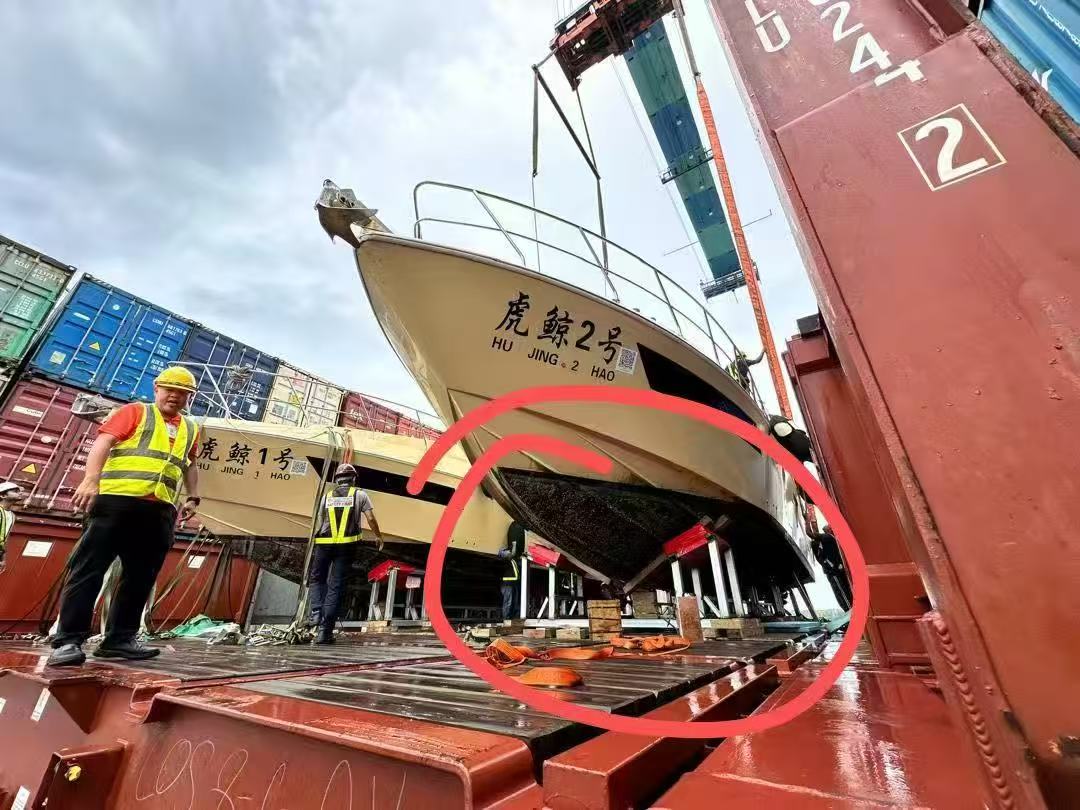
Flat Rack can work well for smaller or mid-sized yachts that are too wide or too high for a standard container but can still be supported safely on container equipment. The transport plan must address OOG clearances, weight distribution, cradle design, lifting points, and lashing.
For yachts that can use containerized or special-equipment services, a broader Sea Freight from China solution may include export customs, port handling, ocean transport, and destination coordination.
RoRo Shipping
RoRo, or Roll-on/Roll-off shipping, moves cargo onto the vessel via ramps instead of lifting it over the ship's side. For yachts, the boat may need to be placed on a suitable trailer or other carrier-approved rolling equipment.
RoRo is route-dependent and subject to carrier acceptance. The vessel still needs stable support and protection for exposed components during transport.
If you want to understand the loading process and where this method is normally used, see What Is RoRo Shipping and How Does It Work?.
LoLo, Breakbulk, and Deck Cargo
LoLo, or Lift-on/Lift-off, uses a ship's crane or port crane to lift the yacht onto or off the carrying vessel. Breakbulk shipping refers to cargo transported individually rather than inside a standard container.
These methods are commonly considered when a yacht is too large, heavy, or irregular for standard container equipment or RoRo handling.
The loading plan must address:
- Approved lifting points
- Sling position
- Cradle and support design
- Deck stowage position
- Weight distribution
- Lashing points
- Protection of the hull and exposed equipment
For a deeper explanation of how non-containerized project cargo is handled, read What Is Breakbulk Shipping?.
Heavy-Lift and Semi-Submersible Yacht Carriers
Very large yachts may require specialized heavy-lift ships or semi-submersible yacht carriers.
With a semi-submersible carrier, the transport vessel lowers part of its deck below the waterline. The yacht floats or is positioned over the submerged deck, after which the carrier rises again and the yacht is secured for the voyage.
Yachts in the 80–100+ foot range may be candidates for this type of transport, but that should be treated as a practical reference rather than a fixed rule. Beam, height, weight, value, route, schedule, and carrier availability still determine the final solution.
Crewed or In-Water Delivery
A yacht can also be delivered by a professional captain and crew instead of being carried as cargo.
This avoids some cargo-loading operations, but it adds engine hours and exposes the yacht directly to weather and sea conditions throughout the passage. Crew costs, fuel, route planning, and operational risk also have to be considered.
The shipping method should be selected according to technical feasibility, total logistics cost, and handling risk-not simply the lowest ocean-freight rate.
How Much Does It Cost to Ship a Yacht from China?
There is no reliable fixed yacht shipping price based only on length. The cost to ship a yacht from China is built from several components, and different transport methods can produce completely different cost structures.
The main cost drivers include:
- Yacht dimensions and weight
- Origin and destination
- Shipping method and carrier
- OOG equipment requirements
- Crane and lifting charges
- Cradle or support preparation
- Lashing and securing
- Port handling and terminal charges
- Documentation and customs work
- Cargo insurance
- Destination handling
- Inland or marina delivery
A containerized boat has a very different cost profile from a yacht requiring crane lifts, deck stowage, or semi-submersible transportation.
Route and port capability also matter. A port with suitable cranes, special-equipment handling capacity, and regular service may produce a more practical total solution than a theoretically cheaper port that requires additional repositioning or handling.
The useful comparison is therefore total logistics cost, not ocean freight alone.
A lower base freight rate can become more expensive after lifting, OOG surcharges, terminal handling, storage, or destination charges are added. For a broader explanation of how sea-freight quotations are built, see How to Calculate Sea Freight Costs.
Step-by-Step Process for Shipping a Yacht from China
A well-managed yacht export follows a defined sequence from technical assessment to final handover.
- Collect yacht specifications and route information. Confirm dimensions, weight, value, origin, destination, and preferred schedule.
- Select the shipping method. Compare container, Flat Rack, RoRo, LoLo, breakbulk, heavy-lift, or semi-submersible options as appropriate.
- Confirm quotation and booking. Review which origin, ocean, and destination charges are included before booking.
- Plan inland transport, lifting, and support. Confirm trailer access, crane requirements, cradle, lifting points, and port handling.
- Prepare the yacht and record its condition. Secure equipment, inspect the hull, and take photos or video before loading.
- Complete export customs and shipping documents. Check the commercial and vessel documents required for China export and destination import.
- Load, support, and secure the yacht. Supervise lifting, cradle placement, anti-slip measures, and lashing.
- Track the shipment. Monitor port entry, loading, vessel departure, transshipment, arrival, and other key milestones.
- Arrange destination handling and final delivery. Coordinate customs, unloading, local transport, launch, or marina handover as required.
The safest yacht shipments are managed as one connected operation from the shipyard or pickup point to the final destination.
How to Prepare and Protect a Yacht for Ocean Shipping
For high-value yacht transport, cargo protection is not an optional extra. It is part of the transport design.
Pre-Shipment Survey and Condition Records
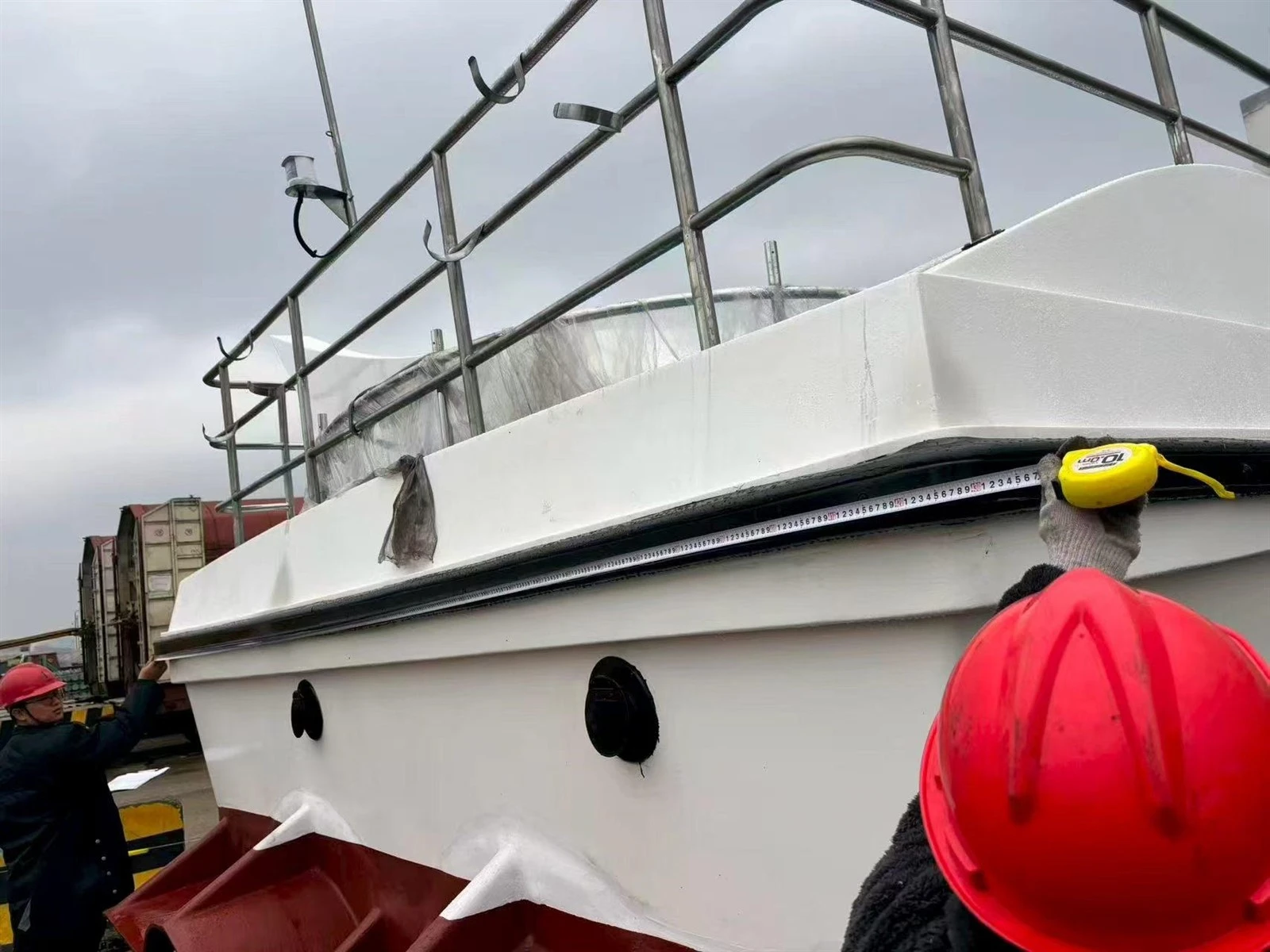
A pre-shipment condition survey records the condition of the yacht before transportation. For high-value or complex shipments, it may cover the hull, visible equipment, electronics, interior, and existing marks or damage.
Photos should be taken before loading, during important handling stages, and after the yacht has been secured. Video can also be useful for documenting larger or more complex vessels.
These records establish the yacht's condition before transport and support risk management if damage is discovered later.
Prepare the Yacht Before Loading
Loose equipment inside and outside the yacht should be removed or secured. Hatches, covers, antennas, radar domes, canvas, and other exposed parts should be checked before transport.
Sea cocks, batteries, fuel, and onboard fluids also need review.
Do not assume there is one universal rule for fuel level or battery disconnection. Requirements should be confirmed against the selected carrier, port procedures, and applicable safety requirements before shipment.
Cradle, Lifting, Lashing, and Hull Protection
A transport cradle is a support structure designed to hold the yacht safely during loading and sea transportation. Its support arrangement should match the hull geometry and distribute weight without creating harmful point loads.
The loading team should verify lifting points, sling positions, and clearance around vulnerable components such as:
- Propellers
- Rudders
- Drives
- Keels
- Hull chines
- External sensors
- Radar or antenna structures
Once positioned, the yacht requires suitable anti-slip measures and lashing to control forward, aft, and lateral movement.
Protective materials may also be added at contact points to reduce the risk of scratches and abrasion. The final secured condition should be inspected and documented before the vessel sails.
Lifting, support, and lashing should be treated as one system. A strong lashing arrangement cannot compensate for poor support or an unsuitable lifting plan.
Customs, Shipping Documents, and Cargo Insurance
International yacht shipping involves both export documentation and destination-country requirements. The exact document set depends on the transaction, yacht status, destination, and carrier.
Common Documents for Yacht Shipping
Common documents may include:
- Commercial Invoice
- Packing List
- Bill of Lading
- China export declaration documents
- Yacht specifications
- Ownership or registration documents where applicable
- Certificate of Origin where required
- Destination-specific certificates or permits where required
Documentation should be reviewed before the yacht reaches the loading stage. Incorrect or incomplete paperwork can lead to port storage, customs delays, or additional handling costs.
For more detail on common export paperwork, see Documents Required for Sea Freight from China.
Destination-Specific Customs Requirements
China export clearance is only one part of the move. The destination country may impose import declarations, duties or taxes, registration requirements, safety documentation, or other local requirements.
These should be checked early, particularly for high-value, used, or commercially imported yachts.
For example, customers shipping boats and other marine cargo into regional markets may also need to evaluate local port options and onward delivery arrangements. Wilson provides Sea Freight From China to Southeast Asia, including routes to major regional ports.
Cargo Insurance for High-Value Yachts
Marine cargo insurance should be evaluated separately from the carrier's contractual liability. They are not the same thing.
Institute Cargo Clauses (A) is one commonly used form of broad marine cargo coverage, but the policy wording, exclusions, limits, valuation method, and loading or unloading coverage still need to be reviewed.
For a high-value yacht, insurance should be checked against the full transport chain rather than only the ocean voyage.
Good documentation and a clearly defined insurance arrangement make transport risk easier to manage.
How Long Does Yacht Shipping from China Take?
Total delivery time is longer than the ocean transit shown on a sailing schedule.
The complete timeline may include:
- Pre-shipment survey
- Yacht preparation
- Cradle or loading preparation
- Booking
- Inland transport
- Export customs
- Port handling
- Ocean transit
- Transshipment where applicable
- Destination customs clearance
- Final delivery
The transport method also affects lead time. Container and Flat Rack shipments may follow regular liner schedules, while breakbulk, heavy-lift, and semi-submersible services can depend more heavily on specialized vessel schedules and port windows.
After arrival, the yacht may still require unloading, customs release, road permits, specialized trailers, crane services, launch, or coastal transfer before reaching the final marina.
If timing is important, request an end-to-end delivery schedule, not just a port-to-port transit estimate.
How to Choose a Freight Forwarder for Yacht Shipping from China
A yacht freight forwarder should be able to explain the transport method, loading plan, cost structure, and risk controls-not just quote an ocean rate.
Before appointing a provider, ask:
- Have you handled yachts of similar dimensions and value?
- Which shipping method do you recommend, and why?
- Who manages lifting, cradle placement, and lashing?
- How will the hull and external equipment be protected?
- What charges are included and excluded from the quotation?
- Can you handle China export customs and destination coordination?
- How will shipment milestones and exceptions be communicated?
If you are comparing logistics providers, our guide on how to choose a freight forwarder in China explains the operational checks that importers should make before appointing an agent.
Practical handling experience matters most where the yacht is physically touched: pickup, lifting, loading, securing, unloading, and final delivery.
FAQs
Can a Yacht Be Shipped in a Container?
Yes. Some smaller yachts and boats can be shipped in standard or High Cube containers.
Feasibility depends on actual transport dimensions, especially beam and height, plus the ability to remove or secure masts, radar arches, antennas, and other protruding parts.
Is Flat Rack or Breakbulk Better for Yacht Shipping?
Flat Rack is often suitable when a yacht is out of gauge but can still be safely supported on container equipment.
Breakbulk or LoLo is generally more suitable for larger, heavier, or irregular yachts that cannot be handled as containerized cargo.
The final choice depends on dimensions, weight, route, equipment availability, handling method, and carrier acceptance.
Do I Need a Cradle to Ship a Yacht?
Many lifting and deck-transport arrangements require a suitable cradle or engineered support system.
The exact design depends on hull shape, weight distribution, lifting method, and how the yacht will be secured to the carrying equipment or vessel.
Should I Buy Cargo Insurance for a Yacht?
For a high-value yacht, cargo insurance should be seriously considered.
Carrier liability is limited and should not be treated as equivalent to comprehensive marine cargo insurance. Review the insured value, exclusions, and whether loading and unloading are covered.
What Information Do I Need for a Yacht Shipping Quote?
Provide:
- Origin
- Destination
- Yacht type
- Length
- Beam
- Overall height
- Weight
- Recent photos
- Estimated value
- Preferred shipping date
- Cradle or trailer information
- Details of removable external equipment
The more accurate these details are, the more reliable the transport recommendation and quotation will be.
Final Thoughts
Shipping a yacht from China safely depends on matching the vessel to the right transport method, planning lifting and support correctly, preparing complete documents, and controlling risk at every handling point.
Container, Flat Rack, RoRo, LoLo, breakbulk, heavy-lift, and semi-submersible transport all have valid uses. The decision should be based on actual dimensions, weight, route, carrier availability, and handling requirements-not yacht length or freight rate alone.
Zhejiang Wilson Supply Chain Management Co., Ltd. provides international freight forwarding and specialized logistics services for yachts, speedboats, small craft, patrol boats, and other high-value cargo. If you are planning a yacht shipment from China, send us the vessel dimensions, photos, origin, and destination so our team can assess the transport method and prepare a workable logistics plan.