In today's globalized business environment, importing clothing from China has become a key strategy for many international buyers and retailers. As the world's largest clothing manufacturer, China attracts global importers with its diverse styles, competitive prices, and well-established supply chain. However, the customs clearance process for importing clothing involves complex procedures, strict regulations, and numerous details. Any oversight could lead to shipment delays, additional costs, or even customs detention. This article provides a comprehensive guide to the customs clearance process for importing clothing from China, covering key steps, required documents, and common precautions to ensure smooth import operations.
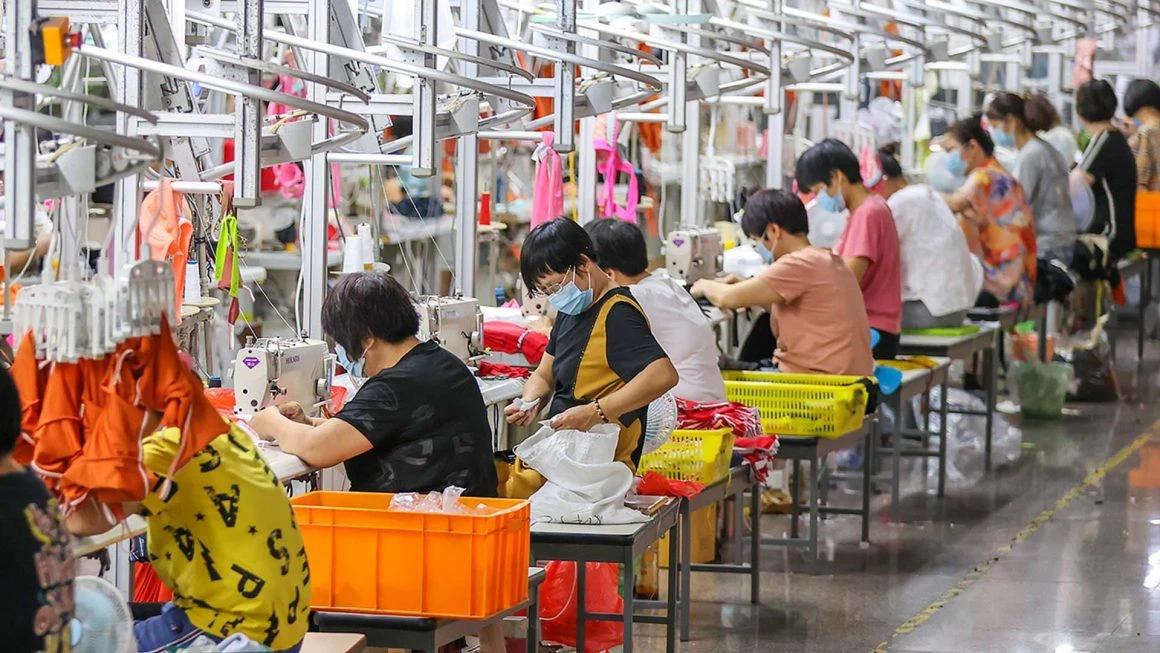
Basic Process of Customs Clearance for Clothing Imports
The customs clearance process for importing clothing from China is a systematic, multi-step procedure. Understanding each stage can significantly improve clearance efficiency and reduce risks. Below is the standard process for customs clearance:
Preparation Stage
Before the shipment departs, importers must complete several preparatory tasks. First, sign a detailed procurement contract with the Chinese clothing supplier, specifying product details, quantities, prices, and delivery terms. Importers must also confirm they have the necessary import/export qualifications. If lacking these qualifications, they should engage a professional import/export agency. At this stage, importers need to select a transportation method (sea freight , air freight , or international express) based on shipment volume and time requirements.
Document Preparation and Review
Complete documentation is the foundation of smooth customs clearance. Importers must request the Chinese supplier to provide all necessary customs clearance documents, including a detailed commercial invoice (specifying product names, quantities, unit prices, and total value), a packing list (detailing the contents of each package, including clothing styles, sizes, and colors), and a bill of lading (for sea freight) or air waybill (for air freight). It's critical that the information on the commercial invoice and packing list is accurate and consistent, as any discrepancies could trigger customs inspections or delays.
Commodity Classification and HS Code Determination
Each type of clothing has a corresponding HS code (Harmonized System code), an internationally standardized system used to determine tariff rates and regulatory requirements. Accurate HS code classification is critical, as errors may result in incorrect tariff rates (e.g., 10% for regular clothing versus up to 20% for leather garments) or changes in regulatory conditions (e.g., requiring additional permits). Importers should determine the correct HS code based on the clothing's material (e.g., cotton, synthetic fibers, wool), style (e.g., tops, pants, dresses), and purpose (e.g., casual wear, sportswear). Refer to China's customs tariff schedule or consult a professional customs broker for accurate guidance.
Customs Declaration
Upon arrival at the destination port, the importer or their customs broker must submit a declaration to customs authorities. Most modern customs systems use electronic clearance platforms, requiring submission of declaration data via designated Electronic Data Interchange (EDI) systems. The declaration must include detailed information such as the HS code, shipment value, and country of origin, all of which must match the physical goods. While Chinese exporters or freight forwarders typically handle export declarations, importers must ensure all information is accurate.
Inspection and Quarantine and Document Review
Many countries impose quality inspection requirements for imported clothing, particularly for children's clothing due to safety and hygiene concerns. Customs or regulatory agencies may conduct random inspections to verify labels, material composition, and safety compliance with the importing country's standards. For example, clothing exported from China may require quality inspection certificates to meet the importing country's regulations. Importers should allocate extra time for this step to avoid delays.
Tariff Calculation and Payment
Customs authorities calculate duties and value-added tax (VAT) based on the declared HS code, shipment value, and country of origin. Tariff rates vary significantly by country, so importers should research and budget for these costs in advance. Notably, if China and the importing country have a free trade agreement (e.g., RCEP), providing a valid origin certificate may qualify for tariff reductions. Tax payments are typically made through designated banks or electronic payment systems.
Customs Release and Cargo Retrieval
Once all steps are completed and taxes paid, customs will release the shipment, allowing the importer to arrange pickup. For full-container sea freight, pickup typically occurs at the port or container yard; for less-than-container-load (LCL) or air freight shipments, pickup may be at the freight forwarder's warehouse. At this point, the customs clearance process is complete, and the goods can be transferred to the importer's warehouse or distribution channels.
Post-Clearance Compliance and Recordkeeping
Some countries' customs authorities conduct post-clearance audits. Importers should retain all customs clearance documents (e.g., commercial invoice, contract, payment receipts) for at least 3–5 years to support potential audits. Proper documentation, especially related to shipment value, can help resolve customs valuation disputes and avoid penalties or additional taxes.
Customs Clearance Key Steps and Time Estimates Table
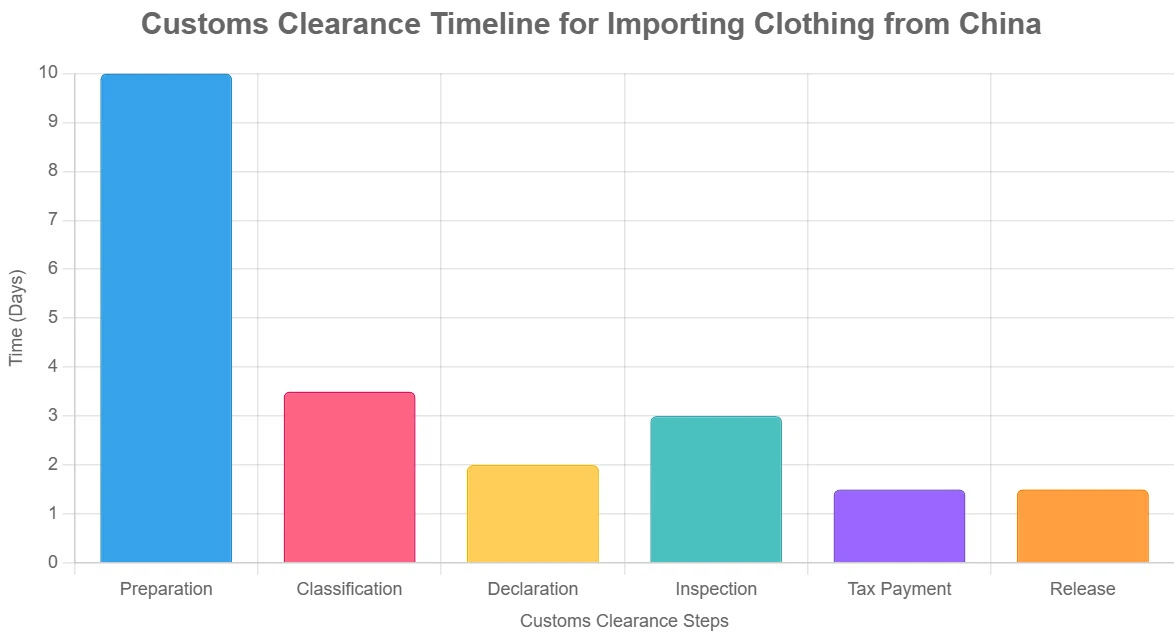
|
Customs Clearance Step |
Main Content |
Required Time |
Responsible Party |
|
Preparation Stage |
Sign contracts, arrange transportation, prepare documents |
1–2 weeks |
Importer / Supplier |
|
Commodity Classification |
Determine HS code, understand supervision requirements |
2–5 working days |
Importer / Customs Broker |
|
Customs Declaration |
Submit declaration forms and related documents |
1–3 working days |
Customs Broker |
|
Inspection & Quarantine |
Document review, cargo inspection |
1–5 working days |
Customs / Inspection Agency |
|
Tax Payment |
Calculate and pay duties, VAT |
1–2 working days |
Importer |
|
Customs Release |
Cargo release, arrange delivery |
1–2 working days |
Freight Forwarder |
Detailed Overview of Required Documents for Customs Clearance of Clothing Imports
Successfully completing customs clearance for importing clothing from China requires preparing a series of standard and specialized documents, which form the basis for customs audits. Missing any critical document can lead to clearance delays or additional costs. Based on common requirements for Chinese clothing exports and international import practices, below is a detailed list of documents needed for customs clearance:
1. Basic Trade Documents
- Commercial Invoice: The commercial invoice is the most critical document for customs clearance, serving as the primary basis for customs valuation and supporting other documents. It should detail the product name, specifications, quantity, unit price, total value, currency type, and trade terms (e.g., FOB, CIF). The invoice must include the full names and addresses of both buyer and seller, as well as order or contract numbers. When importing clothing from China, ensure the declared price is accurate and reasonable, as undervaluation may trigger customs audits. Importers should retain transaction records for verification. For example, vague product descriptions like "women's tops" are insufficient; instead, include specifics such as "95% cotton, 5% spandex women's knitted long-sleeve top."
- Packing List: The packing list complements the commercial invoice, providing detailed information about packaging and shipment contents. It must list the contents of each carton, including clothing styles, sizes, colors, as well as gross weight, net weight, and volume per carton. For mixed shipments of different styles or models, clear labeling is essential to facilitate customs inspections. The total number of cartons, weight, and volume on the packing list must match the bill of lading. Any inconsistencies may prompt customs to request explanations or conduct physical inspections, increasing costs and delays.
- Bill of Lading (Sea Freight) or Air Waybill (Air Freight): These serve as proof of ownership and the transport contract. The bill of lading is issued in original or telex release form, with telex release being more common in modern trade to expedite document transfer. The information on the bill of lading must align perfectly with the commercial invoice and packing list, particularly regarding consignee name, product description, piece count, and weight. Importers should obtain a copy of the bill of lading from the exporter or freight forwarder before the shipment arrives to prepare customs clearance documents. For air freight, the air waybill typically accompanies the cargo, and the clearing agent uses the arrival notice and related documents to process clearance.
- Sales Contract: While not always mandatory, the sales contract is a formal agreement between buyer and seller, providing critical evidence if customs questions the transaction's authenticity or price reasonableness. The contract should include details such as party information, product description, quantity, price, payment terms, delivery terms, and dispute resolution clauses. For long-term partnerships, a framework agreement supplemented by specific purchase orders is acceptable. In cases involving special regulatory requirements (e.g., licensed products), customs may request the original contract to verify transaction legitimacy.
2. Origin and Qualification Documents
- Certificate of Origin: The certificate of origin is a legal document proving the goods' country of origin, crucial for securing tariff reductions under free trade agreements (e.g., RCEP, China-ASEAN FTA). China, as the world's largest clothing exporter, has agreements with many countries, allowing importers to benefit from reduced tariffs by presenting a valid certificate of origin issued by bodies like the China Council for the Promotion of International Trade (CCPIT) or the Entry-Exit Inspection and Quarantine Bureau. Importers should confirm the importing country's tariff preferential policies and ensure the Chinese supplier provides a compliant certificate of origin. Note that different free trade agreements require specific formats (e.g., FORM A, FORM E, FORM F), and using the wrong format can invalidate the certificate.
- Foreign Trade Operator Registration: This is a qualification document for Chinese exporters, primarily required for China's export customs process. However, some importing countries may request proof of the exporter's legal operating status. In China, companies engaged in import/export must register with the Ministry of Commerce or local authorities to obtain import/export qualifications. For small businesses lacking such qualifications, a licensed import/export agency can be engaged, requiring an additional agency agreement. Importers should verify that their Chinese partners have valid export qualifications to ensure compliance and minimize trade risks.
- Import License or Special Regulatory Documents: Certain clothing types may require specific permits in the importing country. For example, garments containing endangered animal materials (e.g., crocodile leather, certain wools) may need a CITES (Convention on International Trade in Endangered Species) certificate. For down-filled clothing, proof of down material compliance may be required. Importers should research their country's regulatory requirements in advance and ensure Chinese suppliers provide all necessary documents before shipment to avoid clearance issues upon arrival.
3. Product Technical Documents
Clothing Labels:
Clothing labels are a key focus of market regulations in importing countries and a critical component of technical documentation. Many countries require labels in the official language, covering specific information such as:
- Material Composition Label (e.g., fabric content and percentages)
- Care Label (washing instructions, temperature guidelines)
- Origin Label (e.g., "Made in China")
- Safety Category (e.g., standards for children's clothing) Chinese-exported clothing labels should include the manufacturer or importer's registered name and address, product name (reflecting true attributes), size specifications (based on height/chest measurements, not just S/M/L), fiber content, care instructions, safety category, and applicable standard codes. Importers should provide detailed label requirements to Chinese suppliers before production and verify sample labels to avoid costly re-labeling or additional labeling upon arrival.
Quality Inspection Certificate or Certificate of Conformity:
These documents verify that the clothing meets relevant quality standards. Chinese-exported clothing typically includes a certificate of conformity, indicating compliance with standards like China's GB standards or international equivalents. For high-end brands or specialized clothing (e.g., protective or sportswear), detailed test reports may be required to prove claimed functionality or safety. Children's clothing faces stricter safety requirements, often needing compliance with standards like China's GB 31701 (Safety Technical Code for Infants and Children's Textile Products) or the EU's EN 14682 . Importers may engage third-party inspection agencies (e.g., SGS, Bureau Veritas) for pre-shipment inspections to ensure quality meets expectations.
Brand Authorization Letter:
For branded clothing, a brand authorization letter is essential to prevent intellectual property infringement. If importing clothing involves well-known brands (international or Chinese), importers must secure legitimate authorization from the brand owner and keep documentation for verification. Customs authorities increasingly enforce intellectual property protections, and lack of authorization can lead to cargo detention or destruction, with potential legal risks for the importer. For OEM (original equipment manufacturer) production, importers should confirm that the Chinese factory has valid authorization to produce the branded products. Even for unbranded clothing, importers must ensure no infringing design elements or logos are included.
4.Clothing Import Customs Clearance Document Checklist and Precautions
|
Document Type |
Specific Documents |
Issuing Authority |
Key Considerations |
|
Basic Trade Documents |
Commercial invoice, packing list, bill of lading, contract |
Exporter / Shipping company |
Consistency of information, reasonable pricing, detailed description |
|
Certificate of Origin |
Certificate of origin (FORM A/E/F, etc.) |
Chamber of Commerce / CIQ (Inspection & Quarantine Bureau) |
Compliance with free trade agreement requirements, correct format |
|
Qualification Documents |
Import & export license, permits |
Ministry of Commerce / Professional institutions |
Validity period, product coverage |
|
Technical Documents |
Labels, inspection reports, certificates of conformity |
Manufacturer / Testing institutions |
Language requirements, compliance with safety standards |
|
Intellectual Property Documents |
Brand authorization letter, trademark registration certificate |
Brand owner |
Complete authorization chain, scope of rights |

Key Precautions and Common Issues
While importing clothing from China offers significant business opportunities, the customs clearance process involves potential risks and complex requirements that cannot be overlooked. Understanding these key precautions can help importers avoid common mistakes, minimize delays, and reduce unnecessary costs. Below is a systematic overview of critical considerations for customs clearance of clothing imports:
1. Commodity Classification and Compliance Risks
Accurate HS Code Classification:
The HS code is the foundation of customs clearance for clothing imports and one of the most technical aspects. The accuracy of the HS code directly impacts applicable tariff rates and regulatory conditions. Clothing HS codes are determined by factors such as material (e.g., cotton, synthetic fibers, wool), weaving method (e.g., knitted, crocheted, woven), gender/age (e.g., men's, women's, children's), and style (e.g., shirts, pants, dresses). For example, a "women's woven cotton shirt" and a "women's knitted synthetic shirt" may have different HS codes and tariff rates. Errors in classification can lead to additional tax payments, fines for inaccurate declarations, or stricter regulatory requirements, such as import licenses or inspection and quarantine certificates. For importers lacking experience, consulting a professional customs broker or using customs pre-classification services is recommended to ensure accurate HS code assignment. While Chinese exporters are familiar with China's export coding, importing countries may have slight differences in import coding, requiring extra attention from importers.
Product Compliance Risks:
Different countries impose varying safety and compliance standards for imported clothing. Chinese-exported clothing must meet the importing country's requirements for fabric safety (e.g., formaldehyde, azo dyes, heavy metals), physical safety (e.g., cord restrictions for children's clothing), and flame resistance. For instance, the EU enforces strict chemical restrictions under REACH regulations, the US has stringent limits on lead content and small parts in children's clothing, and Middle Eastern countries may have specific style requirements. Importers should communicate these requirements to Chinese suppliers before placing orders and request compliance declarations or test reports. Notably, China's domestic clothing standards (GB series) may differ from those of importing countries, so compliance with Chinese standards does not guarantee compliance elsewhere. For functional clothing (e.g., waterproof or UV-protective garments), claimed features must be supported by test reports to avoid false advertising risks.
Clothing Labels and Markings:
Clothing labels are a common pitfall in clothing imports. Many countries have mandatory regulations for label content, format, and language. Typical requirements include:
- Material Composition Label (in the importing country's official language, specifying all fabric components and percentages, e.g., "80% cotton, 20% polyester")
- Care Label (washing and ironing instructions, via symbols or text)
- Origin Label (e.g., "Made in China")
- Safety Warnings (e.g., "Not suitable for children under 3")
- Size Markings (based on standardized measurements like height/chest, not just S/M/L) Some countries require labels to be securely sewn, not merely attached with stickers. Common issues include Chinese-exported clothing with labels only in Chinese, inaccurate material compositions (especially for blended fabrics), or non-standard size markings. These can result in goods being denied entry or requiring costly corrections. Importers should provide Chinese suppliers with compliant label templates before production and verify label accuracy during inspections.
2. Intellectual Property and Brand Protection
Brand Authorization and Authenticity Verification:
Intellectual property protection is increasingly critical in clothing imports, as global customs authorities enforce strict measures against infringement. Goods suspected of infringement may be detained or destroyed. If imported clothing includes brand elements (e.g., trademarks, logos, unique designs), importers must secure legitimate authorization from the brand owner. This applies to both importing authentic branded products (requiring brand owner authorization) and private-label clothing (ensuring no infringement of third-party rights). Common issues include:
- Parallel imports (authentic goods imported without brand owner approval in a specific country)
- Counterfeit goods (imitating branded designs)
- Overproduction (factories producing excess quantities and selling unauthorized units) When importing clothing from China, importers should: 1) Partner with brand owners or authorized agents; 2) Retain complete authorization documentation; 3) Conduct trademark searches for unbranded clothing to avoid infringement; 4) Be cautious of unusually low-priced branded clothing, which may indicate counterfeits. If customs suspects infringement, importers must provide authorization proof, or risk cargo confiscation.
Origin Authenticity:
Certificate of origin authenticity is a sensitive issue tied to intellectual property and tariff benefits. Free trade agreements (e.g., RCEP) require goods to meet specific origin rules to qualify for preferential tariff rates, beyond simply bearing a "Made in China" label. For example, RCEP may require clothing to use yarn or fabric produced in member countries to qualify for reduced tariffs. If the clothing is cut and sewn in China but uses fabric from a non-RCEP country, it may not meet origin criteria. Importers applying for tariff reductions must ensure the certificate of origin is accurate and retain supporting documents (e.g., fabric purchase invoices) for verification. False origin declarations can lead to additional taxes, fines, and damage to the importer's customs credit rating. Some importers may attempt to evade high tariffs by transshipping through third countries or falsifying origin, but such practices carry high risks and are a focus of customs enforcement against trade fraud.
3. Customs Valuation and Tax Compliance
Components of Dutiable Value and Declaration Requirements:
Customs calculates the dutiable value of imported clothing based on the transaction price, including the cost of goods, freight, and insurance. Key considerations include:
- Goods Value: The invoice amount must reflect the actual transaction price. For special arrangements (e.g., related-party transactions, discounts), supplementary explanations are required.
- Additional Costs: Freight, insurance, and commissions incurred before arrival in the importing country must be included in the dutiable value. For FOB terms where freight costs are not incurred, customs may apply industry-standard estimates.
- Declaration Consistency: Amounts in the commercial invoice, contract, and payment records must align, or customs may initiate audits.
- Risk Warning: Undervaluation is a key focus of customs audits. If the declared value is below market rates or customs' internal price database, importers may face additional taxes or fines.
Six Customs Valuation Methods and Their Order of Application:
Based on international customs practices and tariff laws, valuation methods are applied in the following order:
- Transaction Value Method (primary): Based on the actual invoice price, requiring proof of transaction authenticity.
- Identical Goods Transaction Value Method: Referencing import prices of identical clothing under the same HS code, material, and brand.
- Similar Goods Transaction Value Method: Comparing prices of similar clothing (e.g., cotton T-shirts referenced against synthetic T-shirts, adjusted for differences).
- Deductive Value Method: Calculating dutiable value by deducting profits, taxes, etc., from the resale price in the importing country.
- Computed Value Method: Based on production costs (e.g., fabric, labor) plus reasonable profit.
- Fallback Method: When other methods fail, customs uses market data to determine the value.
- Note: The fourth and fifth methods may be applied interchangeably, but the first three must be used sequentially.
Tax Treatment for Special Cases:
- Related-Party Transactions: If the buyer and seller are related (e.g., parent-subsidiary), the transaction price must align with independent market principles, or customs may adjust it based on third-party prices.
- Samples or Gifts: Even if non-commercial, these must be declared, and customs may assess taxes based on comparable goods' value.
- Mailed Items: Single clothing items valued ≤2000 CNY (approximately $280 USD, using 1 CNY = 0.14 USD as of September 2025) for personal use may be taxed at a 20% postal tax rate; higher-value or commercial items require general trade declarations.
Free Trade Agreements and Origin Benefits:
- Tariff Reductions: Free trade agreements like RCEP or China-ASEAN FTA can lower tariff rates, provided a valid certificate of origin (e.g., FORM E) is submitted.
- Origin Verification: Customs may request supporting documents like fabric purchase invoices to confirm compliance with "substantial transformation" rules (e.g., ≥40% processing in China).
Compliance Recommendations and Risk Mitigation:
- Pre-Audit: Use customs pre-classification or pre-determination services to confirm HS code and valuation methods, reducing disputes.
- Record Retention: Keep transaction contracts, payment proofs, and freight documents for at least 3 years to address audits.
- Third-Party Assessments: For high-value or specialized clothing (e.g., containing endangered animal materials), engage professional agencies for test reports or valuation opinions.
Why Choose Wilson as Your Freight Forwarding Partner in China
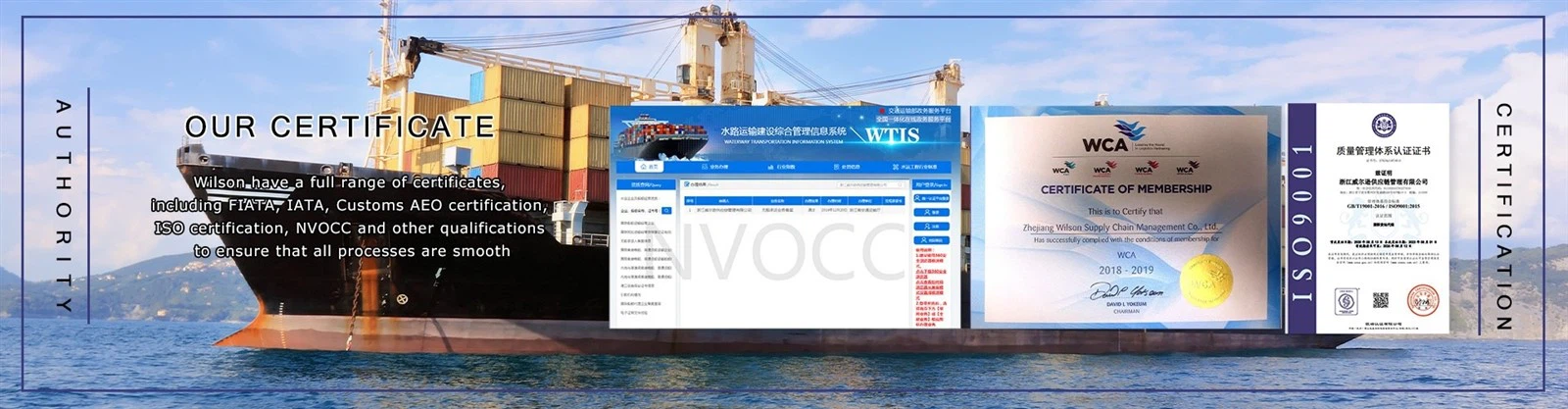
Established in 2011 and headquartered in Ningbo, China, with offices in Shanghai, Shenzhen, and Hong Kong, Wilson has built a robust global logistics network to support importers worldwide. Here's why Wilson is the ideal choice for your customs clearance and logistics needs:
- Proven Expertise: With over a decade of experience, our team of 26 logistics professionals handles 56,000 TEUs annually, ensuring efficient and reliable service for clothing imports.
- Comprehensive Services: From document preparation and HS code classification to customs clearance and door-to-door delivery, Wilson provides end-to-end solutions, including FCL, LCL, and DDP services, tailored to your shipment size and requirements.
- Global Reach with Local Knowledge: Our strategic locations in China's major ports and partnerships with leading carriers (e.g., COSCO, Maersk) enable us to navigate Chinese export regulations and importing country requirements seamlessly.
- Cost Efficiency: We leverage our industry relationships and expertise in free trade agreements (e.g., RCEP) to secure competitive rates and optimize tariff savings, helping you manage costs effectively.
- Reliability and Transparency: With a consistent 10% annual growth rate and a commitment to on-time delivery, Wilson uses advanced tracking systems to provide real-time updates, ensuring your clothing shipments arrive as scheduled.
- Specialized Support: Our experience with specialized cargo, such as textiles and apparel, ensures compliance with clothing label requirements, inspection and quarantine standards, and intellectual property regulations, minimizing risks.
By partnering with Wilson, you gain a dedicated ally to simplify the complexities of customs clearance, reduce risks, and ensure your clothing imports from China reach their destination efficiently and compliantly. Contact us today to optimize your supply chain and elevate your import experience.
Conclusion
Importing clothing from China offers significant opportunities but requires careful navigation of the customs clearance process to avoid delays and costs. By understanding the essential steps-preparing accurate documents like the commercial invoice and certificate of origin, ensuring correct HS code classification, and complying with clothing label and safety regulations-importers can streamline operations and minimize risks. Partnering with an experienced freight forwarder like Zhejiang Wilson Supply Chain Management Co., Ltd. can further simplify the process, leveraging our global network and expertise to ensure efficient, compliant, and cost-effective imports. Contact Wilson today to optimize your clothing import journey and unlock the full potential of your supply chain. Email: gm@wilson-cargo.com
Main information sources:
ETCN: https://hs.e-to-china.com/
European Union: https://european-union.europa.eu/index_en
Wikipedia: https://en.wikipedia.org/