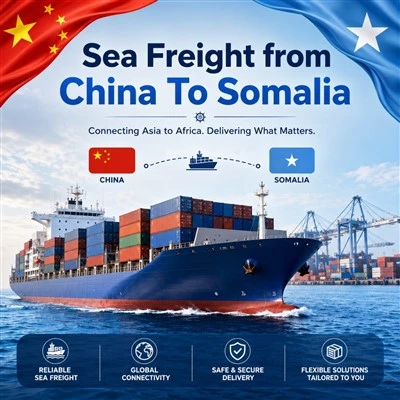
In today's thriving international trade landscape, more and more small and medium-sized enterprises (SMEs) are importing goods from China to expand their businesses. However, when faced with the two primary transportation modes-rail transport and sea freight -many SME decision-makers find themselves in a dilemma. This article provides a comprehensive analysis of the advantages and disadvantages of rail transport and sea freight, covering factors such as cost, transit time, cargo characteristics, and destination. It aims to guide SMEs in making optimized logistics decisions to gain a competitive edge in the market.

Cost Comparison: How SMEs with Limited Budgets Should Choose
Cost control is a core consideration for SMEs, and price is often a decisive factor in selecting an international logistics method. Sea freight excels in cost due to its economies of scale, making it ideal for low-value, high-volume cargo. Industry data shows that sea freight unit costs decrease significantly with larger shipment volumes, as large container ships distribute fixed costs across more cargo, keeping overall freight rates low. For SMEs with low-value, high-volume orders and flexible timelines, sea freight is undoubtedly the most economical choice.
Rail transport, on the other hand, typically has a higher absolute cost than sea freight but is significantly cheaper than air freight, positioning it as a middle-ground option. Notably, the cost structure of rail transport has unique characteristics: per-kilometer costs decrease with longer distances, making it potentially more cost-competitive than sea freight on specific medium-to-long routes, such as China to parts of Europe. Additionally, rail transport can directly reach inland countries in Central Asia and Central Europe, avoiding the secondary transport costs of sea freight combined with road transport. For SMEs with destinations in inland cities, this can result in lower overall logistics costs.
Delving deeper into cost structures, sea freight fees are typically calculated based on volume or weight, following the principle that heavy cargo is cheaper than light cargo. SMEs should note that while sea freight base rates are low, additional costs like port congestion fees and fuel surcharges can fluctuate due to global events, potentially increasing expenses unexpectedly. In contrast, rail transport fees are relatively stable and less affected by international disruptions, enabling SMEs to plan budgets more accurately.
For SMEs with tight cash flow, capital turnover efficiency is another factor. Although sea freight has lower per-shipment costs, its longer transit times mean prolonged capital tie-up. Rail transport, despite higher fees, offers faster turnover, potentially improving cash flow efficiency. SMEs must evaluate their financial situation to select the most suitable transportation mode.
Table: Cost Comparison of Sea Freight and Rail Transport
|
Cost Factor |
Sea Freight |
Rail Transport |
|
Base Freight Rate |
Low (especially for bulk cargo) |
Medium (30-50% higher than sea freight) |
|
Additional Fees |
Port fees, fuel surcharges fluctuate |
Cross-border transfer fees relatively fixed |
|
Secondary Transport Costs |
High for inland cities |
Direct delivery to inland stations |
|
Economies of Scale |
Significant (larger volume, lower unit cost) |
Moderate (less impacted by volume) |
|
Best Use Case |
Low-value, high-volume, low time sensitivity |
Medium-value, medium-volume, moderate time sensitivity |
Transit Time Analysis: Balancing Speed and Cost for SMEs
Transit time is a critical factor for SMEs, directly impacting inventory management, market responsiveness, and customer satisfaction. While sea freight is cost-effective, its transit speed is significantly slower, typically taking 30-45 days from China to Europe. Delays due to port congestion, adverse weather, or route adjustments can further extend transit times. This long duration requires SMEs to plan purchases well in advance and maintain higher safety stock levels, putting pressure on cash flow. For seasonal or trend-sensitive products, such as fashion items, prolonged transit times may lead to missed sales opportunities, resulting in excess inventory and financial losses.
In contrast, rail transport offers a significant advantage in transit time. From China to Europe, rail transport typically takes 15-20 days, nearly half the time of sea freight. For specific routes, such as eastern China to Moscow, rail transport can take as little as 5-15 days, far faster than sea freight. This shorter transit time allows SMEs to respond more flexibly to market demand changes, reduce safety stock levels, and accelerate capital turnover. For time-sensitive orders or tight delivery schedules, rail transport is the superior choice.
Notably, rail transport also provides greater time reliability. It is less affected by weather or sea conditions, ensuring a safer and more stable transport process. Sea freight, however, is often impacted by typhoons, fog, or widespread port congestion, making transit times harder to predict. For SMEs with limited supply chain management capabilities, the predictability of rail transport facilitates better production and sales planning.
In practice, SMEs can adopt a hybrid strategy, selecting transportation modes based on product characteristics and market needs. For example, time-sensitive new or bestselling products can use rail transport for quick market entry, while regular or replenishment stock can use sea freight to control costs. This approach balances speed and cost, maximizing supply chain efficiency.
For SMEs with strict delivery agreements, transit time is even more critical. If clients demand tight deadlines with high penalties for delays, rail transport, despite higher costs, may align better with overall business interests by reducing the risk of late deliveries and associated penalties. SMEs must assess the hidden costs of delays to make informed decisions.

Cargo Characteristics and Suitability: Which Goods Fit Which Mode
The physical characteristics and commercial value of cargo significantly influence the choice of transportation mode, and SMEs must make decisions based on the specific attributes of their goods. Sea freight is ideal for bulk commodities and standardized industrial products, such as raw materials, primary processed goods, and daily consumer products. These goods typically have low unit value, large volumes, and long shelf lives, with low sensitivity to transit time. The high capacity of sea freight (a single large container ship can carry tens of thousands of standard containers) perfectly matches the needs of such cargo. Additionally, sea freight containers offer good sealing and stability, meeting the protection requirements of most standard industrial goods.
Rail transport is better suited for medium-value goods with specific transport condition requirements. Using containerized transport, rail transport has a low cargo damage rate, making it preferable for precision instruments, pharmaceuticals, and high-end electronics that demand controlled transport environments. With advancements in refrigerated container technology, rail transport is increasingly used for temperature-sensitive goods like food and biologics, offering a faster alternative to sea freight and a more economical option than air freight. For SMEs shipping such goods, rail transport often strikes the best balance.
The volume and weight of cargo also play a key role. Sea freight typically offers better rates for heavy cargo (high-density goods), while light, voluminous cargo may face higher fees. Rail transport pricing is more balanced, with less variation between heavy and light cargo. For heavy goods like machinery or construction materials, sea freight may have a cost advantage. For lighter goods like electronics or textiles, rail transport narrows the cost gap and, combined with its speed advantage, may offer better overall value.
The seasonality and market timeliness of goods also influence the choice. For seasonal products like holiday gifts, seasonal apparel, or gardening supplies, precise market timing is critical, and rail transport's speed reduces the risk of missing sales windows. Conversely, for non-seasonal, standard goods, sea freight's cost advantage is more appealing. SMEs must assess the time sensitivity of their goods to make choices aligned with commercial interests.
Special cargo, such as hazardous materials or oversized goods, requires additional consideration. Sea freight has extensive experience and infrastructure for handling such cargo, while rail transport faces more restrictions. SMEs shipping special cargo should consult logistics providers to confirm technical feasibility and regulatory requirements.
Destination Factors: How Geography Influences SME Choices
The geographic location of the destination is a critical factor in choosing between sea freight and rail transport, as regional characteristics directly impact efficiency and overall logistics costs. In terms of geographic coverage, sea freight has an unmatched advantage, serving major coastal countries and port cities worldwide. In contrast, rail transport is limited to regions with rail connections to China, primarily Central Asia, Russia, and continental Europe. For SMEs shipping to North America, South America, Africa, or Australia, sea freight is often the only cost-effective option due to the lack of rail connectivity.
Focusing on the Asia-Europe corridor, rail transport offers unique value for inland cities. The China-Europe Railway Express covers over 200 cities in 24 European countries, delivering cargo directly to inland destinations and avoiding the complexity and cost of sea freight plus road transport. For SMEs with clients in inland cities like Duisburg, Warsaw, or Budapest, rail transport can save time and potentially reduce overall logistics costs. Conversely, for destinations like Hamburg, Rotterdam, or Antwerp-major port cities-sea freight is often more convenient and economical.
Regional policy environments also influence the choice. China's Belt and Road Initiative has driven railway infrastructure investments and policy support, enhancing the efficiency and network of the China-Europe Railway Express, creating opportunities for SMEs. Some inland countries offer customs clearance benefits or tax incentives for rail transport cargo to boost economic development, which SMEs can leverage when exploring emerging markets. Staying informed about regional logistics policies is essential.
From an infrastructure perspective, destination ports and rail stations vary significantly. Western European countries typically have advanced rail networks and efficient cargo handling, while some Eastern European and Central Asian countries may have less developed infrastructure, potentially reducing rail transport efficiency. Similarly, outdated equipment or poor management at ports in some developing countries can cause significant sea freight delays. SMEs should research destination logistics infrastructure and, if needed, consult professional freight forwarding companies.
Notably, intermodal solutions combining sea freight and rail transport can leverage the strengths of both. For example, goods can be shipped via sea freight to a major port and then transferred to rail transport for inland delivery, potentially offering better efficiency than either mode alone. SMEs can explore such innovative logistics solutions to optimize their supply chains.

SME Decision-Making Strategy: Tailoring Choices to Business Needs
Choosing between sea freight and rail transport is not a simple binary decision but a complex evaluation based on an SME's unique characteristics and business needs. Establishing a scientific decision framework can guide rational choices. Order value is a primary factor: low-value, high-volume orders with flexible timelines favor sea freight, while high-value orders with tight deadlines or time sensitivity benefit from rail transport. SMEs should assess order profitability and cost sensitivity to select a transportation mode that aligns with their financial capacity.
Supply chain strategy also shapes the decision. SMEs prioritizing cost leadership can opt for sea freight to maximize savings while maintaining basic service levels, whereas those pursuing differentiation or rapid response strategies may require rail transport's speed. Aligning transportation choices with overall business strategy is critical. For instance, e-commerce businesses facing consumer expectations for fast delivery may prefer rail transport, while traditional wholesale traders with lower time sensitivity can leverage sea freight's cost benefits.
In practice, SMEs can follow this step-by-step evaluation process:
- Identify cargo characteristics (type, value, volume/weight, time sensitivity).
- Determine destination and client requirements (location, delivery deadlines).
- Assess internal resources (cash flow, inventory capacity, risk tolerance).
- Compare total costs (freight, insurance, capital tie-up costs).
- Consider potential risks and contingency plans (delays, client communication).
Risk management is a critical yet often overlooked aspect. Sea freight risks include delays (weather, congestion), cargo moisture damage, and piracy threats, while rail transport may face border delays or political disruptions. SMEs should evaluate risk significance based on cargo type and consider appropriate transport insurance. During periods of global instability, rail transport's relative stability may be a deciding factor.
Adopting a hybrid transportation strategy can optimize the supply chain. Instead of relying on a single mode, SMEs can adjust strategies based on product lifecycle stages-using rail transport for new product launches to ensure quick response and switching to sea freight for mature products to cut costs. SMEs can also apply ABC product classification, using rail transport for high-value A-class products and sea freight for B/C-class products to maximize efficiency. As businesses grow, SMEs should periodically reassess transportation choices to adapt to market changes and business development.
Conclusion
Finally, SMEs don't need to navigate complex logistics decisions alone. Partnering with professional freight forwarding services can provide expertise and tailored solutions. Many international freight forwarders offer intermodal and customized services, designing optimal transportation plans based on SME needs. Building long-term, stable relationships with logistics partners can secure better rates and reliable service, giving SMEs a competitive edge in international trade.
Zhejiang Wilson Supply Chain Management Co., Ltd., founded in 2011 and headquartered in Ningbo, China, stands as a leading international freight forwarder and supply chain solutions provider. With offices in Shanghai, Shenzhen, and Hong Kong, we deliver a comprehensive range of transportation services from China to key global markets, including the Americas, Europe, the Middle East, Africa, Oceania, and Asia.
Serving diverse industries such as chemical, automotive, food, and energy, we specialize in streamlining supply chains and building sustainable, efficient global logistics networks. Our intermodal and customized services design optimal transportation plans tailored to SME needs, ensuring cost-effective and reliable solutions. Contact us now for professional freight forwarding services. Email: gm@wilson-cargo.com