Sea freight looks simple from the outside: cargo is loaded into a container, placed on a vessel, shipped across the ocean, and delivered to the buyer.
That is only part of the story.
In real international trade, sea freight is a chain of linked operations. Cargo has to be assessed, packed, booked, loaded, cleared through customs, moved through ports, carried by vessel, released at destination, and delivered inland. At the same time, documents must move correctly between the seller, buyer, freight forwarder, carrier, customs broker, and destination agent.
A shipment can fail even when the vessel sails on time. Wrong cargo details, poor packaging, missing import documents, unclear destination charges, or late customs clearance can delay the entire shipment.
This guide explains how sea freight works from supplier to final destination. It is written for importers, exporters, manufacturers, procurement teams, and businesses that need a practical understanding of the ocean shipping process before they book cargo.

Quick Answer: How Does Sea Freight Work?
Sea freight works by transporting cargo internationally by ocean vessel, usually inside shipping containers. The process starts with cargo assessment and booking, then moves through pickup, container loading, export customs clearance, port handling, ocean transit, import customs clearance, cargo release, and final delivery.
A complete sea freight process usually includes these steps:
- Assess the cargo and shipping requirements.
- Request a sea freight quote.
- Confirm Incoterms and shipping responsibilities.
- Book space with the carrier.
- Arrange cargo pickup or warehouse delivery.
- Load the container and move it to the port.
- Complete export customs clearance.
- Handle port operations and vessel loading.
- Track the cargo during ocean transit.
- Prepare arrival notice and import customs clearance.
- Pay destination charges and release the cargo.
- Deliver the cargo to the consignee.
Port-to-port shipping covers only the ocean leg between two ports. Door-to-door sea freight covers the full movement from the supplier's location to the consignee's warehouse, factory, distribution center, project site, or Amazon FBA warehouse.
That distinction matters. Many cost disputes and delays happen outside the ocean transit itself.
What Is Sea Freight?
Sea freight, also called ocean freight, is the transportation of goods by cargo ship across international waters. In most commercial shipments, goods are packed into containers and loaded onto container vessels. For oversized machinery, project cargo, bulk commodities, or vehicles, other vessel types and equipment may be used.
Sea freight is widely used because it offers three practical advantages.
First, it can move large quantities at a lower unit cost than air freight. A 40-foot container can carry thousands of cartons, dozens of pallets, or large industrial equipment that would be far too expensive to move by air.
Second, ocean vessels provide high capacity. A single container ship can carry thousands of TEUs, which is why sea freight supports a large share of global merchandise trade by volume.
Third, sea freight gives businesses access to global markets. From major Chinese ports such as Ningbo, Shanghai, Shenzhen, Qingdao, Xiamen, and Guangzhou, cargo can move to Europe, North America, South America, the Middle East, Africa, Southeast Asia, and many other regions.
Sea freight is not the best answer for every shipment. If the cargo is urgent, very small, high-value, or needed within days, air freight or courier service may be more suitable. But for heavy, bulky, non-urgent, and regular B2B shipments, ocean freight is usually the base option.
Who Is Involved in the Sea Freight Process?
A sea freight shipment is not handled by one company alone. It requires coordination between several parties. When one party gives wrong information or misses a deadline, the shipment can be delayed even if every other party does its job.
Shipper, Consignee, and Notify Party
The shipper is the party sending the goods. In export trade, this is usually the supplier, seller, manufacturer, or export company.
The consignee is the party legally entitled to receive the cargo at destination. This may be the buyer, importer, trading company, distributor, or appointed receiver.
The notify party is the party that receives arrival information when the cargo reaches the destination port. In many cases, the notify party is the buyer, the buyer's customs broker, or the destination freight forwarder.
These names often appear on the Bill of Lading. If the consignee name, address, tax number, or notify party details are wrong, the shipment may be blocked at destination until the document is corrected.
Freight Forwarder, Carrier, and Customs Broker
A freight forwarder coordinates the movement of cargo across different service providers. In sea freight, the forwarder may arrange booking, trucking, warehousing, export customs, document checking, port coordination, shipment tracking, destination agent support, and final delivery.
The carrier is the shipping line that operates or controls the vessel space. Examples include container carriers that provide scheduled services between ports.
A customs broker handles import or export customs declarations. In some countries, the freight forwarder may also provide customs brokerage. In other markets, the importer must appoint a licensed customs broker separately.
The forwarder is not simply a middleman. A competent sea freight forwarder helps the customer avoid wrong routing, incomplete documents, hidden charges, missed cut-off times, and poor container planning.
Trucking Company, Warehouse, Port, and Terminal
The trucking company handles inland transport. At origin, this may mean picking up cargo from a factory or delivering an empty container to the shipper for loading. At destination, it may mean collecting a full container from the port and delivering it to a warehouse.
A warehouse may be used for LCL consolidation, cargo inspection, repacking, labeling, palletizing, temporary storage, or multi-supplier consolidation.
The port and terminal handle container gate-in, storage, customs inspection areas, vessel planning, crane operations, loading, and unloading. These operations are controlled by fixed cut-off times. Missing one cut-off can push a shipment to the next vessel.
Sea freight is a coordinated process. The vessel is only one part of the chain.
Step-by-Step Sea Freight Process from Supplier to Destination
The best way to understand ocean shipping is to follow the cargo from the supplier's side to the final receiver. The steps below reflect how a real sea freight shipment normally moves.
Step 1: Assess the Cargo and Shipping Requirements
The first step is not booking. It is cargo assessment.
Before a forwarder can recommend FCL, LCL, special container shipping, or door-to-door sea freight, the cargo details must be clear. A basic cargo assessment includes:
- Product name and material
- HS Code, if available
- Gross weight and volume
- Number of cartons, pallets, crates, drums, or machines
- Packing method
- Cargo ready date
- Pickup address and delivery address
- Whether the cargo is dangerous, oversized, overweight, fragile, temperature-sensitive, liquid, powder, battery-related, or chemical-related
This step affects the whole shipment.
A normal batch of boxed garments may move in a standard dry container. A shipment of lithium batteries, paint, resin, adhesive, or chemical additives may require MSDS review, dangerous goods classification, special labels, and carrier approval. A 12-ton industrial machine may need a flat rack container, lifting plan, lashing plan, and port confirmation.
Special cargo must be identified before booking, not after the container is loaded.
Step 2: Request a Sea Freight Quote
A sea freight quote is a cost estimate for moving cargo from one point to another by ocean freight. A proper quotation should match the shipment scope, not just list the ocean freight rate.
For an accurate quote, the forwarder usually needs:
- Origin and destination
- Port-to-port or door-to-door service scope
- Cargo name
- Weight and volume
- Package type
- Container type, if known
- Incoterms
- Cargo ready date
- Whether export customs or import customs support is needed
- Whether the cargo is hazardous, oversized, refrigerated, fragile, or high-value
A weak quote only shows the ocean freight. A useful quote separates origin charges, ocean freight, destination charges, customs-related costs, and final delivery where applicable.
This is where many buyers make a mistake. They compare only the sea freight rate from Port A to Port B, then discover destination charges, warehouse fees, demurrage, detention, or inland delivery costs later.
Step 3: Confirm Incoterms and Shipping Responsibilities
Incoterms are international trade terms that define who pays for transport, who carries the risk, and where responsibility transfers between seller and buyer.
They directly affect the sea freight process.
| Incoterm | Basic Meaning | Common Sea Freight Impact |
|---|---|---|
| EXW | Buyer collects from seller's premises | Buyer handles pickup, export process, main freight, import, and delivery. Risky for beginners if export control is unclear. |
| FOB | Seller delivers cargo on board at origin port | Buyer controls ocean freight, destination charges, import clearance, and delivery. Common for importers who want control over shipping. |
| CIF | Seller pays cost, insurance, and freight to destination port | Seller controls the main freight. Buyer still handles import clearance and local destination costs. |
| DAP | Seller delivers to named destination, excluding import duties/taxes | Useful when buyer wants delivery support but handles import taxes. |
| DDP | Seller delivers with duties paid | Easiest for buyer, but usually more expensive and requires strong destination compliance control. |
FOB and CIF are common in sea freight. EXW can work, but it gives the buyer more responsibility at origin. DDP is convenient for the buyer, but it must be handled carefully because import tax, customs compliance, and local delivery rules vary by country.
Before booking, both sides should know exactly where the seller's responsibility ends and where the buyer's responsibility begins.
Step 4: Book Space with the Carrier
After the service scope is confirmed, the freight forwarder books vessel space with a carrier.
For FCL, the booking is usually based on container type, quantity, origin port, destination port, sailing date, and cargo details. For LCL, the booking is usually based on volume, weight, warehouse cut-off time, and destination CFS arrangements.
The booking process may involve:
- Shipping Instruction
- Booking request
- Carrier space confirmation
- Booking Confirmation
- S/O or container release instruction
- Empty container pickup arrangement
For regular cargo, booking may be straightforward. For dangerous goods, refrigerated cargo, open top containers, flat rack containers, heavy machinery, or project cargo, the carrier may need extra time to review the shipment.
During peak season, before Chinese New Year, or before major retail seasons, cargo should be booked earlier. Waiting until the cargo is ready can lead to no space, higher rates, rolled cargo, or missed delivery schedules.
Step 5: Arrange Cargo Pickup or Warehouse Delivery
Once the booking is confirmed, cargo has to move from the supplier to the port system.
There are several common origin arrangements.
For FCL shipping, an empty container is often released from the container yard and delivered by truck to the factory. The shipper loads the cargo, closes the doors, applies the seal, and records the seal number. The full container is then trucked to the port terminal.
For LCL shipping, the supplier usually delivers cargo to a consolidation warehouse. The warehouse measures the cargo, checks packaging, labels it, and consolidates it with other shippers' cargo heading to the same destination.
For multi-supplier shipments, a freight forwarder may arrange cargo collection from several factories and consolidate the goods into one container. This is common for importers buying from multiple Chinese suppliers across Ningbo, Yiwu, Guangzhou, Shenzhen, Foshan, or Shanghai.
At this stage, details matter. Carton marks, pallet condition, cargo photos, seal number, package count, and loading records can help solve disputes later.
Step 6: Load the Container and Move It to the Port
Container loading is not just physical labor. It affects cargo safety, container weight balance, customs accuracy, and unloading efficiency at destination.
There are two common loading models.
| Loading Method | Best For | Main Advantage | Main Risk |
| Factory loading | FCL, large shipment, single supplier | Less cargo handling, better cargo control | Poor loading plan can cause damage or overweight problems |
| Warehouse loading | LCL, multi-supplier cargo, mixed products | Better consolidation, inspection, labeling, and repacking | More handling steps and warehouse charges |
For dry containers, common equipment includes 20GP, 40GP, and 40HQ. The container must not exceed weight limits, road limits, or port limits. Heavy cargo should be distributed correctly across the container floor.
After loading, the container moves to the terminal before the cut-off time. The shipper or forwarder may also need to submit VGM, which stands for Verified Gross Mass. VGM is the verified weight of the packed container required before vessel loading.
If VGM, customs release, or terminal gate-in is late, the container may miss the vessel.
Step 7: Complete Export Customs Clearance
Export customs clearance is the process of declaring goods to the origin country's customs authority before they leave the country.
For a standard export shipment from China, the documents may include:
- Commercial Invoice
- Packing List
- Sales contract
- Customs declaration details
- HS Code
- Export license, if required
- Inspection or quarantine documents, if required
- MSDS or dangerous goods documents, if applicable
Customs may release the cargo directly or select it for inspection. If the cargo is inspected, the forwarder, warehouse, or shipper must cooperate with the customs process.
Document errors cause real costs. A mismatch in product name, weight, quantity, consignee details, or HS Code can delay export release. If the delay crosses the terminal or customs cut-off, the container may miss the booked vessel even if the cargo is already inside the port.
Step 8: Port Handling and Vessel Loading
After the container enters the port, the terminal takes over physical handling. The container is stacked in the yard, assigned to a vessel plan, and loaded by crane when the ship is ready.
Port handling may include:
- Gate-in
- Terminal storage
- Customs inspection movement, if selected
- Container yard planning
- Loading onto vessel
- Terminal handling charges
Once the cargo is loaded, the carrier issues or confirms the Bill of Lading details. The Bill of Lading, often called B/L, is one of the most important documents in sea freight. It works as a transport contract, cargo receipt, and in many cases a document of title.
The cargo is now on board, but the shipment is not finished. The document process and destination process still need close control.
Step 9: Ocean Transit and Shipment Tracking
Ocean transit is the vessel movement from the port of loading to the port of discharge. This is the part most people think of when they hear "sea freight."
Transit time depends on the route. A short regional shipment may take several days. A long intercontinental route may take several weeks. Some services are direct. Others move through transshipment ports, where containers are transferred from one vessel to another.
Common factors that affect ocean transit time include:
- Direct service or transshipment
- Port rotation
- Vessel schedule reliability
- Weather
- Congestion at origin or destination port
- Peak season cargo volume
- Canal or route disruption
- Customs or terminal delays
The ETA, or estimated time of arrival, is not a delivery date. It only estimates when the vessel may arrive at the destination port.
A good forwarder tracks the vessel schedule, transshipment status, arrival notice, document release, and destination clearance preparation. This helps the consignee plan customs, payment, warehouse booking, and final delivery.
Step 10: Arrival Notice and Import Customs Clearance
Before the vessel arrives, the carrier or destination agent issues an Arrival Notice. This document informs the consignee that the cargo is approaching the destination port and provides details needed for cargo release.
Import customs clearance is the process of declaring goods to the destination country's customs authority. The required documents vary by country and product, but common documents include:
- Bill of Lading
- Commercial Invoice
- Packing List
- Certificate of Origin
- Import license, if required
- Product certificates, if required
- HS Code and duty information
- Dangerous goods or compliance documents, if applicable
The importer may need to pay customs duties, VAT, GST, or other taxes before the cargo can be released.
Import clearance should begin before the vessel arrives whenever possible. Waiting until the container is already at the port can create storage costs, demurrage, and delivery delays.
Step 11: Pay Destination Charges and Release the Cargo
After import procedures are ready, the consignee or destination agent must pay local charges and complete cargo release.
Destination charges may include:
- Destination THC
- Delivery Order fee
- Documentation fee
- Container handling fee
- Storage
- Demurrage
- Detention
- CFS charges for LCL
- Customs inspection fees
- Port security or local administrative fees
The Delivery Order, often called D/O, allows the consignee or appointed trucker to collect the cargo from the carrier, terminal, or warehouse.
Many importers underestimate destination charges. This is especially common in LCL shipments, where warehouse handling, deconsolidation, and local CFS charges can be higher than expected.
A low ocean freight rate can become expensive if the destination side is not clear.
Step 12: Final Delivery to the Consignee
The final step is inland delivery.
For FCL, the full container is picked up from the port and delivered to the consignee's warehouse or facility. After unloading, the empty container must be returned within the allowed free time. Late return may create detention charges.
For LCL, the container is opened at the destination warehouse, cargo is separated by consignee, and the goods are released for pickup or local delivery.
For Amazon FBA, retail distribution centers, project sites, factories, or construction locations, delivery often requires appointment booking. Some receivers have strict rules on pallet height, labeling, delivery windows, truck type, tail lift requirements, or unloading method.
Final delivery is where planning becomes visible. If the consignee is not ready, the cargo may sit at the port or warehouse even after customs release.

FCL vs LCL: Which Sea Freight Option Should You Choose?
FCL and LCL are the two most common container shipping options.
FCL means Full Container Load. The shipper uses the whole container. LCL means Less than Container Load. The shipper pays for part of a shared container, and the cargo is consolidated with shipments from other customers.
Neither option is automatically better. The right choice depends on cargo volume, value, packaging, timeline, risk tolerance, and destination cost structure.
| Factor | FCL Shipping | LCL Shipping |
| Best for | Larger shipments, high-volume cargo, valuable cargo, fragile cargo | Smaller shipments, trial orders, sample batches, low-volume procurement |
| Container use | One shipper uses the full container | Multiple shippers share one container |
| Cost logic | Container-based | Usually based on CBM or weight |
| Handling | Fewer cargo handling steps | More warehouse handling and deconsolidation |
| Cargo control | Higher | Lower |
| Damage risk | Usually lower if loaded well | Higher due to more handling |
| Destination charges | Often clearer for full container movement | Can be complex due to CFS and warehouse fees |
| Transit stability | Usually more stable | May be affected by consolidation and deconsolidation schedules |
FCL is often better when the cargo volume is large enough, when the buyer wants better cargo control, or when the goods are fragile, high-value, or difficult to handle.
LCL works well for smaller orders. But LCL should not be chosen only because the shipment is small. Buyers should check destination CFS charges, cargo handling risks, and delivery timing before deciding.
Common Container Types Used in Sea Freight
Most sea freight moves in standard containers, but not all cargo fits a standard box. Choosing the wrong container type can create loading failure, cargo damage, extra port charges, or carrier rejection.
| Container Type | Common Use | Approximate Capacity or Feature |
| 20GP | Heavy cargo, machinery parts, tiles, metal products, dense goods | Around 28 CBM usable volume, subject to weight and loading limits |
| 40GP | General cargo, cartons, furniture, consumer goods | Around 58 CBM usable volume |
| 40HQ | Light but bulky cargo, furniture, textiles, plastic products | Around 68 CBM usable volume, taller than 40GP |
| Reefer container | Frozen food, fresh food, pharmaceuticals, temperature-sensitive goods | Temperature-controlled equipment |
| Open top container | Tall machinery, glass sheets, equipment loaded from the top | Removable top cover or tarpaulin |
| Flat rack container | Oversized machinery, vehicles, industrial equipment, project cargo | No side walls or roof, suitable for over-width or heavy cargo |
The quoted CBM capacity is only a guide. Actual loading depends on package dimensions, pallet use, cargo weight, stacking strength, and legal road weight limits at origin and destination.
For oversized machinery, chemical products, refrigerated cargo, or heavy equipment, container selection should be reviewed before quotation. Changing equipment after booking can delay the shipment and increase cost.
What Documents Are Required for Sea Freight?
Sea freight depends on documents as much as physical cargo movement. The container may travel smoothly, but if the documents are wrong, the consignee may not be able to clear or collect the goods.
Core Shipping Documents
| Document | What It Does |
| Bill of Lading | Acts as transport contract, cargo receipt, and sometimes document of title |
| Commercial Invoice | Shows seller, buyer, goods value, currency, trade terms, and customs value |
| Packing List | Shows package count, weight, volume, dimensions, and packing details |
| Certificate of Origin | Confirms where goods were made; may affect duty treatment |
| Arrival Notice | Tells the consignee the cargo is arriving and provides release information |
The Bill of Lading deserves special attention. If the consignee details are wrong, if the release method is unclear, or if the original B/L is lost, cargo release can become difficult.
Customs and Compliance Documents
Depending on the product and country, customs may require extra documents. These may include import licenses, export licenses, inspection certificates, product certificates, test reports, or regulatory approvals.
Examples include CE-related documents for certain goods entering the European market, FDA-related requirements for certain food or medical products entering the United States, and product-specific safety or labeling requirements in other countries.
A freight forwarder can guide the logistics side, but the importer should also confirm product compliance before shipment. Customs clearance is not the right time to discover that a product requires a missing license.
Special Cargo Documents
Special cargo often needs documents beyond the normal invoice and packing list.
Dangerous goods may require MSDS, dangerous goods declaration, proper UN number, packing group, hazard class, label, and carrier approval.
Battery cargo may need battery test summaries or transport safety documents.
Reefer cargo may need temperature instructions.
Oversized cargo may need a loading plan, lashing plan, lifting details, and special equipment confirmation.
VGM is also required for loaded containers before vessel loading. If the packed container weight is not verified correctly, the container may not be accepted for loading.
Why Document Consistency Matters
Document consistency is one of the most common causes of avoidable delay.
The cargo name, HS Code, number of packages, gross weight, net weight, volume, shipper, consignee, notify party, and marks should match across the Commercial Invoice, Packing List, Bill of Lading, customs declaration, and other documents.
Small errors can create large delays. A wrong consignee tax number, mismatched package count, unclear cargo description, or incorrect HS Code may lead to customs questions, B/L amendment fees, inspection, storage, or missed delivery windows.
This is one of the areas where a careful freight forwarder adds real value.
How Much Does Sea Freight Cost?
Sea freight cost is not one number. It is a combination of origin charges, ocean freight, destination charges, customs-related costs, and inland delivery.
The base ocean freight rate is only one part of the total cost.
Ocean Freight Rate Components
Ocean freight rates change based on carrier capacity, route, season, fuel price, equipment availability, and market demand. Common rate components include:
| Cost Item | Meaning |
| Base Ocean Freight | Main cost to move the container or LCL cargo from origin port to destination port |
| BAF | Fuel-related surcharge |
| CAF | Currency adjustment surcharge |
| GRI | General rate increase applied by carriers during certain market periods |
| PSS | Peak season surcharge, often seen before high-volume shipping periods |
| Equipment surcharge | May apply when certain container types are in short supply |
Rates can change from week to week on some trade lanes. During peak season or capacity shortages, a quote may not remain valid for long.
Total Sea Freight Cost Components
A complete sea freight cost may include:
| Stage | Possible Charges |
| Origin inland | Pickup trucking, empty container pickup, warehouse delivery |
| Origin handling | Loading, warehouse fee, palletizing, labeling, export handling |
| Export process | Customs declaration, inspection, documentation |
| Port origin | THC, terminal fee, port security, VGM-related cost |
| Ocean leg | Base ocean freight, fuel surcharge, peak season surcharge |
| Destination port | Destination THC, D/O fee, documentation, port fees |
| Customs | Import declaration, duties, VAT/GST, inspection |
| Destination inland | Container delivery, LCL delivery, warehouse delivery |
| Delay-related | Storage, demurrage, detention, waiting time |
The buyer should ask whether the quote is port-to-port, port-to-door, door-to-port, or door-to-door. The same ocean freight rate can lead to very different total landed costs.
Common Hidden or Overlooked Costs
The most common hidden costs are not hidden by law. They are overlooked because the buyer only checks the ocean freight line.
These costs often include:
- Destination port charges
- LCL CFS charges
- Demurrage
- Detention
- Storage
- Customs inspection fees
- B/L amendment fees
- Truck waiting time
- Failed delivery appointment charges
Demurrage is usually charged when a container stays too long inside the port or terminal. Detention is usually charged when the consignee keeps the container outside the terminal longer than the free time.
Both can be avoided with early document preparation, fast customs clearance, and realistic delivery planning.
How Long Does Sea Freight Take?
Sea freight time should be measured in two ways: port-to-port transit time and door-to-door delivery time.
Port-to-port time is the vessel movement between two ports. Door-to-door time includes everything from supplier pickup to final delivery.
Port-to-Port Transit Time
Port-to-port transit time depends mainly on the trade lane and vessel service.
A short Asia regional route may take less than one week. A China to Europe route usually takes several weeks. A China to North America route varies by coast, port, and routing. Transshipment services usually take longer than direct services.
Port-to-port time does not include cargo pickup, container loading, export customs, terminal cut-off, import clearance, or final delivery.
This is why a 25-day ocean transit does not mean the buyer will receive the cargo in 25 days.
Door-to-Door Shipping Time
Door-to-door sea freight time includes the full logistics chain.
For example, a shipment from a factory in Zhejiang to a warehouse in Germany may include:
- 1–3 days for origin pickup and container loading
- 1–3 days for export customs and port handling
- Several weeks of ocean transit
- Several days for destination port handling and import customs
- 1–5 days or more for final trucking, depending on inland distance and warehouse appointment
The actual timeline depends on the route, service level, customs preparation, and receiver readiness.
Door-to-door time is the more useful number for business planning.
Factors That Affect Sea Freight Time
Common causes of delay include:
- Late cargo readiness
- Missed warehouse cut-off
- Missed customs cut-off
- Vessel schedule change
- Rolled cargo
- Transshipment delay
- Port congestion
- Customs inspection
- Incomplete import documents
- Delayed duty payment
- Warehouse appointment failure
- Inland trucking shortage
The fastest ocean service is not always the best choice if the documents, customs, and final delivery plan are weak. Sea freight speed depends on the whole chain.
Common Risks in Sea Freight and How to Avoid Them
Sea freight risks are manageable, but only if they are identified early. Most problems do not come from the ocean itself. They come from planning gaps.
Booking and Schedule Risks
Cargo may miss a vessel because the booking was too late, the container was not released in time, the terminal cut-off was missed, or the carrier rolled the container to a later sailing.
This is common before Chinese New Year, during peak retail shipping months, or when equipment is tight.
The practical answer is simple: book earlier, provide complete cargo details, and keep cargo ready dates realistic.
Documentation and Customs Risks
Document errors can block both export and import.
Common problems include:
- Wrong HS Code
- Inconsistent cargo description
- Incorrect shipper or consignee details
- Missing certificate
- Wrong package count
- Underdeclared value
- Late B/L confirmation
- Missing import license
For regulated products, customs may ask for extra proof. If the importer cannot provide it quickly, storage and demurrage may start to build.
Documents should be checked before the vessel departs, not after arrival.
Packaging and Cargo Damage Risks
Ocean freight exposes cargo to long transit time, humidity, vibration, stacking pressure, forklift handling, and multiple loading points. LCL cargo may be handled more often than FCL cargo.
Packaging must match the route and cargo type.
Furniture may need moisture protection and reinforced outer packing. Machinery may need wooden crates, anti-rust treatment, base fixing, and lifting marks. Chemical drums need compliant packaging, labels, and secure loading. Fragile goods need inner protection, pallet stability, and clear marks.
Cheap packaging can make the freight cost look lower at origin and much higher after damage.
Special Cargo and Compliance Risks
Dangerous goods, chemicals, batteries, liquids, powders, refrigerated goods, oversized cargo, and controlled products need early review.
The forwarder must know the true cargo details before booking. Hiding dangerous goods or misdeclaring cargo is not a shortcut. It can lead to carrier rejection, port penalties, cargo seizure, safety incidents, or insurance problems.
For chemical logistics, large equipment, and special container shipping, the booking process should start with document review and equipment planning.
Destination Charges and Delivery Risks
Many disputes happen at destination.
The consignee may not expect local charges. Import documents may not be ready. Duties may not be paid. The warehouse may not have an appointment slot. The container may not be returned on time.
These are not minor administrative issues. They create storage, demurrage, detention, and truck waiting fees.
A good sea freight plan includes destination cost review before shipment, not after arrival.
How to Optimize Sea Freight Cost, Time, and Compliance
Sea freight optimization is not only about getting a lower rate. It is about matching the right service to the cargo, route, risk, and delivery requirement.

Cost Optimization
The first cost decision is FCL or LCL. For small shipments, LCL may reduce the starting cost. For larger or fragile shipments, FCL may reduce handling, damage risk, and destination complexity.
Other practical cost controls include:
- Consolidating cargo from multiple suppliers
- Avoiding peak season when possible
- Booking earlier
- Comparing total landed cost, not only ocean freight
- Reducing wasted carton or pallet space
- Choosing the right container size
- Checking destination charges before shipment
For importers buying from several Chinese suppliers, consolidation can make a real difference. Instead of shipping five small LCL shipments separately, the buyer may combine cargo into one FCL container or one controlled LCL shipment.
Transit Time Optimization
Transit time can be improved by choosing a better route, but the route is not the only factor.
Direct vessel services can reduce transit time, but they may cost more or have limited sailing dates. Transshipment services may be cheaper, but the schedule is more exposed to connection delays.
Good time control also means:
- Preparing documents before cargo is ready
- Confirming customs requirements early
- Booking before peak periods
- Monitoring cut-off dates
- Confirming destination delivery appointments
- Choosing suitable ports, not only the cheapest ports
For urgent cargo, some importers combine sea freight with air freight. For example, spare parts needed immediately may move by air, while bulk replenishment moves by sea.
Compliance Optimization
Compliance starts before booking.
The shipper and buyer should confirm HS Code, product certification, labeling, dangerous goods classification, import restrictions, and destination country requirements before the cargo leaves the factory.
For chemicals, batteries, medical-related goods, food-contact products, machinery, electronics, and children's products, compliance review is not optional. These cargo types often need product-specific documents.
A forwarder can guide the shipping process, but product compliance also depends on the importer, supplier, and destination regulations.
How to Choose a Reliable Sea Freight Forwarder
A sea freight forwarder should do more than offer a cheap rate. The forwarder should help the customer move cargo with fewer blind spots.
A reliable forwarder should be able to provide:
- Clear quotation scope
- FCL and LCL options
- Carrier booking support
- Trucking and warehouse coordination
- Export customs support
- Document checking
- Cargo tracking
- Destination agent coordination
- Import clearance support where available
- Door-to-door delivery planning
- Special cargo handling
Before choosing a forwarder, ask practical questions:
- Do they understand the export process from China?
- Can they handle both FCL and LCL?
- Can they manage chemical cargo, oversized cargo, reefer cargo, or special containers?
- Are destination charges explained clearly?
- Can they provide door-to-door service?
- Do they check documents before shipment?
- Do they have a process for vessel delay, customs inspection, or cargo damage?
- Can they coordinate multiple suppliers?
The cheapest quote is not always the lowest-cost solution. A weak forwarder may save a small amount on ocean freight and create much larger costs through delay, correction, storage, or poor communication.
How Wilson Supports Your Ocean Shipping Process
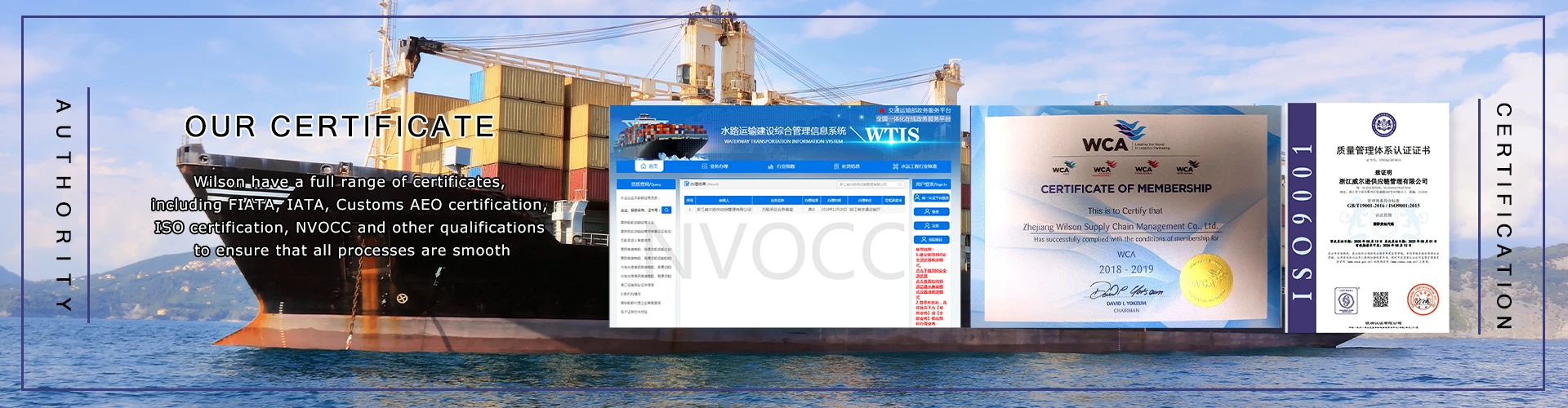
Zhejiang Wilson Supply Chain Management Co., Ltd. provides international freight forwarding and supply chain management services for businesses shipping from China to global markets.
Wilson supports sea freight shipments across FCL, LCL, export customs clearance, cargo pickup, warehousing, chemical logistics, oversized cargo, special container shipping, and door-to-door delivery. For customers buying from Chinese suppliers, Wilson can help coordinate cargo information, container selection, booking, documents, origin operations, and destination delivery planning.
The goal is not only to move cargo from one port to another. The goal is to help customers control cost, timing, documents, customs risk, and supply chain stability.
FAQ
Is sea freight cheaper than air freight?
Sea freight is usually cheaper than air freight for large, heavy, or bulky cargo. A full container of furniture, machinery, tiles, tools, or consumer goods would be very expensive by air. For urgent cargo, small parcels, or high-value goods needed quickly, air freight may still be the better choice. The right comparison should include cargo value, delivery deadline, weight, volume, and final delivery cost.
What is the difference between sea freight and ocean freight?
Sea freight and ocean freight are usually used to mean the same thing: international cargo transportation by sea. "Ocean freight" is common in carrier and forwarding language, while "sea freight" is widely used in general logistics content. Both terms refer to the same core shipping method.
How long does sea freight usually take?
Sea freight may take several days on short regional routes and several weeks on long international routes. The exact time depends on origin port, destination port, direct or transshipment service, carrier schedule, customs clearance, port conditions, and inland delivery.
Always separate port-to-port transit time from door-to-door delivery time.
What documents are needed for sea freight?
Common sea freight documents include the Bill of Lading, Commercial Invoice, Packing List, Certificate of Origin, Arrival Notice, and customs declaration documents. Special cargo may need MSDS, dangerous goods declaration, VGM, battery documents, temperature instructions, import licenses, or product certificates.
What is the difference between FCL and LCL?
FCL means Full Container Load. One shipper uses the whole container. It is usually better for larger shipments, valuable cargo, fragile cargo, or cargo that needs stronger control. LCL means Less than Container Load. The cargo shares container space with other shipments. It is suitable for smaller volumes but involves more warehouse handling and destination charges.
What causes delays in sea freight?
Common delay causes include late cargo readiness, missed cut-off, vessel schedule changes, rolled cargo, port congestion, customs inspection, document errors, late duty payment, and failed delivery appointments. Many delays can be reduced by early booking, correct documents, realistic cargo ready dates, and clear destination planning.
Do I need a freight forwarder for sea freight?
Most businesses benefit from working with a freight forwarder, especially when shipping from China, handling multiple suppliers, arranging LCL cargo, shipping chemicals or oversized goods, or requesting door-to-door service. A good forwarder reduces operational gaps between the supplier, carrier, customs broker, port, warehouse, and consignee.
Final Thoughts
Sea freight works through a connected process: cargo assessment, booking, pickup, loading, customs, port handling, ocean transit, destination clearance, cargo release, and final delivery. The ocean leg is only one part of that chain.
A successful shipment depends on clear cargo details, correct documents, suitable container selection, realistic timing, transparent charges, and proper coordination at both origin and destination.
If you are planning sea freight from China to global destinations, Wilson can help you review the cargo, choose the right shipping option, and build a practical transportation plan. Contact our team with your origin, destination, cargo details, and delivery requirements to get a tailored sea freight solution.