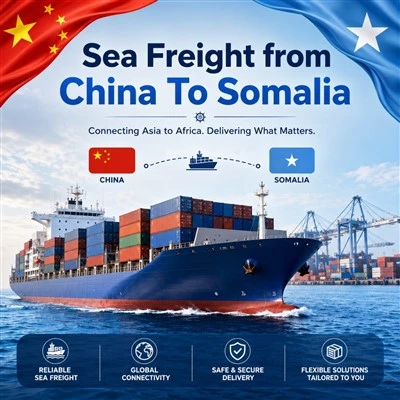
In today's fast-paced global supply chain, efficient transportation is critical to keeping businesses competitive and customers satisfied. Whether you're a manufacturer, an e-commerce retailer, or an importer, understanding the role of a freight carrier can help you make informed logistics decisions. This guide explains what a freight carrier is, how it differs from a freight forwarder, the types of carriers available, and how to choose the right one for your business.

What Is a Freight Carrier?
A freight carrier is a company or individual that owns and operates transportation equipment to move goods from one location to another. Unlike coordinators or planners, freight carriers are responsible for the physical transportation of cargo using vehicles such as trucks, ships, planes, or trains. They ensure your goods reach their destination safely and on time, whether it's a local delivery or an international shipment.
Freight carriers vary in scope, from small local operators to large global companies. For example, companies like XPO Logistics handle trucking, while Maersk manages ocean transport, and FedEx Express focuses on air cargo. Modern carriers often leverage technologies like GPS tracking and telematics to enhance transparency and efficiency, ensuring you can monitor your shipment's progress in real time.

Freight Carrier vs. Freight Forwarder: What's the Difference?
A common source of confusion in logistics is the difference between a freight carrier and a freight forwarder. While both play essential roles in the supply chain, their responsibilities and services differ significantly. Here's a clear comparison:
|
Aspect |
Freight Carrier |
Freight Forwarder |
|
Owns Transportation Assets |
Yes, owns trucks, ships, planes, or trains |
No, coordinates but does not own assets |
|
Primary Responsibility |
Physically transports goods |
Plans, coordinates, and arranges logistics |
|
Client Interaction |
Works directly with shippers or via forwarders |
Acts as an intermediary between shippers and carriers |
|
Core Expertise |
Transportation execution, route optimization |
Documentation, customs clearance, multi-modal coordination |
For example, if you're shipping a full truckload domestically, you might work directly with a carrier like J.B. Hunt. However, for an international shipment requiring customs clearance, a freight forwarder can coordinate with multiple carriers, handle paperwork, and ensure compliance. Freight carriers focus on execution, while forwarders excel in planning and coordination.

Types of Freight Carriers
Freight carriers come in various types, categorized by transportation mode, service range, and legal definition. Understanding these distinctions helps you select the right carrier for your specific needs.
1.By Transportation Mode
- Trucking Carriers: Ideal for local, regional, or national deliveries, especially for retail distribution or last-mile services. They offer flexibility for small to medium-sized shipments.
- Ocean Carriers: Suited for international bulk shipments, such as electronics or commodities like grain. Companies like COSCO and Maersk dominate this space.
- Air Carriers: Best for time-sensitive or high-value goods, like pharmaceuticals or perishables, with providers like DHL Aviation leading the way.
- Rail Carriers: Cost-effective for long-distance, heavy shipments like steel or coal, operated by companies like Union Pacific.
- Intermodal Carriers: Combine multiple modes (e.g., rail and truck) for cost efficiency and flexibility, reducing costs by up to 20% compared to single-mode transport.
Emerging trends, such as electric trucks and autonomous vehicles, are also shaping the future of these modes, with carriers adopting sustainable practices to meet environmental goals.
2.By Service Range
- Local Freight Carriers: Operate within a 80–100-mile radius, perfect for short-haul, cost-effective deliveries in urban areas.
- Regional Freight Carriers: Cover broader regions, offering diverse equipment and services for mid-range logistics needs.
- National Freight Carriers: Provide extensive networks across an entire country, ideal for large enterprises with widespread distribution.
- International Freight Carriers: Handle cross-border shipments, integrating with customs systems and global trade platforms for seamless delivery.
3.By Legal Definition
- Common Carriers: Offer services to the public under regulated pricing and standards, ensuring accessibility but with less flexibility.
- Contract Carriers: Work under exclusive agreements with specific clients, providing customized services and more flexible pricing.
- Private Carriers: Operate their own fleets (e.g., Walmart's private trucking fleet) but are not available for public hire.
Each type serves distinct business needs, from standardized public services to tailored contract solutions.
Why You Need to Work with a Freight Carrier
Partnering with a freight carrier offers several benefits that directly impact your business's efficiency and bottom line:
- Enhanced Customer Satisfaction: Timely and safe deliveries build trust and loyalty with your customers.
- Cost Efficiency: Strategic carrier partnerships can reduce transportation and warehousing costs through optimized routes and volume discounts.
- Supply Chain Reliability: A robust carrier network ensures consistent delivery schedules, supporting just-in-time inventory models.
- Specialized Services: Carriers offer tailored solutions like cold chain logistics for perishables or hazardous material transport, meeting specific industry requirements.
For instance, businesses using specialized carriers for cold chain logistics report significantly fewer spoilage incidents, ensuring product quality and customer satisfaction.

How to Choose the Right Freight Carrier for Your Business
Selecting a freight carrier requires careful evaluation to ensure alignment with your business goals. Consider these key factors:
- Reliability: Look for carriers with high On-Time Delivery (OTD) rates (ideally 95% or above) and low damage rates (98%+ damage-free deliveries). Customer reviews and service history can provide insights.
- Capacity: Ensure the carrier can handle your shipment volume and frequency, with access to the necessary equipment.
- Service Compatibility: Verify support for specialized needs, such as refrigerated transport, hazardous goods, or last-mile delivery.
- Cost-Effectiveness: Compare pricing, but also consider value-added services like tracking or compensation policies for delays.
- Customer Service: Choose carriers with responsive support teams to address issues quickly and professionally.
- Compliance and Safety: Confirm the carrier adheres to regulations (e.g., DOT standards) and holds certifications like SmartWay for sustainability.
- Network Coverage: Ensure the carrier serves your key shipping regions or customer locations effectively.
By prioritizing these criteria, you can build a partnership that supports your logistics strategy and enhances operational efficiency. For example, vetting carriers based on OTD and safety ratings can lead to significant cost savings over time.
Conclusion
Freight carriers are the backbone of the logistics industry, executing the critical task of moving goods from point A to point B. By understanding their role, types, and differences from freight forwarders, businesses can make informed decisions that optimize their supply chain. Choosing the right freight carrier-based on reliability, capacity, and service alignment-ensures timely deliveries, cost savings, and satisfied customers.
As logistics continues to evolve with technologies like AI and automation, freight carriers are becoming more efficient and transparent. To navigate this complex landscape, partner with a trusted freight forwarder who can recommend carriers tailored to your needs. Ready to streamline your logistics? Contact us today to explore customized transportation solutions for your business.
About the Author
Zhejiang Wilson Supply Chain Management Co., Ltd. Established in 2011, its headquarters is located in Ningbo, China, and it has branches in Shanghai, Shenzhen and Hong Kong. As a professional international freight forwarder and supply chain management company, Wilson is committed to providing efficient, safe and professional logistics services to help global customers optimize their supply chain processes.
After more than ten years of steady development, the company has established a global logistics network and has a professional team composed of 26 experienced logistics experts. The company's annual container processing volume reaches 56,000 standard containers (20-foot standard containers), with an annual business turnover of 150 million yuan, and it continues to grow at a stable annual growth rate of 10%. Contact us now to get a cheap freight service quote. ( gm@wilson-cargo.com )