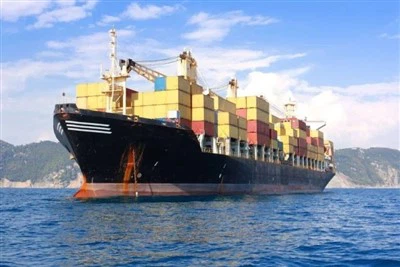
In the ever-evolving world of global trade, clarity in responsibilities between buyers and sellers is crucial. Misunderstanding who is liable for costs, risk, and documentation can lead to disputes, shipment delays, or even financial loss.
To standardize international shipping practices, the International Chamber of Commerce (ICC) established Incoterms®-a globally recognized set of rules that define how goods move from sellers to buyers.
As trade becomes increasingly digital and sustainability-driven, the Incoterms® 2025 update introduces adjustments that reflect modern realities such as electronic documentation, carbon emission cost allocation, and multimodal logistics.
In this guide, we focus on four of the most widely used trade terms-CIF, FOB, DDP, and EXW-to help you understand what they mean, how they differ, and which might suit your next shipment best.
Whether you're an exporter, importer, or freight forwarder, mastering these terms ensures smooth, cost-effective, and compliant international transactions.

What Are Incoterms® 2025 and Why They Matter
The Incoterms® (International Commercial Terms) are a set of 11 internationally accepted trade rules that clearly define the roles and obligations of buyers and sellers in global transactions.
They determine three key elements of any international shipment:
- Who pays for what – transportation, insurance, customs duties, and handling fees.
- When risk transfers – the exact point when liability for loss or damage shifts from seller to buyer.
- Who handles documentation and clearance – export and import procedures, permits, and compliance paperwork.
Key Updates in Incoterms® 2025
Building upon the 2020 version, the 2025 update focuses on modernizing trade practices:
- Digital trade recognition: electronic bills of lading and insurance certificates are now explicitly accepted.
- Carbon emission cost allocation: guidance on how environmental fees or carbon surcharges should be shared.
- Supply chain resilience: clearer instructions for handling disruptions and multimodal transport.
These updates reflect the global shift toward paperless logistics and sustainable freight operations, both essential for international businesses today.
Classification of Incoterms® 2025
The 11 Incoterms® remain divided into two main categories:
- For all transport modes: EXW, FCA, CPT, CIP, DAP, DPU, DDP
- For sea and inland waterway transport only: FAS, FOB, CFR, CIF
The four terms covered in this article-CIF, FOB, DDP, EXW-represent the full range of seller responsibilities:
from minimum (EXW) to maximum (DDP) involvement, with FOB and CIF sitting in the middle ground for maritime trade.
CIF (Cost, Insurance and Freight): Seller-Heavy Responsibility
Under CIF (Cost, Insurance and Freight), the seller is responsible for arranging and paying for the transport of goods to the port of destination, including freight and minimum insurance coverage.
However, the risk transfers to the buyer once the goods are loaded onto the vessel at the port of shipment-a key distinction often misunderstood.
Seller Responsibilities
Under CIF, the seller must:
- Deliver the goods to the port of loading and clear them for export.
- Arrange and pay for main carriage (ocean freight) to the named destination port.
- Obtain minimum marine insurance-usually 110% of the goods' value under Institute Cargo Clauses (C).
- Provide all essential documents: commercial invoice, bill of lading, and insurance certificate.
Even though the seller pays for freight and insurance, the risk technically passes once the goods are loaded onto the vessel.
If damage occurs during transit, the buyer must claim through the seller's arranged insurance.
Buyer Responsibilities
The buyer under CIF must:
- Take delivery of the goods at the destination port.
- Handle import customs clearance, duties, and taxes.
- Pay for unloading, storage, and inland transport beyond the destination port.
- Manage any additional insurance if desired beyond the basic coverage provided by the seller.
Risk Transfer Point
Risk transfers at the port of loading-specifically, when the goods are on board the vessel.
From that moment, the buyer bears all risk, even though the seller continues to pay for freight and insurance.
Common Misunderstanding:
CIF is not door-to-door coverage-it only covers costs up to the destination port, not to the buyer's warehouse.
2025 Updates Relevant to CIF
- Electronic documentation: E-bills of lading and digital insurance certificates are formally recognized.
- Insurance clarity: While minimum coverage remains mandatory, ICC encourages parties to specify the exact insurance clause (A/B/C) in contracts.
- Port charges: The 2025 version clarifies who pays loading/unloading and terminal handling charges.
Typical Use Cases
- Large-volume sea freight transactions , such as commodities, machinery, or bulk goods.
- Buyers seeking convenience-preferring the seller to manage shipment logistics and insurance.
- Ideal for exporters who have established relationships with carriers and insurers.
CIF Responsibility Summary Table
|
Cost / Responsibility |
Seller |
Buyer |
|
Export clearance |
√ |
× |
|
Freight to destination port |
√ |
× |
|
Insurance (basic) |
√ |
×(optional add-on) |
|
Risk until on board |
√ |
× |
|
Import clearance & duties |
× |
√ |
|
Unloading & inland transport |
× |
√ |
In short:
CIF offers simplicity for buyers but still requires them to understand the risk transfer point.
It is an excellent choice for sea shipments where sellers can secure competitive freight and insurance rates-but buyers should verify insurance adequacy to avoid hidden exposure.
FOB (Free On Board): Balanced Responsibility for Maritime Trade
Under FOB (Free On Board), the seller fulfills delivery obligations once the goods are loaded onto the vessel nominated by the buyer at the agreed port of shipment.
At this point, risk transfers to the buyer, even though the goods are still physically at sea.
FOB is one of the oldest and most widely used Incoterms® in traditional seaborne trade.
Seller Responsibilities
- Deliver goods to the vessel at the named port of shipment.
- Handle export customs clearance and related documentation.
- Pay all costs and risks until goods are safely on board.
- Provide commercial invoice and clean on-board bill of lading as proof of delivery.
Buyer Responsibilities
- Nominate and contract the vessel for main carriage.
- Pay for ocean freight, insurance, and import clearance.
- Bear all risks and costs once goods are loaded onto the ship.
- Handle all destination-related costs including unloading and inland transport.
Risk Transfer Point
- Risk passes from seller to buyer when the goods are on board the vessel at the port of shipment.
- This clear point of transition makes FOB especially suitable for bulk or conventional (non-containerized) cargo, where the physical act of loading can be easily verified.
2025 Updates Relevant to FOB
- Loading cost clarity: Seller now explicitly covers loading and terminal handling at the origin port.
- Electronic shipping notice: Digital confirmation of loading and export clearance is formally recognized.
- Port congestion and coordination: Guidance added for managing vessel delays or port congestion risks.
When to Use FOB
- Ideal for sea freight shipments where the buyer prefers control over vessel choice and insurance.
- Common in commodity trade (e.g., coal, steel, grain) and shipments between long-term trading partners.
- Works best when the buyer has strong logistics or carrier relationships.
FOB Responsibility Summary Table
|
Cost / Responsibility |
Seller |
Buyer |
|
Export clearance |
✅ |
❌ |
|
Loading at origin port |
✅ |
❌ |
|
Freight and main carriage |
❌ |
✅ |
|
Insurance |
❌ |
✅ |
|
Import clearance & duties |
❌ |
✅ |
Pro Tip:
For containerized shipments, ICC recommends using FCA (Free Carrier) instead of FOB, since containers are often handed to the carrier before being loaded on the vessel.
DDP (Delivered Duty Paid): Maximum Seller Responsibility
DDP (Delivered Duty Paid) represents the highest level of seller obligation.
The seller is responsible for delivering goods to the buyer's door-covering all costs, risks, and taxes, including import duties and customs clearance.
The buyer only needs to receive the goods at the specified destination.
Seller Responsibilities
- Arrange transport from origin to final destination.
- Handle export and import customs clearance.
- Pay all duties, taxes, and fees in both countries.
- Bear all risks until goods are delivered to the buyer's named place and ready for unloading.
Buyer Responsibilities
- Provide necessary import documentation or information.
- Take delivery and unload the goods at the destination.
Risk Transfer Point
- Risk transfers only when the goods are ready for unloading at the named destination-often the buyer's warehouse or facility.
2025 Updates Relevant to DDP
- Carbon & environmental costs: Sellers must account for new "green tariffs" or carbon surcharges when quoting DDP.
- Electronic customs filings: The 2025 version emphasizes e-clearance procedures for cross-border efficiency.
- Unloading responsibility: Contracts should explicitly state whether unloading costs are included.
When to Use DDP
- When the seller has an established logistics network or partner agents in the buyer's country.
- When the buyer wants simplicity and full cost visibility ("door-to-door, all inclusive").
- Ideal for e-commerce, high-value shipments, or when the buyer lacks import experience.
DDP Responsibility Summary Table
|
Cost / Responsibility |
Seller |
Buyer |
|
Export clearance |
✅ |
❌ |
|
Freight & insurance |
✅ |
❌ |
|
Import clearance & taxes |
✅ |
❌ |
|
Risk until delivery |
✅ |
❌ |
|
Unloading at destination |
Optional (as agreed) |
Optional (as agreed) |
Important Note:
Some countries restrict import clearance to locally registered entities.
In such markets, DDP may be impractical unless the seller has a local presence or licensed customs broker.
EXW (Ex Works): Minimum Seller Obligation
Under EXW (Ex Works), the seller makes goods available at their own premises-factory, warehouse, or workshop-and the buyer takes full responsibility for loading, transport, insurance, and customs clearance.
EXW offers maximum simplicity for the seller but places almost all risks and costs on the buyer.
Seller Responsibilities
- Package and prepare goods at the agreed location.
- Provide basic documentation (invoice, packing list).
- Notify the buyer when goods are ready for pickup.
Buyer Responsibilities
- Handle loading, export clearance, and all transportation to destination.
- Bear all risks and costs from the moment goods are made available.
- Manage import clearance and pay all related duties and taxes.
Risk Transfer Point
- Risk transfers when the goods are placed at the buyer's disposal at the seller's premises-before loading.
2025 Updates Relevant to EXW
- Flexibility in export clearance: Buyers and sellers can agree that the seller assists with export formalities while maintaining EXW status.
- Loading obligations clarified: Unless otherwise agreed, the buyer bears loading costs and risks.
- Digital documentation recognized: E-documents are now valid for handover confirmation.
When to Use EXW
- When the buyer has its own logistics network in the seller's country.
- In intra-company trade or transactions between affiliated entities.
- When buyers want full control of the logistics chain.
EXW Responsibility Summary Table
|
Cost / Responsibility |
Seller |
Buyer |
|
Packaging |
✅ |
❌ |
|
Loading at origin |
❌ |
✅ |
|
Export & import clearance |
❌ |
✅ |
|
Main carriage & insurance |
❌ |
✅ |
|
Risk from pickup point |
❌ |
✅ |
Caution:
EXW may appear cheapest but often leads to hidden costs and operational issues if buyers are unfamiliar with export procedures or local regulations.
Comparison: CIF vs. FOB vs. DDP vs. EXW
To choose the right term, you must balance cost, control, and risk.
The following table summarizes key differences:
|
Criteria |
EXW |
FOB |
CIF |
DDP |
|
Seller responsibility |
Minimal |
Moderate |
High |
Maximum |
|
Risk transfer point |
Seller's premises |
On board vessel |
On board vessel |
Upon delivery at destination |
|
Insurance |
Buyer |
Buyer |
Seller (basic) |
Seller |
|
Export clearance |
Buyer |
Seller |
Seller |
Seller |
|
Import clearance |
Buyer |
Buyer |
Buyer |
Seller |
|
Transportation type |
All modes |
Sea only |
Sea only |
All modes |
|
Best for |
Buyers with logistics control |
Buyers managing sea freight |
Buyers preferring seller-arranged shipping |
Buyers seeking full service |
Quick Guidance:
- Exporters: Prefer FOB or CIF to maintain manageable control and cost visibility.
- Importers: Prefer DDP for simplified logistics and predictable landed costs.
- Buyers with global freight partners: EXW offers flexibility and transparency.
Common Mistakes and Freight Forwarder Insights
Frequent Misunderstandings
1.CIF is not door-to-door.
It covers only to the destination port, not inland delivery.
2.EXW can be risky for inexperienced buyers.
Export formalities and loading arrangements often cause delays.
3.DDP isn't always feasible.
Import clearance requires local registration; confirm before quoting.
4.FOB is outdated for containers.
Consider FCA to align with modern multimodal logistics.
5.Risk ≠ Ownership.
Incoterms define risk transfer, not title transfer.
From a Freight Forwarder's Perspective
Choosing the right Incoterm can significantly impact your cost efficiency, customs compliance, and shipment timeline.
As a global freight forwarder, we help clients:
- Assess which Incoterm best suits their shipment type and destination.
- Manage carrier selection, insurance coverage, and customs documentation.
- Ensure Incoterms® 2025 compliance in contracts and logistics operations.
Pro Tip:
Always specify the full term and version-for example:
"CIF Hamburg, Incoterms® 2025" - this avoids disputes over outdated rule sets.
Conclusion
The Incoterms® 2025 update modernizes global trade by embracing digital documentation, sustainability costs, and greater operational clarity.
Understanding CIF, FOB, DDP, and EXW-their cost structure, risk allocation, and real-world implications-enables traders to avoid hidden liabilities and strengthen their international supply chain control.
For businesses navigating complex global logistics, choosing the right Incoterm isn't just a legal decision-it's a strategic one.
Need help choosing the right Incoterm for your next shipment?
Our global freight forwarding team can provide customized advice, competitive freight solutions, and end-to-end logistics support to keep your cargo moving seamlessly under the new Incoterms® 2025 framework.
About Zhejiang Wilson Supply Chain Management Co., Ltd.
Founded in 2011 and headquartered in Ningbo, China, with branch offices in Shanghai, Shenzhen, and Hong Kong, Zhejiang Wilson Supply Chain Management Co., Ltd. is a professional international freight forwarding and supply chain management company.
With over a decade of hands-on experience in global logistics, Wilson has established deep connections across the world's major trade routes and ports. Our expertise covers every aspect of import and export operations, enabling us to simplify complex shipping processes while optimizing project costs. No matter how challenging your shipment, our experienced team delivers practical solutions that keep your business moving and your bottom line secure.
Partner with Wilson - your trusted freight forwarder for smart, reliable, and cost-effective global shipping under Incoterms® 2025.