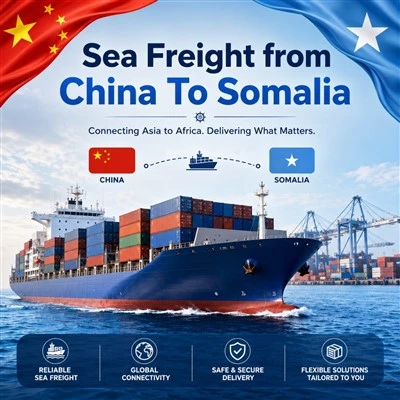
In the global agricultural supply chain, fertilizers are essential inputs that directly impact farming efficiency and costs. China remains one of the world's largest producers of nitrogen, phosphate, and compound fertilizers, exporting significant volumes despite ongoing domestic priorities. This article, explores key transportation options, detailed cost structures, and practical strategies for importers, drawing on current industry insights to help international traders, agricultural businesses, and logistics professionals navigate imports effectively.

Preparatory Steps and Regulatory Requirements for Fertilizer Imports
Before initiating imports from China, thorough compliance with regulations is critical to avoid delays, extra costs, or shipment rejections. China prioritizes domestic food security, leading to export controls on certain fertilizers, particularly phosphates.
As of early 2026, China's phosphate fertilizer industry has voluntarily suspended new export plans until at least August 2026 to ensure domestic supply stability ahead of key planting seasons. This follows similar restrictions in 2025, resulting in limited global availability and elevated prices. Urea exports operate under quotas, with limited windows (e.g., resuming briefly in mid-2025 but tightening again). Importers should monitor announcements from China's National Development and Reform Commission (NDRC) and industry associations for updates.
Key import steps into destination countries include:
- Identifying fertilizer type (e.g., urea, DAP, NPK) and checking for hazardous classifications (some ammonium nitrate-based products require special handling as dangerous goods).
- Verifying destination tariffs, quotas, and phytosanitary requirements.
- Securing reliable Chinese suppliers and contracts.
- Obtaining necessary export approvals from China (e.g., inspection certificates) and import permits.
- Partnering with experienced customs brokers.
Fertilizer properties-like hygroscopicity (moisture absorption), corrosiveness, or toxicity-influence packaging and transport choices. For instance, urea requires moisture-proof lining to prevent caking, while certain phosphates need non-metal contact. Non-compliance can lead to delays or additional fees.
Main Transportation Methods and Comparison
Sea freight dominates fertilizer imports from China due to its cost-effectiveness for bulk commodities, accounting for over 80% of volumes. Alternatives like rail or multimodal offer faster options for specific needs.
Ocean Freight is ideal for large-volume, non-urgent shipments. Options include:
- Containerized (FCL): Suitable for smaller or protected loads using 20ft or 40ft containers with liners. In 2025-2026, spot rates from China to major destinations stabilized post-peak, averaging $2,000-4,000 per 40ft container on key routes (e.g., to Europe or US West Coast), though subject to fuel surcharges and seasonal spikes.
- Bulk carriers: Best for massive shipments (10,000+ tons), with lowest per-ton costs but requiring minimum volumes.
Advantages: Low cost, high capacity. Drawbacks: Longer transit (30-45 days), vulnerable to port congestion or geopolitical disruptions.
Rail Transport: Growing via China-Europe Railway Express (part of Belt and Road Initiative), especially to Central Asia, Russia, and Europe. Transit times: 12-18 days to Western Europe. Suitable for mid-volume, time-sensitive loads. Costs fall between sea and air, with stable schedules and lower weather impact. Challenges: Fixed routes, border gauge changes, and complex customs.
Multimodal Transport: Combines modes (e.g., sea + rail or sea + truck) for optimized routes, common for landlocked destinations.
|
Transportation Method |
Suitable Volume |
Transit Time |
Cost Level |
Key Advantages |
Key Limitations |
|
Ocean Container (FCL) |
20-40ft loads |
Long (30-45+ days) |
Low-Medium |
Good protection, door-to-door |
Slower, seasonal box shortages |
|
Ocean Bulk Carrier |
10,000+ tons |
Long (30-45+ days) |
Lowest |
Extremely low per-ton cost |
High minimum volume, port-dependent |
|
International Rail |
Container/train |
Medium (12-18 days) |
Medium |
Faster, reliable for inland |
Route rigidity, border delays |
|
Multimodal |
Flexible |
Varies by combo |
Varies |
Route optimization |
Coordination complexity, higher management fees |
Importers should factor in fertilizer type, urgency, and market volatility-e.g., shifting to rail during sea freight peaks.
Detailed Cost Breakdown for Fertilizer Transportation
Costs vary by mode, but ocean freight (most common) includes several components. Rates fluctuate with fuel prices, demand, and capacity.
For containerized ocean freight (2025-2026 estimates):
- Base ocean freight: $2,000-5,000 per 40ft (route-dependent).
- Bunker Adjustment Factor (BAF): Varies with oil prices.
- Port handling: $500-1,500 per container.
- Inland haulage: $1,000-3,000 (factory to port/destination).
- Other: Insurance (0.2-0.5% of value), documentation, potential storage.
Total for a 40ft container: Often $4,000-10,000+, excluding goods value.
Bulk carrier costs: Charter rates, loading/unloading (~$10-20/ton), port dues, canal fees. Per-ton significantly lower for large volumes but volatile (e.g., 50% spikes in tight markets).
Rail/multimodal: Base rail fees + border handling; professional coordination can save 15-30% through optimization.
|
Cost Factor |
Impact Level |
Examples |
Mitigation Strategies |
|
Distance/Route |
High |
Longer routes increase base freight |
Select hub ports, optimize paths |
|
Volume/Weight |
High |
Bulk rated by ton, containers by space |
Maximize loading, use FCL over LCL |
|
Market Demand |
Very High |
Peak seasons +50% |
Off-peak shipping, long-term contracts |
|
Fuel Prices |
High |
BAF fluctuations |
Lock rates, monitor trends |
|
Port/Rail Infrastructure |
Medium |
Congestion adds delays/fees |
Choose efficient hubs |
|
Policy/Seasonal |
High |
Export curbs raise scarcity premiums |
Diversify sources, track regulations |
Strategies to Reduce Fertilizer Transportation Costs
As a bulk commodity, fertilizers offer significant opportunities for cost optimization without compromising quality or timeliness. In the current 2026 market-marked by China's ongoing phosphate export suspensions until at least August and tighter urea controls-importers must prioritize efficiency to offset elevated global prices and freight volatility.
Proven strategies include:
- Leverage Bulk and Scale: Opt for Full Container Load (FCL) over Less-than-Container Load (LCL) to cut per-unit costs by 30-50%. For large volumes (10,000+ tons), bulk carriers deliver the lowest per-ton rates, often 60-70% cheaper than containers. Consolidate purchases or partner with other buyers to achieve minimum viable quantities.
- Optimize Routes and Modes: Use multimodal combinations (e.g., sea + rail via Belt and Road routes) for 15-30% savings on inland destinations. Avoid peak seasons; book off-peak to sidestep rate surges. Backhaul opportunities-utilizing return capacity on export-heavy routes-can yield discounted rates.
- Collaborate with Suppliers: Work closely with Chinese producers for optimized packaging (e.g., big bags for better loading density) and synchronized scheduling to minimize port delays. Just-in-Time planning reduces storage fees.
- Lock in Rates and Use Tools: Secure long-term contracts or Forward Freight Agreements (FFAs) to hedge against fluctuations. Digital platforms for real-time rate comparison and predictive analytics help identify low-congestion routes.
- Monitor Policy and Market Trends: With China's phosphate exports largely halted into mid-2026, diversify sources early to avoid scarcity premiums. Track fuel prices, as bunker surcharges directly impact ocean freight.
Implementing these can yield 15-40% total logistics savings, enhancing competitiveness in a constrained supply environment.

Risk Management in Fertilizer Transportation
Fertilizer imports involve unique risks due to product sensitivity, regulatory changes, and global disruptions. Effective management ensures supply chain resilience.
Key risks and mitigations:
- Cargo Damage: Hygroscopic fertilizers like urea are prone to caking from moisture. Use lined containers, ventilation, or dedicated bulk holds. Pre-shipment inspections and sensors for humidity/temperature monitoring prevent claims. Comprehensive insurance (All Risks coverage) is essential.
- Delays and Congestion: Port bottlenecks, weather, or strikes can extend transit. Build buffers into schedules, choose reliable carriers with high on-time performance, and diversify ports/routes. Contingency plans for alternative modes (e.g., rail during sea disruptions) minimize impact.
- Regulatory and Policy Shifts: China's 2026 phosphate suspension and urea restrictions create supply volatility. Stay informed via industry updates; maintain diversified suppliers. Hazardous classifications (e.g., ammonium nitrate as DG) require IMDG compliance-partner with experts for documentation.
- Cost Volatility: Freight rates remain sensitive to fuel, capacity, and geopolitics (e.g., Red Sea issues). Hedge with fixed-rate bookings and monitor indices like the Shanghai Containerized Freight Index.
Real-world example: In 2025, congestion-related delays cost importers millions in demurrage; proactive forwarders rerouted via multimodal options, saving clients 20% in extras.
Proactive risk management-through insurance, tracking tech, and expert partnerships-protects against losses and ensures timely delivery during peak planting seasons.
How to Choose a Freight Forwarder for Fertilizer Imports
Selecting the right freight forwarder is crucial for navigating China's export complexities, hazardous material rules, and bulk logistics. A specialized partner can reduce costs by 10-25% and mitigate risks.
Key criteria:
- Industry Expertise: Look for experience in bulk commodities and fertilizers specifically-handling hygroscopic goods, DG classifications, and Chinese export inspections. Ask for case studies on similar shipments.
- Global Network: Strong relationships with carriers (e.g., major lines like Maersk, COSCO) for priority space and competitive rates. Coverage in key Chinese ports (Qingdao, Tianjin) and your destination.
- Compliance and Documentation: Proven track record in customs clearance, phytosanitary certificates, and dangerous goods declarations. Digital tools for real-time tracking and paperwork streamline processes.
- Cost Transparency and Value-Adds: No hidden fees; detailed quotes including surcharges. Services like rate negotiation, insurance options, and multimodal coordination add value.
- Reliability and Support: High on-time performance, 24/7 support, and financial stability. Check reviews, references, and certifications (e.g., FIATA, IATA).
As a global freight forwarder with deep expertise in China-origin bulk fertilizers, we offer end-to-end solutions: competitive ocean/bulk rates, compliant handling, and real-time visibility.

Conclusion
Importing fertilizers from China in 2026 demands careful planning amid export controls, volatile freight markets, and product-specific challenges. By understanding transportation options, breaking down costs, applying optimization strategies, and managing risks effectively, importers can achieve reliable, cost-efficient supply chains.
Partnering with an experienced freight forwarder unlocks further savings and peace of mind-ensuring your fertilizers arrive on time, in condition, and within budget.
Ready to optimize your next shipment? Contact our team for a customized quote and expert guidance on navigating the current market. Let's secure your agricultural supply chain together.