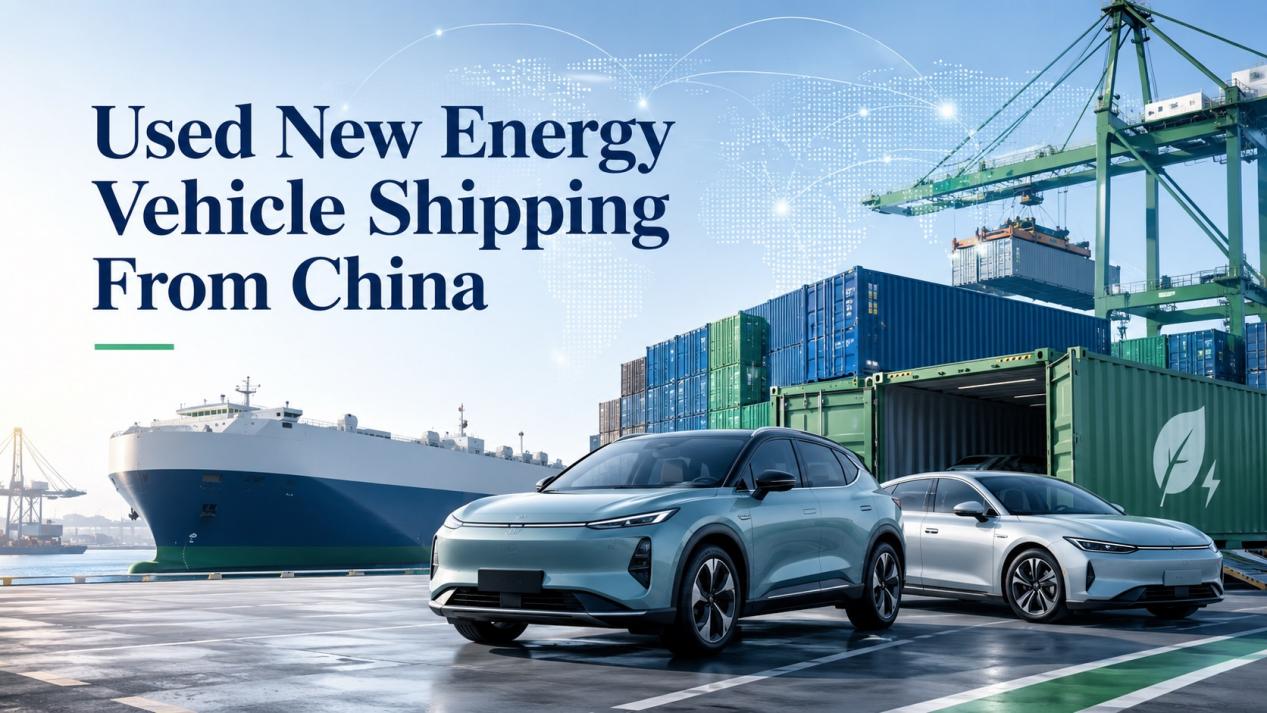
China has become one of the world's most active export markets for new energy vehicles, especially electric vehicles, plug-in hybrid vehicles and other battery-powered passenger cars. Alongside new vehicle exports, used new energy vehicle shipping from China is also growing quickly, driven by competitive vehicle prices, mature EV production, wider model availability and strong demand from markets in the Middle East, Africa, Southeast Asia, Europe and other regions.
However, shipping used new energy vehicles is not the same as shipping traditional fuel cars.
The main difference is the battery.
Because EVs and other new energy vehicles are equipped with lithium batteries or other high-capacity power batteries, the transportation process involves battery safety checks, dangerous goods declaration, shipping line acceptance, export compliance, vehicle condition inspection, loading protection and destination-country import requirements.
For importers, dealers and overseas buyers, working with an experienced freight forwarder is critical. A wrong UN number, missing battery document, incorrect vehicle information, poor container loading or unconfirmed carrier acceptance can lead to cargo delay, extra charges, rejection, return shipment or even serious safety risk.
Zhejiang Wilson Supply Chain Management Co., Ltd. provides professional used new energy vehicle shipping services from China to global destinations. We help customers handle shipping plans, booking, documentation coordination, container loading, vehicle securing, export customs declaration, cargo tracking and destination port coordination.
Need to ship used EVs, plug-in hybrid vehicles or other new energy vehicles from China? Contact Wilson for a practical shipping solution based on your vehicle model, quantity, destination port and delivery requirement.
Get Latest Ocean Freight Rates Now
Why Choose Wilson for Used New Energy Vehicle Shipping From China?
Shipping used new energy vehicles requires more than booking a container. The freight forwarder must understand vehicle logistics, battery-related shipping requirements, export documents, shipping line restrictions and safe loading operations.
Wilson has been operating in international freight forwarding and supply chain logistics since 2011. Headquartered in Ningbo, with branches in Shanghai, Shenzhen and Hong Kong, we support customers with international sea freight, special container transport, oversized cargo, chemical logistics and vehicle export logistics.
Experienced in Vehicle Export Logistics
Used new energy vehicles are high-value cargo. They require careful checking before shipment and professional handling during loading, transport and handover.
Wilson has practical experience in shipping used cars, new energy used vehicles, SUVs, pickup trucks, commercial vehicles, trucks, buses, construction vehicles and heavy machinery from China to overseas markets. Our team understands how different vehicle types should be shipped, whether by container, Ro-Ro vessel, flat rack, open-top container or breakbulk vessel.
For used EVs, we pay special attention to:
● Vehicle dimensions and loading feasibility
● Battery type and shipping line acceptance
● State of Charge requirements
● Vehicle power-off and anti-start measures
● Container securing and anti-movement protection
● Export customs documents
● Destination-country import requirements
Strong Container Loading and Securing Capability
For used new energy vehicles, container shipping is often the preferred method, especially for high-value cars, small batches or vehicles requiring better protection.
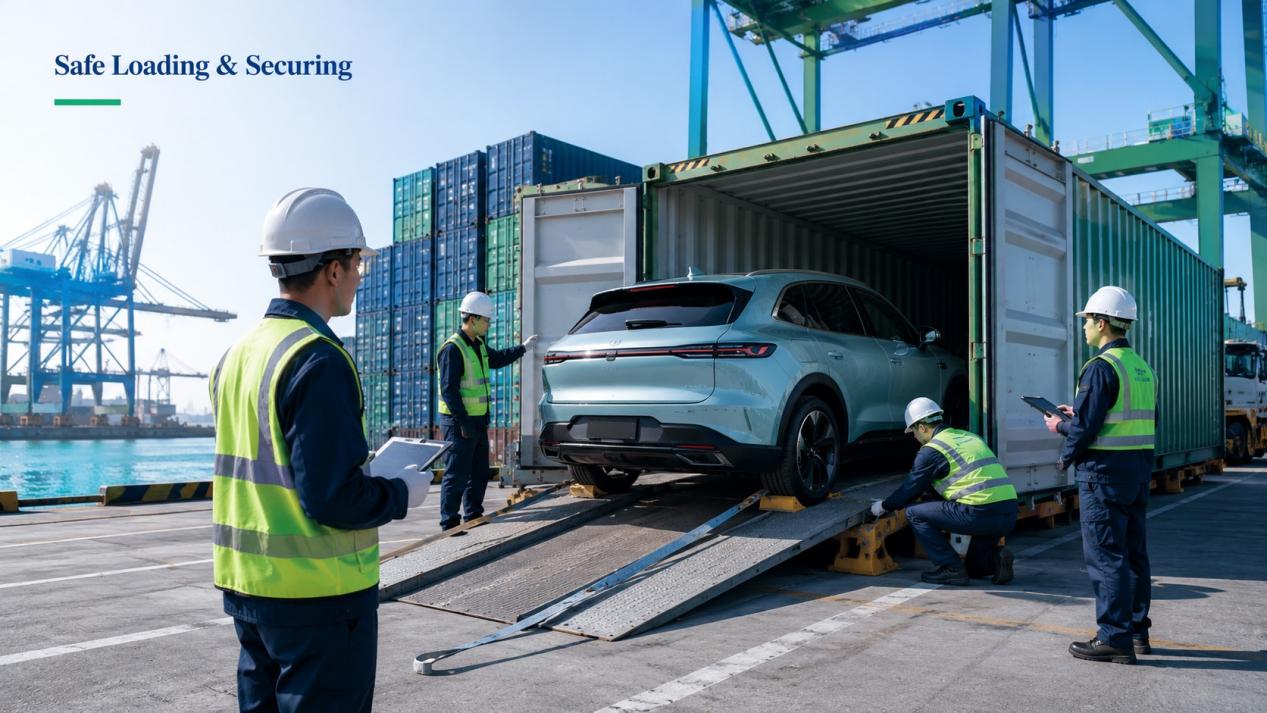
Wilson focuses heavily on vehicle loading safety. Before loading, we can help coordinate vehicle inspection, photo records, VIN confirmation, mileage records and vehicle condition documentation. During loading, we arrange proper positioning, wheel chocking, lashing, anti-slip treatment and movement prevention.
This helps reduce the risk of scratches, collision, shifting, tire movement or body damage during inland transportation, terminal handling and ocean shipping.
Familiar With EV Shipping Compliance
New energy vehicles may involve Class 9 dangerous goods requirements due to lithium batteries or other power battery systems. Depending on the vehicle type, battery chemistry and shipping line rules, documents such as UN38.3 test reports, MSDS/SDS, Dangerous Goods Declaration and battery safety data may be required.
Wilson helps customers check document requirements early and communicate with shipping lines before booking, reducing the risk of booking rejection or last-minute delay.
Flexible Shipping Options From Major Chinese Ports
Wilson has long-term cooperation with major shipping lines such as COSCO, Hapag-Lloyd, Maersk, MSC and Evergreen. We can arrange shipments from major Chinese ports including Ningbo, Shanghai, Shenzhen, Guangzhou, Tianjin and Qingdao.
Our service routes cover Southeast Asia, the Middle East, Africa, India and Pakistan, Europe and the Americas. We have especially active experience in vehicle-related shipments to markets such as Cambodia, Saudi Arabia, Jordan, Ghana, UAE, Nigeria, Kenya and Tanzania.
One-Stop Logistics Support
Wilson can support the full logistics chain, including domestic pickup, warehouse entry, port handover, booking, container loading supervision, vehicle securing, export declaration, document preparation, cargo tracking and destination port coordination.
We do not only focus on freight rate.
We focus on whether the shipping plan is safe, compliant, realistic and cost-effective.
What Types of Used New Energy Vehicles Can We Ship?
Wilson can arrange international shipping for many types of used new energy vehicles from China, depending on vehicle condition, destination country requirements and shipping line acceptance.
Common vehicle types include:
● Used electric passenger cars
● Used plug-in hybrid vehicles
● Used hybrid vehicles
● Used electric SUVs
● Used electric MPVs
● Used electric vans
● Used electric pickup trucks
● Used electric commercial vehicles
● Used electric light trucks
● Used electric buses
● Used electric logistics vehicles
● Used electric special-purpose vehicles
● Used new energy construction or utility vehicles, subject to case review
Before confirming a shipping plan, we usually need to check the vehicle brand, model, year, VIN, battery type, dimensions, weight, driving condition, registration status and destination country.
For some vehicles, shipping lines may request additional battery information or safety documents before accepting the cargo.
Common Shipping Methods for Used New Energy Vehicles From China
The best shipping method depends on the vehicle type, quantity, condition, route, carrier policy and destination port.
For used new energy vehicles, container shipping is usually the most recommended option.
Container Shipping
Container shipping is suitable for most used EVs and new energy vehicles, especially single vehicles, small batches, high-value cars and vehicles requiring better protection.
A 40HQ container can often load 2 to 4 passenger vehicles, depending on vehicle size, loading method and safety requirements. For larger SUVs, vans or commercial vehicles, the loading quantity may be lower.
Main advantages:
● Better protection from weather, sea wind and terminal exposure
● Easier to control loading and securing
● Suitable for higher-value used EVs
● More flexible for small-batch shipments
● Better option when Ro-Ro acceptance is limited
Main considerations:
● Loading must be handled by an experienced team
● Vehicle securing must be strong enough to prevent movement
●Battery documents and shipping line approval may still be required
● Dangerous goods surcharge may apply depending on carrier and route
For most used new energy vehicle exporters, container shipping offers the best balance between safety, control and availability.
Ro-Ro Shipping
Ro-Ro shipping can be used for vehicles that can be driven onto and off the vessel. It is often cost-effective for large-volume vehicle shipments on suitable routes.
However, for used EVs, Ro-Ro shipping can be more complicated. Some shipping lines have stricter acceptance rules for electric vehicles because of battery fire risk, parking arrangement, deck safety and emergency handling requirements.
Ro-Ro may be suitable when:
● The vehicle can drive normally
● The shipping line accepts EV cargo on that route
● Battery condition is stable
● Documents are complete
● The destination port supports Ro-Ro vehicle handling
For used new energy vehicles, Ro-Ro booking should be confirmed with the carrier in advance.
Flat Rack or Open-Top Container
Flat rack and open-top containers are mainly used for oversized vehicles that cannot fit into a standard container. This may apply to some electric commercial vehicles, special-purpose vehicles or larger new energy machinery.
These options require careful measurement, lifting plans, securing design and cost evaluation.
Air Freight
Air freight is rarely used for used new energy vehicles because lithium battery restrictions are strict and costs are extremely high. It may only be considered for very urgent, high-value or special cases, subject to airline approval.
Main Chinese Ports for Used New Energy Vehicle Shipping
Wilson can arrange used new energy vehicle shipments from major vehicle export ports and container ports in China.
Common departure ports include:
Ningbo Port
Ningbo is one of Wilson's core operating ports and an important container shipping hub in East China. It is suitable for vehicles sourced from Zhejiang, Jiangsu, Shanghai and nearby regions.
Shanghai Port
Shanghai has strong international shipping coverage and is suitable for customers purchasing vehicles from East China or needing flexible global route options.
Shenzhen / Guangzhou Ports
Shenzhen and Guangzhou are practical options for vehicles sourced from South China, especially Guangdong and nearby EV manufacturing and trading areas.
Tianjin Port
Tianjin is often used for vehicles from North China and can support shipments to the Middle East, Europe, Africa and other destinations.
Qingdao Port
Qingdao is another important northern port option, suitable for some vehicle exporters and inland suppliers in northern and eastern China.
The final port choice depends on the vehicle location, route availability, shipping line acceptance, cost, sailing schedule and document requirements.
How Our Used New Energy Vehicle Shipping Service Works
A safe shipment starts before the vehicle reaches the port. Wilson helps customers build a practical plan from the beginning, instead of waiting until the booking stage to discover problems.
Step 1: Vehicle Information Review
We first collect basic vehicle information, including vehicle type, brand, model, VIN, dimensions, weight, registration status, battery type, battery condition, quantity and destination.
For used EVs, we also recommend checking battery State of Health, mileage, accident history and whether the vehicle can start and move normally.
Step 2: Destination and Compliance Check
Different countries have different rules for used new energy vehicle imports. Some markets require import permits, inspection certificates, conformity documents, roadworthiness documents or special local certifications.
Before shipment, we help customers review the general logistics requirements and remind them to confirm local import regulations with their importer or customs broker.
For some markets, documents such as PVoC, CCIC, SABS or other inspection certificates may be required.
Step 3: Shipping Method Recommendation
Based on vehicle size, value, quantity, route and destination, we recommend a suitable shipping method.
For most used new energy vehicles, we usually recommend container shipping. For larger batches or special routes, Ro-Ro shipping may also be evaluated. For oversized vehicles, flat rack, open-top container or breakbulk solutions may be considered.
Step 4: Battery and Dangerous Goods Document Coordination
Used new energy vehicles may require battery-related documents, depending on carrier and route.
Common documents may include:
●UN38.3 test report
● MSDS/SDS
● Battery safety data
● Dangerous Goods Declaration
● Battery chemistry information
● Watt-hour rating
● Vehicle VIN and EV identification
● Transport condition assessment documents, if required
For lithium battery vehicles, shipping lines may apply stricter review procedures. We help check requirements early and communicate with carriers before confirming space.
Step 5: Booking and Carrier Confirmation
EV cargo acceptance is not always automatic. Some carriers may restrict, reject or surcharge new energy vehicle shipments.
Wilson confirms route, sailing schedule, container availability, carrier acceptance, dangerous goods requirements and estimated charges before shipment. For EV shipments, we recommend confirming space earlier than normal cargo, especially during peak season.
Step 6: Domestic Pickup and Port Delivery
We can coordinate domestic vehicle pickup, warehouse entry or direct delivery to the port, depending on customer needs.
Before loading, the vehicle condition can be recorded with photos, including body appearance, VIN plate, mileage, dashboard, battery status and any visible damage.
Step 7: Container Loading and Vehicle Securing
For container shipments, proper loading and securing are critical.
Wilson pays attention to:
● Vehicle positioning inside the container
● Wheel fixing
● Lashing and tie-down arrangement
● Anti-slip treatment
● Clearance between vehicles
● Protection of vulnerable parts
● Final loading condition confirmation
For EVs, the vehicle should normally be powered off and secured to prevent accidental movement or activation. Some shipping lines may also require the battery State of Charge to remain within a specified range, often around 30% or below, depending on carrier rules.
Step 8: Export Customs Declaration
We help coordinate export customs declaration based on customer-provided documents. The information must be accurate, especially vehicle model, VIN, battery type, cargo description, UN number if applicable and shipping documents.
Incorrect declaration can cause delay, inspection, amendment cost or shipment rejection.
Step 9: Ocean Shipping and Cargo Tracking
After vessel departure, Wilson continues to track the shipment and update the customer on sailing status, estimated arrival time and possible route changes.
If transshipment is involved, we also monitor the transfer status.
Step 10: Destination Port Coordination
At destination, customers or local agents handle import customs clearance based on local regulations. Wilson can assist with shipping documents and destination coordination where required.
After customs clearance, the vehicle can be picked up from port or delivered to the final destination through local arrangements.
Cost & Time Estimates for Used New Energy Vehicle Shipping From China
The cost of shipping used new energy vehicles from China depends on destination, vehicle size, shipping method, container type, route, season, carrier acceptance, dangerous goods requirements and destination charges.
The following table gives general reference ranges only. Final quotation should be based on actual vehicle details and route conditions.
| Destination Region | Recommended Method | Estimated Transit Time | Reference Cost Range |
| China to Southeast Asia | Container / Ro-Ro if accepted | 7–20 days | USD 600–1,800 per vehicle |
| China to Middle East | Container / Ro-Ro if accepted | 20–35 days | USD 800–2,000 per vehicle |
| China to Africa | Container / Ro-Ro / special container | 25–45 days | USD 1,000–2,500 per vehicle |
| China to Europe | Container | 30–45 days | USD 1,500–3,500 per vehicle |
| China to South America | Container | 35–55 days | USD 1,800–4,000 per vehicle |
| China to North America | Case-by-case review | 25–45 days | Depends heavily on compliance and route |
Additional charges may include:
● Dangerous goods surcharge
● Battery document review fee
● Vehicle inspection cost
● Export license or certificate cost, if applicable
● Container loading and securing fee
● Inland transportation cost in China
● Marine insurance
● Destination port charges
● Customs clearance and import taxes at destination
【Note】: Transit times may vary slightly based on weather conditions, customs processing, and port congestion. Prices listed are indicative and subject to change based on market fluctuations. For precise quotations and schedules, please contact our team today for an accurate quote tailored to your goods and a better offer! ( gm@wilson-cargo.com )

Used New Energy Vehicle Shipping From China
Get in touch with our sea freight experts immediately to discuss your requirements and get a quick quote.
How Wilson Helps Reduce Cost
Wilson helps customers reduce unnecessary logistics costs by selecting the most suitable port, container type, route and loading plan.
For example, when vehicles can be loaded safely together in one 40HQ container, the average cost per vehicle may be reduced. When Ro-Ro is available and accepted by the carrier, we can compare it with container shipping. For larger or non-standard vehicles, we evaluate whether flat rack, open-top or breakbulk shipping is more practical.
A cheaper freight rate is not always the best solution.
For used new energy vehicles, a low-cost but non-compliant shipping plan can create much higher costs later, including storage, rebooking, document amendment, return shipment or cargo rejection.
How Wilson Helps Ensure Transit Time
To reduce delay risk, Wilson checks carrier acceptance, required documents, sailing schedule, port operation time and customs declaration requirements before shipment.
For EV cargo, we recommend preparing documents and confirming space early, because some shipping lines require additional review before accepting battery-powered vehicles.
What Documents Are Needed for Used New Energy Vehicle Shipping From China?
The exact document list depends on vehicle type, destination country, trade terms and carrier requirements. However, the following documents are commonly involved.
Basic Commercial and Shipping Documents
● Commercial invoice
● Packing list
● Sales contract
● Bill of lading
● Export customs declaration documents
● Vehicle information sheet
● VIN list
● Vehicle photos
● Marine insurance policy, if purchased
Vehicle Export Documents
● Vehicle registration or deregistration certificate
● Vehicle inspection report
● Export license, if applicable
● Manufacturer or authorized dealer documents, if required
● Used vehicle condition report
● Mileage and vehicle history documents, if available
Battery and Dangerous Goods Documents
● UN38.3 test report
● MSDS/SDS
● Battery safety data
● Dangerous Goods Declaration
● Transport condition assessment report, if required
● Battery chemistry and watt-hour information
● SOC confirmation, if requested by carrier
Destination-Country Documents
Depending on the importing country, additional documents may be required, such as:
● Certificate of Origin
● Import permit
● Conformity certificate
● Roadworthiness inspection
● PVoC
● CCIC
● SABS
● Local customs clearance documents
● Tax or duty documents
Because used new energy vehicle import rules vary greatly by country, the importer should confirm local requirements before purchasing and shipping the vehicle.
How to Buy Used New Energy Vehicles From China
Many overseas buyers want to purchase used EVs from China but are not sure where to start. The process should be handled carefully because vehicle condition, battery health, export qualification and document accuracy directly affect shipment success.
Step 1: Confirm Import Rules in Your Country
Before buying, check whether your country allows used new energy vehicle imports. Pay attention to age limits, steering position, emission rules, roadworthiness standards, battery requirements, import permit rules, tax rates and certification requirements.
Some countries are open to used EV imports. Others have strict compliance requirements.
Step 2: Choose a Reliable Vehicle Supplier
Work with a legitimate exporter, dealer or sourcing partner in China. For some vehicle types, export licenses or manufacturer-related documents may be required.
Avoid vehicles with unclear ownership, incomplete registration documents, accident history or missing VIN information.
Step 3: Check Vehicle Condition
For used EVs, do not only check the exterior.
Important inspection points include:
● Battery State of Health
● Mileage
● Charging function
● Motor and control system
● Accident record
● Tire and chassis condition
● Interior condition
● VIN consistency
● Dashboard warning lights
● Whether the vehicle can drive normally
Step 4: Confirm Battery and Export Documents
Before payment or shipment, confirm whether the supplier can provide the documents required for export and shipping, especially battery-related documents if requested by the carrier.
Missing battery documents can delay or block shipment.
Step 5: Arrange Payment and Contract Terms
The sales contract should clearly state vehicle model, VIN, quantity, price, payment terms, delivery point, document responsibility, inspection responsibility and after-sales terms.
For bulk buyers, it is especially important to define who is responsible for vehicle condition, export documents, local transport and shipment risk.
Step 6: Work With an Experienced Freight Forwarder
After the vehicle is purchased, Wilson can help design the shipping plan, confirm carrier acceptance, arrange booking, coordinate loading, handle export logistics and track the shipment.
For first-time buyers, a door-to-door or port-to-port logistics solution can reduce operational complexity.
Ship Used New Energy Vehicles From China With Wilson
Used new energy vehicle shipping from China is a growing opportunity, but it is also a logistics category with higher compliance and safety requirements. Importers need to consider vehicle sourcing, battery condition, export documents, carrier acceptance, shipping method, container loading, customs declaration and destination-country import rules.
Wilson helps overseas buyers, vehicle traders and importers simplify this process.
With years of experience in international freight forwarding, vehicle export logistics, special container transport and global sea freight, we provide practical and reliable shipping solutions for used EVs and other new energy vehicles from China.
Contact Wilson today with your vehicle model, quantity, pickup city, destination port and preferred shipping time. Our team will help you evaluate the best shipping method, estimated cost, transit time and required documents for your used new energy vehicle shipment from China.
FAQ
Q: 1. Can used new energy vehicles be shipped from China?
A: Yes. Used new energy vehicles can be shipped from China, but the process is more complex than shipping ordinary used fuel vehicles. Battery safety, shipping line acceptance, export documents, dangerous goods declaration and destination-country import rules must be checked before shipment.
Q: 2. What is the best shipping method for used EVs from China?
A: For most used EVs, container shipping is the recommended method. It provides better protection, more flexible loading control and stronger safety management. Ro-Ro shipping may be possible on some routes, but it depends on whether the carrier accepts EV cargo.
Q: 3. Are used electric vehicles treated as dangerous goods during shipping?
A: In many cases, EVs with lithium batteries may be subject to Class 9 dangerous goods-related requirements under sea freight rules. The exact handling depends on battery type, vehicle condition, carrier policy and route. Shipping lines may require UN38.3, MSDS/SDS, Dangerous Goods Declaration and other battery safety documents.
Q: 4. What battery documents are usually required?
A: Common battery-related documents include UN38.3 test report, MSDS/SDS, battery safety data, Dangerous Goods Declaration, battery chemistry information and watt-hour rating. Some carriers may request additional documents before accepting the booking.
Q: 5. What SOC level is required for shipping used EVs?
A: Many shipping lines require the battery State of Charge to be controlled at a low level, often around 30% or below. However, the exact SOC requirement depends on the carrier and route. It should be confirmed before shipment.
Q: 6. Can one container load several used EVs?
A: Yes, depending on vehicle size and loading method. A 40HQ container may load 2 to 4 passenger vehicles in many cases. Larger SUVs, vans or commercial EVs may reduce the loading quantity. Safety and securing requirements must always come first.
Q: 7. How long does it take to ship used new energy vehicles from China?
A: Transit time depends on destination and shipping route. Southeast Asia may take around 7–20 days, the Middle East around 20–35 days, Africa around 25–45 days, Europe around 30–45 days and South America around 35–55 days. These are general estimates and may change due to sailing schedules, transshipment and port conditions.
Q: 8. How much does it cost to ship a used EV from China?
A: The cost depends on destination, vehicle size, shipping method, container loading plan, dangerous goods requirements, insurance and destination charges. As a general reference, shipping to the Middle East or Africa may range from around USD 800–2,500 per vehicle, while Europe may range from around USD 1,500–3,500 per vehicle. Final cost must be quoted case by case.
Q: 9. Do I need insurance for used EV shipping?
A: Yes, insurance is strongly recommended. Used new energy vehicles are high-value cargo, and battery-related risks require careful consideration. Marine insurance can help protect against transport-related loss or damage, depending on the insurance terms.
Q: 10. Can Wilson provide door-to-door service?
A: Wilson can support domestic pickup in China, port delivery, export customs declaration, booking, loading supervision, ocean shipping and destination coordination. Door-to-door service depends on the destination country, local customs clearance conditions and inland delivery availability.
Hot Tags: used new energy vehicle shipping from china, price, cheap, cost, quote, service, provide, forwarder, company