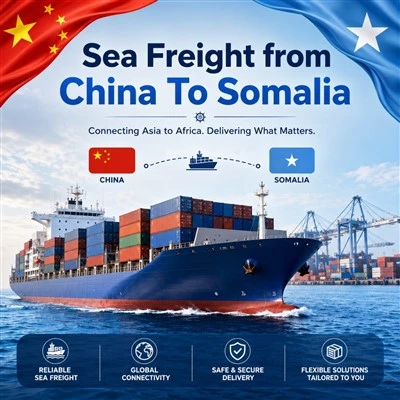
As the trade between China and Africa becomes increasingly close, more and more overseas import and export enterprises are seeking efficient and reliable door-to-door transportation solutions from China to Africa. As an expert in international freight forwarding, we are well aware of the uniqueness and complexity of the African market. This guide will systematically introduce the entire process of door-to-door transportation from China to Africa, covering aspects such as transportation mode selection, cost optimization strategies, customs clearance tips, and risk management, with the aim of helping you fully understand the operation mechanism of this logistics channel and make more informed supply chain decisions.
What is Door-to-Door Shipping?
Door-to-door shipping is a full-service logistics solution in which goods are collected directly from the shipper's premises in China and delivered to the consignee's designated location in Africa. Every stage-origin handling, export customs clearance, international carriage, import clearance, and last-mile distribution-is coordinated by a single freight forwarder or integrated logistics provider.
Key characteristics of this model include:
- Single-point responsibility – One contract governs the entire logistics process, eliminating the uncertainty of dealing with multiple vendors.
- End-to-end visibility – Modern freight forwarders provide tracking and updates across all transit milestones.
- Risk transfer – The forwarder assumes responsibility for coordination, reducing the burden on the shipper.
Compared with traditional port-to-port or CIF arrangements, door-to-door shipping offers significant advantages. It integrates factory pickup, export packaging, and documentation with the main carriage (by sea or air) and destination clearance and last-mile delivery. In practice, this model aligns closely with Incoterms such as DDP (Delivered Duty Paid), where the seller bears all costs and risks until the goods reach the buyer's facility. Depending on commercial agreements, it can also operate under DAP (Delivered at Place).
For African importers who may lack on-the-ground resources in China-or for Chinese exporters who want to simplify the delivery chain for their overseas buyers-this solution offers unmatched convenience.

Transportation Options from China to Africa
Selecting the most suitable transport mode is a strategic decision that hinges on cost, urgency, and cargo type. In the China–Africa trade lane, companies typically rely on a mix of sea freight, air freight, and multimodal solutions.
1. Sea Freight
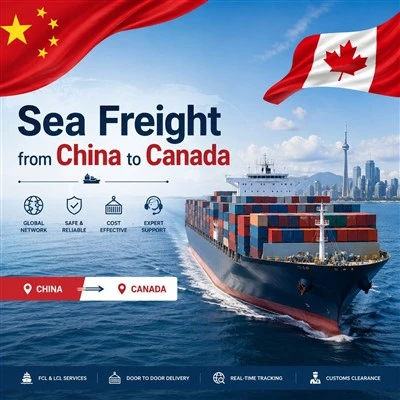
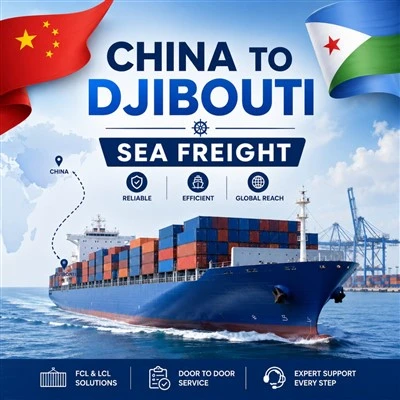
Sea freight remains the backbone of China–Africa trade, accounting for nearly 90 percent of all volumes. Major Chinese export hubs such as Shanghai, Ningbo, Qingdao, and Guangzhou connect directly to African gateways including Durban (South Africa), Lagos (Nigeria), Mombasa (Kenya), and Dar es Salaam (Tanzania).
- Advantages: Sea freight is highly cost-effective, offers capacity for oversized or heavy cargo, and supports full container load (FCL) and less-than-container load (LCL) shipments.
- Challenges: During peak seasons, space shortages and vessel delays are common. Shippers are advised to book at least three to four weeks in advance.
- Indicative costs (2025): $1,800–$2,500 for a 20' container to Kenya; $3,200–$4,100 for a 40' container to Tanzania.
2. Air Freight
Although four to six times more expensive than ocean freight, air freight plays a crucial role for time-sensitive, high-value, or perishable cargo. With direct flights from China to major African hubs such as Johannesburg, Nairobi, and Lagos, delivery can be achieved within 2–5 days including customs clearance.
- Advantages: Unparalleled speed, reduced handling risk, and frequent departures.
- Indicative costs (2025): $4.50–$8.00 per kilogram for shipments to Kenya.
3. Sea–Air Combined Solutions
A hybrid approach is often used to strike a balance between speed and cost. For example, cargo may be shipped by sea to Dubai or a European hub and then transferred by air to an inland African city. This strategy can cut transit time by half compared to all-sea solutions, while reducing costs by 30–50% compared to all-air transport.
4. Inland Distribution and Regional Transport
The "last mile" is often the most complex segment in African logistics. From Mombasa to Kampala, road transport typically takes 2–3 days, while shipments from Durban to Johannesburg can arrive within 24 hours thanks to South Africa's advanced highway system. For landlocked countries like Zambia or Zimbabwe, rail or road networks are indispensable, although they may extend transit times. Freight forwarders with established local partnerships are critical to ensuring smooth delivery across borders.
The Door-to-Door Shipping Process From China to Africa
A clear understanding of the shipping workflow helps businesses plan timelines, prepare documentation, and avoid bottlenecks. The process can be broken down into the following stages:
1.Requirement Confirmation and Solution Design
The process begins with a thorough assessment of cargo details: product type, dimensions, weight, declared value, special handling requirements (such as refrigeration), and Incoterms. Based on this information, the freight forwarder designs a tailored logistics plan, including transport mode, estimated timelines, and cost breakdowns.
2.Cargo Pickup and Origin Handling
The forwarder arranges pickup from the factory or warehouse in China. At this stage, packaging is inspected to ensure compliance with international shipping standards. For LCL shipments, cargo is sorted and consolidated at a warehouse. Many forwarders recommend a pre-container inspection to verify labeling, packaging durability, and documentation accuracy-particularly for goods bound for regions with poor road conditions.
3.Export Customs Clearance
Export formalities in China require commercial invoices, packing lists, contracts, and customs declarations. Certain goods demand additional documents, such as certificates of origin, quality certificates, or export licenses. Errors at this stage are one of the most common causes of clearance delays, making document accuracy critical.
4.International Carriage
The main leg of the journey is executed via sea or air freight. During peak shipping months (August–October), securing container space or air cargo slots often depends on the forwarder's relationships with carriers. Real-time tracking tools now provide visibility into vessel locations and flight progress, ensuring importers stay informed.
5.Import Customs Clearance in Africa
This stage is often the most unpredictable. Requirements vary widely: South Africa and Kenya have relatively structured customs systems, whereas Nigeria and Angola can involve complex and lengthy procedures. Many countries demand pre-clearance, meaning that documents must be submitted several days before the cargo arrives. Forwarders with in-country brokerage partners are invaluable for managing these requirements and reducing delays.
6.Destination Handling and Final Delivery
Once cleared, goods are moved from ports or airports to the consignee's premises. Depending on cargo type, specialized vehicles may be required-flatbeds for oversized machinery, refrigerated trucks for perishables, or armored transport for high-value shipments. In remote regions, delivery may involve multiple legs across rail and road networks.
7.End-to-End Visibility and Exception Management
Advanced logistics platforms enable shippers to monitor every step, from pickup to proof of delivery. IoT devices can provide temperature, humidity, and GPS data for sensitive cargo. If disruptions occur, forwarders deploy contingency measures such as rerouting to alternative ports or engaging backup carriers.
Delivery Confirmation and After-Sales Support
Once goods are delivered, the consignee signs off, and the forwarder provides shipment reports. Professional forwarders also offer post-shipment analysis, identifying areas for cost savings or efficiency improvements for future consignments.
Cost and Transit Time Considerations
Cost and delivery times are the two factors that most directly influence supply chain performance. For importers from Africa and exporters in China, understanding how these variables are structured allows better planning and fewer surprises.
Cost Structure
Door-to-door shipping costs can be broken down into three layers:
- Origin charges – These include pickup fees from the supplier, handling charges at the warehouse or port, preparation of export documentation, and terminal handling charges (THC).
- Main carriage costs – The base freight rate for ocean or air transport, along with surcharges such as the Bunker Adjustment Factor (BAF) and Currency Adjustment Factor (CAF).
- Destination charges – Duties and import taxes, port handling charges, customs clearance fees, storage costs if delays occur, and inland delivery to the consignee's premises.
Transit Time Benchmarks
- Sea Freight: From China to East Africa typically takes 25–30 days; to West Africa 35–45 days; and to South Africa 30–35 days.
- Air Freight: Deliveries to major African hubs such as Nairobi, Johannesburg, or Lagos can be completed in 3–5 days, while shipments to secondary cities may require 5–7 days due to feeder connections.
Optimization Strategies
Leading freight forwarders employ a combination of strategies to balance cost and efficiency:
- ABC cargo classification: High-value or urgent goods (Category A) are assigned to air freight, moderately sensitive goods (Category B) to sea–air multimodal solutions, and bulky or non-urgent goods (Category C) to sea freight.
- Container utilization: Maximizing space efficiency by mixing heavy cargo with lighter, voluminous items can reduce ocean freight costs by 15–25%.
- Route planning: Direct sailings are often faster, but transshipment can sometimes provide earlier arrival or lower costs. For example, a shipment from Qingdao via Colombo to Maputo can save over a week compared to waiting for direct space.
- Customs efficiency: Pre-clearance, early document submission, and collaboration with experienced local customs brokers can shorten clearance times by several days.
Ultimately, effective cost and time management is not about simply chasing the cheapest rate or fastest option, but about aligning logistics choices with business priorities and risk tolerance.
Customs and Compliance Requirements
Navigating African customs regimes is one of the most challenging aspects of China-to-Africa logistics. Requirements and enforcement vary widely across regions, and a single documentation error can delay cargo for weeks.
Essential Documentation
Importers should prepare a complete file that typically includes:
- Commercial invoice
- Packing list with detailed HS codes
- Bill of lading or air waybill
- Certificate of origin (often required for preferential tariffs)
- Import permits for regulated goods
- Phytosanitary or health certificates for agricultural and food products
Regional Duty Structures
- ECOWAS (West Africa): Duties range between 5–20% on most manufactured products.
- EAC (East Africa): Tariffs are generally between 0–25%, depending on product category.
- SACU (Southern Africa): Duties vary, with exemptions for some essential goods.
Common Pitfalls
- Under-declaring values, which may result in penalties or seizure.
- Incorrect HS code classification, leading to reassessments and costly delays.
- Missing certifications, such as SONCAP in Nigeria or KEBS in Kenya.
- Non-compliance with local labeling or packaging regulations.
Best Practices
To avoid these risks, businesses should work with freight forwarders that maintain partnerships with local customs brokers. These experts understand not just the letter of the law, but also how regulations are interpreted in practice by local officials. Pre-submission of documents before cargo arrival, where permitted, is one of the most effective strategies for speeding up clearance.
Choosing the Right Freight Forwarder
Selecting a competent freight forwarder is not just about price-it directly determines whether shipments arrive on time, whether compliance risks are avoided, and whether overall logistics costs remain predictable.
Evaluation Criteria
- African experience: A forwarder with an established local agent network and knowledge of country-specific regulations is invaluable.
- Service scope: The ability to integrate multimodal solutions, customs clearance, warehousing, and distribution.
- Carrier relationships: Long-term cooperation with major shipping lines ensures space and rate stability during peak seasons.
- Certifications and compliance: Look for FIATA, IATA, ISO, AEO, and NVOCC accreditation.
- Technology: End-to-end cargo visibility through tracking systems and logistics management software.
Wilson Supply Chain Management's Advantage
Founded in 2011 in Ningbo, Zhejiang Wilson Supply Chain Management Co., Ltd. has grown into a trusted logistics partner with branches in Shanghai, Shenzhen, and Hong Kong. The company manages an annual throughput of approximately 56,000 TEUs and maintains steady growth of 10% per year.
- Network strengths: Proven expertise on Southeast Asia, Indian Subcontinent, Middle East, and particularly Africa trade lanes.
- Carrier partnerships: Long-standing cooperation with COSCO, Maersk, MSC, and Evergreen secures competitive rates and guaranteed space.
- Specialized capabilities: Handling of oversized cargo, chemical logistics, and dangerous goods; ranked first at Ningbo port for tea imports.
- Client success stories: Strategic logistics provider for Kenya's LAMU shipping project, FAW (First Automotive Works), and multiple Chinese listed companies.
- Professional team: An experienced staff with an average of eight years in the industry, skilled in customs clearance and risk management.
- Service philosophy: A mission-driven approach, combining "delivery certainty" with advanced tracking and post-shipment performance analysis.
In practice, choosing a forwarder like Wilson means more than hiring a transporter-it means securing a partner that can anticipate challenges, prevent costly mistakes, and optimize your logistics end-to-end.
FAQ
Q1: Should I use sea or air freight for high-value electronics?
A: Air freight is recommended. Although more expensive, it ensures faster transit and reduced handling risk. Comprehensive cargo insurance should also be arranged.
Q2: How can I minimize customs delays in Africa?
A: Provide complete and accurate documentation. Use pre-clearance where possible and work with experienced local customs brokers.
Q3: How are LCL (Less-than-Container Load) costs calculated?
A: Rates are based on either cargo volume (in cubic meters) or weight (in metric tons), whichever results in higher revenue for the carrier.
Q4: How can I secure space during peak seasons?
A: Book at least three to four weeks in advance and choose forwarders with strong carrier agreements, which ensures priority access to slots.
Q5: What is the difference between DDP and door-to-door shipping?
A: DDP (Delivered Duty Paid) is an Incoterm that defines cost and risk allocation. Door-to-door shipping describes the logistics model. While different in scope, they often overlap in practice.
Conclusion
Effective door-to-door shipping from China to Africa requires a careful balance of cost efficiency, delivery timelines, and regulatory compliance. Businesses that succeed in this trade corridor do so by making informed choices in transportation mode, anticipating each step in the logistics chain, selecting partners with proven expertise, and maintaining strict documentation discipline.
Wilson Supply Chain Management, with over ten years of operational experience, strong carrier partnerships, and a local network in Africa, has become a professional freight forwarding service provider from China to South Africa. Through our professional services, you can achieve faster, more reliable, and more compliant deliveries, transforming the complex intercontinental logistics into a sustainable competitive advantage. Contact us now to learn about our sea freight from china to south africa.