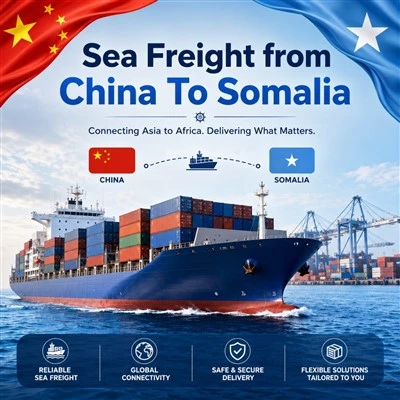
In the fast-paced world of international trade, understanding the capacity of cargo ships is crucial for businesses looking to optimize their logistics. Whether you're a small or medium-sized business (SMB) shipping goods overseas or a seasoned importer/exporter, one question often arises: how many containers can a cargo ship carry? As a trusted freight forwarder, we're here to break down the essentials, from container measurements to the capacities of modern container ships. This guide will help you make informed decisions about your shipping needs, whether you're opting for Full Container Load (FCL) or Less than Container Load (LCL) services.

What Is a TEU and FEU?
To understand how many containers a cargo ship can carry, you first need to grasp the standard units of measurement in the shipping industry: the Twenty-Foot Equivalent Unit (TEU) and the Forty-Foot Equivalent Unit (FEU). These standardized metrics are the backbone of container shipping, ensuring consistency across global logistics.
TEU: The Standard 20-Foot Container
A TEU represents a single 20-foot standard container, with the following specifications:
- Dimensions: 20 feet long, 8 feet wide, 8 feet high
- Volume: Approximately 1,280 cubic feet
- Purpose: The primary unit for measuring a ship's container capacity
TEUs are widely used to quantify the capacity of cargo ships and are essential for calculating transport costs and planning shipments.
FEU: The 40-Foot Container
An FEU refers to a 40-foot container, equivalent to two TEUs. Its specifications include:
- Dimensions: 40 feet long, 8 feet wide, 8.5 feet high
- Volume: Approximately 2,390 cubic feet
- Weight Limit: Up to 26,500 kg (58,420 lbs)
FEUs are popular in international trade due to their larger capacity, making them ideal for bulk shipments. Understanding the relationship between TEUs and FEUs is key to estimating how many containers a ship can carry, especially when mixing 20-foot and 40-foot containers.
How Many Containers Can Different Types of Cargo Ships Carry?
The number of containers a cargo ship can carry depends on its size and design. Cargo ships are classified based on their TEU capacity, ranging from small regional vessels to the world's largest Ultra Large Container Vessels (ULCVs). Below, we outline the main types of ships and their capacities, helping you choose the right vessel for your shipping needs.
1.Feeder Ships (200–3,000 TEUs)
Feeder ships are smaller vessels designed for regional transport, connecting smaller ports to major hubs. They are subdivided as follows:
- Small Feeder: Up to 1,000 TEUs
- Feeder: 1,000–2,000 TEUs
- Feedermax: 2,000–3,000 TEUs
These ships operate efficiently in smaller ports, making them ideal for regional trade routes with lower cargo volumes.
2.Panamax Ships (3,001–5,100 TEUs)
Panamax ships are designed to fit the original Panama Canal locks, with a length of approximately 290 meters. They offer:
- Capacity: 3,001–5,100 TEUs
- Use: Versatile for medium-scale global trade routes
Their size makes them a cost-effective option for many international shipments.
3.Post-Panamax Ships (5,101–10,000 TEUs)
Post-Panamax ships exceed the original Panama Canal dimensions, requiring deep-water ports. They are:
- Capacity: 5,101–10,000 TEUs
- Use: Mainline shipping routes for higher cargo volumes
These vessels are specifically designed for efficiency in major global trade lanes.
4.New Panamax Ships (10,000–14,500 TEUs)
New Panamax ships are built to navigate the expanded Panama Canal (post-2016), with a length of up to 366 meters. They offer:
- Capacity: 10,000–14,500 TEUs
- Use: High-volume routes with access to upgraded canal infrastructure
These ships balance capacity and accessibility for modern trade.
5.Ultra Large Container Vessels (ULCVs) (18,000–24,000+ TEUs)
ULCVs are the giants of the shipping industry, designed for long-haul routes between major ports. Key features include:
- Capacity: 18,000–24,000+ TEUs
- Length: Up to 400 meters
- Advantages: Lowest per-unit transport costs
- Limitations: Restricted to deep-water ports due to their ship size
6.Real-World Examples
MSC Irina: Holds a theoretical maximum of 24,346 TEUs, making it one of the largest container ships in the world.
- Evergreen Alot: Boasts a capacity of 24,004 TEUs, built for high-efficiency global routes.
- Evergreen Ace: Set a record in 2021 by carrying 21,710 TEUs on a single voyage from Yantian, China, to Rotterdam, Netherlands.
These modern container ships demonstrate the incredible scale of today's largest container ships, enabling businesses to move vast quantities of goods efficiently.

How Many 40-Foot Containers (FEUs) Can Fit on a Ship?
While TEU capacity measures total container capacity, many businesses prefer 40-foot containers (FEUs) for their larger volume. To calculate how many FEUs a ship can carry, use the simple formula: 1 FEU = 2 TEUs. Below are theoretical estimates based on TEU capacity:
24,000 TEU ship: Approximately 12,000 FEUs
18,000 TEU ship: Approximately 9,000 FEUs
5,000 TEU ship: Approximately 2,500 FEUs
Why Actual Capacity May Be Lower
The actual number of 40-foot containers a ship can carry is often less than the theoretical maximum due to several factors:
Deadweight Tonnage (Weight Limits): Even if space is available, the ship's total weight capacity may restrict the number of containers.
Stowage Planning: Uneven distribution, such as mixing standard containers with high-cube or refrigerated (reefer) containers, reduces efficiency.
Draft Restrictions: Shallow ports or canals limit the ship's draft, reducing the number of container layers that can be stacked.
By understanding these constraints, businesses can better plan their shipments, whether opting for FCL or LCL, to maximize efficiency and minimize costs.
Factors That Affect Container Capacity on a Cargo Ship
While the TEU capacity of a cargo ship provides a baseline for how many containers it can carry, several factors influence the actual number. Understanding these constraints is critical for shippers and freight forwarders to optimize logistics and avoid costly delays in international trade. Below are the key factors affecting container capacity:
Ship Size and Design
The physical dimensions of a cargo ship-length, width, and depth-directly determine its capacity. Larger vessels, such as Ultra Large Container Vessels (ULCVs), can be up to 400 meters long, allowing them to stack more containers. Specialized designs, such as wider hulls or optimized deck layouts, further increase container capacity by maximizing stacking density.
Container Type Mix
Not all containers are created equal. The shipping industry uses various container types, each impacting capacity differently:
- Standard Containers: 20-foot (TEU) or 40-foot (FEU) units with uniform dimensions.
- High-Cube Containers: Taller than standard containers, occupying more vertical space.
- Open-Top or Flat-Rack Containers: Used for oversized cargo, reducing stackability.
- Reefer Containers: Refrigerated units requiring power connections, which limits layout flexibility.
Mixing these container types requires careful planning to optimize space and ensure efficient loading.
Weight Limitations
Even if a ship has space for more containers, its deadweight tonnage (DWT)-the maximum weight it can carry-sets a hard limit. For example, a 40-foot container (FEU) can hold up to 26,500 kg (58,420 lbs), but heavy cargo may prevent a ship from reaching its full TEU capacity. Shippers must balance volume and weight to avoid underutilizing space.
Stowage Planning
Efficient stowage planning is essential for safety and capacity. Containers must be arranged to maintain the ship's balance and stability, prioritizing safety over maximizing quantity. Heavier containers are placed lower in the stack, while lighter ones go higher to avoid a high center of gravity, which could compromise stability.
Maritime Safety Regulations
International maritime rules, enforced by organizations like the International Maritime Organization (IMO), set strict guidelines on:
- Maximum stacking height to prevent toppling.
- Total weight limits to ensure structural integrity.
- Stability requirements to withstand rough seas.
These regulations ensure safety but may reduce the number of containers a ship can carry.
Port Draft Limitations
A ship's draft-the depth of its hull below the waterline-limits its ability to enter shallow ports. In such cases, cargo ships may need to carry fewer containers to reduce weight and draft, ensuring safe navigation. This is particularly relevant for smaller ports serviced by feeder ships.
Geographic Constraints
Geographic limitations, such as canal dimensions, restrict ship size. For example:
- The Panama Canal's original locks (290 meters long) defined Panamax ships, while the expanded canal (2016) accommodates New Panamax ships up to 366 meters.
- The Suez Canal imposes similar restrictions, as seen in the 2021 Ever Given incident, where a 20,124-TEU ship blocked the canal, highlighting the challenges of navigating largest container ships through constrained routes.
- These factors collectively determine how many containers a ship can carry, making strategic planning essential for efficient logistics.

Why This Matters to Shippers and Freight Forwarders
Understanding container capacity is more than a technical exercise-it directly impacts the efficiency and cost-effectiveness of your shipping operations. For small and medium-sized businesses (SMBs) and freight forwarders, this knowledge drives smarter decisions in international trade.
For SMB Shippers
Knowing how many containers a cargo ship can carry helps SMBs:
- Choose Between FCL and LCL: Decide whether a Full Container Load (FCL) or Less than Container Load (LCL) suits their cargo volume. For example, if a Panamax ship carries 2,500 FEUs, SMBs can estimate whether their shipment fits a full 40-foot container or requires shared space.
- Estimate Costs and Timelines: Accurate capacity knowledge aids in calculating shipping costs, delivery schedules, and batch frequency, ensuring budget and timeline alignment.
For Freight Forwarders
As a freight forwarder, we leverage container capacity insights to:
- Match Cargo to Vessel: Pair client shipments with the right type of ship (e.g., feeder ships for regional routes or ULCVs for long-haul) to optimize transport efficiency.
- Select Suitable Ports: Avoid delays by choosing ports that accommodate the draft and size of modern container ships, ensuring smooth operations.
- Assess Volume and Weight: Accurately evaluate cargo volume and weight to maximize container usage without exceeding weight limitations.
Economic Optimization
Maximizing container usage-approaching "full container load"-significantly reduces per-unit logistics costs. For SMBs, this means lower shipping expenses and better profitability. For freight forwarders, it enables long-term planning, such as securing cabin space and establishing consistent export schedules, ensuring reliable service for clients.
By partnering with an experienced freight forwarder, businesses can navigate these complexities, from selecting the right type of ship to optimizing stowage for cost efficiency.
FAQ
Q: What's the difference between TEU and FEU?
A: A TEU (Twenty-Foot Equivalent Unit) is a 20-foot standard container, while an FEU (Forty-Foot Equivalent Unit) is a 40-foot container, equivalent to 2 TEUs. These units standardize capacity measurements across the shipping industry.
Q: Can ships mix 20-foot and 40-foot containers?
A: Yes, cargo ships can carry both TEUs and FEUs. Flexible stowage planning allows for mixed configurations based on space, weight, and balance requirements.
Q: What limits the number of containers on a ship besides size?
A: Beyond ship size, factors like weight limitations, maritime safety regulations, port draft limitations, and geographic constraints (e.g., Panama or Suez Canal restrictions) impact capacity.
Q: Are all container ships designed to carry both TEUs and FEUs?
A: Most modern container ships are specifically designed to handle both TEUs and FEUs. However, efficient stowage planning is required to optimize mixed configurations while ensuring safety and stability.
Q: What's the biggest container ship today?
A: The MSC Irina holds the title as one of the largest container ships in the world, with a theoretical maximum TEU capacity of 24,346, equivalent to approximately 12,173 FEUs.
Conclusion
Understanding how many containers a cargo ship can carry empowers businesses to make informed decisions in the complex world of international trade. From navigating weight limitations to selecting the right type of ship-whether a feeder ship or an Ultra Large Container Vessel (ULCV)-this knowledge drives cost efficiency and operational success. As your trusted freight forwarder, Wilson Cargo is here to simplify the process, offering tailored solutions to match your cargo with the right vessel, port, and shipping strategy.
Please Contact Wilson Cargo for a free customized quote. Let our 15 years of expertise provide you with professional Shipping Container Trade services. ( gm@wilson-cargo.com )