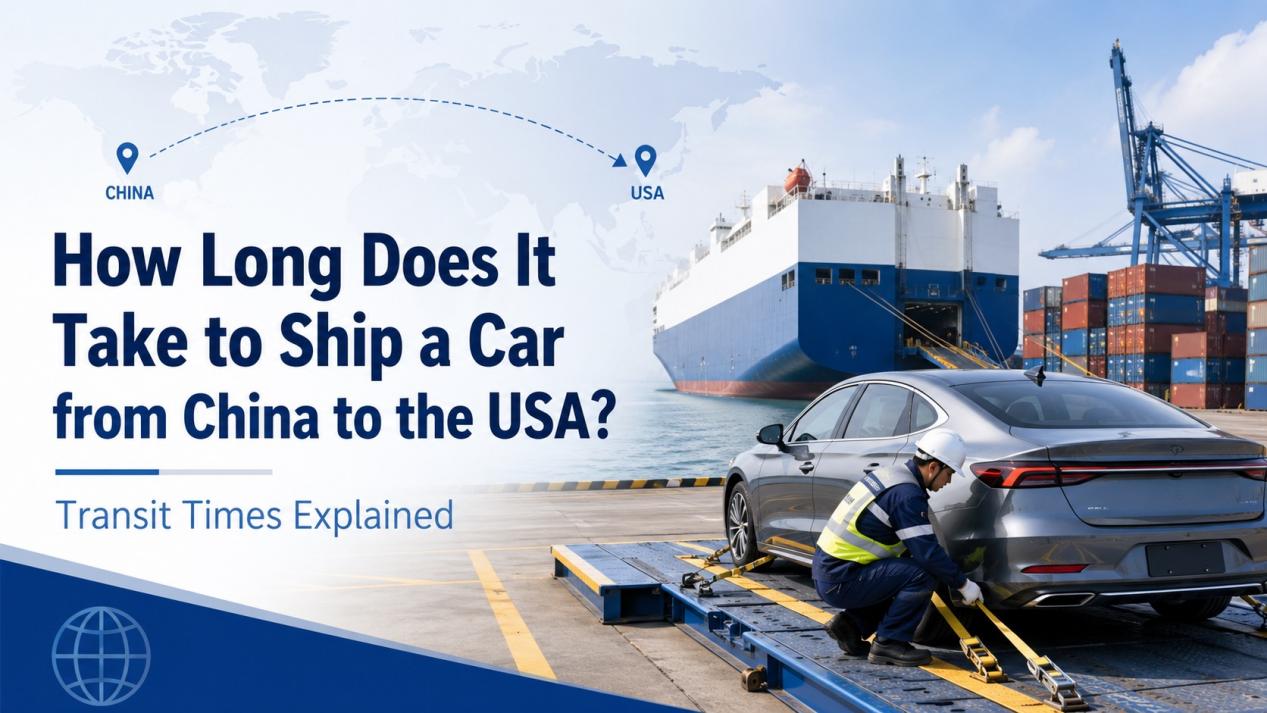
Shipping a car from China to the USA does not have one fixed timeline.
If you only look at ocean transit, a vehicle shipped from China to the U.S. West Coast may take around 15–20 days at sea. To the U.S. East Coast, the sailing time is usually closer to 25–35 days.
But that is not the full shipping timeline.
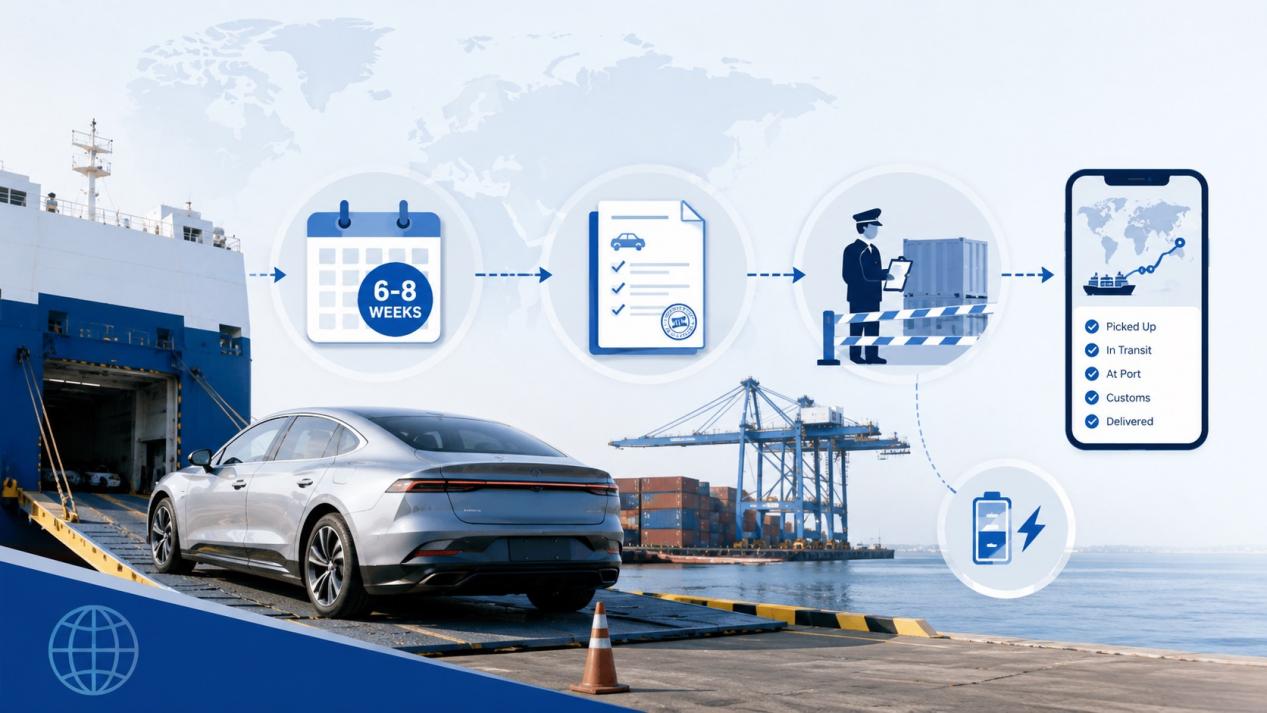
For most car shipments, the real planning window is usually 4–8 weeks from pickup in China to final delivery or port release in the USA. The final time depends on the departure port, arrival port, shipping method, vessel schedule, customs clearance, vehicle condition, and whether the documents are ready before booking.
The mistake many buyers make is simple: they treat the sailing time as the delivery time. In vehicle logistics, that is rarely accurate.
Port-to-Port vs. Door-to-Door Transit Time
Before comparing shipping methods, it helps to define the timeline correctly.
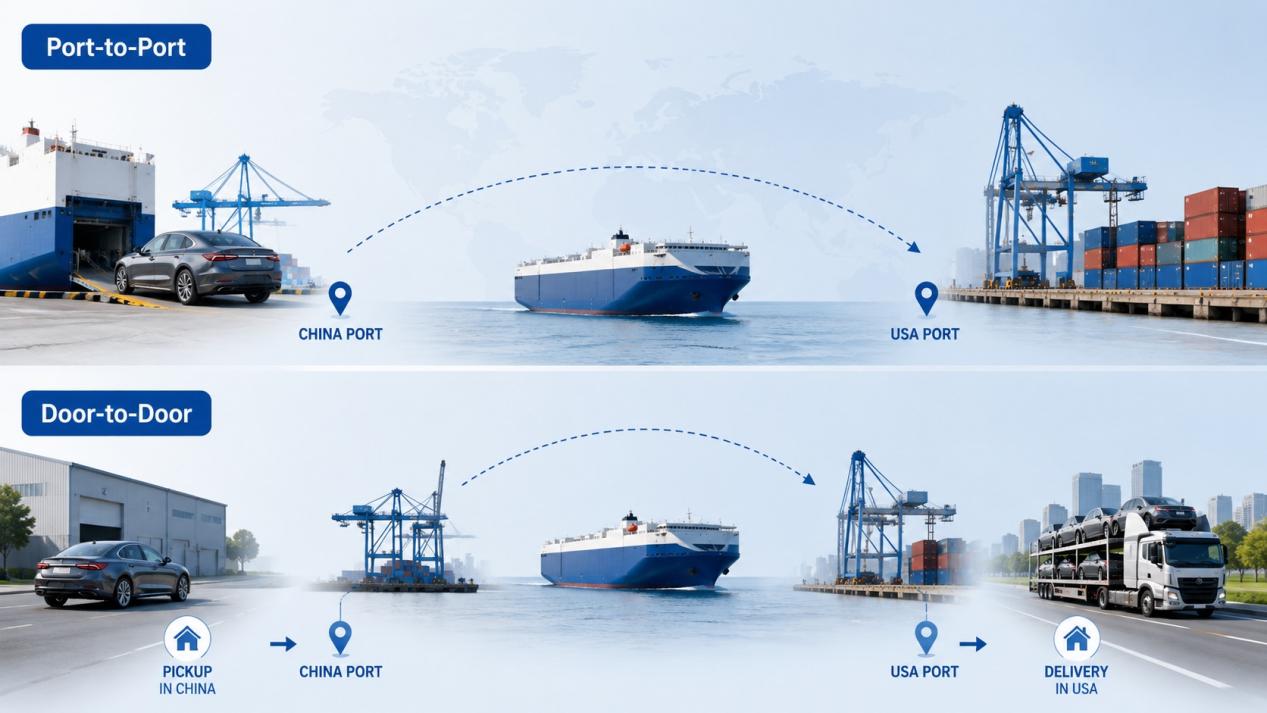
Port-to-port transit time means the time between the vehicle loading at a Chinese port and arriving at a U.S. port. It only covers the sea leg. It does not include vehicle pickup, export customs declaration, waiting for the vessel, U.S. customs clearance, port release, or inland delivery.
Door-to-door shipping time means the full movement from the vehicle's pickup location in China to the final delivery address in the United States. This is the timeline importers should use for business planning.
For example, if a car is purchased from a dealer in Guangzhou and shipped to Los Angeles, the ocean transit may only be around two to three weeks. But before the vessel departs, the vehicle still needs to be picked up, moved to the port, checked against documents, declared for export, and loaded. After arrival, it still needs U.S. customs clearance, port handling, and pickup or trucking.
That is why a 18-day sailing schedule can easily become a 35–45 day project.
In car shipping from China to the USA, the sea leg is only one part of the job. The time before loading and after arrival often decides whether the shipment feels smooth or delayed.
Typical Timeline for Shipping a Car from China to the USA
A realistic vehicle shipping timeline should be broken into stages. This gives the buyer, supplier, and freight forwarder a shared view of where time is spent.
| Shipping Stage | Estimated Time | What Happens |
| Vehicle information check | 1–3 days | Confirm VIN, model, size, weight, running condition, shipping method, pickup city, and U.S. destination |
| Pickup and document preparation | 3–7 days | Arrange pickup, collect vehicle documents, prepare booking details, check export requirements |
| Port delivery and export clearance | 5–10 days | Vehicle enters port, export customs declaration is filed, terminal handling and loading are arranged |
| Ocean transit | 15–35 days | Depends on China departure port, U.S. coast, vessel schedule, and whether transshipment is involved |
| U.S. customs clearance and final delivery | 3–14+ days | CBP clearance, possible inspection, port release, towing, truck delivery, or buyer pickup |
For a clean shipment - complete documents, a running vehicle, a stable sailing schedule, and no customs inspection - the timeline can stay closer to the lower end.
For a used car, an EV, a non-running vehicle, a commercial truck, or a shipment with incomplete documents, the timeline can stretch quickly. The delay is not always at sea. It often happens while waiting for approval, port handling, customs release, or final pickup.
A safe planning window is better than an optimistic sailing estimate.
Transit Time by Shipping Method: RoRo, Container, and Air Freight
The shipping method has a direct effect on both transit time and handling time. For vehicle shipping from China to the USA, the three main options are RoRo shipping, container shipping, and air freight.
RoRo Shipping Transit Time
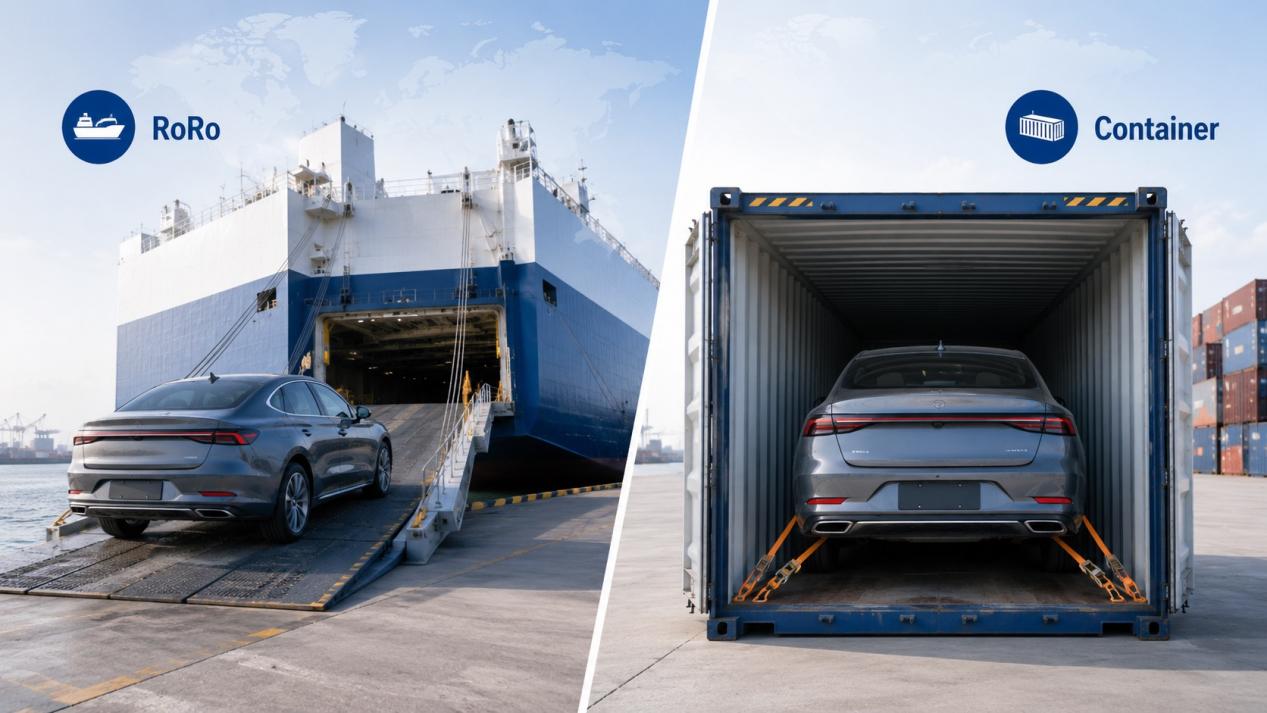
RoRo means "Roll-on/Roll-off." The vehicle is driven onto the vessel at the departure port and driven off at the arrival port.
This method works best for running vehicles, including standard cars, SUVs, pickup trucks, buses, and some types of construction machinery. The loading and unloading process is usually efficient because the vehicle does not need to be loaded into a container.
RoRo can reduce handling time, especially for standard vehicles that can move under their own power. A running SUV exported through a major Chinese port and shipped to Los Angeles or Long Beach may benefit from faster terminal handling than a containerized vehicle that needs loading, securing, and later unloading.
But RoRo is not always the fastest option.
RoRo depends on vessel availability, port coverage, and sailing frequency. If the right RoRo service is not available from the nearest port, the vehicle may need extra inland movement or a longer wait for the next sailing. For some routes, container shipping may offer more flexible schedules.
RoRo is efficient when the vehicle, port, and route match.
Container Shipping Transit Time
Container shipping means the vehicle is loaded into a 20-foot, 40-foot, or 40-foot high cube container. The car is secured inside the container before sea transport.
This method is often used for high-value vehicles, electric cars, prototype vehicles, sample vehicles, multiple-car shipments, or cars that need better protection during transport. It is also useful when RoRo service is not available or when the shipper wants more control over loading.
Container shipping usually adds more operation time. The vehicle must be loaded, fixed, inspected if required, sealed, shipped, and unloaded after arrival. For a single high-value car, that extra handling may be acceptable because the container gives better protection against weather exposure and port movement.
For example, a new energy vehicle shipped from Shanghai to the U.S. may be safer in a container if the shipper needs controlled loading, battery document review, and closer supervision. The total transit time may be slightly longer than RoRo, but the risk control may be better.
Speed is not the only factor. For expensive vehicles, EVs, or samples, container shipping can be the more practical choice.
Air Freight Transit Time
Air freight is the fastest way to ship a car from China to the USA. In some cases, the air transport itself can take only a few days.
But air freight is rarely used for normal commercial car shipping because the cost is extremely high. It is usually limited to special cases such as race cars, exhibition vehicles, prototype cars, urgent testing vehicles, or high-value samples with strict deadlines.
For most importers, air freight is not a cost-effective solution. A better approach is to choose a stable sea route, prepare documents early, and avoid delays before and after the vessel departure.
| Shipping Method | Typical Time Profile | Best For | Main Limitation |
| RoRo shipping | Efficient loading and unloading; ocean time depends on route | Running cars, SUVs, trucks, machinery that can be driven | Limited by RoRo route and sailing schedule |
| Container shipping | More handling time but better protection | EVs, high-value cars, samples, multi-car shipments | Loading, securing, inspection, and unloading may add time |
| Air freight | Fastest, often only a few days in transit | Race cars, prototypes, exhibition vehicles, urgent samples | Very high cost |
For most China to USA car shipping projects, the real choice is between RoRo and container shipping. Air freight is the exception, not the standard solution.
How U.S. Coast and Port Choice Affect Transit Time
The U.S. arrival port can change the shipping time by one to two weeks. This is why "China to USA" is too broad as a shipping estimate.
Shipping to the U.S. West Coast
Common U.S. West Coast ports include:
- Los Angeles
- Long Beach
- Oakland
- Seattle / Tacoma
For ocean freight, China to the U.S. West Coast is usually the shorter route. As a planning range, the sea leg may take around 15–20 days, depending on the Chinese departure port, vessel schedule, and port conditions.
This option is often suitable when the final destination is in California, Nevada, Arizona, Oregon, Washington, or other western states. If the buyer can pick up the car at the port or arrange short-distance trucking, the total timeline is usually easier to control.
For example, a running vehicle shipped from Shenzhen or Shanghai to Long Beach may be a reasonable choice when the final delivery address is in Southern California. The ocean leg is shorter, and the inland delivery distance is limited.
Shipping to the U.S. East Coast
Common U.S. East Coast ports include:
- New York / New Jersey
- Savannah
- Baltimore
- Norfolk
China to the U.S. East Coast usually takes longer at sea, often around 25–35 days as a planning range. The vessel may pass through longer routes, and schedule frequency can be different from West Coast services.
Still, East Coast delivery can make sense. If the buyer is based in New York, Pennsylvania, Georgia, Florida, or nearby states, shipping to an East Coast port may reduce inland trucking time after arrival. A shorter sea route is not always the shortest full delivery route.
This is where many buyers miscalculate. Shipping to Los Angeles may look faster on the vessel schedule, but if the vehicle then needs to be trucked across the country, the final delivery date and total cost may no longer look better.
Shipping to the Gulf Coast
Houston is a common Gulf Coast option for some southern and central U.S. destinations. It may be suitable when the final delivery point is in Texas, Louisiana, Oklahoma, or nearby regions.
Gulf Coast routes should be reviewed case by case. The right port is not just the closest ocean port on a map. The freight forwarder should compare sailing time, port handling, customs clearance, inland delivery distance, and vehicle handling capability.
A faster port-to-port route does not always create a faster door-to-door shipment.
Main Factors That Can Delay Car Shipping from China to the USA
Delays in vehicle shipping usually come from several small problems, not one dramatic event. The most common issues are schedule changes, document problems, loading requirements, customs inspection, and port release delays.
Vessel Schedule, Transshipment, and Port Congestion
Direct services are usually more stable than transshipment routes. When a shipment requires vessel transfer, the car or container may wait at an intermediate port before moving onward.
Peak seasons, Chinese holidays, U.S. holiday demand, port congestion, labor disruption, bad weather, and vessel schedule changes can all add days to the timeline. Typhoons in Asia, heavy fog near ports, or terminal congestion on the U.S. side can delay departure, arrival, or unloading.
A delay of three to seven days is common in busy periods. Longer delays can happen when several risks overlap.
This is why booking early matters. Waiting until the car is ready at the port before checking space can create avoidable waiting time.
Vehicle Condition and Loading Requirements
A standard running vehicle is easier to move. It can be driven onto a RoRo vessel or positioned inside a container with fewer special arrangements.
A non-running car is different. It may need a winch truck, forklift, crane, or special loading plan. The same applies to damaged vehicles, modified cars, oversized vehicles, buses, commercial trucks, and construction machinery.
For example, a non-running used car bought from an auction yard in China may need extra towing to the port, manual loading, and special securing inside a container. Even if the vessel schedule is good, the pre-loading process can add several days.
Vehicle condition should be checked before quoting the timeline. If the car cannot move under its own power, the shipping plan changes.
Export and Import Documentation
Documents are one of the most common causes of delay.
For car shipping from China to the USA, the basic document set may include:
- Commercial Invoice
- Sales Contract
- Packing List
- Vehicle Title or Certificate
- VIN information
- Export declaration documents
- Bill of Lading
- EPA-related documents
- DOT / NHTSA-related documents
- Any required battery documents for EVs or hybrids
The exact documents depend on the vehicle type, export arrangement, and U.S. import requirements.
For U.S. imports, CBP refers to U.S. Customs and Border Protection, the agency handling customs entry. EPA refers to the Environmental Protection Agency, which is related to emissions compliance. DOT and NHTSA are tied to vehicle safety requirements and federal motor vehicle standards.
A freight forwarder does not replace legal import compliance review, but the forwarder can help flag missing shipping documents early. This matters because documents affect booking, export declaration, loading, customs clearance, and port release.
If the paperwork is wrong, the vessel may not be the slow part. The file is.
EV Battery and Carrier Review
Electric vehicles and hybrid vehicles need extra attention before booking.
EV shipping may involve battery information, MSDS, UN38.3 test documents, battery condition, state of charge requirements, and carrier approval. Not every vessel operator treats EVs the same way, and not every route is suitable for every vehicle type.
The best time to review EV shipping requirements is before the car is sent to the port. If the vehicle arrives at the terminal before the battery documents are checked, the shipment may be delayed, rejected, or moved to a later sailing.
For China to USA EV shipping, the question is not only "how long is the voyage?" The question is whether the vehicle is accepted, documented, and booked under the right shipping conditions.
How to Reduce Transit Time and Track Your Vehicle During Shipping
A faster shipment usually starts before the car moves.
The most effective way to avoid delay is to prepare the shipment as a project, not as a last-minute booking.
Plan 6–8 Weeks Ahead
For a standard vehicle shipment, planning 6–8 weeks ahead is a safer window. This gives enough time for vehicle checks, document review, booking, port delivery, export customs, ocean transit, U.S. clearance, and final delivery.
For EVs, non-running vehicles, multiple cars, commercial vehicles, construction machinery, or time-sensitive trade show vehicles, earlier planning is better.
A buyer who starts planning only after the car is ready for pickup may still ship successfully, but there is less room to solve document or schedule problems.
Review Documents Before Booking
Documents should be reviewed before booking space.
At minimum, the freight forwarder needs clear vehicle information: VIN, make, model, dimensions, weight, running condition, pickup location, seller details, buyer details, and expected U.S. destination.
For EVs, battery documents should be checked early. For used cars, ownership and vehicle certificate details should be confirmed before the export process begins.
This step is not paperwork for paperwork's sake. It prevents the most frustrating kind of delay: the car is ready, the buyer is ready, but the shipment cannot move because one document is missing or inconsistent.
Choose the Right Shipping Method, Not Only the Fastest One
The fastest method on paper may not be the best shipping method.
RoRo may save handling time for a running vehicle, but only when the route and sailing schedule fit. Container shipping may take longer at the port, but it can be better for expensive vehicles, EVs, samples, and vehicles needing protection. Air freight is fast, but the cost usually removes it from normal commercial planning.
The right question is not "Which method is fastest?"
The better question is: "Which method gives the most reliable timeline for this vehicle, route, and delivery requirement?"
Track Key Shipping Milestones
Tracking in vehicle shipping is more than checking a vessel position.
A good tracking process should monitor each project milestone:
- Booking confirmed
- Vehicle picked up
- Vehicle arrived at China port
- Export customs completed
- Loaded on vessel
- Vessel departed
- Estimated arrival updated
- Arrived at U.S. port
- Customs clearance in progress
- Port release
- Final pickup or delivery
These updates help buyers prepare payment, insurance, customs documents, trucking, and receiving arrangements. They also make it easier to react if the vessel schedule changes or if the shipment is held for inspection.
For long-distance vehicle shipping, silence creates more stress than delay. Clear milestone updates keep the buyer in control.
How Wilson Helps Manage Car Shipping Time from China to the USA
Zhejiang Wilson Supply Chain Management Co., Ltd. supports vehicle shipping from China to the USA by helping customers plan the route, shipping method, documents, booking, export customs, port operation, and destination-side coordination.
For a car shipment, timing control starts with the first review. The vehicle type, pickup city, running condition, U.S. destination, and document status all affect the timeline.
Wilson can assist with:
- RoRo, container, and special vehicle shipping options
- Pickup coordination within China
- Departure port and route planning
- Export document review
- Booking and customs declaration
- Container loading or RoRo port arrangement
- Shipment milestone updates
- U.S. destination coordination through local agents
- Shipping advice for used cars, EVs, SUVs, commercial vehicles, and machinery vehicles
The goal is not to promise the shortest possible number of days. The goal is to give the customer a realistic shipping timeline and reduce avoidable delay before the vehicle moves.
Conclusion
Shipping a car from China to the USA usually takes 15–35 days at sea, depending on whether the vehicle is going to the U.S. West Coast, East Coast, or another destination port. The full pickup-to-delivery process often takes 4–8 weeks, and sometimes longer when documents, customs, vessel schedules, or vehicle handling are more complex.
If you are preparing to ship a car, EV, SUV, truck, or machinery vehicle from China to the United States, Wilson can review your vehicle details, route, documents, and delivery needs before booking. Contact Zhejiang Wilson Supply Chain Management Co., Ltd. to get a more realistic transit time plan for your shipment.
FAQ
How long does it take to ship a car from China to Los Angeles?
For Los Angeles or Long Beach, the ocean transit from China is often around 15–20 days as a planning range. The full timeline may be longer once pickup, export customs, loading, U.S. customs clearance, port release, and final delivery are included.
A realistic pickup-to-delivery estimate is often several weeks, not only the vessel sailing time.
Is RoRo faster than container shipping?
RoRo can be faster during loading and unloading because the vehicle is driven on and off the vessel. It is often a good option for running cars, SUVs, trucks, and some machinery.
Container shipping may take more handling time, but it can be better for EVs, high-value vehicles, samples, and cars needing more protection. The faster choice depends on route, sailing schedule, vehicle condition, and destination port.
What is the fastest way to ship a car from China to the USA?
Air freight is the fastest method and may move a vehicle in only a few days. But it is very expensive and usually used only for race cars, prototypes, exhibition vehicles, or urgent samples.
For normal vehicle shipping, the fastest practical method is usually a well-planned sea freight solution with early booking and complete documents.
Why does car shipping from China to the USA get delayed?
Common delay reasons include vessel schedule changes, transshipment waiting, port congestion, incomplete documents, customs inspection, non-running vehicle handling, EV battery document review, and delayed port pickup after arrival.
Many delays happen before loading or after arrival, not during the ocean voyage itself.
Can electric cars be shipped from China to the USA?
Yes, electric cars can be shipped from China to the USA, but they need earlier review. Battery information, MSDS, UN38.3 documents, carrier requirements, state of charge, and import compliance should be checked before booking.
EV shipments should not be treated exactly like standard gasoline vehicles.
How early should I book car shipping from China?
For standard car shipping, it is safer to plan 6–8 weeks ahead. For EVs, non-running cars, multiple vehicles, commercial trucks, machinery vehicles, or strict delivery deadlines, start earlier.
Early planning gives the freight forwarder enough time to check documents, compare routes, book space, arrange port handling, and prepare for U.S. clearance.