China's used car market is no longer a small domestic resale channel. It has become a large vehicle supply system with online platforms, dealer networks, inspection services, export companies, and logistics providers working around it.
For overseas buyers, this matters for one simple reason: China can offer a wide range of used passenger cars, SUVs, EVs, trucks, and commercial vehicles at attractive prices.
But price is only the first layer.
A cheap used car in China is not always a good import deal overseas. The real question is whether the vehicle can be inspected, exported, shipped, cleared, registered, and serviced in the destination country without creating cost or compliance problems.
That is the practical way to read China's used car market in 2025-2026.
Why China's Used Car Market Matters in 2025-2026
China has one of the largest vehicle ownership bases in the world. Years of high new car sales have created a deep pool of used vehicles, including three-to-six-year-old cars, low-mileage SUVs, trade-in vehicles, and used new energy vehicles.
Recent market data cited by industry sources shows China's used car transactions moved beyond the 20 million-unit level in 2025. New energy used vehicles also became more visible, with reported transaction volume reaching around 1.6 million units in 2025 and growing faster than the wider used car market.
The exact figures may vary by source and statistical method, but the direction is clear. China's used car market is becoming larger, more structured, and more relevant to global buyers.
Several forces are driving this:
● Fast new car replacement cycles
● New car price competition
● Trade-in programs
● Rising EV ownership
● Digital used car platforms
● Strong demand from overseas markets
The price gap is a major reason buyers pay attention. In China, a three-year-old sedan or SUV can sometimes cost much less than a comparable new model. Many young domestic buyers already see used cars as a practical choice rather than a compromise. Overseas buyers are now looking at the same price window.
Still, international trade adds extra layers. A vehicle that looks affordable in China may become expensive after inspection, inland transport, export handling, ocean freight, destination charges, duties, taxes, and registration.
For international buyers, the purchase price is not the real price.
The real price is the total landed cost.
How China's Used Car Market Works
The China used car market includes several supply channels. Some are suitable for domestic buyers only. Some can work for international buyers if the seller can support export documents and port delivery.
Main Sources of Used Cars in China
Used cars in China usually come from these channels:
Source | Typical Features | Export Suitability |
| Individual owners | Scattered supply, price may be negotiable | Often difficult unless an export company is involved |
| 4S store trade-ins | Better repair history and service records | Good if documents are complete |
| Used car dealers | Wider inventory, faster sourcing | Depends heavily on dealer quality |
| B2B auction platforms | Dealer-to-dealer stock flow | Better for bulk buyers with local partners |
| Certified used car programs | Inspection and limited service guarantee | Useful, but export policy must be checked |
| Rental or fleet vehicles | Possible batch supply | Need careful condition and usage checks |
| Used EV trade-ins | Growing supply, younger vehicle age | Attractive but technically more complex |
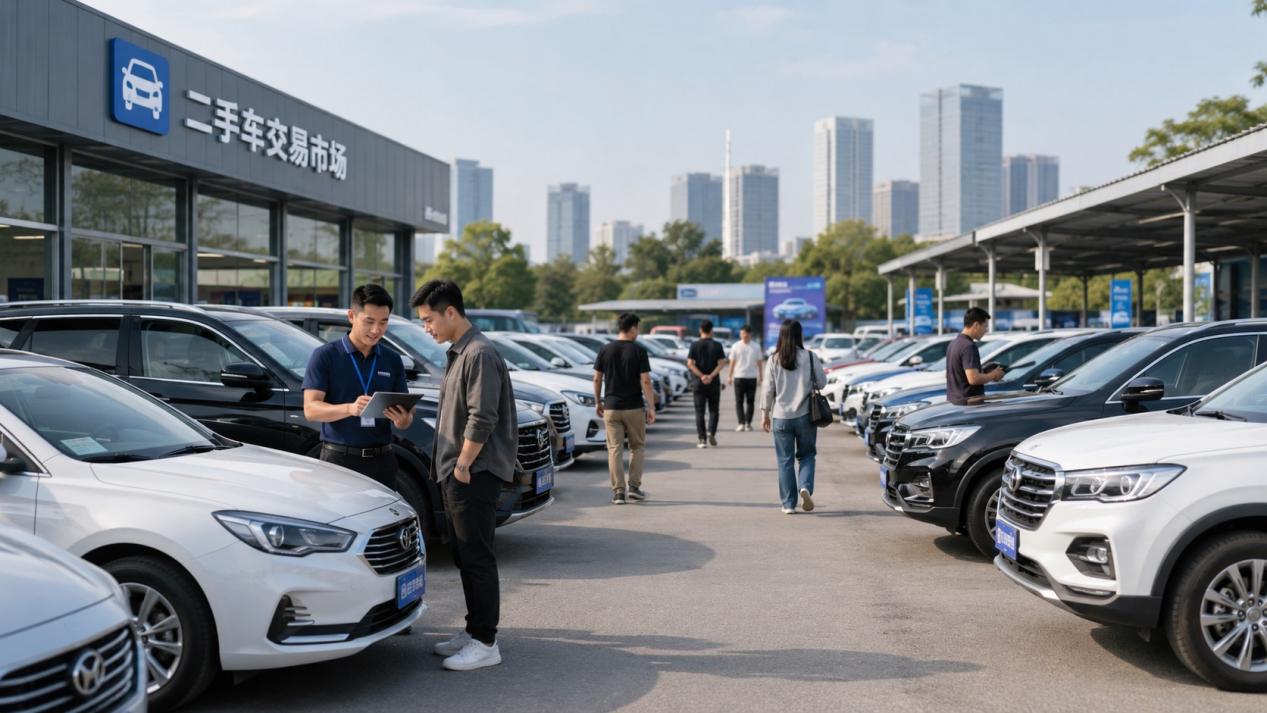
For overseas buyers, the safest approach is rarely pure C2C purchasing. A private seller may offer a low price, but the transaction can become difficult when export documents, customs declaration, and port delivery are needed.
A vehicle suitable for export should come through a channel that can support inspection, ownership verification, commercial paperwork, and export coordination.
Key Players International Buyers Should Understand
Several parties may be involved before a used car leaves China.
The vehicle dealer provides the car, but the dealer may not have export capability. This is a common misunderstanding. Selling a car and exporting a car are not the same thing.
The export company handles trade documents, export-related procedures, and coordination with customs. Some buyers work directly with export-oriented suppliers because they understand both vehicle sourcing and export compliance.
The inspection provider checks the vehicle condition. This may include accident history, mileage consistency, flood damage, engine condition, chassis condition, structural damage, and EV battery health.
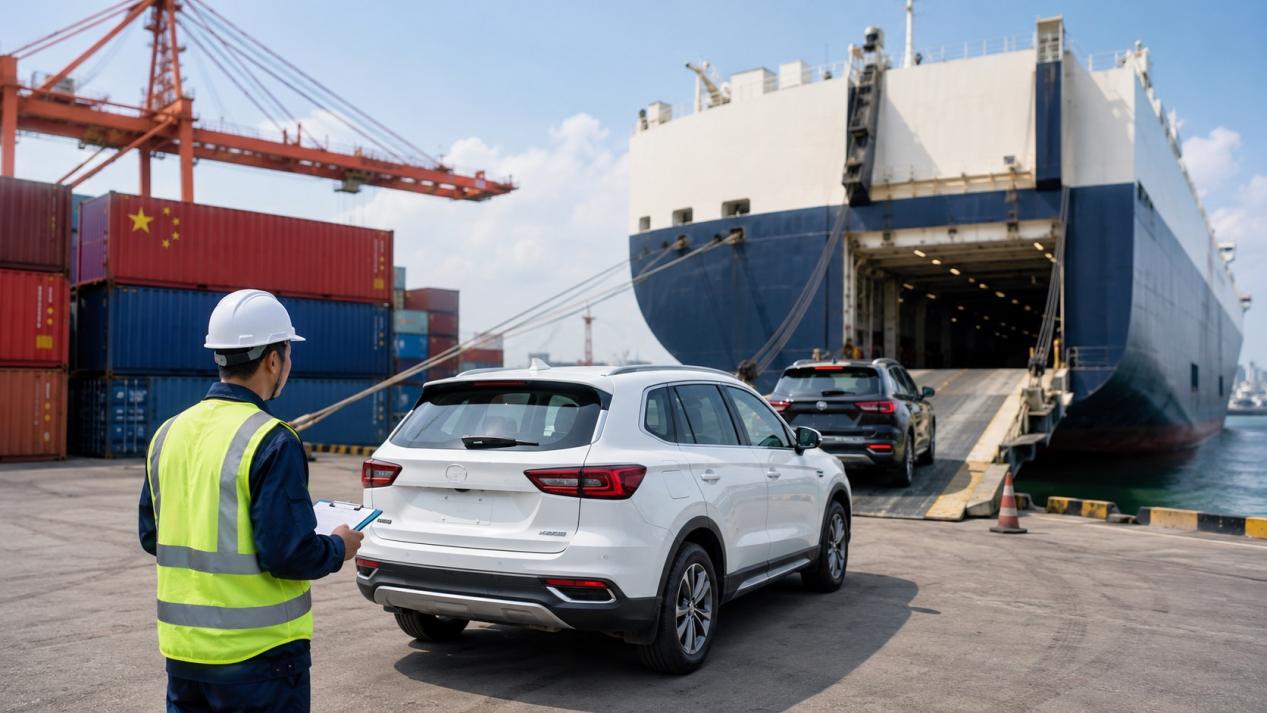
The freight forwarder handles the logistics chain. This may include inland pickup, port delivery, booking, customs coordination, RoRo shipping, container loading, insurance, bill of lading, and destination agent coordination.
The destination customs broker handles local clearance, taxes, port formalities, and sometimes delivery or registration support.
A serious buyer should not only ask, "How much is this car?"
The better question is: "Can this vehicle move through the full chain from China seller to destination road legally and safely?"
What Types of Used Vehicles Are Most Attractive to Global Buyers?
Not every used vehicle in China is a good export candidate. The best choice depends on destination regulations, buyer budget, local demand, parts availability, and transport method.
Passenger Cars and SUVs
Passenger cars and SUVs are the most common used vehicle categories for overseas buyers. They are easier to inspect, easier to ship, and easier to price compared with heavy vehicles or special-purpose units.
SUVs are especially attractive in markets where buyers need road clearance, space, and practical use, such as the Middle East, Africa, Central Asia, and parts of Latin America.
Before purchase, buyers need to check:
● Vehicle age
● Emission standard
● Left-hand drive or right-hand drive requirement
● Local registration policy
● Safety certification needs
● Availability of spare parts
● Import duty and tax level
A used SUV may look profitable at the purchase stage, but if the destination country has a strict age limit or emission rule, the deal may fail after the car arrives.
Used EVs and New Energy Vehicles
Used EVs from China are one of the most watched areas in 2025-2026. China has a large new energy vehicle base, and more low-mileage EVs are entering the second-hand market.
This creates opportunity, but EVs require deeper due diligence than fuel vehicles.
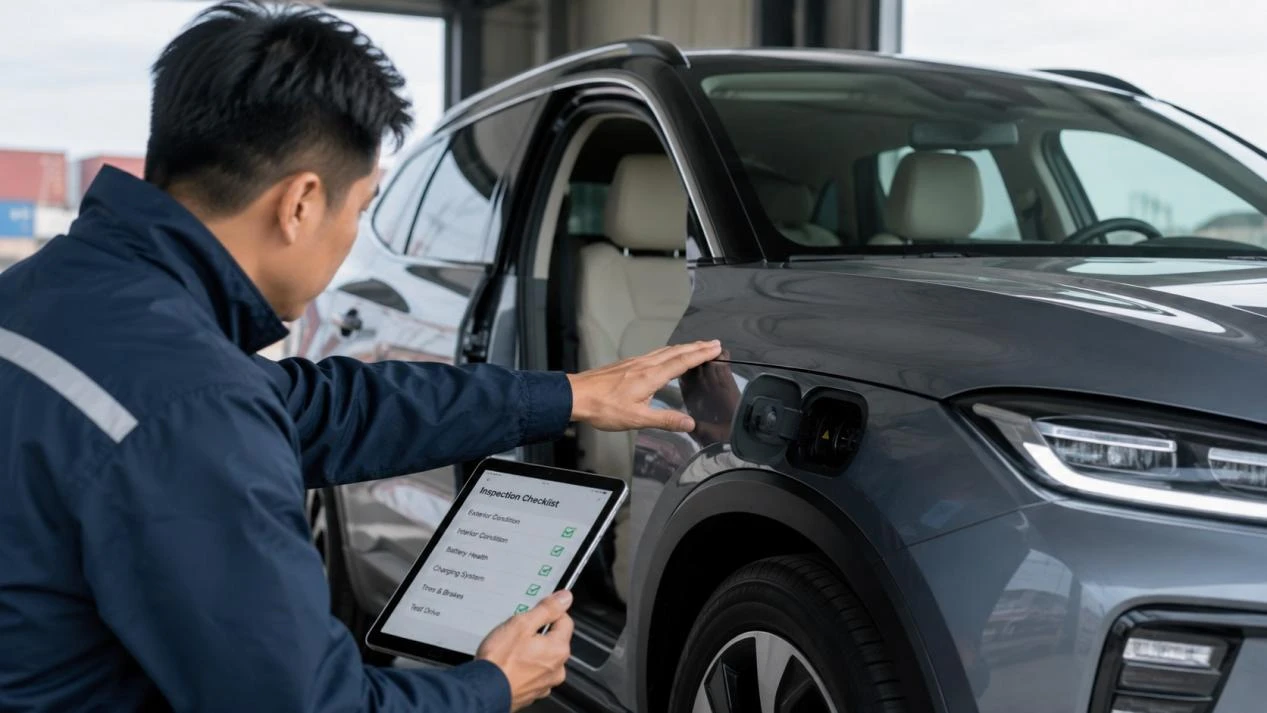
For a used electric vehicle, mileage alone is not enough. Buyers should check:
● Battery state of health, often called SOH
● Battery cycle count
● Fast charging history
● Thermal management condition
● Real driving range
● Charging plug compatibility
● Software language and regional settings
● Warranty transfer rules
● Local diagnostic and repair support
● Shipping line acceptance for EV transport
A used EV with a low price but weak battery health can become a bad investment. The battery pack is often the most expensive part of the vehicle. In some cases, battery condition can affect resale value by 10-15% or more.
There is also a shipping issue. EVs may face different carrier requirements due to lithium battery safety concerns. Some shipping lines may ask for battery condition information, state-of-charge control, or specific handling instructions.
A used EV should be treated as both a vehicle and a battery-powered cargo unit.
Commercial Vehicles, Trucks and Special Vehicles
China also exports used trucks, buses, pickups, cargo vans, construction vehicles, and special-purpose vehicles. These categories are attractive for practical markets where buyers care more about working value than brand image.
Examples include:
● Used cargo trucks for construction and distribution
● Used buses for passenger transport
● Used pickups for mining, farming, or utility work
● Used concrete mixer trucks
● Used excavators, loaders, and engineering vehicles
● Refrigerated trucks and special vehicles
These vehicles need more planning before shipment. The buyer should provide length, width, height, weight, wheelbase, running condition, and lifting points if available.
Transport options may include RoRo, flat rack, breakbulk, or special cargo handling. For large vehicles, the shipping plan must be checked before purchase, not after purchase.
What Buyers Should Check Before Paying for a Used Car in China
The biggest risk in the used car trade is not always fraud. Often, it is incomplete verification.
A buyer sees photos, receives a low quotation, pays a deposit, and only later discovers that the car has accident history, missing documents, weak battery health, or no realistic import pathway.
That order is wrong.
Due diligence should happen before payment.
Vehicle Condition and History
For fuel vehicles, the inspection should cover more than exterior photos. Buyers should request a written inspection report and, when possible, video evidence.
Key checks include:
● VIN and registration information
● Vehicle production date
● Seatbelt, glass, and major part dates
● Odometer consistency
● Accident record
● Insurance claim record
● 4S store maintenance record
● Engine and gearbox condition
● Chassis and suspension condition
● Structural frame damage
● Flood damage signs
● Fire damage signs
● Illegal modification
● Ownership or title issues
One practical method is to compare the production date of the vehicle with dates on seatbelts, windows, headlights, and body panels. If several parts are newer than the vehicle without a clear repair record, the car may have undergone major repair.
Photos can hide problems. Inspection records reveal patterns.
EV Battery and Technical Compatibility
For used EVs, buyers need a separate technical review.
The basic checklist includes battery SOH, cycle count, charging record, fast charge frequency, thermal management system, error codes, real range, and charging interface.
The destination market also matters. A charging plug used in China may not match the buyer's local charging network. Software language, navigation system, mobile app control, remote diagnostics, and warranty support may also be limited outside China.
This is where many EV buyers underestimate risk. The car may drive well in China, but servicing it in the destination country may be difficult if the brand has no local network or if diagnostic tools are not available.
For used EV imports, buyers should ask two questions before price negotiation:
Can the vehicle be charged and serviced locally?
Can the vehicle be accepted by the shipping line and imported legally?
If either answer is unclear, the price advantage may not matter.
Seller, Exporter and Document Verification
A Chinese used car dealer may be honest and still be unable to support export. This is why international buyers should check the seller's role.
Before paying, confirm:
● Who owns the vehicle?
● Who issues the commercial invoice?
● Who handles export documents?
● Who is responsible for port delivery?
● Who coordinates customs declaration?
● Who provides the inspection report?
● Who supports missing documents if customs asks?
● Who is responsible if the car cannot be exported?
Very new vehicles, zero-mileage vehicles, or nearly new vehicles may face stricter export document checks. Buyers should confirm registration history, export eligibility, and any manufacturer-related document requirement before making payment.
Do not buy first and check export rules later.
China Used Car Export Process: From Sourcing to Shipment
A clean export process should start with import eligibility, not vehicle price.
Many failed deals happen because buyers reverse the order. They choose a vehicle, pay for it, and only then ask whether the destination country allows it.
That creates avoidable risk.
Step 1: Confirm Destination-Country Import Rules First
Each destination country has its own rules for used vehicle imports.
Before selecting a car, buyers should check:
● Vehicle age limit
● Emission standard
● Left-hand drive or right-hand drive rule
● Safety certification
● Homologation requirement
● EV import requirement
● Import duty
● VAT, GST, or other tax
● Local inspection
● Registration procedure
● Used vehicle import permit
A vehicle that can be exported from China is not automatically legal to import, register, or drive in the destination country.
This is especially true for the United States, Europe, some Gulf countries, and markets with strict technical approval systems. Some African, Middle Eastern, Central Asian, and Southeast Asian markets may be more open, but rules still vary by country.
Step 2: Inspect the Vehicle and Prepare Export Documents
After the destination rules are confirmed, the buyer can move to inspection and documents.
Common export-related documents may include:
| Document | Purpose |
| Purchase contract | Confirms buyer, seller, vehicle, price, and terms |
| Commercial invoice | Used for customs and trade declaration |
| Vehicle documents | Prove vehicle identity and ownership history |
| Inspection report | Supports condition transparency |
| Packing or loading information | Useful for shipping and customs coordination |
| Export declaration documents | Required for China customs process |
| Bill of lading | Ocean shipping document issued after loading |
| Certificate of origin, if needed | May be required by destination customs |
The exact document package depends on vehicle type, export channel, shipping method, and destination country.
For EVs, buyers may also need battery-related information or carrier-specific handling confirmation.
Step 3: Inland Transport, Customs Declaration and Loading
Used cars are not always located near major ports. Many vehicles are sourced from inland cities, dealer yards, 4S stores, auctions, or fleet owners.
The freight plan may include:
● Pickup from seller location
● Domestic towing or truck transport
● Delivery to export port
● Port receiving and vehicle inspection
● Customs declaration
● RoRo yard entry or container loading
● Lashing and securing
● Marine insurance
● Bill of lading issuance
● Vessel tracking
The inland section is often ignored in early cost estimates. It should not be. A car in Chengdu, Xi'an, Zhengzhou, or Wuhan does not have the same logistics cost as a car already located near Shanghai, Ningbo, Qingdao, Tianjin, or Guangzhou/Nansha.
Shipping Options for Used Cars from China
The right shipping method depends on vehicle type, running condition, value, destination port, volume, and protection requirement.
RoRo Shipping
RoRo means roll-on/roll-off shipping. The vehicle is driven onto the vessel at the loading port and driven off at the destination port.
RoRo is usually suitable for:
● Passenger cars
● SUVs
● Vans
● Buses
● Trucks
● Some self-propelled machinery
● Bulk vehicle shipments
RoRo is often cost-efficient for moving operable vehicles. It avoids container loading, reduces handling complexity, and works well for multiple units.
The limits are also clear. RoRo depends on vessel schedule and port availability. The vehicle usually cannot be packed with extra goods. Non-running vehicles may be rejected or require special handling.
Container Shipping
Container car shipping from China is common for high-value vehicles, sample units, small batches, and buyers who want more protection.
A car can be loaded into a 20GP, 40GP, or 40HQ container depending on size and loading plan. For multiple cars, professional loading and securing are needed to prevent damage.
Container shipping may be preferred when:
● The vehicle has high value
● The destination has no suitable RoRo route
● The buyer wants better protection
● The shipment includes a small number of cars
● The vehicle requires controlled handling
For EVs, container shipping may be possible, but carrier acceptance and battery-related requirements must be checked in advance.
Flat Rack, Breakbulk and Multimodal Transport
Flat rack and breakbulk shipping are used for oversized or heavy vehicles that do not fit standard containers and may not suit normal RoRo service.
This applies to:
● Large trucks
● Construction vehicles
● Over-height units
● Over-width vehicles
● Non-standard special vehicles
● Heavy machinery on wheels or tracks
Some Central Asia routes may use rail or road transport after domestic pickup. For such cargo, the route is planned around border points, rail capacity, customs procedures, and destination inland delivery.
For heavy vehicles, a quotation without dimensions and weight is not a real quotation.
Main Risks and Cost Traps for International Buyers
The largest cost traps usually appear after the buyer thinks the deal is already done.
Looking Only at the Purchase Price
Total landed cost means the full cost to bring a vehicle from the seller's location in China to the buyer's usable position in the destination country.
It may include:
| Cost Item | What It Covers |
| Vehicle purchase price | The price paid to the seller |
| Inspection fee | Third-party vehicle or EV battery inspection |
| Inland transport | Trucking or towing to the China loading port |
| Export handling | Export service, documents, coordination |
| Port charges | Yard handling, receiving, loading-related charges |
| Customs declaration | China export customs process |
| Ocean freight | RoRo, container, flat rack, or breakbulk freight |
| Marine insurance | Coverage against transport risk |
| Destination port charges | Local port and terminal costs |
| Duties and taxes | Import duty, VAT, GST, or local tax |
| Compliance and registration | Testing, certification, registration |
| Local delivery | Transport from port to buyer's location |
A low vehicle price can disappear quickly if the inland pickup city is far from the port, the destination has high import duty, or the vehicle requires special shipping.
Ignoring Destination-Country Compliance
Destination compliance should be checked before purchase. This includes technical rules and commercial cost.
Common restrictions include:
● Maximum vehicle age
● Emission level
● Safety standard
● Left-hand drive or right-hand drive requirement
● EV import approval
● Battery and charging standard
● Local registration requirement
● Used vehicle permit
● Customs valuation method
Some buyers assume that if a vehicle is accepted by China customs, the destination country will accept it too. That is not how vehicle import works.
Export clearance and import clearance are separate legal processes.
Incomplete Documents and Weak After-Sales Support
Missing documents can delay customs clearance, increase storage charges, or create disputes between buyer, seller, exporter, and shipping agent.
For EVs, after-sales support is another risk. If the vehicle brand has no local presence, battery repair, software diagnostics, spare parts, and warranty claims may become difficult.
This is one reason why very cheap EVs from discontinued or weak brands should be handled carefully. The hardware may look valuable, but the service ecosystem may not exist in the buyer's country.
A working car is not enough. It must be serviceable.
2025-2026 Trends Buyers Should Watch
Four trends will shape the China used car export market in 2025-2026.
First, used EVs will attract more attention. China's EV supply is large, and more low-mileage vehicles are entering resale channels. Buyers will pay more attention to battery health, charging compatibility, local servicing, and shipping acceptance.
Second, export compliance will become tighter. Very new vehicles, zero-mileage vehicles, incomplete vehicle documents, and weak exporter qualifications may face more checks. Buyers should not rely on informal channels for international shipments.
Third, digital platforms will improve visibility. Online listings, video inspections, electronic reports, and pricing tools make sourcing easier. They do not replace independent inspection.
Fourth, end-to-end logistics support will matter more. Buyers are not only buying a car. They are moving a regulated vehicle across borders.
That means sourcing, inspection, export documents, inland delivery, port operations, ocean freight, customs clearance, and local delivery must work as one chain.
How a Freight Forwarder Helps Buyers Import Used Cars from China
A freight forwarder does not decide whether a used car is a good purchase. That decision belongs to the buyer.
But a freight forwarder can help buyers avoid buying a car that is difficult or expensive to move.
For used car shipping from China, a freight forwarder can support:
● Logistics feasibility check before payment
● Loading port selection
● Inland pickup and vehicle delivery to port
● RoRo, container, flat rack, or breakbulk route planning
● EV transport requirement confirmation
● Export customs document coordination
● Booking with shipping lines
● Marine insurance arrangement
● Bill of lading and shipment tracking
● Destination agent coordination
● Port-to-door delivery planning if needed
This is especially useful for buyers importing multiple vehicles, commercial trucks, used EVs, or special vehicles.
The earlier logistics is checked, the fewer surprises appear later.
Conclusion
China's used car market in 2025-2026 offers real opportunities for global buyers. The supply is large, used EVs are becoming more available, and many vehicles can offer strong value compared with new models.
But the market should not be approached as a simple price comparison. Buyers need to control the full process: vehicle condition, exporter capability, documents, destination compliance, shipping method, and total landed cost.
Zhejiang Wilson Supply Chain Management Co., Ltd. helps buyers plan used car shipping from China, including route checks, export document coordination, RoRo and container shipping, special vehicle transport, and destination logistics support. If you already have a vehicle model, quantity, pickup city, and destination port, our team can help review the shipping route and estimated logistics cost before you commit to the purchase.
FAQ
Can foreigners buy used cars from China?
Yes. Foreign buyers can buy used cars from China, but the transaction usually needs a dealer, export company, sourcing agent, or trade partner that can support payment, inspection, export documents, and port delivery.
The buyer should also confirm destination-country import rules before payment.
Is it safe to buy used cars from China?
It can be safe if the buyer verifies the seller, inspects the vehicle, checks documents, and confirms export and import feasibility.
It is risky when the buyer relies only on photos, short videos, verbal promises, or very low prices.
What documents are needed to export a used car from China?
Common documents include purchase contract, commercial invoice, vehicle information, inspection report, export declaration documents, shipping documents, and bill of lading.
Depending on the vehicle and destination country, extra documents such as certificate of origin, technical inspection, or EV-related information may be needed.
Is RoRo or container shipping better for used cars?
RoRo is often better for operable vehicles and larger shipments. It is cost-efficient and designed for vehicle transport.
Container shipping is better for high-value vehicles, small batches, destinations without suitable RoRo service, or buyers who want more protection.
The right choice depends on vehicle type, route, port, budget, and risk tolerance.
Can used electric cars be exported from China?
Yes, used electric cars can be exported from China, but they require closer checking. Buyers should verify battery health, charging compatibility, software function, local service support, export documents, and shipping line acceptance.
For EVs, the lowest purchase price is rarely the best decision.
What is the biggest mistake buyers make?
The biggest mistake is buying first and checking logistics later.
The correct order is: confirm destination import rules, check vehicle export eligibility, inspect the car, estimate total landed cost, choose the shipping method, then make the purchase decision.