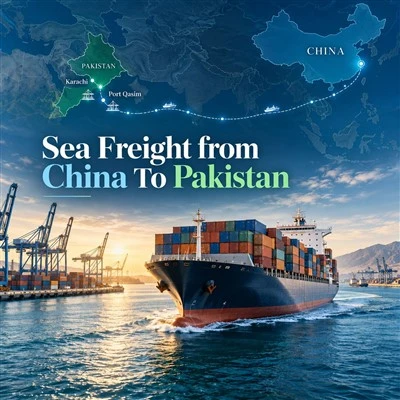
Myanmar, strategically located in Southeast Asia, has become an increasingly important trading partner for China. In recent years, bilateral trade between the two countries has shown steady growth, supported by projects under the Belt and Road Initiative and the Regional Comprehensive Economic Partnership (RCEP). China exports machinery, electronics, textiles, and consumer goods to Myanmar, while importing agricultural products, minerals, and seafood. Against this backdrop, sea freight has become the backbone of trade, providing businesses with a cost-effective and reliable way to move goods between the two countries.

Main Ports for Shipping from China to Myanmar
Shipping routes between China and Myanmar primarily rely on major Chinese ports such as Shanghai, Ningbo, Shenzhen, Guangzhou, and Qingdao. These ports are well-equipped with advanced container terminals, ensuring efficient handling of both FCL (Full Container Load) and LCL (Less than Container Load) cargo.
On the Myanmar side, the Port of Yangon is the largest and busiest port, handling more than 90% of the country's international trade. It includes facilities such as Myanmar Industrial Port (MIP), Asia World Port Terminal (AWPT), and the modern Thilawa Port, which is capable of handling large container vessels. Other regional ports like Sittwe and Kyaukpyu are emerging as gateways for project cargo, energy shipments, and large-scale infrastructure projects. Together, these ports form the core logistics hubs for Sino-Myanmar sea freight.
Why Choose Sea Freight from China to Myanmar
Sea freight is the most economical and scalable solution for businesses shipping goods from China to Myanmar. Compared to air freight, sea shipping offers significantly lower costs, especially for bulk or heavy cargo. It also provides the flexibility to transport a wide variety of goods-from consumer products to industrial machinery and oversized project equipment. For companies prioritizing budget efficiency over speed, sea freight is the optimal choice.

How Our Sea Freight from China to Myanmar Services Work
At Zhejiang Wilson Supply Chain Management Co., Ltd., we have developed a comprehensive shipping process to ensure your goods are handled smoothly from origin to destination:
- Initial Consultation and Booking – Our team reviews your shipment details, including cargo type, volume, and delivery requirements. We then secure competitive rates and reliable space with our long-term carrier partners such as COSCO, MSC, and Maersk.
- Cargo Collection and Container Stuffing – Goods are picked up from your supplier's warehouse in China and delivered to the chosen port. Depending on your shipment size, we arrange either FCL or LCL consolidation.
- Export Customs Clearance in China – Our compliance experts prepare and submit all required export documentation, such as commercial invoices, packing lists, and certificates of origin, ensuring clearance without delays.
- Sea Transportation – Cargo is shipped via the optimal route, either direct or transshipment through hubs like Singapore or Port Klang. Transit time typically ranges from 7 to 14 days, depending on the port of loading.
- Arrival and Import Clearance in Myanmar – Upon arrival, our local partners handle port operations, unloading, and initiate the import clearance process.
- Final Delivery – After clearance, shipments can be delivered to Yangon or transported further inland to cities such as Mandalay and Naypyidaw through our door-to-door logistics solutions.
Customs Clearance Process in Myanmar
Customs clearance is a critical step in ensuring smooth cargo entry into Myanmar. With our experience and local partnerships, we streamline this process for our clients:
- Pre-Arrival Documentation – We advise clients to submit key documents (bill of lading, commercial invoice, packing list, certificate of origin, and any necessary permits) at least 5 days before cargo arrival.
- HS Code Classification – Correct HS code classification is essential to determine duties and taxes. Our experts verify product descriptions to avoid misclassification and unnecessary costs.
- Duty and Tax Assessment – Myanmar applies varying duty rates depending on cargo type. Under RCEP, eligible Chinese goods may enjoy reduced tariffs, offering clients additional savings.
- Inspection and Compliance – Certain categories, such as chemicals, food, and pharmaceuticals, may require inspection or approvals from government agencies. We coordinate these procedures to minimize delays.
- Cargo Release and Delivery – Once duties are paid and clearance is completed, goods are released for delivery to the customer's designated location.
By combining our customs compliance expertise with real-time tracking systems, we ensure that clients avoid unnecessary delays or penalties during the import process.
Advantages of Our Sea Freight from China to Myanmar
Partnering with Zhejiang Wilson Supply Chain Management Co., Ltd. offers businesses several competitive advantages:
- Strong Carrier Partnerships – Long-standing relationships with leading shipping lines guarantee space availability and competitive freight rates.
- Expertise in Special Cargo – We are highly experienced in handling oversized equipment, chemical products, and dangerous goods, ensuring compliance and safety throughout the journey.
- Integrated Supply Chain Solutions – Beyond sea freight, we provide one-stop services including customs clearance, warehousing, distribution, and supply chain consulting.
- Certified and Trusted – With FIATA, IATA, ISO, NVOCC, and AEO certifications, we deliver reliable, compliant, and globally recognized logistics services.
- Proven Track Record – Serving leading enterprises in sectors such as automotive, chemicals, and energy, we manage over 56,000 TEUs annually, demonstrating our scale and professionalism.
- Customer-Centric Support – Our experienced team provides tailored solutions and real-time updates, reducing logistics risks and optimizing costs for every shipment.

Cost & Time Estimates of Sea Freight from China to Myanmar
Transit time and shipping costs depend on the origin port, destination port, container type, and seasonal factors. On average, sea freight from China to Myanmar takes 7–14 days, with faster sailings available from South China ports and slightly longer routes from North China.
|
Container Type |
Average Cost (USD) |
Transit Time (Days) |
Typical Cargo |
|
20FT Standard |
800 – 1,200 |
7 – 10 |
Consumer goods, textiles |
|
40FT Standard |
1,200 – 1,800 |
7 – 14 |
Machinery, electronics |
|
40FT High Cube |
1,300 – 2,000 |
7 – 14 |
Bulkier cargo, industrial parts |
|
LCL (per CBM) |
80 – 120 |
10 – 14 |
Small shipments, mixed cargo |
【Note】: Transit times may vary slightly based on weather conditions, customs processing, and port congestion. Prices listed are indicative and subject to change based on market fluctuations. For precise quotations and schedules, please contact our team today for an accurate quote tailored to your goods and a better offer! ( gm@wilson-cargo.com )

Sea Freight from China to Myanmar
Get in touch with our sea freight experts immediately to discuss your requirements and get a quick quote.
How We Help You Optimize Costs and Time
- Long-term carrier contracts with COSCO, MSC, Maersk, and other lines secure competitive rates and reliable space.
- Flexible service options such as FCL, LCL consolidation, and special equipment containers reduce wasted capacity.
- Custom clearance pre-filing minimizes port delays and ensures "cargo release upon arrival."
- Risk management strategies like advanced booking before peak seasons and tailored insurance coverage protect against unexpected surcharges and delays.
Possible Factors Leading to Delays
- Seasonal congestion during holidays such as China's Golden Week or Myanmar's Thingyan Water Festival.
- Weather-related disruptions, especially during monsoon season (June–September).
- Incomplete or incorrect shipping documents.
- Stricter customs inspections for sensitive or controlled goods.
Major Ports in China and Myanmar
China Ports
- Shanghai Port: One of the world's largest container hubs, ideal for electronics, textiles, and high-value exports.
- Ningbo-Zhoushan Port: Known for strong handling capacity of bulk cargo and containers, efficient for large-scale shipments.
- Shenzhen Port: A key South China gateway, particularly suited for consumer goods and time-sensitive cargo to Southeast Asia.
- Guangzhou Port: Strategic for South China's manufacturing base, offering competitive shipping times to Yangon.
- Qingdao & Tianjin Ports: Northern China gateways for heavy industry, steel, and machinery destined for Myanmar projects.
Myanmar Ports
- Yangon Port: Handles more than 90% of Myanmar's international trade, equipped with multiple terminals (MIP, AWT, YICT, Thilawa).
- Thilawa Port: A modern deep-water port near Yangon, developed under international investment, supporting vessels up to 8,000 TEUs.
- Kyaukpyu Port: Strategically important for energy projects and oversized cargo, part of the China-Myanmar Economic Corridor.
- Sittwe Port: Growing in importance for regional trade, particularly for agricultural and mineral products.

Bilateral Trade Between China and Myanmar
China is Myanmar's largest trading partner. In recent years:
- Chinese exports to Myanmar include machinery, construction materials, electronics, vehicles, textiles, and daily consumer goods.
- Myanmar exports to China focus on agricultural products (beans, rice, sesame), seafood, natural gas, timber, and minerals.
- Trade volume has consistently grown, supported by RCEP and Belt and Road projects, with bilateral trade value exceeding tens of billions of USD annually.
- Balanced cargo flows in both directions allow shipping lines and freight forwarders to offer competitive rates and frequent sailings.
Legal and Technical Terms for Importing into Myanmar
When importing goods into Myanmar, businesses should be aware of key logistics and customs-related terms:
- Bill of Lading (B/L) – The official shipping document issued by the carrier.
- Commercial Invoice – Must detail HS codes, descriptions, quantities, and values.
- Packing List – Required for customs clearance, listing package details.
- Certificate of Origin (COO) – Essential for claiming RCEP tariff preferences.
- HS Code Classification – Determines applicable duties and taxes; misclassification can lead to penalties.
- Import License – Mandatory for restricted goods such as chemicals or pharmaceuticals.
- Customs Valuation – Myanmar customs may challenge declared values; supporting documents are required.
How to Source Products from China
For companies new to importing from China, here are key steps to ensure success:
- Supplier Verification – Conduct background checks, visit factories, or use third-party inspection agencies.
- Product Compliance – Confirm that goods meet both Chinese export regulations and Myanmar import standards.
- Negotiate Terms – Clarify Incoterms (FOB, CIF, DDP) to define responsibilities.
- Freight Forwarding Partner – Work with an experienced freight forwarder like Wilson SCM to manage booking, consolidation, and customs.
- Documentation Preparation – Ensure invoices, contracts, certificates, and packing lists are accurate and consistent.
- Plan for Lead Time – Consider both production and shipping times, particularly during seasonal peaks.
FAQ
Q: 1. How long does sea freight from China to Myanmar take?
A: On average 7–14 days, depending on the origin port, route, and seasonal factors.
Q: 2. What documents are required for customs clearance in Myanmar?
A: Commercial invoice, packing list, bill of lading, certificate of origin, and, if applicable, import license.
Q: 3. Can I ship smaller quantities without a full container?
A: Yes, our LCL (Less than Container Load) services allow you to share space in a container and reduce costs.
Q: 4. What are the common causes of customs delays in Myanmar?
A: Incorrect HS code classification, incomplete documents, or goods requiring special permits (e.g., chemicals, food).
Q: 5. How do tariffs work under RCEP?
A: Many Chinese goods qualify for reduced or zero tariffs if supported by a valid certificate of origin.
Q: 6. Do you provide door-to-door delivery in Myanmar?
A: Yes, we handle everything from supplier pickup in China to final delivery in Yangon, Mandalay, or Naypyidaw.
Q: 7. How are sea freight costs calculated?
A: Based on container type (20FT/40FT), cargo weight or volume (whichever is greater), and applicable surcharges (fuel, port fees).
Q: 8. Can you handle hazardous or oversized cargo?
A: Yes, with our experience in chemical logistics and project cargo, we provide safe and compliant solutions for special shipments.
Hot Tags: sea freight from china to myanmar, price, cheap, cost, quote, service, provide, forwarder, company