Shipping goods from China to Singapore by sea is one of the most practical options for importers moving commercial cargo, industrial products, machinery, consumer goods, chemicals, and other bulk shipments. The relatively short distance between major Chinese ports and Singapore, frequent intra-Asia sailings, and Singapore's role as a major regional logistics hub make this trade lane suitable for both regular imports and wider Southeast Asian distribution.
Zhejiang Wilson Supply Chain Management Co., Ltd. provides FCL, LCL, supplier pickup, warehousing, cargo consolidation, export customs clearance, ocean freight, destination coordination, door-to-door delivery, and specialized logistics solutions from China. Our capabilities also cover reefer cargo, chemicals and dangerous goods, heavy equipment, OOG cargo, special containers, and project shipments.
Founded in 2011 and headquartered in Ningbo, Wilson also operates through Shanghai, Shenzhen, and Hong Kong, helping overseas customers coordinate shipments from major manufacturing and port regions across China.
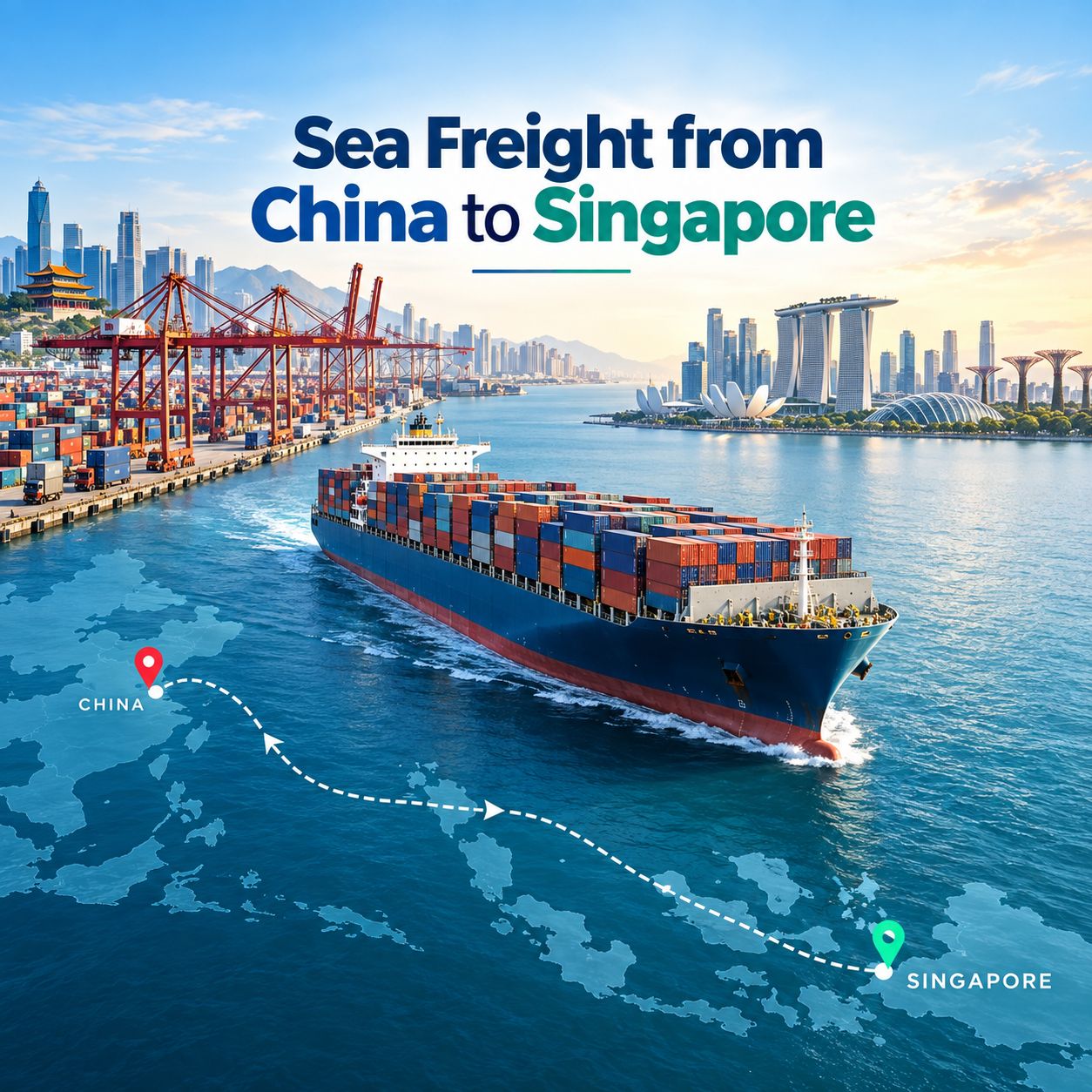
For direct services from major Chinese ports, ocean transit to Singapore can be as short as approximately 4–8 days, while the practical shipping lead time depends on the port of origin, vessel schedule, service type, customs procedures, and final delivery arrangement.
Need a quote? Send us your cargo name, volume, gross weight, pickup location in China, cargo-ready date, and destination in Singapore. Our team can recommend a suitable FCL, LCL, or door-to-door solution and provide an estimated shipping cost and sailing schedule.
Sea Freight Cost from China to Singapore
Ocean freight rates between China and Singapore change according to market conditions, shipping line capacity, equipment availability, container type, departure port, cargo characteristics, and local service requirements.
The following figures can be used as general planning estimates:
| Shipping Method | Estimated Freight Rate | Best Suited For |
|---|---|---|
| LCL | USD 15–30/CBM | Small-volume cargo that does not require a full container |
| 20GP FCL | USD 400–600/container | Medium-volume shipments and relatively dense cargo |
| 40GP / 40HQ | USD 600–1,000/container | Larger-volume commercial shipments |
These figures are indicative market estimates rather than fixed quotations. A published ocean freight rate may also exclude origin handling, terminal fees, customs-related services, destination charges, trucking, storage, or other applicable surcharges.
For this reason, importers should compare the total logistics cost, not only the base ocean freight rate.
Your final shipping cost may be affected by the Chinese departure port, FCL or LCL selection, container size, cargo weight and CBM, commodity type, shipping line, sailing date, peak-season demand, bunker or fuel adjustments, terminal handling, documentation, customs requirements, and final delivery address in Singapore.
For LCL cargo, freight is normally calculated according to chargeable volume or weight, depending on the applicable consolidation tariff. For larger shipments, comparing LCL against a 20GP or 40GP container before booking can be worthwhile. As cargo volume increases, FCL can sometimes offer a lower overall cost per unit while also reducing cargo handling.
Wilson works with major ocean carriers including COSCO, Hapag-Lloyd, Maersk, MSC, and Evergreen, allowing our team to compare available schedules, equipment, routing, and space according to each shipment.
For an accurate quote, provide the cargo dimensions, quantity, gross weight, total CBM, pickup address, destination, and preferred shipping date.
How Long Does Sea Freight from China to Singapore Take?
China–Singapore is a relatively short intra-Asia shipping route, but there is an important difference between direct vessel transit time and the overall shipment lead time.
Indicative shipping times are as follows:
| Route or Service | Estimated Time |
|---|---|
| Shenzhen to Singapore, direct sailing | 4–6 days |
| Shanghai to Singapore, direct sailing | 5–7 days |
| Northern China ports to Singapore | 7–10 days |
| Typical FCL shipping lead time | 7–12 days |
| Typical LCL shipping lead time | 8–15 days |
Direct services from major Chinese ports can take approximately 4–8 days depending on the origin, while services with intermediate calls or transshipment can require additional time.
LCL usually takes longer than FCL because the shipment must first be consolidated with other cargo in China and then deconsolidated after arrival in Singapore. Other factors such as vessel schedules, cut-off times, Chinese New Year, carrier capacity, port congestion, customs inspection, documentation problems, and weather in the South China Sea can also affect the final delivery schedule.
Customers should therefore avoid treating port-to-port transit time as the complete delivery time.
For example, a door-to-door shipment may additionally involve supplier pickup, warehouse receiving, customs declaration, waiting for the booked sailing, Singapore import clearance, terminal release, and last-mile delivery.
If you provide Wilson with your cargo-ready date and supplier location, we can check a suitable sailing schedule and give you a more realistic expected timeline.

Our Sea Freight Services from China to Singapore
Wilson provides flexible ocean freight solutions for both regular commercial cargo and more complex shipments.
FCL Shipping
Full Container Load is suitable for larger shipments or customers who prefer to use a dedicated container. Standard options include 20GP, 40GP, and 40HQ containers, while special equipment can be arranged when required.
FCL also reduces the amount of cargo handling compared with LCL, making it suitable for regular inventory replenishment, machinery, industrial cargo, and higher-volume orders.
LCL Shipping
Less than Container Load allows importers to share container space and pay according to the size or chargeable volume of their cargo.
It is particularly useful for smaller shipments, trial orders, or importers sourcing limited quantities from China. Wilson can also coordinate consolidation when cargo is purchased from several Chinese suppliers.
Door-to-Door Shipping
For customers who do not want to coordinate multiple logistics providers, we can combine supplier pickup, warehousing, export clearance, ocean freight, destination customs coordination, and final delivery into one transportation plan.
The exact service scope depends on the Incoterm, cargo type, consignee requirements, and delivery location in Singapore.
Warehousing and Consolidation
Cargo from different suppliers can be collected at a warehouse in China, checked, photographed when required, consolidated, and prepared for shipment.
This can simplify procurement logistics for overseas importers buying from multiple factories or trading companies.
Customs Clearance Support
Wilson can assist with export declarations, shipping documents, HS-code-related information, and coordination of import clearance requirements according to the agreed service scope.
Specialized Sea Freight
Our sea freight capabilities extend beyond standard containers. Wilson handles chemical and dangerous goods, reefer shipments, vehicles, heavy equipment, OOG cargo, Flat Rack and Open Top containers, project cargo, and other non-standard logistics requirements.
How Our Sea Shipping Service Works
A clear operating process helps reduce errors, delays, and unexpected logistics costs.
| Step | How the Shipment Is Handled |
|---|---|
| 1. Cargo Details | You provide cargo name, quantity, weight, dimensions or CBM, pickup location, destination, Incoterm, and cargo-ready date. |
| 2. Shipping Solution | We evaluate FCL or LCL, suitable origin port, carrier options, equipment, sailing schedule, and service scope. |
| 3. Quote and Booking | After confirming the quotation, our team arranges space and coordinates the shipment schedule. |
| 4. Pickup and Warehousing | Cargo can be collected from the supplier and delivered to the required warehouse, depot, or loading point. |
| 5. Loading and Protection | Cargo is loaded according to its characteristics, with appropriate packing, support, securing, or protection when necessary. |
| 6. Customs and Documents | Export declarations and shipping documentation are prepared and checked before departure. |
| 7. Ocean Freight and Tracking | We follow key shipping milestones and provide status updates during transportation. |
| 8. Singapore Arrival and Delivery | According to the selected service, we coordinate destination clearance, cargo release, trucking, and final delivery. |
This process reflects Wilson's wider operating model, which covers requirement assessment, logistics planning, booking, pickup, warehousing, loading, customs documentation, transportation tracking, and destination coordination.
Why Choose Wilson for China–Singapore Sea Freight?
China-to-Singapore logistics requires more than simply booking space on a vessel. The right forwarder should be able to select an appropriate origin port, compare carriers and schedules, coordinate suppliers, manage documents, and respond quickly when plans change.
Wilson has coverage across major Chinese logistics centers including Ningbo, Shanghai, Shenzhen, Guangzhou, Tianjin, Qingdao, Hangzhou, and other manufacturing regions. Southeast Asia is also one of our established service markets.
Working with multiple major shipping lines gives us flexibility when comparing available space, schedules, equipment, and routing instead of relying on a single carrier.
Our service is also suitable for customers whose requirements extend beyond standard FCL and LCL. For machinery, vehicles, oversized equipment, chemicals, refrigerated goods, or other complex cargo, our team can evaluate dimensions, weight, handling requirements, equipment type, loading method, and cargo-protection needs before shipment.
Wilson places particular emphasis on cargo safety. For non-standard or higher-value cargo, our operational approach can include pre-loading inspection, photographic records, support, lashing, anti-slip measures, cargo securing, and loading-condition confirmation.
By combining transportation with warehousing, customs support, trucking, consolidation, and destination coordination, overseas buyers can reduce the need to manage several separate logistics providers.
Common Goods Shipped from China to Singapore
Singapore imports a wide range of products from Chinese manufacturers and trading companies. Typical sea-freight cargo can include electronics, electrical products, machinery, industrial equipment, auto parts, furniture, building materials, household products, consumer goods, chemicals, raw materials, retail inventory, and temperature-sensitive products.
Different cargo requires different logistics planning.
Standard commercial goods can usually move by FCL or LCL. Machinery and industrial equipment may require dedicated containers, Flat Rack equipment, Open Top containers, or OOG planning. Temperature-sensitive products may require reefer containers, while chemicals and dangerous goods require additional classification, carrier acceptance, safety documentation, and compliant handling.
Singapore can also serve as more than a final destination. Its role as a regional shipping and transshipment hub allows some importers to use Singapore for storage, consolidation, re-export, or onward distribution into other Southeast Asian markets.
For customers planning regional distribution, the shipping solution should therefore consider not only the first ocean leg from China but also the final inventory and delivery strategy.

Singapore Customs and Import Requirements
Before shipping from China, importers should confirm that their business and cargo meet Singapore's applicable customs and regulatory requirements.
Companies importing commercial goods generally need the appropriate registration and customs arrangements, including a UEN and an activated Customs Account where applicable. Import declarations and permits are commonly handled through Singapore's TradeNet system.
Correct HS or AHTN classification is important because the product code can affect permit requirements, tax treatment, customs declarations, and whether a product is considered controlled.
Typical customs and shipping documentation includes a commercial invoice, packing list, bill of lading, applicable import permit, and certificate or proof of origin where preferential treatment is being claimed.
Singapore's Goods and Services Tax is 9% for most imports intended for local consumption under the applicable tax rules.
Importers should also determine whether their goods are subject to additional controls. Certain food products, pharmaceuticals, strategic goods, dangerous items, and other regulated products may require authorization from the relevant Singapore authority before importation.
China and Singapore also participate in regional and bilateral trade arrangements. Eligible goods may qualify for preferential tariff treatment when the applicable rules of origin and supporting documentation are satisfied. Eligibility should be checked according to the specific HS code, origin criteria, and import arrangement rather than assuming that every shipment automatically qualifies.
For smoother customs clearance, ensure that the product description, HS code, declared value, quantity, origin information, invoice, packing list, and transport documents are consistent before the cargo departs China.
FAQ
Q: 1. How much does sea freight from China to Singapore cost?
A: As a planning reference, LCL may be around USD 15–30 per CBM, a 20GP container around USD 400–600, and a 40GP or 40HQ around USD 600–1,000. Actual rates depend on the origin port, carrier, container availability, cargo, sailing date, and local charges.
Q: 2. How long does sea freight from China to Singapore take?
A: Direct sailings from major Chinese ports can take approximately 4–8 days. A typical FCL shipping lead time may be around 7–12 days, while LCL often requires approximately 8–15 days because of consolidation and deconsolidation.
Q: 3. Should I choose FCL or LCL?
A: LCL is generally suitable for smaller cargo volumes. As shipment volume increases, it is worth comparing the total LCL cost against a 20GP or 40GP container. The most economical option depends on the current freight rate and local handling charges.
Q: 4. Can Wilson pick up cargo from my supplier in China?
A: Yes. Pickup can be coordinated from suppliers in major Chinese manufacturing regions and transferred to a warehouse, consolidation facility, container depot, or port according to the shipping plan.
Q: 5. Can you consolidate goods from multiple Chinese suppliers?
A: Yes. We can coordinate supplier pickups, warehouse receiving, cargo consolidation, and preparation for one combined shipment, subject to the cargo and service requirements.
Q: 6. Do you provide door-to-door shipping to Singapore?
A: Yes. Depending on the shipment, Wilson can arrange an integrated service covering pickup in China, export customs, ocean freight, Singapore import coordination, and final delivery.
Q: 7. Can you ship machinery, chemicals, or oversized cargo?
A: Yes. Wilson handles machinery, heavy equipment, chemical and dangerous goods, OOG cargo, special containers, reefer cargo, and other specialized shipments. Cargo details should be reviewed before booking so that the correct transport method and equipment can be selected.
Q: 8. What information do I need to get a freight quote?
A: Please provide the cargo name, HS code if available, number of packages, gross weight, total CBM or dimensions, pickup location in China, destination in Singapore, cargo-ready date, and Incoterm.
Planning your next shipment from China to Singapore? Send your cargo details to Zhejiang Wilson Supply Chain Management Co., Ltd. Our team can compare FCL, LCL, carrier, schedule, and delivery options and prepare a practical shipping solution based on your cargo and supply-chain requirements.
Hot Tags: Sea Freight from China To Singapore [Updated November 2026]