Shipping goods from China to the Middle East by sea remains one of the most cost-effective solutions for importers moving commercial cargo, machinery, vehicles, industrial equipment, consumer goods, chemicals, and other high-volume shipments. With frequent sailings from China's major ports and established connections to key Middle Eastern gateways, ocean freight offers businesses the capacity and flexibility needed for both regular imports and project-based shipments.
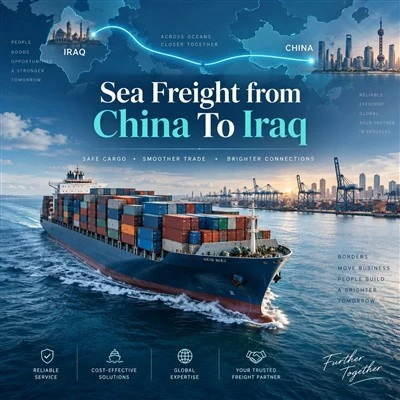
Zhejiang Wilson Supply Chain Management Co., Ltd. provides sea freight services from major Chinese ports including Shanghai, Ningbo, Shenzhen, Guangzhou, Qingdao, and Tianjin to destinations throughout the Middle East, including the UAE, Saudi Arabia, Qatar, Kuwait, Oman, Bahrain, Jordan, and Iraq.
For major routes, estimated port-to-port transit times are generally around 16–30 days, depending on the origin port, destination, carrier, sailing schedule, and whether the shipment moves on a direct or transshipment service. Founded in 2011 and headquartered in Ningbo, Wilson provides FCL, LCL, special container, reefer, oversized cargo, vehicle, heavy equipment, dangerous goods, and end-to-end supply chain solutions. Our teams in Ningbo, Shanghai, Shenzhen, and Hong Kong coordinate shipments from supplier pickup in China through export handling, ocean transportation, destination coordination, and final delivery where required.

Need a current sea freight quote from China to the Middle East? Send us your pickup location, destination, cargo description, weight or volume, container requirement, and cargo-ready date. Our team can evaluate suitable carrier and routing options for your shipment.
Major Sea Freight Routes and Ports from China to the Middle East
China has multiple container gateways serving Middle Eastern trade lanes. Choosing the correct origin and destination port can affect freight cost, transit time, inland transportation, and overall supply chain efficiency.
Major Chinese origin ports include:
- Shanghai – a major gateway for cargo from East China and the Yangtze River Delta.
- Ningbo-Zhoushan – an important export hub for Zhejiang and surrounding manufacturing regions.
- Shenzhen and Guangzhou – key gateways for South China manufacturing and export cargo.
- Qingdao and Tianjin – practical options for exporters and manufacturers in North China.
Important Middle Eastern destinations include:
| Country / Market | Major Destination Ports |
|---|---|
| UAE | Jebel Ali, Abu Dhabi |
| Saudi Arabia | Dammam, Jeddah |
| Qatar | Hamad Port |
| Kuwait | Shuwaikh |
| Oman | Sohar |
| Jordan | Aqaba |
| Iraq | Umm Qasr |
Jebel Ali is one of the region's most important transshipment and distribution hubs, while Dammam and Jeddah serve major Saudi import markets. Hamad, Shuwaikh, Sohar, Aqaba, and Umm Qasr provide access to other important Gulf and Middle Eastern destinations.
Depending on the route, carrier, and shipment date, Wilson can evaluate both direct and transshipment services and recommend an option based on cost, schedule, equipment availability, and cargo requirements.

Sea Freight Cost from China to the Middle East
Ocean freight rates fluctuate according to carrier capacity, season, origin and destination ports, container availability, cargo characteristics, and regional shipping conditions. Therefore, published rates should always be treated as planning estimates rather than fixed quotations.
The following ranges can be used as an indicative reference for standard cargo:
| Destination | Estimated 20GP | Estimated 40GP / 40HQ | Estimated LCL |
|---|---|---|---|
| Jebel Ali, UAE | $1,200–$1,900 | $1,500–$2,300 | $55–$95/CBM |
| Dammam / Jeddah, Saudi Arabia | $1,400–$2,300 | $1,700–$2,700 | $70–$105/CBM |
| Hamad, Qatar | $1,400–$2,200 | $1,700–$2,500 | $70–$100/CBM |
| Shuwaikh, Kuwait | $1,300–$1,900 | $1,500–$2,200 | $65–$100/CBM |
| Sohar, Oman | $1,250–$1,850 | $1,450–$2,150 | $60–$95/CBM |
These estimates primarily represent ocean freight planning ranges. The total logistics cost may also include origin handling, documentation, customs-related charges, destination handling, inland transportation, and special cargo costs.
A simplified cost structure is:
Total Shipping Cost = Ocean Freight + Origin Charges + Documentation + Customs-Related Costs + Destination Charges + Inland Delivery + Special Cargo Charges
Several factors can cause the final rate to change:
- FCL or LCL shipping
- 20GP, 40GP, 40HQ, reefer, Flat Rack, or Open Top equipment
- Cargo weight and volume
- Dangerous goods classification
- Oversized or overweight cargo
- Peak-season demand
- Container availability
- Carrier space
- Fuel and route-related surcharges
- Destination terminal and inland requirements
For vehicles, machinery, chemical cargo, reefer shipments, and OOG cargo, pricing should normally be calculated individually.
For the most useful quotation, provide your cargo name, quantity, dimensions, gross weight, pickup location, destination, and expected shipping date.
Request Current Sea Freight Rates
Sea Freight Transit Time from China to the Middle East
For most major Middle Eastern ports, sea freight from China generally takes approximately 16–30 days port-to-port.
Indicative transit times for commonly used routes include:
| Shipping Route | Estimated Port-to-Port Transit Time |
|---|---|
| Shanghai → Jebel Ali | 18–24 days |
| Ningbo → Jebel Ali | 18–24 days |
| Shenzhen → Jebel Ali | 16–22 days |
| Guangzhou → Jebel Ali | 17–23 days |
| Shanghai → Dammam | 22–28 days |
| Shanghai → Hamad | 22–28 days |
| Shanghai → Shuwaikh | 24–30 days |
| Shanghai → Sohar | 18–24 days |
Actual transit times depend on the carrier and routing selected for a particular shipment. Direct services are generally faster, while transshipment services may require additional time but can sometimes offer better pricing or equipment availability.
Other factors that may affect delivery time include:
- Port congestion
- Vessel schedule changes
- Blank sailings
- Weather conditions
- Customs inspections
- Peak shipping seasons
- Transshipment delays
- Regional routing changes
It is also important to distinguish port-to-port transit time from door-to-door delivery time. A complete shipment may include factory pickup, warehouse handling, export customs procedures, port operations, import customs clearance, and inland delivery after arrival.
If delivery timing is important for inventory planning or a project schedule, contact Wilson with your cargo-ready date so that we can check suitable sailing schedules and routing options.
Our Sea Freight Services from China to the Middle East
Wilson provides more than standard container booking. Our services cover general cargo as well as complex, high-value, oversized, and regulated shipments.
FCL Shipping
Full Container Load services are available using 20GP, 40GP, and 40HQ containers. FCL is suitable for larger shipments, recurring imports, machinery, industrial products, vehicles, and cargo requiring dedicated container space.
LCL Shipping
Less than Container Load shipping allows customers with smaller shipments to share container space. It can be an economical option when cargo volume does not justify booking a full container.
Buyer Consolidation
For importers purchasing from several Chinese suppliers, Wilson can coordinate domestic pickup, warehouse receiving, consolidation, cargo checking, and combined shipment arrangements.
Instead of managing each supplier separately, customers can consolidate cargo into one logistics plan before exporting to the Middle East.
Door-to-Door and DDP Solutions
Depending on the destination, cargo type, importer requirements, and agreed Incoterms, we can coordinate services covering supplier pickup, export handling, international transportation, customs clearance support, and final delivery.
Vehicle Shipping
We handle logistics for cars, SUVs, pickups, trucks, buses, and other vehicles. Depending on the vehicle dimensions and route, suitable solutions may include container shipping, RoRo, Flat Rack, or Breakbulk services.
Heavy Equipment and Project Cargo
Excavators, loaders, drilling rigs, construction machinery, industrial equipment, and other heavy cargo often require detailed transport planning.
Our team considers cargo dimensions, weight, center of gravity, lifting requirements, container type, loading sequence, and securing method before shipment.
OOG and Special Container Shipping
For oversized cargo, we can evaluate solutions using:
- Flat Rack containers
- Open Top containers
- Breakbulk shipping
- Other project cargo arrangements
Reefer Cargo
Temperature-controlled transportation can be arranged for frozen food, seafood, and other temperature-sensitive products using reefer equipment.
Dangerous Goods and Chemical Cargo
For dangerous goods, early cargo review is especially important. We can coordinate cargo classification, SDS review, carrier acceptance, documentation, and shipment requirements based on the specific product.
How Our Sea Shipping Service Works
A successful China-to-Middle-East shipment depends on preparation before the cargo reaches the port. Our process is designed to identify cost, compliance, and cargo-handling issues as early as possible.
Step 1: Shipment Consultation
We confirm the cargo name, quantity, weight, dimensions, origin, destination, Incoterms, cargo-ready date, and special handling requirements.
Step 2: Shipping Solution Design
Our team evaluates FCL, LCL, standard containers, special equipment, direct or transshipment routes, and alternative transport solutions where required.
Step 3: Quotation and Booking
We compare carrier schedules, freight rates, equipment availability, and routing before arranging the booking.
Step 4: Pickup and Warehouse Coordination
Cargo can be collected from factories, warehouses, or multiple suppliers across China. Consolidation, temporary storage, labeling, checking, and other warehouse services can be arranged when needed.
Step 5: Loading and Cargo Securing
For standard cargo, we coordinate normal container loading. For vehicles, machinery, boats, OOG cargo, and other sensitive shipments, additional attention may be given to loading position, support, blocking, bracing, lashing, and cargo protection.
Step 6: Export Customs and Documentation
We coordinate and review shipping documentation such as commercial invoices, packing lists, customs information, certificates of origin where required, and other cargo-specific documents.
Step 7: Ocean Transportation and Tracking
We monitor key shipment milestones and provide status updates during transportation. If schedule changes or operational issues occur, our team communicates the situation and evaluates available alternatives.
Step 8: Destination Coordination and Delivery
Depending on the agreed service scope, we can coordinate destination customs procedures, cargo pickup, warehousing, and inland delivery through local logistics partners.
Why Choose Wilson for China–Middle East Sea Freight?
Choosing a freight forwarder should involve more than comparing one ocean freight number. Reliability, cargo handling, route planning, communication, and risk control can have a significant impact on the final logistics cost.
Strong China–Middle East Shipping Resources
The Middle East is one of Wilson's important service regions. We support shipments to the UAE, Saudi Arabia, Qatar, Kuwait, Oman, Jordan, Iraq, and other regional markets.
Multiple Carrier Options
Wilson works with major international carriers including COSCO, MSC, Maersk, Hapag-Lloyd, and Evergreen. This allows our team to compare different sailing schedules, routings, rates, and equipment options.
Competitive Freight Solutions
Rather than relying on a single carrier or route, we evaluate multiple options and work to provide competitive freight solutions based on the customer's cargo and delivery requirements.
Specialized Cargo Capability
Our experience extends beyond general container freight to vehicles, engineering machinery, chemical cargo, dangerous goods, reefer cargo, heavy equipment, OOG shipments, and project logistics.
Cargo Protection and Risk Control
For complex or high-value shipments, cargo protection can be as important as freight cost. We pay attention to loading preparation, condition records, support points, securing, anti-shifting measures, and shipment documentation.
End-to-End Supply Chain Support
Wilson can coordinate multiple stages of the shipment-from supplier communication and domestic pickup to warehousing, export procedures, international transportation, and destination delivery support-reducing the number of separate logistics providers the importer needs to manage.
Major Goods Traded Between China and the Middle East
China is an important supplier of manufactured and industrial products to Middle Eastern markets. Common shipments from China include:
- Machinery and industrial equipment
- Vehicles and automotive parts
- Electronics and household appliances
- Construction materials
- Textiles, fabrics, and footwear
- Furniture and household products
- Chemicals and plastics
- Solar and energy-related equipment
- Consumer goods
For Wilson, vehicles, trucks, heavy equipment, construction machinery, industrial equipment, chemicals, and special cargo are particularly relevant categories because these shipments often require more than a standard container booking.
Trade also moves in the opposite direction. Common Middle Eastern exports to China include crude oil, petrochemical products, plastics, minerals, industrial raw materials, and selected agricultural products.
Because cargo profiles differ significantly by industry, the most suitable transport solution should be selected according to shipment volume, value, dimensions, regulatory requirements, and delivery schedule.

Import Regulations When Shipping from China to the Middle East
There is no single import rule that applies to the entire Middle East. Customs procedures, tax treatment, product certification, labeling, licensing, and controlled-goods requirements differ by destination country and product category.
Common documents may include:
- Commercial Invoice
- Packing List
- Bill of Lading
- Certificate of Origin where required
- Import licenses for regulated goods
- Product conformity certificates where applicable
- Dangerous goods documentation for regulated cargo
UAE
Import requirements depend on the product, HS code, importer, and destination. Customs duties and VAT may apply, and goods entering free zones may follow different procedures from cargo imported into the domestic market.
Saudi Arabia
Saudi shipments require careful pre-shipment compliance review. Certain regulated products may require conformity procedures and documentation through systems such as SABER, while food, cosmetics, medical products, and other regulated categories may involve additional requirements from relevant Saudi authorities such as SFDA.
Documentation and product compliance should ideally be confirmed before cargo departs China.
Qatar, Kuwait, Oman, Jordan, Iraq and Other Markets
Each country has its own customs rules, tariff classifications, licensing requirements, and product controls. Importers should confirm the requirements applicable to their exact HS code and cargo before shipment.
Incomplete documentation or missing certificates can delay cargo release and may result in storage, demurrage, or detention costs. Early document review and coordination with the destination importer or customs agent can significantly reduce unnecessary clearance risk.
FAQ About Sea Freight from China to the Middle East
Q: 1. How much does sea freight from China to the Middle East cost?
A: Costs depend on the destination, container type, cargo, carrier, season, and market conditions. Indicative FCL rates for major Middle Eastern ports may range from roughly $1,200 to $2,700, while LCL can generally be estimated on a per-CBM basis. A current quotation is recommended before booking.
Q: 2. How long does sea freight from China to the Middle East take?
A: For major ports, typical port-to-port transit times are approximately 16–30 days. UAE routes can be faster, while some transshipment or secondary-port services may require additional time.
Q: 3. Should I choose FCL or LCL?
A: LCL is usually suitable for smaller shipments that do not need a full container. FCL becomes more attractive as shipment volume increases and can provide better cargo separation, simpler handling, and more predictable container planning.
Q: 4. Can Wilson pick up goods from my suppliers in China?
A: Yes. We can coordinate cargo pickup from factories and suppliers in different Chinese cities and can arrange warehouse consolidation when goods are purchased from multiple vendors.
Q: 5. Can you ship cars, trucks, and heavy machinery to the Middle East?
A: Yes. Depending on cargo dimensions, weight, route, and destination, we can evaluate container, Flat Rack, Open Top, RoRo, or Breakbulk options for vehicles and heavy equipment.
Q: 6. Can you handle dangerous goods or oversized cargo?
A: Yes, subject to cargo assessment and carrier acceptance. For dangerous goods, please provide the cargo name, UN information where applicable, and SDS. For oversized cargo, dimensions, weight, photos, and lifting information are normally required before quotation.
Q: 7. Do you provide customs clearance and door-to-door shipping?
A: Customs clearance and final delivery can be coordinated for many Middle Eastern destinations depending on the country, cargo, importer qualifications, and required service scope.
Q: 8. What information do you need to provide a sea freight quote?
A: Please send us your pickup location, destination, cargo name, quantity, gross weight, dimensions or total CBM, required container type, and cargo-ready date. For special cargo, photos, SDS, or technical specifications may also be required.
Get a Sea Freight Quote from China to the Middle East
Whether you are shipping standard containers, LCL cargo, vehicles, heavy machinery, oversized equipment, reefer cargo, or dangerous goods, Wilson can help you evaluate a practical shipping solution from China to the Middle East.
Send us your shipment details, including origin, destination, cargo description, weight, volume, container requirement, and expected shipping date, and our team will review suitable routes, equipment, carrier options, and estimated logistics costs for your shipment.
Hot Tags: Sea Freight from China To Middle East [Updated September 2026]