Shipping goods by sea from China to Pakistan is one of the most practical options for importers moving commercial cargo, machinery, industrial products, consumer goods, chemicals, auto parts, construction materials, and other large-volume shipments. Pakistan's main maritime gateways for China-origin cargo are Karachi Port and Port Qasim, with services available from major Chinese ports including Shanghai, Ningbo, Shenzhen, Guangzhou, Qingdao, and Tianjin.
Depending on the origin port, carrier, sailing schedule, and whether the service is direct or transshipment, port-to-port sea transit can often be planned within approximately 10–25 days. For shipments involving supplier pickup, consolidation, customs procedures, port handling, and inland delivery, the total logistics lead time may extend to around 18–35 days or longer.
Zhejiang Wilson Supply Chain Management Co., Ltd. provides FCL, LCL, special container, reefer, heavy cargo, customs coordination, warehousing, supplier pickup, and integrated supply chain services from China to overseas markets. Our India–Pakistan trade lane is one of our established service regions, supported by carrier resources and experience with both standard and specialized cargo.
Whether you are importing one LCL shipment, regular containers, machinery, or project cargo, our team can help you select a suitable shipping solution based on your cargo, budget, required delivery time, and destination.

Need a current China-to-Pakistan sea freight quote?
Send us your cargo name, pickup location, destination, weight, volume or dimensions, preferred container type, and estimated shipping date.
How Much Does Sea Freight from China to Pakistan Cost?
Sea freight rates from China to Pakistan fluctuate with carrier capacity, container availability, origin port, destination, season, cargo characteristics, and market conditions.
For budgeting purposes, the following ranges can be used as an indicative planning reference rather than a fixed booking rate.
| Shipping Type | Destination | Estimated Freight Reference |
|---|---|---|
| 20GP FCL | Karachi / Port Qasim | USD 2,500–3,200 |
| 40GP / 40HQ FCL | Karachi / Port Qasim | USD 2,600–3,350 |
| LCL | Karachi | From approx. USD 15–30/CBM |
Recent market samples for Karachi placed 20GP freight around USD 2,606–3,184 and 40-foot container freight around USD 2,702–3,304, while LCL was quoted around USD 15/CBM. Because ocean freight can change quickly, rates should always be reconfirmed before booking.
What Determines Your China-to-Pakistan Shipping Cost?
Several factors influence the final quotation:
- Origin port: Freight from Shanghai, Ningbo, Shenzhen, Guangzhou, Qingdao, or Tianjin may vary according to carrier service and capacity.
- Destination port: Karachi and Port Qasim may have different schedules, terminal charges, and local handling arrangements.
- FCL or LCL: Full containers are usually more cost-efficient for larger shipments, while LCL allows smaller cargo to share container space.
- Container type: 20GP, 40GP, 40HQ, reefer, open-top, and flat-rack equipment have different rate structures.
- Cargo weight and volume: LCL is commonly charged according to volume or revenue ton, while heavy cargo may require additional evaluation.
- Direct or transshipment service: Faster routing may carry a different price from services involving intermediate ports.
- Season and vessel capacity: Peak periods, equipment shortages, and space availability can affect freight rates.
- Special cargo requirements: Dangerous goods, temperature-controlled cargo, oversized equipment, and project cargo require additional handling.
- Pickup and delivery: Inland trucking in China and final delivery in Pakistan are separate cost components unless included in the quotation.
Ocean Freight Is Only Part of the Total Landed Cost
The lowest ocean freight rate does not always produce the lowest final logistics cost.
Your shipment may also involve:
Ocean Freight + China Origin Charges + Documentation + Export Customs + Destination Charges + Import Duties and Taxes + Customs Clearance + Inland Delivery + Insurance
Additional expenses may arise from customs inspection, port storage, demurrage, detention, document corrections, or delays in cargo clearance.
For this reason, Wilson can help customers compare not only the basic ocean freight rate but also the broader transportation arrangement.
Send us your shipment details to receive an updated quotation based on your actual cargo and route.
How Long Does Sea Freight from China to Pakistan Take?
Sea freight transit time depends heavily on the Chinese port of departure, vessel schedule, routing, and Pakistan destination port.
The following table is an indicative planning estimate:
| Route | Estimated Port-to-Port Transit Time |
|---|---|
| Shanghai → Karachi | Approx. 12–20 days |
| Ningbo → Karachi | Approx. 12–20 days |
| Shenzhen → Karachi | Approx. 10–18 days |
| Guangzhou → Karachi | Approx. 10–18 days |
| Qingdao → Karachi | Approx. 15–25 days |
| Major China Ports → Port Qasim | Approx. 12–25 days |
Fast scheduled services may reach Karachi in around 9–10 days, while broader China-to-Pakistan sea freight estimates commonly extend beyond this depending on routing and operational conditions.
Port-to-Port Transit Time vs. Total Shipping Lead Time
A vessel transit time does not include every stage of the logistics process.
A complete shipment may involve:
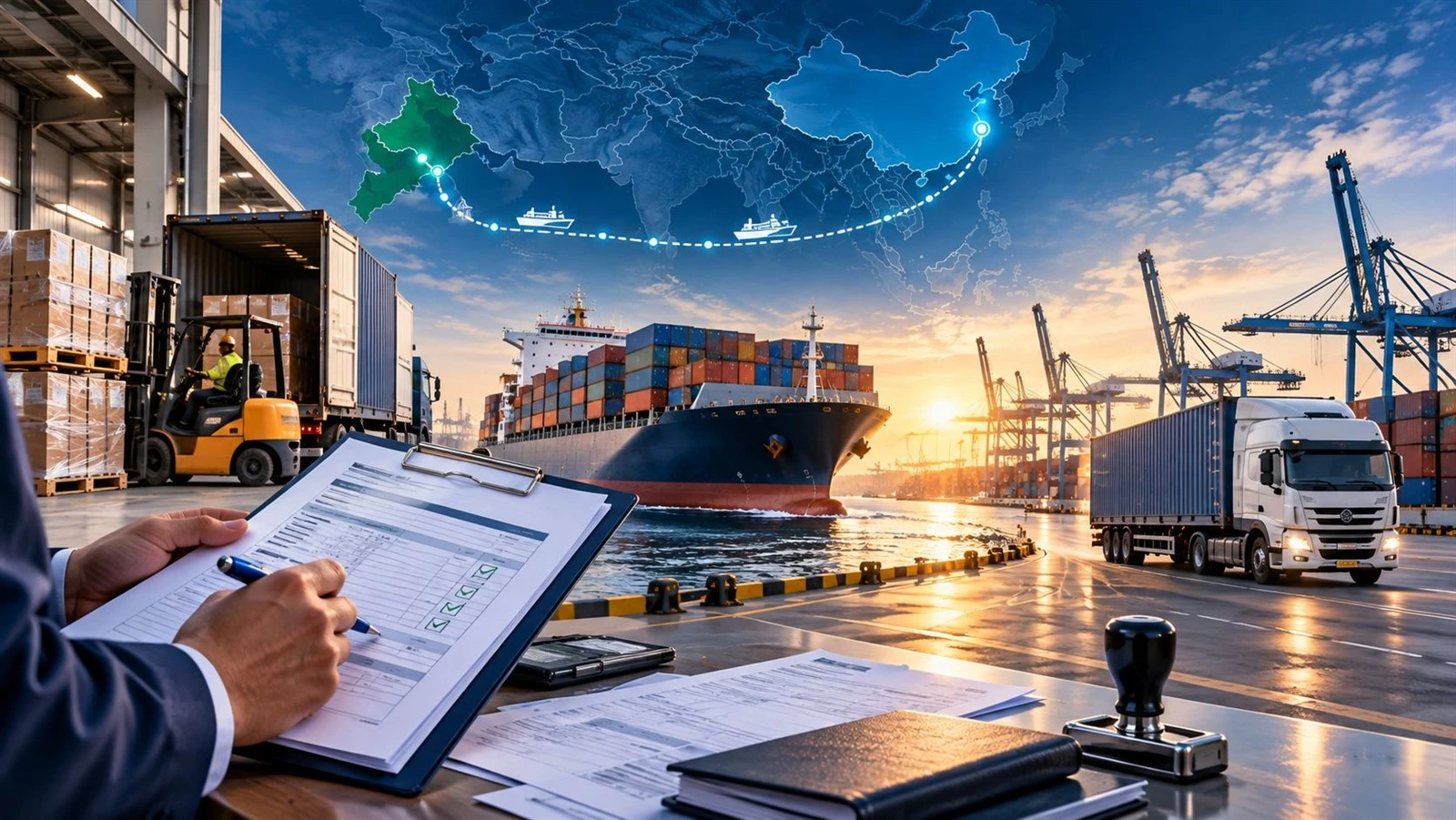
Supplier Pickup → Warehouse or Consolidation → Export Customs → Container Loading → Waiting for Vessel Departure → Ocean Transit → Pakistan Port Handling → Customs Clearance → Inland Delivery
For this reason, importers should normally allow a wider planning window-often around 18–35 days or more where consolidation, customs, or destination delivery is required.
What Can Delay a Sea Shipment?
Typical causes include:
- Vessel schedule changes
- Transshipment connections
- Port congestion
- Weather conditions
- Container and vessel space availability
- Peak-season demand
- Customs inspection
- Incorrect or incomplete shipping documents
- Destination delivery arrangements
Port congestion and customs procedures are especially important variables when planning delivery dates.
Contact Wilson before booking for the latest available sailing schedule and estimated arrival plan.
Our Sea Freight Services from China to Pakistan
Wilson provides more than basic container booking. We can coordinate different transportation and supply chain services according to the cargo and buyer's requirements.
FCL Shipping
Full Container Load is suitable for larger shipments, regular B2B imports, machinery, industrial products, and cargo that benefits from dedicated container space.
Common equipment includes:
- 20GP
- 40GP
- 40HQ
FCL can offer a lower unit shipping cost for larger cargo volumes and reduces handling associated with LCL consolidation.
LCL Shipping
Less than Container Load is suitable when your cargo does not require a full container.
We can coordinate:
- Supplier pickup
- Warehouse receiving
- Cargo consolidation
- Export documentation
- LCL booking
- Shipment tracking
This is particularly useful for Pakistani importers purchasing smaller quantities or sourcing from multiple suppliers in China.
Door-to-Door Shipping
Depending on the cargo, destination, customs arrangement, and service scope, Wilson can coordinate transportation beyond the port.
A typical integrated service may include:
China Supplier Pickup → Warehouse → Export Customs → Sea Freight → Pakistan Customs Coordination → Final Delivery
This helps importers reduce the number of logistics providers they need to manage.
Customs and Documentation Support
Accurate documentation is essential for reducing customs delays.
Common shipping documents include:
- Commercial Invoice
- Packing List
- Bill of Lading
- Certificate of Origin
- Product certificates or permits where applicable
Our team can review logistics documents and coordinate shipment requirements before departure.
Warehousing and Cargo Consolidation
If you purchase from several Chinese manufacturers, Wilson can coordinate supplier pickup and consolidate the cargo before shipment.
This can simplify purchasing from suppliers located in Zhejiang, Jiangsu, Guangdong, Shandong, Shanghai, and other major manufacturing regions.
Machinery and Heavy Equipment Shipping
Wilson handles machinery, industrial equipment, construction equipment, and other heavy cargo.
Depending on dimensions, weight, lifting points, and cargo configuration, possible solutions include:
- Standard containers
- Open Top containers
- Flat Rack containers
- Breakbulk shipping
- Project cargo solutions
Dangerous Goods and Chemical Logistics
For eligible chemical and dangerous cargo, the shipment needs to be evaluated according to classification, SDS information, carrier acceptance rules, documentation, and destination requirements.
Wilson has operating experience with chemical and dangerous goods logistics and emphasizes classification and compliance before shipment.
Reefer and Special Container Shipping
Temperature-sensitive products may require reefer containers, while oversized or non-standard cargo may require Open Top, Flat Rack, or other specialized equipment.
Our team evaluates the cargo before recommending the appropriate container type.

How Our Sea Shipping Service Works
Wilson uses a structured process to coordinate shipments from Chinese suppliers to Pakistan.
Step 1: Send Your Cargo Details
Provide:
- Cargo name
- Pickup location
- Destination
- Quantity
- Gross weight
- Volume or dimensions
- Incoterm
- Preferred shipping date
- Special handling requirements
Step 2: Shipping Solution and Container Planning
We evaluate whether FCL, LCL, standard container, special container, or another ocean solution is more suitable.
Step 3: Quotation and Booking
The quotation is prepared according to current carrier rates, vessel space, sailing schedules, equipment availability, and destination requirements.
Step 4: Supplier Pickup and Warehousing
We coordinate cargo pickup, warehouse receiving, cargo inspection, consolidation, and preparation when required.
Step 5: Loading and Cargo Protection
For machinery, heavy cargo, vehicles, or other sensitive shipments, loading plans, support, securing, and cargo protection may be arranged according to the project.
Step 6: Export Customs and Documentation
We coordinate export declaration and check the main shipping documents before departure.
Step 7: Ocean Transportation and Tracking
Key logistics milestones are monitored and communicated throughout the shipment.
Step 8: Pakistan Arrival and Destination Coordination
Depending on the agreed service scope, we can coordinate customs clearance support, cargo release, inland transportation, or handover to the consignee's nominated agent.
This workflow reflects Wilson's standard service model from initial cargo assessment through booking, pickup, loading, customs, transportation tracking, and destination coordination.
Why Choose Wilson for Sea Freight from China to Pakistan?
Strong China–Pakistan Shipping Resources
Pakistan is one of Wilson's established South Asia service markets. We work with major international carriers and use multiple route and sailing options to help customers balance freight cost, transit time, and space availability.
Multiple China Origin Ports
We can arrange shipments from major Chinese logistics hubs including:
- Ningbo
- Shanghai
- Shenzhen
- Guangzhou
- Qingdao
- Tianjin
Domestic pickup can also be coordinated from inland supplier locations.
Competitive Freight Rates
Rather than relying on a single routing option, we compare suitable carrier, schedule, and equipment choices according to each shipment.
This is particularly useful in a volatile freight market where vessel space and rates can change quickly.
FCL, LCL and Complex Cargo Capability
Wilson's sea freight capability covers standard containers as well as:
- Heavy equipment
- Oversized cargo
- Dangerous goods
- Reefer cargo
- Special containers
- Project cargo
This allows customers with different cargo types to work with one logistics team.
Cargo Protection and Risk Control
For high-value, heavy, or irregular cargo, transportation planning must go beyond booking vessel space.
Wilson pays attention to loading inspection, cargo positioning, support, lashing, anti-movement measures, and shipment condition confirmation where required.
End-to-End Supply Chain Coordination
Our service capabilities extend from supplier coordination and pickup to warehousing, customs, international transportation, destination handover, and related logistics support.
Common Goods Shipped from China to Pakistan
China-to-Pakistan trade involves a wide range of commercial and industrial products.
Common sea freight cargo includes:
- Machinery and industrial equipment
- Electrical equipment
- Electronics
- Auto parts
- Construction materials
- Chemicals and industrial raw materials
- Plastic products
- Textile machinery and related products
- Consumer goods
- Energy and solar-related equipment
Different cargo requires different shipping solutions.
| Cargo Type | Typical Shipping Solution |
|---|---|
| Consumer goods | FCL / LCL |
| Machinery | FCL / Flat Rack |
| Heavy equipment | Flat Rack / Open Top / Breakbulk |
| Chemicals | Standard or DG container depending on classification |
| Temperature-sensitive cargo | Reefer container |
| Oversized project cargo | OOG / Breakbulk / Project shipping |
The right solution depends on cargo size, weight, value, classification, handling requirements, and destination.
Pakistan Import Regulations and Customs Requirements
Importers should confirm the latest Pakistan customs and product-specific requirements before shipment because regulations and tax treatment can change.
Common Import Documents
Typical documents may include:
- Commercial Invoice
- Packing List
- Bill of Lading
- Certificate of Origin
- Import permit where applicable
- Product-specific certificates where required
Accurate documentation reduces the risk of cargo holds and customs delays.
HS Code and Customs Valuation
Pakistan uses the Harmonized System for product classification.
The applicable HS code can influence:
- Customs duty
- Taxes
- Import restrictions
- Required permits
- Product-specific compliance
Customs valuation is also important. Commercial documents should accurately reflect the shipment and declared transaction information.
China–Pakistan Free Trade Agreement
Eligible products may qualify for preferential tariff treatment under the China–Pakistan Free Trade Agreement when the applicable rules of origin and documentation requirements are satisfied.
A Certificate of Origin may therefore be relevant when claiming preferential treatment.
Eligibility should be confirmed according to the specific product and HS code before shipment.
Duties and Taxes
There is no single import duty rate that applies to every China-origin shipment.
The final tax burden depends on factors such as:
- HS code
- Customs value
- Product category
- Applicable duties
- Sales tax or other charges
- Preferential tariff eligibility
Importers should calculate these costs before placing large purchase orders.
Common Reasons for Customs Delays
Typical issues include:
- Incorrect HS classification
- Invoice and packing list inconsistencies
- Missing certificates
- Customs valuation questions
- Product-specific restrictions
- Customs inspection
- Incomplete documents
Reviewing shipment information before departure is usually easier and less expensive than correcting documentation after the cargo reaches Pakistan.
FAQ
Q: 1. How much does sea freight from China to Pakistan cost?
A: As a planning reference, 20GP FCL may be around USD 2,500–3,200, while 40-foot containers may be around USD 2,600–3,350. LCL may start from approximately USD 15–30/CBM. Rates vary by origin, carrier, season, cargo, and service scope, so a current quotation is required before booking.
Q: 2. How long does sea freight from China to Pakistan take?
A: Many port-to-port services can be planned at approximately 10–25 days, depending on origin and routing. The total logistics cycle may take around 18–35 days or longer where pickup, consolidation, customs clearance, or inland delivery is involved.
Q: 3. Which ports in Pakistan can you ship to?
A: Karachi Port and Port Qasim are the main destinations for regular China-to-Pakistan container shipments. Other port options can be evaluated according to cargo and project requirements.
Q: 4. Which Chinese ports can Wilson ship from?
A: Wilson can arrange shipments from Ningbo, Shanghai, Shenzhen, Guangzhou, Qingdao, Tianjin, and other Chinese logistics hubs, with domestic pickup available from supplier locations.
Q: 5. Should I use FCL or LCL?
A: LCL is generally suitable for smaller shipments that do not require an entire container. FCL becomes more attractive for larger cargo volumes, regular imports, heavy cargo, or shipments requiring dedicated container space.
Q: 6. Can you collect cargo from several suppliers in China?
A: Yes. We can coordinate pickup from multiple suppliers, warehouse receiving, consolidation, export preparation, and shipment under one logistics arrangement.
Q: 7. Can Wilson ship machinery or oversized equipment to Pakistan?
A: Yes. We can evaluate standard containers, Open Top, Flat Rack, OOG, Breakbulk, or project cargo solutions according to dimensions, weight, lifting requirements, and cargo configuration.
Q: 8. Can you arrange door-to-door shipping to Pakistan?
A: Door-to-door or destination delivery services can be evaluated depending on cargo type, consignee requirements, destination city, customs arrangements, and applicable import regulations.
Q: 9. What documents are normally required?
A: Common documents include a Commercial Invoice, Packing List, Bill of Lading, and Certificate of Origin where applicable. Certain products may require additional permits or certificates.
Q: 10. What information do you need for a freight quotation?
A: Please provide:
- Cargo name
- Pickup city in China
- Pakistan destination
- Total weight
- Cargo volume or dimensions
- Quantity
- Container type if known
- Incoterm
- Preferred shipping date
- Any special handling requirements
Hot Tags: Sea Freight from China To Pakistan [Updated September 2026]