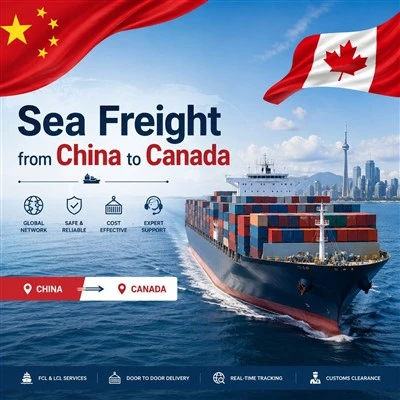
With the longest coastline in the world stretching over 243,000 kilometers and access to both the Pacific and Atlantic Oceans, Canada is uniquely positioned as a maritime bridge between Asia, Europe, and the Americas.
From the Asia-facing ports of British Columbia to the Europe-oriented gateways in the Atlantic provinces, Canada's port infrastructure forms the spine of its global supply chain. These facilities not only facilitate the import and export of commodities, consumer goods, and raw materials but also serve as vital links in cross-border trade with the United States.
As a leading freight forwarder in China , Wilson is well aware of the importance of choosing the right port to meet your freight needs. For this reason, in this article we will explore with you the 10 busiest ports in Canada, including an introduction to their infrastructure, cargo handling capacity and their role in global trade, to help you make informed logistics decisions.
Why Canadian Ports Matter in Global Trade
Canada's ports are not simply points of entry and exit; they are high-functioning logistics ecosystems that influence trade patterns far beyond national borders. Each year, these ports collectively handle over 340 million tonnes of cargo, connecting Canadian exporters with more than 170 international markets.
1. Trade Reach and Market Connectivity
Pacific-facing ports like Vancouver and Prince Rupert are essential for transpacific shipping, offering direct access to Asian manufacturing centers.
Atlantic ports such as Halifax and Montreal provide critical routes to Europe, the Mediterranean, and North Africa.
Inland ports like Hamilton and Toronto serve as redistribution hubs for the industrial and consumer heartlands of Ontario and the northeastern United States.
2. Economic Contribution
Ports are vital to the national economy, supporting over 213,000 jobs and contributing more than $25 billion to Canada's GDP. They are indispensable to sectors such as agriculture, automotive, energy, and forestry, providing reliable gateways for goods to reach global markets.
3. Role in Supply Chain Efficiency
Canada's port network is deeply interwoven with rail, highway, and intermodal infrastructure, enabling efficient cargo movement across long inland distances. Port authorities have increasingly invested in automation, smart logistics platforms, and sustainability programs-positioning Canadian ports among the most forward-thinking globally.
Top 10 Busiest Ports in Canada
Below, we examine Canada's top 10 busiest seaports-not just ranked by tonnage or container volume, but by their strategic functions, economic impact, and suitability for diverse shipping needs.
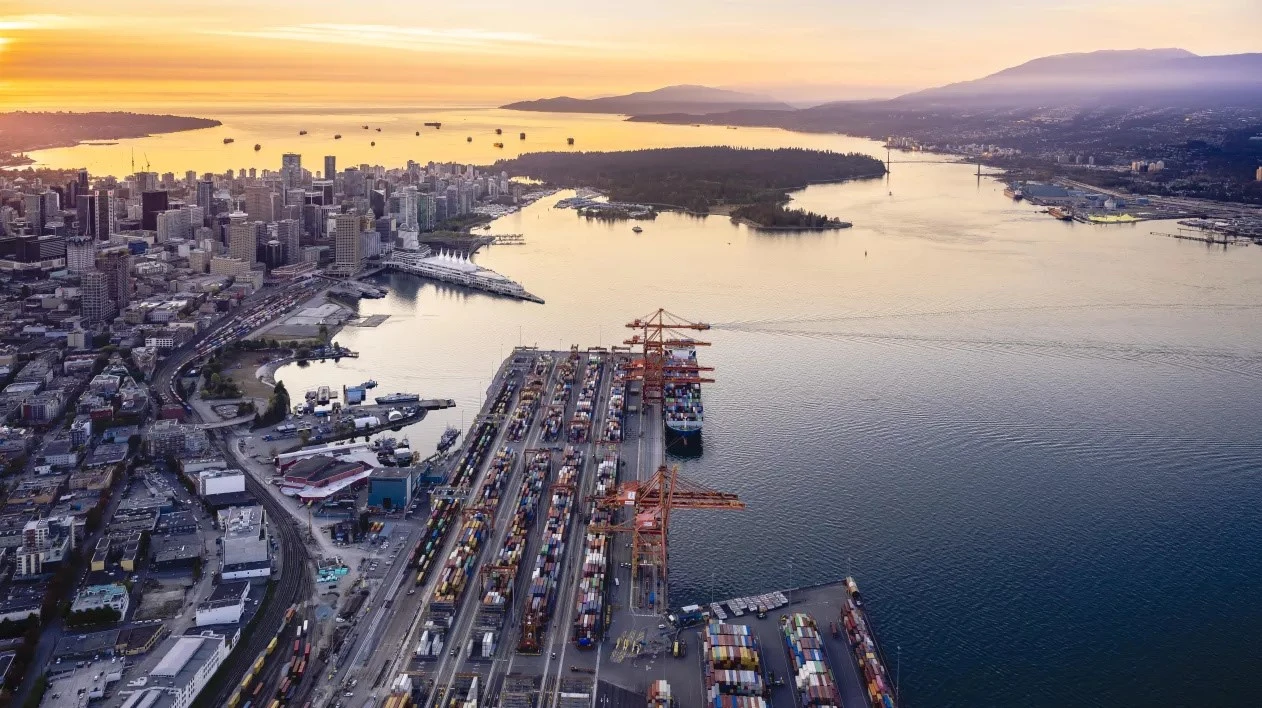
Port of Vancouver (British Columbia) - Canada's Gateway to Asia
- Overview: Located on the Pacific Coast, Vancouver is Canada's largest port by both area and cargo throughput. It spans 16,000 hectares of water and 1,500 hectares of land, with 27 terminals dedicated to containers, bulk, and breakbulk.
- 2022 Throughput: ~146.5 million tonnes | 3.5 million TEUs
- Primary Cargo: Coal, grain, forest products, consumer goods, automobiles
- Best for: Mid- to large-volume exporters, especially those trading with Asia-Pacific
- Infrastructure Highlights: Robust CN and CP rail access, advanced container handling systems, Centerm terminal expansion, Roberts Bank Terminal 2 underway
- Sustainability Initiatives: Shore power integration, habitat restoration, air and water quality controls
Port of Montreal (Quebec) - The Inland Trade Engine
- Overview: Strategically located on the St. Lawrence River, 1,600 km inland, Montreal is North America's largest inland port and a key link to Europe. It connects to over 140 countries via direct shipping services.
- 2022 Throughput: 36 million tonnes | 1.7 million TEUs
- Primary Cargo: Containers, petroleum products, machinery, grain
- Best for: Shippers serving Central Canada and the U.S. Midwest
- Infrastructure Highlights: 23 terminals, over 100 km of rail, expansion of Viau terminal
- Sustainability Initiatives: Smart Port technology adoption, emissions reduction programs, waste and water management
Port of Prince Rupert (British Columbia) - The Shortest Route to Asia
- Overview: Known for its shortest transpacific sailing time, Prince Rupert is a deep-water, ice-free port that blends natural advantages with world-class logistics.
- 2022 Throughput: 24.6 million tonnes | 1.0 million TEUs
- Primary Cargo: Grain, coal, forest products, consumer imports
- Best for: Time-sensitive Asian imports/exports, rail-linked logistics
- Infrastructure Highlights: Fairview Container Terminal, grain and coal export terminals, direct CN Rail intermodal links
- Sustainability Initiatives: Green Wave program, energy efficiency upgrades, community ecosystem partnerships
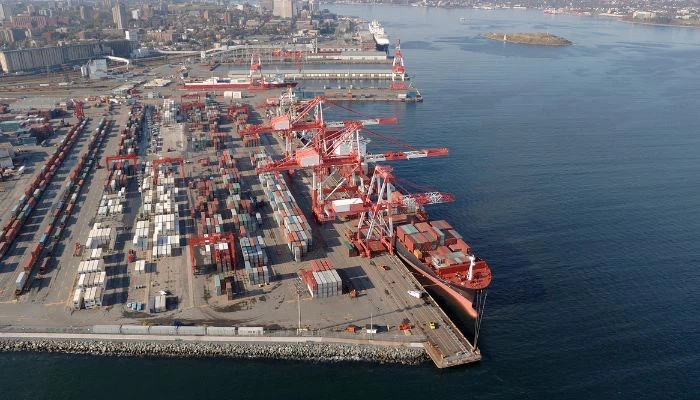
Port of Halifax (Nova Scotia) - The Atlantic's Fastest Europe Link
- Overview: Halifax is the closest North American port to Europe, offering deep-water, ice-free access year-round and capable of handling ultra-large container vessels.
- 2022 Throughput: 5.4 million tonnes | 601,700 TEUs
- Primary Cargo: Seafood, manufactured goods, forest products
- Best for: Atlantic shippers, EU-facing exporters, cruise logistics
- Infrastructure Highlights: Two modern container terminals, post-Panamax cranes, rail links to Central Canada
- Sustainability Initiatives: Shore power, port electrification, habitat restoration
Port of Saint John (New Brunswick) - Atlantic Canada's Growth Port
- Overview: Located at the mouth of the Saint John River, this is Atlantic Canada's largest port by volume and a key player in cross-border trade with the U.S.
- 2022 Throughput: 27.5 million tonnes | 150,194 TEUs
- Primary Cargo: Refined oil, forest products, agricultural goods, LNG
- Best for: Regional shippers, U.S.-bound traffic, bulk logistics
- Infrastructure Highlights: 17 berths, West Side Modernization Project ($205M), CN rail connections
- Sustainability Initiatives: Green Marine certification, comprehensive environmental monitoring systems
Port of Quebec (Quebec) - Versatility at the St. Lawrence Gate
- Overview: This deep-water port near Quebec City manages diversified cargo types and links the Atlantic to the Great Lakes and continental interior.
- 2022 Throughput: 30 million tonnes
- Primary Cargo: Bulk minerals, petroleum, grain, chemicals
- Best for: Multi-industry cargo, heavy industries, energy exporters
- Infrastructure Highlights: 14 terminals, 4 operational sectors, intermodal access
- Sustainability Initiatives: Water quality management, habitat protection, port-community integration efforts
Port of Hamilton (Ontario) - Steel & Agri-Industrial Backbone
- Overview: As Ontario's busiest port, Hamilton supports southern Ontario's industrial heartland and provides key access to the Great Lakes–St. Lawrence Seaway.
- 2022 Throughput: ~10 million tonnes
- Primary Cargo: Steel, iron ore, grain, fertilizer, jet fuel
- Best for: Manufacturers, agri-exporters, Great Lakes shipping
- Infrastructure Highlights: 255 hectares, 11,000m berthing space, rail and road synergy
- Sustainability Initiatives: Stormwater management systems, local ecosystem protections, emissions tracking
Port of Toronto (Ontario) - Inner City Maritime Gateway
- Overview: Located within the Greater Toronto Area, this port is a strategic terminal for breakbulk, construction materials, and specialized cargo.
- 2022 Throughput: ~2.2 million tonnes
- Primary Cargo: Sugar, salt, cement, machinery, project cargo
- Best for: Last-mile cargo into GTA, urban construction & infrastructure projects
- Infrastructure Highlights: 7 berths, 100,000m² terminal, heated storage, direct highway access
- Sustainability Initiatives: Clean tech investments, lakefront ecosystem engagement, emission reduction plans
Port of Port Cartier (Quebec) - Iron Ore Export Stronghold
- Overview: A critical bulk cargo port specializing in iron ore exports, located on the Gulf of St. Lawrence, serving major mining operations in Labrador and Quebec.
- 2022 Throughput: ~16 million tonnes
- Primary Cargo: Iron ore, wood pellets, grain
- Best for: Bulk raw materials, mining logistics, energy sector exports
- Infrastructure Highlights: 2 terminals (ArcelorMittal + multi-user), 16m draft berths, direct rail access
- Sustainability Initiatives: Dust control, low-emission loading systems, sustainable ore handling
Port of Sydney (Nova Scotia) - Niche Eastern Access Point
- Overview: Though smaller in volume, Sydney offers a natural deep-water harbor and serves project cargo, bulk, and growing cruise tourism segments.
- 2022 Throughput: 7.5 million tonnes
- Primary Cargo: Coal, aggregate, seafood, forestry products
- Best for: Niche Atlantic trade, cruise vessels, project shipping
- Infrastructure Highlights: Marine terminal, Novaporte development, 640m wharf
- Sustainability Initiatives: Water quality management, community-led green port practices
Comparison Table: At-a-Glance Overview of Canada's Busiest Ports
|
Port Name |
Province |
Cargo Volume (MT) |
TEUs (M) |
Key Markets |
Best For |
|
Vancouver |
BC |
146.5 |
3.5 |
Asia-Pacific |
Major exporters, global reach |
|
Montreal |
Quebec |
36 |
1.7 |
Europe, N. Africa |
Inland Europe-focused shippers |
|
Prince Rupert |
BC |
24.6 |
1 |
Asia |
Time-sensitive Pacific cargo |
|
Halifax |
Nova Scotia |
5.4 |
0.6 |
Europe, Middle East |
Atlantic imports/exports |
|
Saint John |
New Brunswick |
27.5 |
0.15 |
U.S., Europe |
Bulk and cross-border trade |
|
Quebec |
Quebec |
30 |
- |
EU, Great Lakes |
Industrial bulk + liquid cargo |
|
Hamilton |
Ontario |
10 |
- |
U.S. Midwest |
Steel, fertilizer, agriculture |
|
Toronto |
Ontario |
2.2 |
- |
GTA region |
Urban logistics, breakbulk |
|
Port Cartier |
Quebec |
16 |
- |
Europe, Asia |
Iron ore exports |
|
Sydney |
Nova Scotia |
7.5 |
- |
Cruise, Atlantic |
Niche or project shipments |
Choosing the Right Port for Your Business
Selecting a port goes beyond headline figures. Freight forwarders and exporters should consider:
- Market destination: Asia-bound cargo benefits from west coast ports; European trade aligns with the Atlantic.
- Proximity to production/consumption zones: For Ontario-based manufacturers, Hamilton and Toronto offer significant advantage.
- Infrastructure needs: If intermodal access and automation are key, ports like Vancouver and Prince Rupert stand out.
- Scale of operation: Small-volume shippers may benefit from less congested ports like Saint John or Sydney.
- Environmental and compliance standards: For clients with ESG mandates, ports with Green Marine certification or clean energy infrastructure are preferable.
Conclusion
From the bustling quays of Vancouver to the revitalized berths of Saint John, Canada's busiest ports are more than logistical crossroads-they are strategic enablers of economic growth, innovation, and global connectivity. For shippers, choosing the right port can significantly impact cost, efficiency, and customer satisfaction.
At Zhejiang Wilson Supply Chain Management Co., Ltd., we specialize in seamless, end-to-end sea freight solutions, ensuring that businesses can navigate complex logistics with confidence. With our strong partnerships with global carriers like COSCO, HPL, MSC, and EMC, as well as a trusted network of customs and port authorities, we guarantee competitive rates, reliable transit times, and comprehensive shipping solutions from major Chinese ports to key Canadian destinations, including Vancouver, Toronto, and Montreal.
Whether you require Full Container Load (FCL) or Less than Container Load (LCL) services, specialized cargo handling, or a complete supply chain solution, Wilson provides tailored logistics strategies to optimize your shipping needs. Please contact us to get a cheap quote for sea freight from China to Canada. ( gm@wilson-cargo.com )