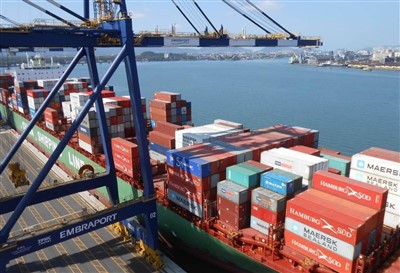
China and Thailand maintain active maritime trade, with Thailand's primary container port Laem Chabang handling about 70% of the country's container throughput.
Direct shipping routes from Chinese ports such as Shanghai, Shenzhen, and Guangzhou to Laem Chabang and Bangkok typically take 5–12 days depending on the origin port and service type. This robust network supports the growing bilateral exchange of luxury and commercial vessels.
For a precise quote tailored to your specific cargo, origin, and delivery terms, reach out to our team for a detailed breakdown.
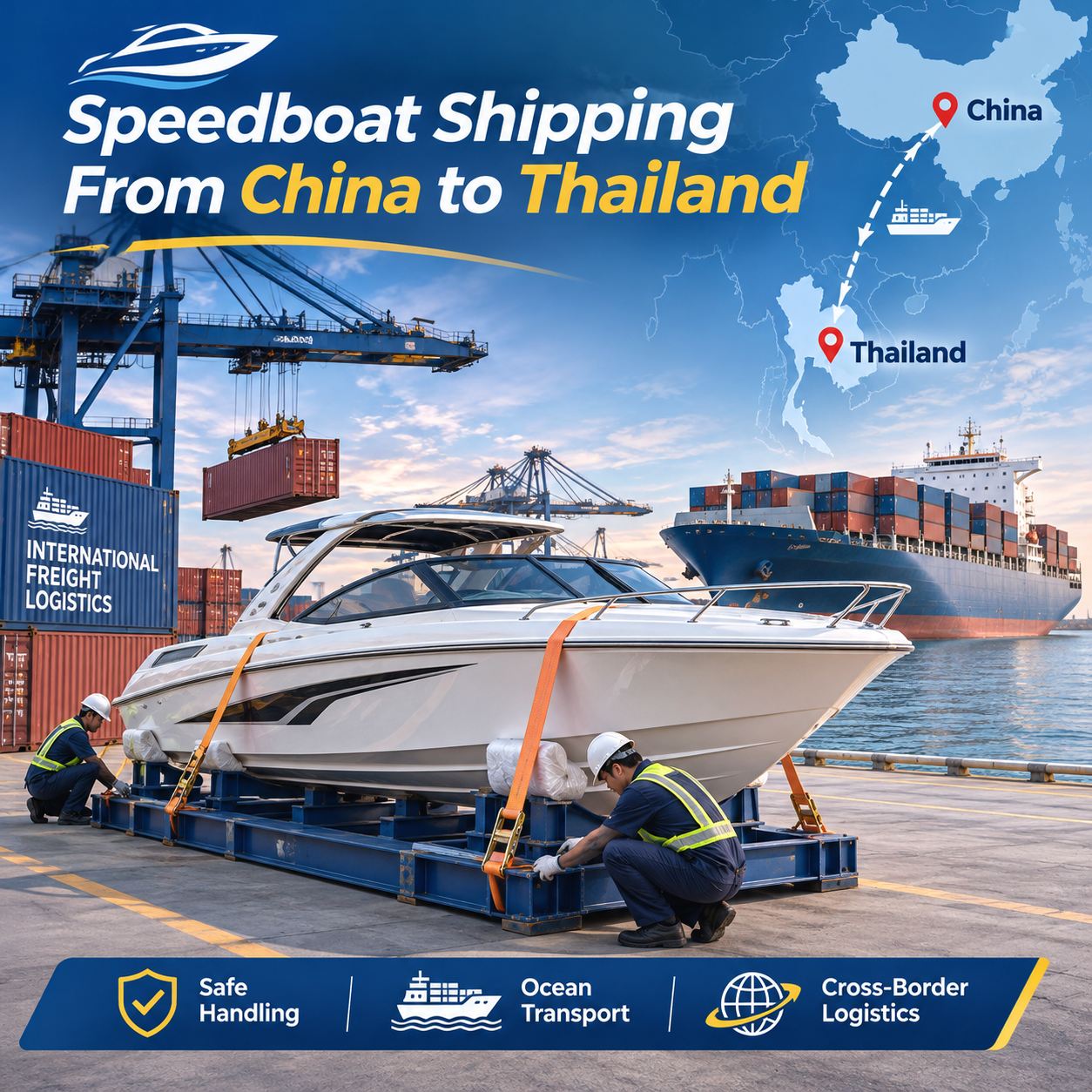
Overview: Speedboat and Yacht Shipping Between China and Thailand
The China-Thailand Vessel Trade Landscape
China and Thailand maintain active maritime trade, with Thailand's primary container port Laem Chabang handling about 70% of the country's container throughput. Direct shipping routes from Chinese ports such as Shanghai, Shenzhen, and Guangzhou to Laem Chabang and Bangkok typically take 5–12 days depending on the origin port and service type. This robust network supports the growing bilateral exchange of luxury and commercial vessels.
Wilson's Specialized Shipping Capabilities
Zhejiang Wilson Supply Chain Management Co., Ltd. is a global freight forwarding company specializing in supply chain optimization and sustainable, efficient global logistics networks, providing yacht, speedboat, and high-value vessel shipping services between China and Thailand in both export and import directions. We do not treat vessels as standard container cargo. Instead, we provide specialized engineering for transport solution design, precise dimension measurement, crane lifting planning, hull protection, support cradle fabrication, and lashing/securing.
Our service scope covers Yachts, Speedboats, Small Boats, and Patrol Boats. We offer multiple shipping methods including Flat Rack, Open Top, Breakbulk, and Container Shipping where applicable.
Table 1. Wilson Boat Shipping Methods Overview
| Transport Method | Key Characteristics | Typical Application |
|---|---|---|
| Flat Rack | Open sides, custom lashing | Wide beam yachts, speedboats |
| Open Top | Top loading via crane | Tall vessels, flybridge yachts |
| Breakbulk | Ro-Ro or lift-on/lift-off | Large yachts, commercial patrol boats |
| Container | Standard dry box | Small boats, disassembled vessels |
Estimated Costs and Transit Times
Estimated freight costs and transit times are provided on a case-by-case basis, determined by vessel dimensions, weight, and chosen transport method. All rates and timelines are for reference only.
Ready to Ship Your Vessel?
Whether you require speedboat shipping from China to Thailand or yacht transport China to Thailand, Wilson provides end-to-end yacht freight forwarding Thailand solutions. Contact our team today to discuss your specific vessel requirements and receive a tailored shipping proposal.
Get a Customized Shipping Quote
Cost of Shipping Yachts and Speedboats From China to Thailand
Determining the accurate boat shipping cost China Thailand requires a tailored approach rather than standard freight tariffs. At Zhejiang Wilson Supply Chain Management Co., Ltd., we evaluate pricing based on precise vessel dimensions, weight, and specialized handling requirements. Whether managing export speedboat shipping from China to Thailand or import yacht transport China to Thailand back to Chinese ports, costs vary significantly by shipping method.
Estimated Shipping Costs by Method
We provide transparent cost estimates based on current route data. Note that all prices listed below are for reference only and subject to seasonal fluctuations and specific vessel measurements.
Table 2. China-Thailand Boat Shipping Cost Comparison by Method
| Shipping Method | Estimated Cost (USD) | Applicable Vessel Types | Key Inclusions & Surcharges |
|---|---|---|---|
| Flat Rack (40FR) | 2,500–4,200 | Compact to mid-size yachts | Base ocean freight, special equipment surcharges |
| Open Top (40OT) | 2,800–4,200 | Mid-size yachts, tall vessels | Tarpaulin, lashing materials, over-height surcharges |
| Breakbulk | Quoted per freight ton (RT) or lump-sum | Oversized yachts exceeding container limits | Port handling, lashing, stevedoring, open-deck stowage |
| Standard Container (20GP) | 600–700 | Small boats, dinghies, disassembled parts | Standard internal dimensions: ~5.9m L × 2.35m W × 2.39m H |
| Standard Container (40HQ) | 1,400–1,500 | Small boats, disassembled components | Standard internal dimensions: ~12m L × 2.35m W × 2.7m H |
Special equipment surcharges for Flat Rack and Open Top containers can be 50–100% higher than standard container rates. These additional fees cover over-dimensional declaration fees, lashing material fees, port over-limit handling fees, and destination port unpacking fees.
Factors Affecting Cost
We do not treat all yachts as standard container cargo. The final freight invoice depends on specialized physical and logistical variables:
- Vessel Dimensions (L/W/H): Exact length, width, and height determine whether Out of Gauge (OOG) special equipment is needed.
- Total Weight: Directly affects lashing intensity requirements and crane capacity planning at both ports.
- Shipping Method: Choosing flat rack yacht shipping versus breakbulk boat transport or standard containers drastically alters the base rate.
- Lifting and Crane Requirements: Specialized crane lifting planning at origin and destination ports adds to operational costs.
- Support and Securing: Custom support cradle fabrication, steel frame construction, and heavy-duty lashing/securing materials are mandatory for hull protection.
- Origin and Destination Ports: Routing from Shanghai, Ningbo, Shenzhen, or Guangzhou to Laem Chabang or Bangkok impacts total ocean freight.
Basic Cost Calculation Methodology
As your dedicated yacht freight forwarding Thailand partner, our calculation methodology follows a strict sequence to ensure accurate quoting:
- Precise Dimension Measurement: We measure the vessel's extreme length, beam, and height (including flybridge and keel) to calculate the OOG footprint.
- Method Selection: Based on dimensions, we determine if the vessel fits a 40FR/40OT or requires breakbulk stowage.
- Support Cradle Fabrication: We calculate materials needed to build a custom steel or wooden support cradle tailored to the hull's curvature.
- Lifting and Lashing Planning: We assess crane capacity at the departure and arrival ports, plus the cost of certified lashing materials.
- Base Freight and Surcharges: Finally, we apply the base ocean freight rate and add all special equipment, over-limit, and port handling surcharges to deliver a comprehensive quote.
Get Latest Ocean Freight Rates Now
Transit Time for Shipping Yachts From China to Thailand
Accurate transit time estimation is critical for yacht freight forwarding Thailand operations. As Zhejiang Wilson Supply Chain Management Co., Ltd., we provide realistic schedules based on port pairs, routing options, and specialized handling requirements for oversized marine vessels.
Estimated Transit Times by Port Pair
Transit times vary significantly depending on the origin port in China and the destination port in Thailand. Direct sailings offer the fastest transit, while transshipment routes add several days to the overall journey.
Table 3. Transit Times from Major Chinese Ports to Thai Ports
| Origin Port (China) | Destination Port (Thailand) | Direct Sailing (Days) | Transshipment Routing (Days) |
|---|---|---|---|
| Dongguan | Laem Chabang | 5 | N/A |
| Guangzhou Nansha | Bangkok | 5–7 | N/A |
| Shenzhen (Yantian/Shekou) | Laem Chabang | 7–8 | 10–14 |
| Shenzhen (Yantian/Shekou) | Bangkok | 7 | 10–14 |
| Shanghai | Laem Chabang | 7 | 12–15 |
| Ningbo | Laem Chabang/Bangkok | 7–10 | 12–18 |
| Tianjin/Qingdao | Laem Chabang | 10–14 | 15–20 |
For the return journey, direct services from Laem Chabang to Chinese ports take approximately 5–10 days depending on the specific destination port in China.
Key Factors Affecting Transit Time
Shipping a yacht or speedboat is not identical to standard container freight. Several operational variables influence the total delivery time:
Sailing Schedule and Routing: Direct express services, such as the Thailand Silk Route from Shanghai, compress transit time significantly compared to traditional routes. Transshipment at southern Chinese hubs extends the voyage.
Port Operations and Special Lifting: Oversized cargo like yachts requires specialized crane lifting planning. Crane availability and port congestion directly impact loading and discharging efficiency.
Customs Clearance: Standard goods typically require 1–3 working days for customs clearance at origin and destination. However, special cargo requiring detailed inspection or specific import licensing may take longer.
All estimated transit times and associated schedules are for reference only. Actual times are subject to carrier schedules, weather conditions, and customs processing.
Plan Your Marine Transport
Whether you need flat rack yacht shipping or breakbulk boat transport, precise timing is essential for your supply chain. Contact Zhejiang Wilson Supply Chain Management Co., Ltd. today to discuss your specific vessel dimensions, preferred routing, and schedule requirements for speedboat shipping from China to Thailand.
Yacht and Speedboat Shipping Services From China to Thailand
At Zhejiang Wilson Supply Chain Management Co., Ltd., we recognize that high-value vessels demand far more than standard container logistics. Whether managing export projects from China or handling import shipments into Thailand, our yacht freight forwarding Thailand capabilities are built entirely around customized transport solutions. We transport various vessel types including yachts, speedboats, small boats, patrol boats, and other high-value vessels, each requiring tailored shipping solutions based on dimensions, weight, hull material, and structural characteristics.
Vessel Types and Shipping Methods
We do not treat all yachts as standard cargo. Our engineering team evaluates precise dimensions and hull structures to deploy the correct transport method. Our shipping methods offered include Flat Rack (FR) for oversized vessels requiring open-side loading, Open Top (OT) for vessels with height exceeding standard container limits, Breakbulk for large yachts exceeding all container dimensions, and standard Container Shipping for small boats or disassembled components.
Table 4. Vessel Types and Applicable Shipping Methods
| Vessel Category | Primary Characteristics | Recommended Shipping Method | Key Logistics Feature |
|---|---|---|---|
| Luxury Yachts | High value, wide beam | Breakbulk / Flat Rack | Custom hull protection |
| Speedboats | Streamlined, moderate height | Open Top / Flat Rack | Tailored support cradles |
| Patrol / Commercial Boats | Heavy structure, robust hull | Flat Rack / Breakbulk | Heavy-duty lashing |
| Small Boats / Components | Disassembled parts | Standard Container | Standard consolidation |
Full Service Chain and Specialized Capabilities
Our full service chain includes: domestic pickup from manufacturer or marina, warehousing and staging, professional lifting and crane operations, custom-built support cradles and steel frames, hull protection with padding and wrapping, lashing and securing with wire rope and turnbuckles, anti-scratch/collision/shifting measures, export customs declaration, real-time international shipping tracking, and destination port coordination including unloading and delivery arrangement.
We emphasize specialized capabilities at every operational phase:
- Precise Dimension Measurement & Transport Solution Design: We conduct onsite surveys to map exact hull coordinates, determining the optimal loading orientation and vessel stowage plan.
- Crane Lifting Planning: We engineer custom lift plans using spreader bars to distribute lifting forces evenly, preventing structural deformation during heavy lift operations.
- Support Cradle Fabrication: Support structures are engineered to distribute weight evenly and prevent stress concentration on the hull. We custom-build steel frames and padded wooden cradles tailored to the vessel's keel shape.
- Hull Protection: Hull protection measures include custom-fit padded cradles, shrink wrapping or tarpaulin coverage, foam padding at contact points, and anti-chafe guards at lashing positions.
- Lashing and Securing: Lashing and securing follows international maritime standards: wire rope with turnbuckles, chain binders, nylon straps with appropriate load ratings, timber blocking and bracing, with each lashing point rated at approximately 5 tons capacity. Cargo must not obstruct the four corner castings of flat rack containers.
Bi-directional Shipping Coordination
Our services comprehensively cover both export (China to Thailand) and import (Thailand to China) directions. For export shipments, we manage domestic pickup, Chinese export customs declaration, and direct port loading. For import shipments from Thailand to China, we handle origin port lifting, Thai export clearance, and seamless destination delivery in China. Throughout the voyage, clients receive real-time international shipping tracking and dedicated destination port connection services, ensuring smooth unloading and final delivery arrangements at either end.
Yacht Shipping Process From China to Thailand
At Zhejiang Wilson Supply Chain Management Co., Ltd., we manage the complete workflow for speedboat shipping from China to Thailand, as well as import routes from Thailand back to China. We treat every vessel as specialized cargo, requiring custom transport solution design, precise dimension measurement, and professional lifting and securing operations.
Required Documentation and Vessel Information
To initiate yacht freight forwarding Thailand services, clients must submit comprehensive vessel details for transport feasibility assessment. Required documentation includes vessel brand and model, precise dimensions (length, width, height including any protrusions), total weight (with and without trailer/engine), hull material (FRP, aluminum, steel, wood), engine brand/model/power specifications, current hull photographs from multiple angles, declared cargo value, pickup address and accessibility conditions, vessel ownership proof, and relevant import/export licenses or certificates.
For export customs declaration in China, we require the commercial invoice, packing list, bill of lading, export license (if applicable), vessel ownership certificate, and HS code classification documents. Pleasure boats and yachts fall under HS 8903 category.
Complete Service Workflow
Our operational workflow ensures hull protection and secure delivery from origin to destination.
Table 5. Yacht Shipping Service Workflow
| Stage | Operational Action | Output |
|---|---|---|
| 1. Inquiry | Client submits shipping inquiry with vessel details | Initial feasibility review |
| 2. Confirmation | Vessel information confirmation and on-site measurement if needed | Verified vessel specifications |
| 3. Assessment | Transport feasibility assessment including port conditions and equipment availability | Feasibility report |
| 4. Solution Design | Customized shipping solution design | Tailored transport plan |
| 5. Booking | Quotation and booking | Confirmed shipping schedule |
| 6. Pickup | Domestic pickup and transport to port | Vessel arrives at origin port |
| 7. Preparation | Loading preparation including cradle fabrication and hull protection | Custom support cradle ready |
| 8. Operations | Lifting and securing operations | Vessel safely loaded and lashed |
| 9. Export | Export customs declaration | Customs clearance completed |
| 10. Transport | International ocean transport with tracking | Real-time tracking updates |
| 11. Delivery | Destination port arrival, customs clearance coordination, and final delivery | Vessel delivered to client |
Precise dimension measurement is critical before selecting flat rack yacht shipping or breakbulk boat transport. Our team conducts on-site verification to design the transport solution, ensuring the support cradle fabrication matches the hull's exact contours. During lifting and securing operations, we implement strict hull protection protocols to prevent structural stress. Whether handling export or import directions, Wilson coordinates every phase from domestic pickup to destination customs clearance coordination.
Why Choose Wilson for Your Yacht Shipping
Specialized Vessel Transport Capability
Wilson brings extensive international freight forwarding experience with established partnerships with major shipping lines, ensuring reliable space allocation and competitive rates even during peak seasons when Southeast Asia routes experience capacity tightness. We possess specialized yacht and high-value vessel transport capability, including extensive experience with Flat Rack, Open Top, and Breakbulk operations. Our trained teams execute professional crane lifting, hull cradle fabrication, and marine-grade lashing following international securing standards.
Core Service Advantages
We do not treat all yachts as standard container cargo. Each vessel receives a customized transport plan based on its specific dimensions, weight distribution, hull structure, and destination port conditions, rather than a one-size-fits-all container approach.
Table 6. Wilson Core Competencies
| Capability | Description |
|---|---|
| Complex Cargo Solution Design | Customized plans based on vessel dimensions, weight distribution, and hull structure |
| Professional Lifting & Loading | Trained teams for crane lifting and precise hull cradle fabrication |
| Hull Protection & Lashing | Marine-grade lashing and securing following international standards |
| Global Carrier Partnerships | Reliable space allocation and competitive rates during peak seasons |
| Digital Tracking | Real-time visibility from pickup through ocean transport to destination port arrival |
| One-Stop Supply Chain | Domestic pickup, international transport, customs clearance, warehousing, and last-mile coordination |
One-Stop Supply Chain Services
Our one-stop supply chain services cover the entire process from domestic pickup through international transport to destination delivery, including customs clearance, warehousing, and last-mile coordination, eliminating the need for multiple service providers. Digital shipping tracking provides real-time visibility from pickup through ocean transport to destination port arrival, with milestone updates at each stage of the journey.
For a precise quote tailored to your specific cargo, origin, and delivery terms, reach out to our team for a detailed breakdown
Get Latest Ocean Freight Rates Now
China-Thailand Yacht and Boat Trade in Recent Years
Global Market Growth and Bilateral Trade Dynamics
The global yacht market was valued at approximately USD 14.3 billion in 2025 and is projected to reach USD 27.9 billion by 2035, with a CAGR of 7% from 2026 to 2035. This expansion directly drives the demand for specialized yacht freight forwarding Thailand services. While Italy, Netherlands, and Germany led global yacht exports in 2024, China's yacht manufacturing industry is developing with growing export volumes to Southeast Asian markets including Thailand.
Historically, China has been a net importer of yachts. In 2021, China imported 202 yachts and exported 66 units, though domestic production and export willingness are steadily increasing. Recent data highlights a significant shift in motorboat (HS 8903) trade: in the first 5 months of 2025, China exported 537 motorboats valued at CNY 190 million, a 134.5% increase in quantity year-on-year. During the same period, China imported 3,143 units valued at CNY 251 million, down 5.02% year-on-year.
Thailand's Maritime Leisure Demand
Thailand's maritime leisure sector is growing rapidly, with Phuket serving as a major yachting hub in the Andaman Sea. The Thai government's continuous development of marina infrastructure and marine tourism has created robust demand for imported yachts and pleasure boats. This positions Thailand as a key destination for Chinese-built speedboats and commercial pleasure vessels.
Table 7. China Motorboat (HS 8903) Trade Data (Jan–May 2025)
| Trade Direction | Quantity (Units) | Value (CNY) | Year-on-Year Quantity Change |
|---|---|---|---|
| Exports | 537 | 190 million | +134.5% |
| Imports | 3,143 | 251 million | -5.02% |
Vessel Categories and Transport Implications
Bilateral trade covers diverse vessel types under HS 8903, which includes pleasure/sports boats and yachts. Subcategories include motorboats up to 7.5m (890331), motorboats 7.5–24m (890332), motorboats over 24m (890333), sailboats, and other vessels. China's MFN import tariff for 8–90m pleasure motorboats (8903990001) is 10%, with a general rate of 30%.
The varying dimensions of these traded vessels dictate specific transport requirements. Smaller speedboats under 7.5m can often utilize standard container shipping, whereas larger motorboats and yachts require flat rack yacht shipping or breakbulk boat transport. As bilateral trade volumes increase, particularly the surge in Chinese exports to Thailand, the need for professional hull protection, support cradle fabrication, and precise lashing/securing becomes critical to safely deliver vessels to Thai ports.
Latest Regulations and Policies for Yacht Import/Export Between China and Thailand
Navigating customs regulations is critical for speedboat shipping from China to Thailand. Wilson ensures full compliance with current bilateral policies for both export and import directions.
HS Code Classification and Tariff Systems
Yachts and pleasure boats are universally classified under HS 8903. Thailand applies a six-tier tariff system: most industrial raw materials at 0%, some at 1%, primary/capital goods at 5%, intermediate products at 10%, finished goods at 20%, and specially protected items at 30%. Pleasure boats typically fall under the finished goods category, attracting a standard 20% import duty.
Table 8. Thailand Import Duty and VAT Rates for Yachts
| Tax Category | Rate | Applicability |
|---|---|---|
| Import Duty | 20% | Pleasure boats (HS 8903) classified as finished goods |
| Value Added Tax (VAT) | 7% | Applied to all imported goods including yachts |
| Combined Tax Burden | No less than 17% | Mandatory minimum threshold for imported goods |
Thailand's standard VAT rate is 7%, applied to all imported goods including yachts, collected by Thai Customs at the time of import. Effective January 1, 2026, Thailand implemented the Low-Value Goods Import Tax Regulation, ending the previous duty exemption for goods valued under THB 1,500, ensuring all imported goods valued at THB 1 or above are subject to both import duty and VAT, with a combined tax burden no less than 17%.
Importing Yachts into China
For the reverse direction (Thailand to China), import duty on pleasure boats (HS 8903) varies by origin, generally 5–30%; VAT is 13%; consumption tax is 10% for vessels 8m and above but under 90m with built-in engines, and 5% for vessels over 10m.
The Hainan Free Trade Port offers a zero-tariff policy for operational transport vehicles and yachts, exempting import duty, VAT, and consumption tax for qualifying enterprises.
Customs Clearance and AEO Recognition
Thai customs clearance requires a commercial invoice, packing list, bill of lading, import declaration via the e-Customs system, and the importer's TIN (Tax Identification Number) and DBD registration for commercial goods. Personal imports of large-value commercial goods are not permitted; a Thai-registered company must handle commercial clearance.
China and Thailand implemented mutual AEO recognition on November 5, 2025, per Customs General Administration Announcement No. 160 of 2025. AEO-certified enterprises from both countries receive expedited customs clearance including lower inspection rates and priority handling.
Temporary vs Permanent Import
Temporary import (ATA Carnet or customs bond) allows yachts to enter Thailand for exhibitions, races, or temporary use without paying full duties, typically valid for 6–12 months. Permanent import requires full payment of applicable duties and taxes and vessel registration with Thai maritime authorities.
Vessel Registration and Technical Standards
Vessel registration in Thailand is governed by the Thai Harbor Department. Imported yachts must meet Thai maritime safety standards, and engines must comply with emission requirements. Vessel ownership proof, original registration documents, and a deletion certificate from the previous registry are required for re-registration in Thailand.
FAQ
Shipping Costs and Transit Times
Q: 1. How much does it cost to ship a yacht from China to Thailand?
A: Costs vary based on vessel dimensions, weight, and chosen method. Flat Rack shipping typically ranges from USD 2,500–4,200; Open Top from USD 2,800–4,200; Breakbulk is quoted per project. All quotes are for reference only.
Q: 2. How long does yacht shipping take from China to Thailand?
A: Port-to-port transit from South China ports (Shenzhen/Guangzhou) to Laem Chabang takes 5–8 days; from Shanghai 7–12 days; from North China ports 10–14 days. Total door-to-door time is typically 10–20 days.
Shipping Methods and Oversized Transport
Q: 3. What is the difference between Flat Rack and Breakbulk shipping?
A: Flat Rack uses a 40-foot platform container with collapsible end walls, suitable for vessels within container-compatible dimensions needing open-side or top loading. Breakbulk loads the vessel directly onto a ship's deck or into a hold, used for yachts too large for any container type. Breakbulk offers more flexibility for oversized vessels but may have longer wait times.
Q: 4. How are oversized yachts transported?
A: Oversized yachts exceeding standard container dimensions are shipped via Breakbulk on heavy-lift vessels or multi-purpose ships with deck crane capacity. The vessel is placed on a custom-built support cradle, secured to the deck with heavy-duty wire rope and chain lashing, and protected with weatherproof covering.
Documentation, Insurance, and Customs
Q: 5. What documents are needed for yacht shipping?
A: Required documents include: vessel brand/model/specifications, precise dimensions and weight, hull photographs, hull material specification, engine details, commercial invoice with declared value, packing list, bill of lading, ownership certificate, export/import licenses, and origin certificate (Form E for China-ASEAN FTA preferential rates).
Q: 6. Is yacht insurance available for shipping?
A: Yes, marine cargo insurance is strongly recommended. Coverage typically ranges from 1.5–2.5% of declared cargo value, covering total loss, partial damage, and general average. Wilson can assist in arranging appropriate insurance coverage.
Q: 7. What import duties apply when importing a yacht into Thailand?
A: Thailand applies import duty based on HS classification (pleasure boats typically at finished goods rate of around 20%) plus 7% VAT. Under the China-ASEAN Free Trade Agreement, goods with valid Form E certificate may qualify for preferential rates. Importers should consult Thai Customs for current applicable rates.
Door-to-Door Service
Q: 8. Does Wilson provide door-to-door service?
A: Yes, Wilson offers complete door-to-door yacht shipping service from the pickup location in China through ocean transport to the destination marina or warehouse in Thailand, including domestic transport, port handling, customs clearance, and final delivery coordination.
Hot Tags: Speedboat Shipping From China To Thailand [Updated November 2026]