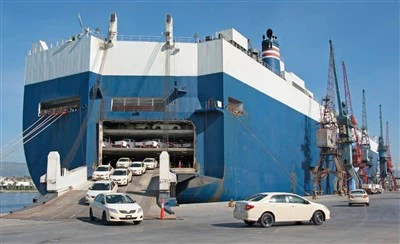
Over the past decade, trade between China and Egypt has shown steady expansion, supported by the Belt and Road Initiative and Egypt's Vision 2030 economic framework. In 2024, the bilateral trade volume reached approximately USD 17 billion, marking a near 10% year-on-year growth. China continues to be Egypt's largest source of imports-ranging from machinery, electronics, appliances, and construction materials-while Egypt exports energy, minerals, marble, cotton, and agricultural products to China.
Egypt's unique geographical location-linking Africa, Asia, and Europe through the Suez Canal-makes it one of the world's most critical maritime gateways. Over 90% of bilateral goods are transported via sea freight, making ocean shipping the backbone of China–Egypt trade.
For global importers and distributors, sea freight from China to Egypt offers an unmatched balance of cost efficiency, cargo capacity, and shipping reliability. Backed by Wilson's decade-long expertise and global carrier network, your shipments reach Egyptian ports such as Alexandria and Port Said safely, on time, and with complete visibility.

Major Ports for Importing from China to Egypt
Selecting the right port combination is essential for optimizing time, cost, and logistics flow. Wilson operates across China's top export gateways and Egypt's key import hubs, ensuring flexible routing and stable schedules.
Main Ports in China:
- Ningbo-Zhoushan (Headquarters Port): As Wilson's base of operations, Ningbo offers direct sailings to Port Said and Alexandria, ideal for large-scale containerized cargo.
- Shanghai Port: The world's largest container hub, providing weekly direct departures to Egypt-suited for time-sensitive and high-value shipments.
- Shenzhen & Guangzhou Ports: Key South China ports for electronics, household goods, and e-commerce cargo.
- Qingdao & Tianjin Ports: Northern China's industrial gateways, supporting chemical, machinery, and raw material exports.
Main Ports in Egypt:
- Alexandria Port: Egypt's largest seaport, handling over 60% of the country's imports with modern container terminals and extensive warehousing.
- Port Said: A major transshipment hub at the entrance of the Suez Canal-perfect for regional re-export and bonded warehouse operations.
- Suez Port: Strategically located for large-scale engineering and energy projects.
- Damietta Port: A modernized facility with automated container operations and short turnaround times.
By integrating these port pairs with our digital route optimization system, Wilson guarantees smooth port-to-port and door-to-door ocean transport, no matter your cargo type or destination.

Why Choose Sea Freight to Egypt
Sea freight remains the most efficient and scalable transportation mode for Sino–Egyptian trade, offering superior economics and stability for all shipment volumes.
Key Advantages of Sea Freight to Egypt:
- Cost-Effective for Bulk Cargo: Up to 20 times cheaper than air freight, ideal for industrial machinery, furniture, or consumer goods.
- High Load Capacity: Container vessels carry tens of thousands of tons per voyage, accommodating oversized and high-density shipments.
- Stable Transit Times: Direct sailings from Ningbo, Shanghai, or Shenzhen reach Alexandria or Port Said in approximately 25–30 days, ensuring predictable scheduling.
- Flexible Solutions: Full Container Load (FCL), Less than Container Load (LCL), and specialized containers (open-top, flat rack, refrigerated) for all cargo types.
- Eco-Friendly Transport: Sea freight produces significantly fewer CO₂ emissions per ton compared to air or land, supporting your company's sustainability goals.
For importers balancing cost control, reliability, and global reach, sea freight remains the foundation of a sustainable supply chain between China and Egypt.
How Our Sea Shipping Service Works
At Zhejiang Wilson Supply Chain Management Co., Ltd., we deliver a comprehensive end-to-end sea freight service-covering shipment planning, booking, customs, and last-mile delivery. With over a decade of logistics experience and annual handling volume of 56,000 TEUs, we ensure that your cargo moves with precision and transparency.
Step 1. Consultation & Solution Design
Our specialists analyze your cargo specifications, timeline, and budget, providing multiple route and carrier options (FCL/LCL/door-to-door). Clients receive quotations within 24 hours, including expected transit times and value-added options.
Step 2. Cargo Pickup & Warehousing
We offer nationwide pickup services from factories or suppliers in China and short-term storage at Wilson's warehouses in Ningbo, Shanghai, and Shenzhen. Cargo is inspected, consolidated, and prepared for maximum container space utilization (up to 85% efficiency).
Step 3. Export Customs & Documentation
Wilson's AEO-certified customs team prepares all export paperwork-Commercial Invoice, Packing List, Certificate of Origin, Bill of Lading, and hazardous goods declarations if needed. We guarantee accuracy and compliance to prevent customs delays.
Step 4. Sea Freight Coordination
Partnering with COSCO, MSC, MAERSK, HPL, EMC, and other major carriers, we secure stable sailings and competitive contract rates. Clients can track shipments in real time via our logistics management platform.
Step 5. Pre-Clearance in Egypt (ACI Filing)
Our local partners handle Advanced Cargo Information (ACI) submission via the Nafeza platform, ensuring your cargo is approved before vessel arrival. This proactive process reduces clearance time and demurrage costs.
Step 6. Destination Delivery
After arrival and customs release, Wilson arranges inland trucking or bonded warehouse transfer for your goods. Door-to-door service covers Cairo, Giza, Alexandria, and other key Egyptian cities.
Each shipment is fully monitored by our team, supported by digital tracking, regular status reports, and 24/7 communication, ensuring total control from origin to destination.

Destination Customs Clearance Process in Egypt
Clearing goods in Egypt requires precise coordination under the Advanced Cargo Information (ACI) system and local regulations. Wilson's experienced customs team and Egyptian partners guarantee a smooth process through the following steps:
Step 1. ACI Pre-Registration
Shipment data is uploaded to Egypt's Nafeza platform at least 48 hours before departure. We assist in obtaining the ACI tracking number, required for customs validation.
Step 2. Document Review and Verification
Wilson ensures that all documents meet Egyptian customs standards, including:
- Commercial Invoice (endorsed by the Chinese Chamber of Commerce)
- Packing List
- Certificate of Origin (CO)
- Bill of Lading showing the consignee's tax ID
- Product-specific certifications (EOS, NTRA, Health Ministry approval if applicable)
Step 3. Tax and Duty Calculation
Customs duties (5–40% depending on HS Code) are assessed on CIF value, plus 14% VAT. Wilson's clearance team double-checks classification accuracy to avoid over-taxation or delays.
Step 4. Inspection and Clearance
If selected for inspection, our local agents attend in person to handle documentation and communication. Our average clearance time is 2–4 working days, faster than Egypt's national average.
Step 5. Post-Clearance Handling
Following release, goods can be directly delivered to the consignee, placed in a bonded warehouse, or distributed through our local logistics partners. For DDP shipments, we manage the entire tax payment and delivery process on behalf of clients.
Wilson's deep understanding of Egyptian regulations, combined with digital document control, ensures 98% on-time clearance and eliminates unnecessary port charges or demurrage risks.
Advantages of Our Sea Freight from China to Egypt
When choosing a logistics partner, experience, reliability, and compliance matter as much as price. Wilson's decade-long reputation in the China–Egypt corridor sets us apart from other freight forwarders.
1. Deep-Rooted Experience and Global Reach
Founded in 2011, with branches in Ningbo (HQ), Shanghai, Shenzhen, and Hong Kong, Wilson has managed complex cross-border projects in Asia, the Middle East, and Africa for over ten years.
2. Strong Carrier Relationships and Stable Space Guarantee
Our long-term partnerships with COSCO, MAERSK, MSC, and HPL secure priority bookings and competitive rates, even during peak seasons.
3. Certified Compliance and Industry Accreditations
With FIATA, IATA, ISO, AEO, and NVOCC certifications, Wilson ensures total operational compliance and customs credibility in both China and Egypt.
4. Specialized Handling of Complex Cargo
From oversized machinery and vehicles to chemicals and dangerous goods (Classes 2, 5.1, etc.), we offer customized solutions backed by professional safety protocols.
5. Integrated Supply Chain and Customs Expertise
As a full-service supply chain management enterprise, Wilson provides one-stop logistics-from procurement and customs to warehousing and last-mile delivery.
6. Transparent Pricing and Real-Time Visibility
All quotations are all-inclusive, covering freight, fuel, canal, and port charges. Our digital tracking system gives clients complete shipment visibility at every stage.
7. Dedicated Professional Team
Our 26 logistics professionals, averaging 8+ years of experience, proactively manage every shipment, offering responsive support and strategic solutions.

Cost & Time Estimates of Sea Freight from China to Egypt
Shipping costs and transit times between China and Egypt can vary depending on the departure port, destination port, container type, and seasonal demand. Based on market data from late 2025 and Wilson's carrier contracts with COSCO, MAERSK, MSC, and HPL, the following figures represent a reasonable industry reference.
|
Mode / Container Type |
Route Example |
Estimated Cost (USD) |
Average Transit Time |
Remarks |
|
LCL (Less than Container Load) |
Ningbo → Port Said |
$100 – $120 per CBM |
28 – 32 days |
Suitable for SMEs or mixed cargo |
|
FCL 20' Container |
Shanghai → Alexandria |
$3,300 – $3,600 per unit |
26 – 30 days |
Best for general goods or medium-volume orders |
|
FCL 40' Container |
Shenzhen → Port Said |
$4,400 – $4,800 per unit |
27 – 31 days |
Cost-effective for bulk and retail cargo |
|
Special Container (Flat Rack / Open Top / Reefer) |
Ningbo → Suez |
$5,800 – $7,000 per unit |
28 – 34 days |
For oversized, temperature-controlled, or hazardous goods |
|
Express Sea Service (Fast Vessel) |
Shanghai → Alexandria (direct) |
+10 % premium |
23 – 26 days |
Priority loading & shortened routing |
【Note】: Transit times may vary slightly based on weather conditions, customs processing, and port congestion. Prices listed are indicative and subject to change based on market fluctuations. For precise quotations and schedules, please contact our team today for an accurate quote tailored to your goods and a better offer! ( gm@wilson-cargo.com )

Sea Freight From China To Egypt
Get in touch with our sea freight experts immediately to discuss your requirements and get a quick quote.
How Wilson Helps Reduce Costs and Secure Timelines
Long-Term Carrier Contracts: By maintaining annual fixed-rate agreements with major shipping lines, we protect clients from seasonal surcharges and volatile spot-rate hikes.
Smart Consolidation: For LCL shipments, Wilson's consolidation hubs in Ningbo and Shenzhen combine compatible cargo to reduce per-CBM costs.
Route Optimization: Our digital planning system automatically selects the fastest transit schedule and least-congested transshipment port.
Pre-Clearance & Advanced Booking: Early ACI filing and space reservation guarantee predictable arrivals and minimize demurrage or storage fees.
Potential Causes of Delay
Weather disruptions in the Indian Ocean or Red Sea, port congestion during Chinese New Year or Ramadan, and incomplete customs documentation are the main delay factors. Wilson mitigates these through continuous tracking, priority berthing arrangements, and real-time communication with port authorities.
Overview of Major Ports in China and Egypt
China's Key Export Hubs
- Ningbo-Zhoushan Port: Wilson's headquarters port and one of the world's busiest in cargo throughput, handling more than 1 billion tons annually. Advanced automation and 24-hour loading capacity ensure rapid vessel turnaround.
- Shanghai Port: The largest global container port with weekly direct sailings to Egypt; optimal for high-value consumer goods and electronics.
- Shenzhen & Guangzhou Ports: Central to South China's export economy; ideal for appliances, textiles, and e-commerce cargo.
- Qingdao Port: Specialized in mechanical equipment and industrial materials; offers extensive feeder links to northern suppliers.
- Tianjin Port: Northern China's maritime gateway to the Middle East and Africa; efficient rail-sea intermodal services for inland provinces.
Egypt's Primary Import Ports
- Port of Alexandria: Handles roughly 60 % of national imports; features modern container yards, cold-chain facilities, and rail links to Cairo.
- Port Said: Positioned at the Mediterranean entrance of the Suez Canal; Egypt's largest container transshipment and bonded-storage hub.
- Port of Suez: Southern canal entry point, dedicated to project cargo, heavy machinery, and oil-industry logistics.
- Damietta Port: A technologically advanced terminal with high crane density and short dwell times, suitable for time-sensitive shipments.
Together, these ports form a stable logistics corridor that connects China's manufacturing centers with Egypt's expanding consumer and industrial markets.
Import Regulations and Trade Terms
Importing into Egypt is governed by customs rules enforced by the Egyptian Customs Authority and the Ministry of Finance under the Advanced Cargo Information (ACI) system.
Key Legal and Technical Terms:
- ACI Number: Mandatory pre-shipment reference generated via Egypt's Nafeza platform; without it, goods cannot be unloaded.
- CIF Value: The customs valuation basis combining Cost + Insurance + Freight; all duties and VAT are calculated from this figure.
- HS Code: Harmonized System classification determining duty rate and inspection requirement.
- VAT (14 %) & Customs Duties: Applied ad valorem; most goods fall between 5 % and 40 %.
- Incoterms 2020: Defines buyer-seller responsibility-commonly used terms are FOB, CIF, DDU, and DDP.
- NVOCC License: Wilson's certification enabling direct issuance of Bills of Lading and liability coverage for sea shipments.
Wilson's compliance team ensures every shipment aligns with the latest Egyptian and Chinese customs frameworks, reducing the risk of fines or confiscation.
How to Purchase from China
For Egyptian importers sourcing goods from China, Wilson provides end-to-end procurement and logistics support.
Step 1 – Supplier Verification: We assist in vetting factories through on-site inspection or third-party audit to confirm export qualifications and product quality.
Step 2 – Quotation & Contract: Negotiate prices using clear Incoterms (FOB / CIF / DDP) to define shipping responsibilities.
Step 3 – Shipment Planning: Wilson coordinates pickup, export documentation, and container booking according to production schedules.
Step 4 – Quality Control & Packing: Optional pre-shipment inspection ensures goods meet your standards before loading.
Step 5 – International Transport & Customs: We manage sea freight, insurance, and full customs procedures, delivering goods safely to your Egyptian warehouse.
By combining sourcing consultation with logistics execution, Wilson turns procurement from China into a transparent, controllable, and low-risk process.
FAQ
Q: How long does sea freight from China to Egypt take?
A: Typical transit time ranges from 26 to 32 days depending on port pair and route type.
Q: What are the average shipping costs?
A: FCL 20' container ≈ $3,300 – $3,600; 40' ≈ $4,400 – $4,800; LCL ≈ $100 – $120 per CBM.
Q: What documents are required for customs clearance in Egypt?
A: Commercial Invoice, Packing List, Certificate of Origin, Bill of Lading, and ACI number. Additional product certifications may apply.
Q: Can Wilson handle dangerous or chemical cargo?
A: Yes. We are licensed for Classes 2 and 5.1 DG materials and serve listed chemical companies and state-owned enterprises.
Q: How does Wilson ensure customs compliance?
A: Our AEO-certified team performs HS code validation and pre-clearance filing through Nafeza to minimize inspection risks.
Q: What causes delays and how are they managed?
A: Port congestion or missing documents are most common. Wilson pre-books space, monitors vessel status 24/7, and provides real-time updates to clients.
Q: Do you offer insurance coverage?
A: Yes. Cargo transport and liability insurance can be arranged at competitive rates to protect goods throughout the journey.
Q: Can I get door-to-door delivery in Cairo or Giza?
A: Absolutely. Wilson offers door-to-door DDU and DDP services covering major Egyptian cities with local trucking support.
Q: Does Wilson provide assistance with supplier sourcing in China?
A: Yes. We can recommend qualified manufacturers and assist with factory audits before logistics arrangements.
Q: What makes Wilson different from other freight forwarders?
A: Our combination of AEO compliance, long-term carrier contracts, transparent pricing, and 8-year-average staff experience ensures a premium yet cost-effective service for every client.
Hot Tags: sea freight from china to egypt, price, cheap, cost, quote, service, provide, forwarder, company