The maritime trade corridor between China and the United States represents one of the most active routes for yacht, speedboat, and pleasure vessel logistics in the world. Chinese shipyards have steadily expanded their production of motor yachts, sailing yachts, speedboats, and small recreational vessels, while American buyers - from private owners to commercial fleet operators - increasingly source vessels and marine equipment from China. At the same time, a growing number of Chinese clients import pre-owned yachts and premium boats from the United States, creating a genuine two-way flow of high-value watercraft across the Pacific.
Zhejiang Wilson Supply Chain Management Co., Ltd. provides specialized yacht shipping from China to USA, covering the full spectrum of vessel types including yachts, speedboats, small boats, patrol boats, and other high-value vessels. Our shipping methods include Flat Rack container shipping, Open Top container shipping, Breakbulk (Ro-Ro and lift-on/lift-off) shipping, and standard Container Shipping where vessel dimensions permit. Estimated shipping costs typically range from USD 3,500 to USD 25,000 depending on vessel size, transport method, and port pair, with transit times of approximately 14 to 35 days from major Chinese ports to principal U.S. destinations. All rates and timeframes referenced on this page are for guidance only - actual quotes are tailored to each vessel's specifications and current market conditions.
Whether you are exporting a newly built motor yacht from a Chinese shipyard to Miami, or importing a pre-owned sailing yacht from California to Shanghai, our team designs a transport plan around the exact dimensions, weight, and structural characteristics of your vessel. Contact us today for a customized yacht shipping quote and let our specialists handle every detail of your trans-Pacific vessel transport.

Cost of Shipping a Yacht from China to USA
The cost of shipping a yacht from China to the United States depends on multiple interacting factors - vessel dimensions (length, width, height), displacement weight, chosen transport method, lifting and cradle requirements, origin port, destination port, and seasonal market conditions. Because yachts are oversized, high-value cargo, they cannot be uniformly treated as standard container freight. Each vessel requires an individualized assessment to determine the most cost-effective and safest shipping configuration.
The table below provides estimated cost ranges for the principal shipping methods used for yacht transport between China and the USA. These figures are indicative references only and should not be treated as firm quotations.
Table 1. Estimated Yacht Shipping Costs by Method (China to USA)
| Shipping Method | Suitable Vessel Size | Estimated Cost Range (USD) | Key Characteristics |
|---|---|---|---|
| Flat Rack Container | Up to approx. 12 m LOA, within 40' flat rack dimensions | 3,500–8,500 | Vessel secured on a 40' flat rack with custom cradle; open sides and top allow over-width clearance; widely available on trans-Pacific services |
| Open Top Container | Up to approx. 9 m LOA, within 20' or 40' open top dimensions | 3,000–7,000 | Top-open loading via crane; suitable for smaller motorboats and speedboats with moderate height; weatherproof tarp cover during transit |
| Breakbulk (Lo-Lo / Ro-Ro) | 12 m to 40 m+ LOA, oversized or non-containerizable vessels | 8,000–25,000+ | Vessel lifted or rolled directly onto the cargo deck; ideal for large yachts, wide-beam vessels, and patrol boats; maximum flexibility for unusual dimensions |
| Standard Container (40' HQ / 40' GP) | Small boats, RIBs, inflatable boats, disassembled vessels under approx. 6 m | 2,500–5,500 | Most economical option; vessel must fit within standard container internal dimensions (approx. 12.03 m × 2.35 m × 2.69 m for 40' HQ); often used for small speedboats and components |
Key Factors Influencing Yacht Shipping Cost
- Vessel Dimensions (Length, Width, Height): The single most important cost driver. A yacht exceeding standard container dimensions (over approximately 12 meters in length or 2.35 meters in width) cannot use standard container shipping and must move to Flat Rack, Open Top, or Breakbulk service - each progressively more expensive. Beam width is especially critical: vessels wider than approximately 3.5 meters may require Breakbulk transport even if length is moderate.
- Weight and Displacement: Heavy-displacement yachts require reinforced cradles, higher-capacity lifting equipment, and potentially specialized flat rack reinforcement. Excessive weight may trigger over-weight surcharges from carriers and require heavy-lift crane arrangements at both origin and destination ports.
- Transport Method Selection: Flat Rack is typically the most economical option for mid-size yachts (approximately 8–12 meters), while Breakbulk becomes necessary for larger vessels. Standard container shipping is reserved for small boats that fit within container internal dimensions. The choice is driven by the vessel's physical envelope, not by preference alone.
- Lifting and Cradle Requirements: Every yacht shipped by Flat Rack or Breakbulk requires a purpose-built support cradle (steel or timber) engineered to distribute the vessel's weight without stressing the hull. Cradle fabrication, crane hire at origin and destination ports, and specialized rigging labor all contribute to total cost.
- Origin and Destination Ports: Trans-Pacific freight rates vary significantly by port pair. Shipping from Shanghai or Ningbo to Los Angeles or Long Beach (U.S. West Coast) is generally less expensive than shipping to Miami, New York, or Savannah (U.S. East Coast), due to shorter transit distance and higher vessel frequency on the Pacific Southwest route.
- Seasonal and Market Conditions: Freight rates fluctuate with carrier capacity utilization, fuel surcharge adjustments (BAF), peak season surcharges (PSS), and broader market dynamics. Booking 3–4 weeks in advance typically yields more favorable pricing and equipment availability.
How Yacht Shipping Cost Is Calculated
The basic calculation method for yacht shipping combines several components:
- Ocean Freight: Charged per Flat Rack, per Open Top container, or per Breakbulk unit (by freight ton or lump sum), depending on the method selected.
- Origin Charges: Inland trucking from shipyard or marina to departure port, port handling (THC), crane/lift-on charges, cradle fabrication, export customs declaration, and documentation fees.
- Destination Charges: Port handling (THC), lift-off charges, U.S. customs entry processing, Merchandise Processing Fee (MPF), Harbor Maintenance Fee (HMF), and inland delivery to final destination.
- Insurance: Marine cargo insurance, typically 0.3%–0.5% of declared vessel value, strongly recommended for all high-value watercraft shipments.
- Additional Surcharges: Bunker Adjustment Factor (BAF), Currency Adjustment Factor (CAF), peak season surcharges, and any specialized handling fees.
The total landed cost is the sum of all the above. Because each vessel presents a unique dimensional and weight profile, we provide itemized quotations only after reviewing the vessel's specifications, photos, and intended routing.
For a precise quote tailored to your specific cargo, origin, and delivery terms, reach out to our team for a detailed breakdown
Get Latest Ocean Freight Rates Now
Transit Time for Yacht Shipping from China to USA
Transit time for yacht shipping from China to the United States varies primarily by port pair, shipping method, carrier schedule, and whether the service is direct or involves transshipment. The table below summarizes estimated transit times from major Chinese origin ports to principal U.S. destination ports.
Table 2. Estimated Transit Times - China to USA Major Port Pairs
| Origin Port (China) | Destination Port (USA) | Estimated Transit Time (Days) | Service Type |
|---|---|---|---|
| Shanghai | Los Angeles / Long Beach | 14–20 | Direct trans-Pacific |
| Ningbo | Los Angeles / Long Beach | 14–20 | Direct trans-Pacific |
| Shenzhen (Yantian) | Los Angeles / Long Beach | 13–18 | Direct trans-Pacific |
| Shanghai | New York / New Jersey | 25–32 | Via Panama Canal or transshipment |
| Ningbo | New York / New Jersey | 26–33 | Via Panama Canal or transshipment |
| Shenzhen (Yantian) | Miami | 24–30 | Via Panama Canal |
| Qingdao | Los Angeles / Long Beach | 15–21 | Direct trans-Pacific |
| Shanghai | Savannah | 26–34 | Via Panama Canal or transshipment |
| Guangzhou | Houston | 25–32 | Via Panama Canal |
Factors Affecting Transit Time
- Vessel Schedule and Frequency: Carrier sailing schedules determine the earliest available departure. Major trans-Pacific services typically offer weekly sailings from Shanghai, Ningbo, and Shenzhen to U.S. West Coast ports, while East Coast services may have less frequent direct options.
- Routing and Transshipment: Direct services to U.S. West Coast ports are the fastest. Shipments to East Coast and Gulf Coast ports often route through the Panama Canal or involve transshipment at intermediate hubs (e.g., Busan, Singapore), adding 5–10 days.
- Port Operations: Port congestion, labor disruptions, and berth availability at both origin and destination can extend overall transit time. U.S. West Coast ports have historically experienced periodic congestion that may delay vessel berthing and cargo discharge.
- Lifting and Loading Operations: Yachts shipped by Flat Rack or Breakbulk require specialized crane operations for loading and unloading. These operations must be scheduled within port working windows and may require additional time beyond standard container handling.
- U.S. Customs Clearance: Formal entry processing by U.S. Customs and Border Protection (CBP), including any examination holds, typically adds 2–5 business days after vessel arrival before the yacht can be released for inland delivery.
- Inland Transportation: Final delivery from the destination port to a marina, dealership, or private berth involves oversized-load trucking, which may require route surveys and special permits - adding 2–7 days depending on distance and route complexity.
All shipping costs and transit times referenced on this page are estimates for guidance only and do not constitute a binding quotation. Contact us for a real-time shipping plan tailored to your vessel and schedule.
Get Latest Ocean Freight Rates Now
Yacht Transport Services from China to USA
We provide comprehensive vessel logistics services covering every type of watercraft and every viable shipping method for the China-USA trade lane. Our service portfolio is built around the understanding that no two vessels - and no two transport requirements - are identical.
Vessel Types We Ship
- Motor Yachts and Luxury Yachts: From compact 8-meter cruisers to 30-meter+ luxury motor yachts, shipped via Flat Rack or Breakbulk depending on dimensions and weight.
- Speedboats and Motorboats: High-performance speedboats, center console boats, and rigid inflatable boats (RIBs), shipped via Open Top container, Flat Rack, or standard container where dimensions permit.
- Small Boats and Recreational Vessels: Dinghies, sailboats, kayaks, and small recreational craft, shipped via standard container or consolidated LCL where appropriate.
- Patrol Boats and Commercial Vessels: Law enforcement patrol boats, workboats, and commercial-use vessels requiring specialized handling, Breakbulk transport, and compliance with end-use documentation requirements.
- Other High-Value Vessels: Custom-built boats, racing boats, electric vessels, and prototype watercraft requiring white-glove handling and tailored protection measures.
Shipping Methods Available
- Flat Rack Container Shipping: The most commonly used method for mid-size yachts (approximately 8–12 meters). The vessel is secured on a custom-built steel or timber cradle atop a 40' flat rack, providing open-side and open-top clearance for over-width and over-height hulls. Flat racks are available on virtually all major trans-Pacific container services.
- Open Top Container Shipping: Suitable for smaller motorboats and speedboats (up to approximately 9 meters) that can be loaded through the open top via crane. The container is covered with a weatherproof tarp during ocean transit, protecting the vessel from salt spray and weather exposure.
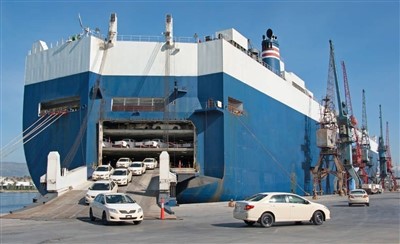
- Breakbulk Shipping (Lift-On/Lift-Off and Roll-On/Roll-Off): The preferred method for large yachts (12 meters and above), wide-beam vessels, and non-containerizable watercraft. The vessel is lifted directly onto the cargo vessel deck by heavy-lift crane or rolled aboard via a purpose-built trailer. Breakbulk offers maximum dimensional flexibility and is the only viable option for many luxury yachts and patrol boats.
- Standard Container Shipping: Used exclusively for small boats, inflatable vessels, and disassembled watercraft that fit within standard 20' or 40' container internal dimensions. This is the most economical option but is strictly limited by the vessel's physical envelope - no yacht exceeding container dimensions can use this method.
Full-Service Logistics Coverage
Our yacht transport service extends well beyond ocean freight. We manage the complete logistics chain on both sides of the Pacific:
- Domestic Pickup and Inland Transport: Coordinated trucking from Chinese shipyards, factories, or marinas to the departure port, using specialized low-bed trailers and oversized-load escort vehicles as required.
- Warehousing and Staging: Short-term storage at port-side facilities for vessels awaiting scheduled sailings, with secure, monitored premises.
- Loading, Unloading, and Crane Operations: Professional lift-on and lift-off services using certified marine cranes, experienced rigging crews, and weight-appropriate lifting slings designed to protect hull integrity.
- Hull Protection: Comprehensive protective measures including shrink-wrap, protective film, padded fendering, and custom-fabricated covers for windshields, railings, and delicate components.
- Professional Cradle and Support Engineering: Custom-designed and fabricated steel or timber cradles engineered to distribute the vessel's weight evenly across the hull, preventing stress points, gel-coat damage, or structural deformation during transit.
- Lashing, Securing, and Anti-Movement Measures: Certified lashing systems using chains, turnbuckles, and tensioned webbing to immobilize the vessel against roll, pitch, and surge forces encountered during ocean transit. All securing arrangements comply with international cargo securing standards.
- Anti-Scratch, Anti-Collision, and Anti-Shift Protection: Padded contact points at all cradle-to-hull interfaces, protective wrapping for exposed hardware and fittings, and additional bracing for flybridges, towers, and outriggers.
- Export Customs Declaration: Complete China export customs filing, including HS code classification under Chapter 8903 (yachts and pleasure vessels), export license coordination where applicable, and preparation of all required shipping documents (Bill of Lading, Commercial Invoice, Packing List, Certificate of Origin).
- International Shipment Tracking: Real-time vessel tracking and status reporting throughout the ocean transit, with proactive updates at key milestones (departure, transshipment, arrival).
- Destination Port Coordination: Arrangement of U.S. customs entry, port handling, lift-off operations, and inland delivery to the final marina, dealership, or private berth.
Every vessel receives an individually engineered transport plan. We do not apply a one-size-fits-all approach - the shipping method, cradle design, lashing configuration, and port routing are determined by your vessel's specific dimensions, weight, structure, and your delivery timeline.
Yacht Shipping Process from China to USA
Our yacht shipping process follows a structured, step-by-step workflow designed to ensure that every vessel is transported safely, efficiently, and in full compliance with both Chinese and U.S. regulatory requirements.
Step-by-Step Shipping Workflow
- Inquiry and Transport Requirement Submission: The client provides initial details including vessel type, intended origin and destination, desired timeframe, and direction of transport (China-to-USA export or USA-to-China import).
- Vessel Information Confirmation: We collect and verify the vessel's complete technical specifications - brand, model, length overall (LOA), beam (width), height, draft, displacement weight, hull material, engine details, and current location. Photographs of the vessel from multiple angles are requested to assess condition and identify any transport-sensitive features.
- Transport Feasibility Assessment: Our logistics engineers evaluate the vessel's dimensions against available shipping methods, port capabilities, and route constraints. This step determines whether Flat Rack, Open Top, Breakbulk, or (rarely for yachts) standard container shipping is appropriate, and identifies any special handling requirements.
- Transport Plan Design: A detailed shipping plan is developed, specifying the shipping method, origin and destination ports, carrier selection, cradle design parameters, lashing configuration, lifting arrangements, and inland transport routing at both ends.
- Quotation and Booking: An itemized quotation is provided covering all cost components. Upon client approval, we proceed with carrier booking, equipment reservation (flat rack, crane slot, or Breakbulk deck space), and sailing schedule confirmation.
- Domestic Pickup: The vessel is collected from the shipyard, factory, marina, or storage location and transported to the departure port using specialized oversized-load trucking.
- Loading Preparation: At the port, the vessel is positioned for lifting, the cradle is finalized and secured, and all protective measures (shrink-wrap, padding, bracing) are applied.
- Lifting, Securing, and Lashing: The vessel is lifted by marine crane onto the flat rack or vessel deck, positioned on the cradle, and secured with certified lashing systems. A final pre-departure inspection confirms that all securing arrangements meet international standards.
- Export Customs Declaration: China export customs formalities are completed, including HS classification, document submission, and customs release. For USA-to-China imports, the corresponding U.S. export documentation is handled at this stage.
- Ocean Transport: The vessel is shipped across the Pacific per the booked service. Shipment status is tracked and reported at key milestones throughout the voyage.
- Destination Port Coordination and Delivery: Upon arrival at the U.S. destination port, we coordinate customs entry processing, lift-off operations, port handling, and inland delivery to the final destination - whether a marina, dealership, private berth, or storage facility.
Information and Documents Required from the Client
To design an accurate transport plan and complete all customs formalities, we request the following information and documents from the client:
- Vessel Brand and Model: Manufacturer name and specific model designation.
- Vessel Dimensions: Length overall (LOA), maximum beam (width), maximum height (including flybridge, tower, or mast - measured from keel to highest point), and draft.
- Vessel Weight: Displacement weight or shipping weight, including engines, fuel, and any permanently installed equipment.
- Hull Photographs: Clear photographs from port, starboard, bow, stern, and above, plus close-ups of any damaged or transport-sensitive areas.
- Hull Material: Fiberglass (GRP), aluminum, steel, carbon fiber, wood, or other - this affects cradle design and handling methods.
- Engine Information: Engine brand, model, horsepower, fuel type, and whether engines are inboard, outboard, or sterndrive. This information is also required for U.S. EPA emission compliance verification.
- Declared Value: The vessel's commercial value or insured value, used for customs declaration and marine cargo insurance arrangement.
- Pickup Address and Delivery Address: Complete addresses for both origin and final destination, including any marina or port access constraints.
- Ownership and Import/Export Documents: Bill of Sale, Builder's Certificate (for new vessels), original registration or deletion certificate (for pre-owned vessels), and any applicable import/export licenses or permits.
Why Choose Wilson for Your Yacht Shipping
Choosing the right freight forwarding partner for yacht transport is a decision that directly affects the safety of your vessel, the predictability of your delivery timeline, and the total cost of your shipping investment. Our core advantages in yacht and high-value vessel logistics include:
- International Freight Forwarding Experience: Years of operational experience in trans-Pacific freight management, with established carrier relationships and deep familiarity with port operations on both the Chinese and U.S. sides of the trade lane.
- Specialized Yacht and High-Value Vessel Transport Capability: Dedicated expertise in handling luxury yachts, speedboats, patrol boats, and other high-value watercraft - not general cargo repurposed for vessel shipping. We understand hull structures, gel-coat vulnerability, and the specific risks that oversized marine vessels face during ocean transport.
- Complex Cargo Transport Plan Design: Engineering-driven approach to transport planning. Every vessel receives a custom-designed shipping plan that accounts for its unique dimensional, weight, and structural characteristics - no templated solutions applied to unique vessels.
- Professional Lifting and Loading Planning: Certified crane operations, experienced rigging crews, and pre-engineered lift plans that account for weight distribution, sling contact points, and hull stress factors. We coordinate lift-on and lift-off operations at ports that have the appropriate equipment and expertise for marine vessel handling.
- Hull Protection and Securing Expertise: Custom cradle fabrication, comprehensive protective wrapping, and certified lashing systems that meet international cargo securing standards. Our protection measures are designed to prevent gel-coat scratches, hull deformation, component damage, and vessel movement during transit.
- Global Carrier Partnership Network: Established relationships with major shipping lines operating trans-Pacific services, giving us access to Flat Rack equipment, Breakbulk deck space, and sailing schedules that may not be available to smaller or less specialized forwarders.
- Professional Logistics Team: A team of logistics specialists with specific training and experience in oversized and high-value cargo handling, including marine vessel transport, project cargo management, and specialized port operations.
- Digital Shipment Tracking: Real-time visibility into your vessel's location and status throughout the shipping process, with proactive milestone reporting and immediate notification of any schedule changes or exceptions.
- One-Stop Supply Chain Service: End-to-end management from domestic pickup through ocean transport to destination delivery, including customs clearance, insurance arrangement, and inland transport coordination - a single point of contact for the entire shipping process.
Partner with a team that treats your vessel as a high-value asset, not just another piece of freight. Contact us for a consultation and customized shipping proposal.
China-USA Yacht and Boat Trade Overview
The trade in yachts, pleasure boats, and related marine equipment between China and the United States has developed into a meaningful bilateral corridor within the broader marine industry. Trade flows run in both directions, with each country serving as both exporter and importer of different vessel categories.
China's Exports to the USA
China has emerged as a significant producer and exporter of recreational boats and marine vessels. Chinese shipyards, particularly in Guangdong, Fujian, Shandong, and Zhejiang provinces, manufacture a wide range of vessels for the international market, including motor yachts, speedboats, rigid inflatable boats (RIBs), fishing boats, and small recreational craft. Key export products to the U.S. market include:
- Motorboats and Speedboats: Mid-size motorboats and high-performance speedboats produced by Chinese manufacturers have gained market acceptance in the U.S. recreational boating sector, particularly in the entry-level and mid-range segments.
- Rigid Inflatable Boats (RIBs): Chinese-built RIBs are widely exported to the U.S. for use as tenders, patrol boats, and recreational vessels, offering competitive pricing relative to European brands.
- Small Sailboats and Dinghies: Small sailing vessels and dinghies manufactured in China are exported to U.S. sailing schools, clubs, and individual owners.
- Marine Equipment and Components: Beyond complete vessels, China exports substantial volumes of marine engines, outboard motors, boat trailers, marine electronics, and fiberglass hull components to the U.S. market.
Vessels exported from China to the USA are classified under HS heading 8903 (yachts and other vessels for pleasure or sports), which covers inflatable boats (8903.10), sailboats (8903.21/8903.22/8903.39), motorboats (8903.31/8903.32/8903.39), and other pleasure vessels (8903.99). U.S. import trade data indicates that China is among the leading source countries for recreational boat imports by volume, particularly in the small-to-mid-size vessel categories.
China's Imports from the USA
The United States is also a significant source of yacht and boat imports into China, particularly in the high-value and pre-owned vessel segments. American-built yachts, premium motor yachts, and specialized vessels are imported to serve China's growing leisure boating market. Key import products include:
- Premium Motor Yachts: U.S.-built luxury motor yachts from established American brands are imported for private owners, yacht clubs, and charter operators in China.
- Pre-Owned and Used Yachts: Second-hand yachts and pleasure boats imported from the U.S. market, particularly under China's Hainan Free Trade Port zero-tariff policy for yachts, which allows qualifying enterprises to import vessels with reduced or eliminated customs duties.
- Specialized and Commercial Vessels: Patrol boats, workboats, and specialized commercial vessels imported for specific operational requirements.
- Marine Engines and Equipment: High-performance marine engines, propulsion systems, and specialized marine equipment imported from U.S. manufacturers.
Bilateral Trade Development
The bilateral yacht and boat trade between China and the USA reflects broader trends in the global marine industry. China's shipbuilding capacity - the country accounts for the majority of global commercial shipbuilding output by gross tonnage - has increasingly extended into the recreational vessel segment, with manufacturers investing in fiberglass and composite hull technology, electric propulsion systems, and design capabilities that meet international standards. On the U.S. side, demand for competitively priced recreational boats and the growing popularity of boating and water sports continue to drive import volumes from Chinese manufacturers.
At the same time, China's domestic leisure boating market, centered around marinas in Hainan, Shenzhen, Xiamen, Qingdao, and Shanghai, has created sustained demand for premium imported vessels - including yachts from the United States and Europe. The Hainan Free Trade Port's yacht-friendly policies, including relaxed import age limits and zero-tariff treatment for qualifying enterprises, have further stimulated the import of pre-owned yachts into China.
This two-way trade flow creates ongoing demand for specialized international yacht transport services in both directions - a need that our China-USA yacht shipping service is specifically designed to meet.
Latest Regulations and Policies for Yacht Import/Export Between China and USA
Yacht and boat imports and exports between China and the United States are subject to a comprehensive regulatory framework administered by customs authorities, maritime agencies, and environmental regulators in both countries. The following overview summarizes the key regulatory requirements based on publicly available official information. Importers and exporters should verify all requirements with the relevant authorities or a licensed customs broker before shipment, as regulations are subject to change.
U.S. Import Requirements for Yachts and Boats
- Customs Classification (HTS): Yachts and pleasure boats imported into the United States are classified under Chapter 89 of the Harmonized Tariff Schedule of the United States (HTSUS), specifically heading 8903. The subheading depends on vessel type: inflatable boats and vessels (8903.10), sailboats (8903.21/8903.22/8903.39), motorboats other than outboard motorboats (8903.31/8903.32/8903.39), and other pleasure or sports vessels (8903.99). The U.S. International Trade Commission (USITC) maintains and publishes the HTSUS, and U.S. Customs and Border Protection (CBP) has final authority over classification determinations.
- Import Duty Rates: The general (Most Favored Nation) duty rate for vessels under HTS 8903 varies by subheading. Inflatable pleasure boats (8903.10) and certain sailboats may enter at a Free or low rate, while motorboats and other pleasure vessels typically carry duty rates in the range of approximately 1% to 5% ad valorem, depending on the specific classification. Importers should consult the current HTSUS on the USITC website (hts.usitc.gov) for the exact rate applicable to their vessel.
- Additional Tariffs and Surcharges: Importers should be aware that certain additional tariffs may apply to goods originating from China, including Section 301 tariffs and reciprocal tariff measures that have been subject to frequent adjustment. The applicability and rate of these additional duties depend on the specific HTS subheading, the country of origin, and the trade policy environment in effect at the time of import. Importers must verify the current tariff status with CBP or a licensed customs broker.
- Merchandise Processing Fee (MPF) and Harbor Maintenance Fee (HMF): In addition to customs duties, U.S. imports are subject to the MPF (an ad valorem fee of 0.3464% of the entered value, subject to minimum and maximum caps that are adjusted periodically) and, for ocean freight shipments, the HMF (0.125% of the entered value). These fees apply to formal entries and are collected by CBP.
- U.S. Coast Guard (USCG) Documentation: Recreational vessels measuring at least 5 net tons may be documented with the U.S. Coast Guard National Vessel Documentation Center. USCG documentation establishes vessel ownership and nationality at the federal level and is recognized internationally. While state registration is also available for smaller vessels, federal documentation is recommended for yachts intended for international use or financing.
- EPA Emission Requirements: Marine engines imported into the United States must comply with emission standards established by the U.S. Environmental Protection Agency (EPA) under the Clean Air Act. Marine spark-ignition engines (outboard, inboard, and personal watercraft engines) are subject to the regulations in 40 CFR Part 1045, while marine compression-ignition (diesel) engines are subject to 40 CFR Part 1042. Importers must verify that the vessel's engines carry valid EPA certification or compliance documentation. Non-compliant engines may be denied entry, and importers may face penalties.
- CBP Formal Entry Requirements: Yachts valued above USD 2,500 require formal customs entry, which involves filing entry documents with CBP, payment of applicable duties and fees, and submission of an Importer Security Filing (ISF) at least 24 hours before vessel loading at the foreign port. The importer of record (IOR) must have a valid U.S. tax identification number (EIN or SSN) and an active customs bond.
- Temporary Import vs. Permanent Import: Yachts brought into the U.S. temporarily (e.g., for exhibitions, racing, or short-term recreational use) may qualify for temporary importation under bond (TIB) or ATA Carnet arrangements, deferring or avoiding duty payment. Permanent imports require full duty payment and formal entry processing. The intended use and duration of stay determine which regime applies.
- Vessel Ownership and Title Documents: Importers must provide proof of ownership, including a Bill of Sale, Builder's Certificate (for new vessels), or original registration and deletion certificate from the previous flag state (for pre-owned vessels). These documents must be properly executed and, where required, apostilled or consularized for acceptance by U.S. authorities.
China Import Requirements for Yachts and Boats (USA-to-China Direction)
- HS Classification: Yachts imported into China are classified under HS heading 8903, with subheadings based on vessel type, length, and propulsion method. The specific subheading determines the applicable duty rate, consumption tax, and value-added tax.
- Import Duty, Consumption Tax, and VAT: Yachts imported into China are generally subject to import customs duty, consumption tax (typically 10% for motor yachts), and value-added tax (13%). The combined tax burden can be substantial. Under the Hainan Free Trade Port policy, qualifying enterprises (registered tourism or water transport companies with marina berths) may import yachts with zero customs duty, subject to specific eligibility conditions and operational commitments.
- Import Licensing: Certain vessel categories under HS 8903 may require an automatic import license, processed through the Ministry of Commerce or its authorized platforms. The license requirement depends on the vessel type, displacement, and intended use.
- Maritime Registration and Inspection: Imported yachts must undergo inspection by a recognized classification society or maritime authority and be registered with the China Maritime Safety Administration (MSA). For pre-owned vessels, the original flag state's deletion certificate must be obtained before Chinese registration can proceed.
- Used Yacht Import Restrictions: China maintains specific controls on the import of pre-owned yachts. Under the Hainan Free Trade Port policy, the importable age of used yachts has been relaxed to 5 years for qualifying enterprises. Outside the Hainan policy framework, used yacht imports face stricter requirements and may require additional approvals.
Export Requirements (Both Directions)
- China Export Declaration: Yachts exported from China require formal export customs declaration, including HS classification, export license verification where applicable, and preparation of shipping documents (Bill of Lading, Commercial Invoice, Packing List, Certificate of Origin).
- U.S. Export Declaration: Vessels exported from the United States valued above USD 2,500 require Electronic Export Information (EEI) filing through the Automated Commercial Environment (ACE) system, managed by the U.S. Census Bureau. Specific vessel types may require additional export licenses from the relevant U.S. agencies.
Regulatory requirements are complex and subject to change. We strongly recommend that importers and exporters verify all current requirements with the appropriate customs authorities, maritime agencies, or a licensed customs broker before arranging shipment. Our team can assist in coordinating documentation and compliance verification as part of our shipping service.
FAQ
Q: 1. How much does it cost to ship a yacht from China to the USA?
A: The cost depends on the vessel's dimensions, weight, chosen shipping method, origin and destination ports, and current market conditions. As a general reference, Flat Rack shipping for a mid-size yacht (approximately 8–12 meters) ranges from approximately USD 3,500 to USD 8,500, while Breakbulk shipping for larger yachts (12 meters and above) ranges from approximately USD 8,000 to USD 25,000 or more. Small boats that fit in standard containers can ship for approximately USD 2,500 to USD 5,500. All figures are estimates for guidance only - we provide firm, itemized quotations after reviewing your vessel's specifications.
Q: 2. How long does yacht shipping from China to the USA take?
A: Transit time depends on the port pair and service type. Direct services from Shanghai, Ningbo, or Shenzhen to U.S. West Coast ports (Los Angeles, Long Beach) typically take 14–20 days. Shipments to U.S. East Coast ports (New York, Miami, Savannah) via the Panama Canal generally take 24–34 days. Additional time should be allowed for port handling, customs clearance, and inland delivery - typically 5–10 additional days. All transit times are estimates and subject to carrier schedules and port conditions.
Q: 3. What is the difference between Flat Rack and Breakbulk shipping for yachts?
A: Flat Rack shipping secures the yacht on a custom cradle atop a 40' flat rack container, which is handled alongside standard containers on regular container vessels. It is suitable for yachts up to approximately 12 meters that fit within flat rack dimensional limits. Breakbulk shipping places the yacht directly on the cargo vessel deck, lifted by crane or rolled aboard, and is used for larger yachts (12 meters and above), wide-beam vessels, and craft that exceed flat rack dimensions. Breakbulk offers greater dimensional flexibility but at a higher cost. The choice is determined by the vessel's physical envelope, not by cost preference alone.
Q: 4. How are oversized yachts transported?
A: Oversized yachts that exceed standard container and flat rack dimensions are transported via Breakbulk (lift-on/lift-off) or Roll-on/Roll-off service. The vessel is lifted by heavy-lift marine crane directly onto the cargo vessel deck, positioned on a purpose-built cradle, and secured with certified lashing systems. This method accommodates vessels of virtually any size, including luxury motor yachts over 20 meters, wide-beam vessels, and vessels with flybridges or hardtops that cannot be removed for transport.
Q: 5. How is the yacht protected during shipping?
A: We implement comprehensive hull protection measures including custom-fabricated steel or timber cradles engineered to distribute weight without stressing the hull, shrink-wrap or protective film covering, padded contact points at all cradle-to-hull interfaces, protective wrapping for windshields and delicate components, and additional bracing for flybridges, towers, and outriggers. All lashing and securing arrangements comply with international cargo securing standards to prevent movement, scratching, collision damage, and structural stress during transit.
Q: 6. What documents do I need to provide for yacht shipping?
A: The required documents include: vessel brand and model, complete dimensions (length, beam, height, draft), displacement weight, hull material, engine details (brand, model, horsepower, fuel type), hull photographs from multiple angles, declared vessel value, pickup and delivery addresses, Bill of Sale, Builder's Certificate (for new vessels) or original registration/deletion certificate (for pre-owned vessels), and any applicable import/export licenses or permits. For U.S. imports, the importer of record must have a valid U.S. tax identification number and customs bond.
Q: 7. Is marine cargo insurance available for yacht shipping?
A: Yes, we strongly recommend marine cargo insurance for all yacht shipments. Insurance typically costs 0.3%–0.5% of the declared vessel value and covers physical loss or damage during ocean transit, loading and unloading operations, and inland transportation. Given the high value of yachts and the specialized handling involved, insurance is an essential component of the total shipping arrangement. We can arrange insurance coverage as part of our service or work with your existing marine insurance provider.
Q: 8. What about U.S. import duties and customs clearance for yachts?
A: Yachts imported into the U.S. are classified under HTS heading 8903. The general duty rate varies by subheading, typically ranging from Free to approximately 5% ad valorem depending on the vessel type. Additional tariffs may apply to goods originating from China - importers should verify the current tariff status with CBP or a licensed customs broker. All formal entries are also subject to the Merchandise Processing Fee (0.3464% ad valorem, subject to caps) and, for ocean freight, the Harbor Maintenance Fee (0.125% ad valorem). Marine engines must comply with EPA emission standards. Our team coordinates the full U.S. customs entry process as part of our destination service.
Q: 9. Do you offer door-to-door yacht shipping service?
A: Yes. Our service covers the complete logistics chain from origin pickup to final destination delivery - including domestic trucking from the shipyard or marina to the departure port, ocean freight, destination port handling, customs clearance, and inland delivery to the final marina, dealership, or private berth. Door-to-door service includes coordination of oversized-load trucking, route surveys, and special transport permits where required on the U.S. inland leg.
Q: 10. Can you ship a yacht from the USA to China (reverse direction)?
A: Yes. We handle yacht shipping in both directions - China-to-USA export and USA-to-China import. For U.S.-to-China shipments, we manage U.S. export documentation (including EEI filing), origin port loading, ocean freight, China import customs declaration (including HS 8903 classification, duty and tax calculation, and import license coordination where required), and delivery to the final destination in China. We also advise on Hainan Free Trade Port zero-tariff eligibility for qualifying importers. Contact us with your vessel details and intended routing for a customized shipping plan.
Hot Tags: Yacht Shipping From China To USA [Updated November 2026]