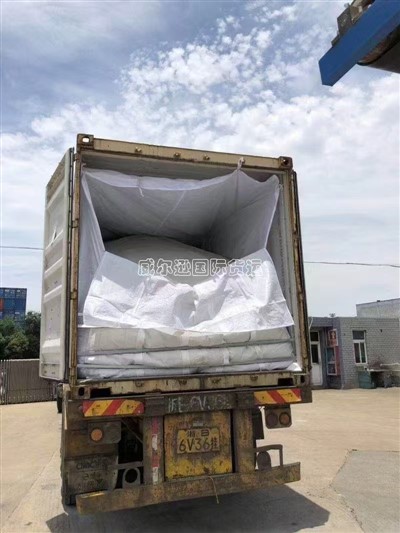
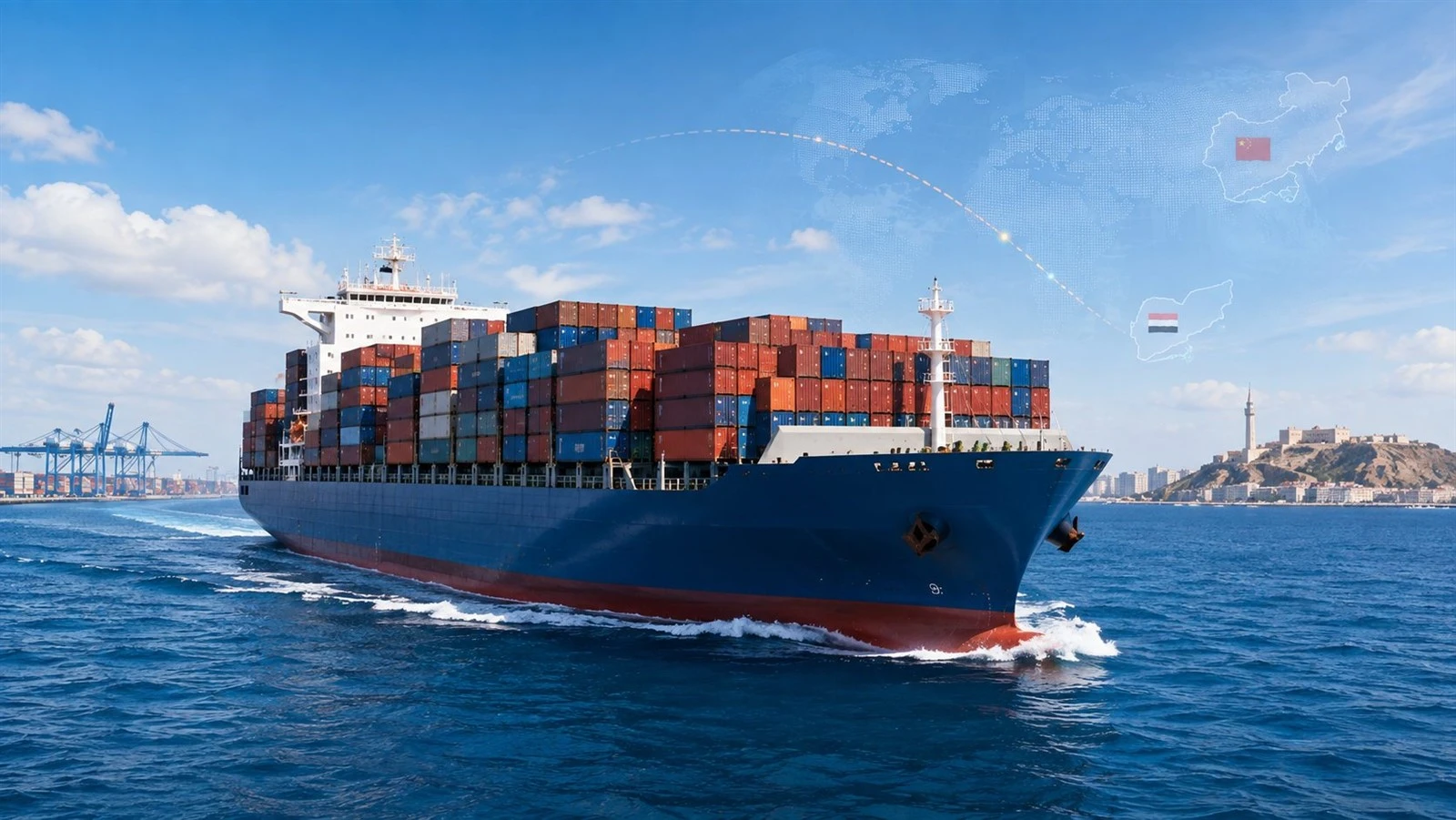
Shipping goods from China to Yemen by sea is a practical and cost-effective solution for construction materials, machinery, industrial equipment, textiles, furniture, electronics, automotive products, chemicals, and other commercial cargo.
Depending on the carrier, destination port, and regional operating conditions, shipments may move through a direct service, a regional transshipment hub, or an adjusted routing. Aden is generally the first port considered for commercial container cargo, while Hodeidah and Mukalla may be available for selected shipments based on port operations, carrier acceptance, and the final delivery location.
As a general planning reference, sea freight from China to Yemen may cost approximately:
- USD 1,500–4,500 for a 20GP container
- USD 3,000–6,900 for a 40GP or 40HQ container
- USD 40–120 per CBM for LCL cargo
Most port-to-port shipments require approximately 28–50 days. Cargo involving extended transshipment, feeder connections, or route changes may require around 40–60 days. LCL shipments normally need additional time for consolidation and deconsolidation.

Zhejiang Wilson Supply Chain Management Co., Ltd. provides FCL, LCL, special container, oversized cargo, chemical logistics, export customs clearance, warehousing, cargo insurance, and supply chain coordination services from China.
Founded in 2011 and headquartered in Ningbo, Wilson also has branches in Shanghai, Shenzhen, and Hong Kong. Our team handles approximately 56,000 TEU annually across our international logistics network, with particular strength in Middle East, Africa, Southeast Asia, and India–Pakistan routes.
Need a tailored shipping plan? Send us your cargo name, volume, weight, supplier location, destination port, and preferred shipping date. Our team will prepare a suitable route, estimated cost, and transit-time proposal.
Get Latest Ocean Freight Rates Now
Sea Freight Costs from China to Yemen
The final sea freight cost from China to Yemen depends on more than the basic ocean freight rate. The departure port, destination port, container type, cargo characteristics, carrier, sailing date, transshipment arrangement, and applicable risk surcharges can all affect the quotation.
The following figures are general port-to-port planning estimates rather than fixed Wilson quotations.
Estimated FCL Rates from China to Yemen
| Departure Port in China | 20GP Container | 40GP / 40HQ Container | Typical Cargo |
|---|---|---|---|
| Shanghai | USD 1,500–4,000 | USD 3,000–6,200 | Electronics, textiles, consumer goods, general cargo |
| Ningbo-Zhoushan | USD 1,600–4,200 | USD 3,100–6,500 | Machinery, furniture, industrial products, chemicals |
| Shenzhen | USD 1,500–4,000 | USD 3,000–6,300 | Electronics, high-tech products, general merchandise |
| Guangzhou/Nansha | USD 1,500–4,000 | USD 3,000–6,300 | Household goods, equipment, consumer products |
| Qingdao | USD 1,700–4,500 | USD 3,200–6,900 | Machinery, metals, industrial and heavy cargo |
Rates from Tianjin, Xiamen, and other Chinese ports can also be arranged according to the supplier location and available carrier service.
Estimated LCL Rates
| Destination Port | Estimated LCL Rate |
|---|---|
| Aden | USD 40–110 per CBM |
| Hodeidah | USD 50–120 per CBM |
| Mukalla | Subject to route and service confirmation |
LCL cargo is generally charged according to the higher of the shipment's volume or chargeable weight. A minimum chargeable volume may also apply.
What May Be Included in a Sea Freight Quote?
A quotation may contain several separate cost items:
| Charge | What It Covers | General Reference |
|---|---|---|
| Ocean Freight | Port-to-port container transportation | Depends on route and carrier |
| BAF | Bunker or fuel cost adjustment | USD 200–600 per container |
| THC | Terminal handling at origin or destination | USD 150–300 per container |
| WRS | Additional war-risk or security-related costs | USD 200–800 per container |
| PSS | Peak-season demand surcharge | USD 150–500 per container |
| Documentation Fee | Bill of Lading and shipping documentation | USD 50–100 |
| Seal Fee | Container security seal | USD 10–25 |
| China Export Customs | Export declaration and related handling | Usually USD 50–150 |
| Cargo Insurance | Protection against insured cargo risks | Based on cargo value and coverage |
Not every charge applies to every shipment. Special routing, limited carrier capacity, dangerous goods, reefer cargo, special containers, or unusual destination handling may increase the final cost.
How to Calculate the Total Landed Cost
Importers should compare the total landed cost instead of looking only at the basic ocean freight rate.
Total Landed Cost = Product Cost + China Pickup + Export Charges + Ocean Freight + Insurance + Surcharges + Duties and Taxes + Destination Charges + Customs Clearance + Final Delivery
A low base freight rate may become expensive after terminal charges, war-risk costs, storage, customs clearance, and destination delivery are added.
How to Reduce Shipping Costs
You may be able to control costs by:
- Consolidating goods from several Chinese suppliers into one shipment
- Comparing LCL and 20GP rates when cargo volume reaches approximately 10–15 CBM
- Selecting a departure port close to the supplier
- Booking before Chinese New Year, Golden Week, Ramadan, or other busy periods
- Requesting an all-in quotation with clear inclusions and exclusions
- Preparing complete and consistent customs documents
- Confirming free time, demurrage, detention, and storage terms before arrival
- Choosing suitable cargo packaging to reduce unused container space
Shipping Time from China to Yemen
Transit time depends on the departure port, destination port, carrier schedule, transshipment hub, feeder connection, security conditions, and port operations.
Estimated Port-to-Port Transit Times
| Departure Port | To Aden | To Hodeidah |
|---|---|---|
| Shanghai | 28–45 days | 32–50 days |
| Ningbo-Zhoushan | 30–45 days | 34–50 days |
| Shenzhen | 26–43 days | 30–48 days |
| Guangzhou/Nansha | 25–42 days | 28–46 days |
| Qingdao | 32–48 days | 35–52 days |
Selected shipments to Mukalla may require approximately 28–48 days, subject to service availability and the selected routing.
These estimates refer to port-to-port transportation. They do not include supplier production, cargo pickup, warehouse handling, China export clearance, Yemen import clearance, or final inland delivery.
Why Transit Times May Change
Several factors can extend the shipping schedule:
Direct Service or Transshipment
Some shipments may move through regional hubs such as Jebel Ali or Salalah before being transferred to a feeder vessel. Waiting for the connecting vessel may add several days.
Route Adjustments
Carriers may change routing according to regional security assessments, vessel deployment, or insurance requirements. A longer routing can add approximately 10–15 days or more.
Port Congestion
Busy terminals, limited berthing availability, equipment shortages, or cargo accumulation may delay unloading and container release.
Weather Conditions
Adverse weather in the Indian Ocean, Arabian Sea, or connecting maritime regions may affect sailing schedules.
Customs Inspection
Incorrect HS codes, missing certificates, inconsistent invoices, or physical cargo inspection can delay customs release.
LCL Consolidation
LCL normally requires additional time at both origin and destination. Importers should generally allow another 5–10 days for consolidation and deconsolidation.
Choosing a Port in Yemen
Port of Aden
Aden is generally the first destination considered for commercial container shipments from China. It can serve machinery, construction materials, furniture, consumer goods, and general containerized cargo.
Aden may be suitable for cargo destined for southern and central Yemen, subject to carrier acceptance, terminal availability, customs arrangements, and local delivery conditions.
Port of Hodeidah
Hodeidah may be considered when the cargo is intended for western or northern Yemen. However, the route may involve higher risk-related charges or more restrictive carrier requirements.
Before booking, importers should confirm:
- Current vessel acceptance
- Port operating conditions
- Destination-agent availability
- Customs clearance arrangements
- Inland delivery feasibility
- Applicable war-risk charges
Port of Mukalla
Mukalla can be considered for selected cargo destined for southeastern Yemen. Availability depends on the cargo type, vessel schedule, local handling capability, and feeder connection.
It should be treated as an alternative destination rather than assumed to be available for every regular container shipment.
FCL or LCL: Which Option Should You Choose?
FCL Shipping
FCL means that one shipper uses the entire container. The container is normally sealed after loading and opened at the destination or consignee facility.
FCL is suitable for:
- Cargo above approximately 15 CBM
- Heavy machinery and industrial goods
- Construction materials and metals
- Furniture and bulky consumer products
- Fragile or high-value cargo
- Shipments that should have fewer handling points
Common equipment includes:
| Container Type | Approximate Internal Capacity | Suitable Cargo |
|---|---|---|
| 20GP | About 33 CBM | Heavy machinery, steel, dense cargo |
| 40GP | About 67 CBM | Furniture, textiles, consumer goods |
| 40HQ | About 76 CBM | Bulky but relatively lightweight cargo |
Actual loading capacity depends on cargo weight, packaging, pallets, shape, and container weight limits.
LCL Shipping
LCL allows several shippers to share one container. It is suitable for:
- Small shipments from 1 CBM
- New importers testing the Yemen market
- Low-volume orders
- Cargo from several suppliers
- Shipments that do not justify a full container
LCL involves more handling because goods must be received, consolidated, loaded, unloaded, and separated. This normally increases the transit time and requires strong export packaging.
When Does FCL Become More Economical?
As a practical guideline:
- Below 10 CBM, LCL is usually the first option to compare
- Between 10 and 15 CBM, compare both LCL and 20GP quotations
- Above approximately 15 CBM, FCL often provides a better unit cost
- Fragile, valuable, or difficult-to-handle cargo may justify FCL even at a lower volume
Our Sea Freight Services from China to Yemen
FCL Container Shipping
Wilson arranges standard 20GP, 40GP, and 40HQ container transportation from major Chinese ports.
We help coordinate supplier pickup, container booking, export declaration, loading, Bill of Lading preparation, vessel departure, transshipment, and destination handling.
LCL Consolidation
For smaller shipments, Wilson can arrange LCL consolidation from China.
Services may include:
- Pickup from suppliers
- Consolidation from multiple factories
- Warehouse receiving
- Cargo measurement
- Palletizing
- Export packaging coordination
- LCL customs declaration
- Consolidated sea transport
Special Container Shipping
Wilson can arrange special container equipment for eligible cargo, including:
- Open-top containers
- Flat-rack containers
- Reefer containers
- Other special equipment subject to carrier availability
These options are suitable for oversized machinery, temperature-sensitive goods, cargo loaded from the top, or products that do not fit into a standard dry container.
Oversized and Project Cargo
Our team provides transport planning for industrial equipment, oversized cargo, and project shipments.
The solution may include:
- Cargo dimension assessment
- Loading method planning
- Lifting and securing coordination
- Special container selection
- Route evaluation
- Port handling coordination
- Delivery planning
Chemical and Dangerous Goods Logistics
Wilson has experience handling chemicals and selected dangerous goods, including products in Class 2 and Class 5.1 categories.
Chemical and dangerous goods shipments are subject to:
- Product classification
- MSDS or SDS review
- UN number and dangerous-goods class
- Approved packaging
- Carrier acceptance
- Export requirements
- Destination regulations
- Port and route restrictions
Acceptance must be confirmed before booking. Not every dangerous product can be shipped to every Yemen port.
China Pickup and Supplier Consolidation
Wilson can coordinate cargo pickup from major manufacturing regions in China and consolidate orders from several suppliers.
This can help importers:
- Reduce repeated LCL charges
- Combine several orders into one FCL shipment
- Simplify supplier coordination
- Improve container utilization
- Centralize packaging and document checks
Customs and Documentation Support
Our service can include:
- HS code coordination
- Export declaration in China
- Commercial Invoice and Packing List review
- Bill of Lading instruction management
- Certificate of Origin coordination
- Product documentation checks
- Dangerous-goods document review
- Communication with the destination customs agent
Customs release remains subject to the decisions of the relevant authorities.
Cargo Insurance
Wilson can assist with marine cargo insurance and logistics liability insurance.
Insurance is strongly recommended for Yemen-bound shipments. Importers should confirm:
- Insured cargo value
- Coverage terms
- Deductible
- Packaging requirements
- Exclusions
- War-risk coverage
- Claims procedures
Standard marine insurance or basic CIF insurance may not automatically cover war-related risks.
Destination Clearance and Final Delivery
For eligible shipments, Wilson can coordinate destination customs clearance and inland delivery through local service providers.
Availability depends on:
- Cargo type
- Destination port
- Importer qualifications
- Local agent coverage
- Customs requirements
- Final delivery address
- Current operating conditions
How Our Sea Shipping Service Works
Step 1: Cargo Consultation
The customer provides:
- Cargo name
- HS code, if available
- Number of packages
- Gross weight
- Total volume
- Package dimensions
- Cargo value
- Supplier address
- Preferred shipping date
- Yemen destination port
- Final delivery address
- Incoterm
- MSDS or certificates for regulated goods
Step 2: Route and Port Planning
Our team compares:
- Shanghai, Ningbo, Shenzhen, Guangzhou, Qingdao, or other origin ports
- Aden, Hodeidah, or Mukalla
- FCL, LCL, or special equipment
- Direct, transshipment, or adjusted routing
- Estimated freight and surcharges
- Transit-time range
- Destination clearance requirements
Step 3: Quotation and Booking
Wilson provides a quotation showing the service scope, estimated transit time, included charges, excluded charges, and quotation validity.
Once confirmed, we coordinate space and equipment with the selected carrier.
Step 4: Pickup and Consolidation
Cargo can be collected from the supplier, delivered to a Wilson-arranged warehouse, or loaded at the factory.
For orders from several suppliers, we can coordinate consolidation before export.
Step 5: Documentation and Export Customs Clearance
The team reviews the shipping documents and arranges the China export declaration.
Documents may include:
- Commercial Invoice
- Packing List
- Sales Contract
- Shipping instructions
- Certificate of Origin
- Export permits
- Product certificates
- MSDS and dangerous-goods documents
Step 6: Loading and Ocean Transport
The cargo is loaded into the container or consolidated into an LCL shipment. After customs release, the container is loaded onto the vessel and transported according to the confirmed route.
Step 7: Shipment Updates
Wilson provides milestone-based shipping updates, which may include:
- Cargo pickup
- Warehouse receipt
- Customs release
- Container loading
- Vessel departure
- Transshipment
- Estimated arrival
- Customs clearance
- Final delivery
Step 8: Yemen Customs Coordination
Before arrival, the importer and destination customs agent should prepare the required documents, import permits, product certificates, and tax payment arrangements.
Where local procedures allow, document preparation before vessel arrival may reduce avoidable clearance delays.
Step 9: Port Release and Final Delivery
After customs release, the cargo can be collected from the port or delivered to the consignee's warehouse or project site.
For FCL cargo, empty-container return requirements and free-time limits should be confirmed in advance.
Why Choose Wilson for Sea Freight to Yemen?
Established International Logistics Experience
Wilson was founded in 2011 and has more than a decade of experience in international freight forwarding and supply chain management.
Offices in Major Chinese Logistics Centers
Our headquarters is in Ningbo, with branches in Shanghai, Shenzhen, and Hong Kong.
This network helps us coordinate suppliers and cargo from both eastern and southern China.
Approximately 56,000 TEU Handled Annually
Wilson handles approximately 56,000 TEU per year across its international logistics network, demonstrating stable operational capacity and broad shipping experience.
Strength in Middle East and Africa Routes
Middle East and Africa services are among Wilson's principal route strengths. Our team can compare carrier schedules, transshipment arrangements, equipment, and route options for Yemen-bound cargo.
Cooperation with Major Carriers
Wilson maintains long-term cooperation with major shipping lines, including:
- COSCO
- Hapag-Lloyd
- Maersk
- MSC
- Evergreen
Carrier acceptance, container space, sailing schedules, and freight rates remain subject to the conditions of each shipment.
Experienced Logistics Team
Wilson has 26 experienced employees, with an average of more than eight years of industry experience.
Our team supports routing, customs documentation, special cargo evaluation, shipment coordination, and risk management.
FCL, LCL, and Special Cargo Capability
Unlike freight providers focused only on standard containers, Wilson can also support:
- LCL consolidation
- Open-top and flat-rack containers
- Reefer containers
- Oversized equipment
- Automotive cargo
- Chemicals
- Selected dangerous goods
- Project shipments
Customs and Compliance Capabilities
Wilson holds professional qualifications and certifications that include FIATA, IATA, China Customs AEO, ISO, and NVOCC credentials.
These capabilities support structured customs procedures, document management, and compliant freight operations. Certification validity and applicability should be confirmed against the relevant company certificates.
Shipment Visibility
Our logistics management systems support order coordination, milestone tracking, and regular shipment status updates.
End-to-End Supply Chain Coordination
Wilson can coordinate more than port-to-port freight. Our broader services include:
- Supplier pickup
- Warehouse consolidation
- Export customs
- Ocean freight
- Cargo insurance
- Destination clearance support
- Inland delivery coordination
- Logistics consulting
- Claims and legal-support coordination
Main Goods Traded Between China and Yemen
China supplies Yemen with a broad range of commercial and industrial products. The following categories commonly require sea freight because of their weight, volume, or order quantity.
Construction Materials
Building products, steel, hardware, pipes, panels, and related materials are often transported in full containers.
Dense products may be suitable for a 20GP, while bulky construction products may require a 40GP or 40HQ.
Machinery and Industrial Equipment
Machinery, production equipment, generators, pumps, and industrial components may require:
- Standard containers
- Open-top containers
- Flat-rack containers
- Special securing
- Lifting coordination
Electronics and Consumer Goods
Electronics, appliances, accessories, and consumer products require moisture-resistant packaging, accurate product descriptions, and consistent customs documents.
Textiles, Furniture, and Household Goods
These products are often relatively lightweight but occupy significant space. A 40HQ may offer better volume utilization.
Automotive Products
Vehicles, automotive parts, tires, tools, and accessories may require special loading arrangements or regulatory checks.
Wilson's broader automotive logistics experience includes serving large industrial and automotive clients.
Chemicals and Regulated Cargo
Chemicals, refrigerants, oxidizing substances, and other regulated goods require early product review.
The shipper may need to provide:
- MSDS or SDS
- Chemical composition
- UN number
- Dangerous-goods class
- Packaging certificate
- Product photos
- Test reports
- Export or import permits
How to Import Goods from China to Yemen
1. Find and Verify a Chinese Supplier
Confirm the supplier's registration, product specifications, production capability, quality standards, payment terms, and delivery schedule.
A clear sales contract should define:
- Product
- Quantity
- Price
- Incoterm
- Payment terms
- Packaging
- Inspection requirements
- Delivery date
2. Confirm the HS Code
The HS code affects:
- Customs classification
- Import duty
- Product restrictions
- Required certificates
- Inspection requirements
- Import licensing
An incorrect HS code may result in delays, reassessment, penalties, or additional documentation.
3. Check Import Restrictions
Before production or shipment, confirm whether the product requires:
- Import license
- Product conformity certificate
- Health certificate
- Phytosanitary certificate
- Quality inspection certificate
- Special government approval
- Dangerous-goods approval
4. Select the Incoterm
The Incoterm determines which party arranges transport, pays the freight, purchases insurance, and handles customs procedures.
FOB is often suitable for experienced importers who want control over the main freight. CIF may be convenient, but the buyer should check the insurance and destination charges carefully. DDP may simplify the process, but it is only available when the importer, tax, customs, and local delivery arrangements are workable.
5. Choose FCL, LCL, or Special Equipment
Choose the shipping method according to cargo volume, weight, dimensions, value, packaging, and handling requirements.
6. Prepare Export Packaging
Sea freight cargo may be exposed to moisture, vibration, stacking pressure, and multiple handling points.
Suitable packaging may include:
- Reinforced cartons
- Pallets
- Wooden cases
- Moisture barriers
- Protective wrapping
- Internal bracing
- Clear shipping marks
- Handling labels
Wooden packaging may require treatment or certification depending on the applicable rules.
7. Arrange Pickup and China Export Customs
The freight forwarder coordinates pickup, warehouse delivery, consolidation, container loading, and China export declaration.
8. Complete Yemen Customs Clearance
The importer or appointed customs agent submits the required documents and pays applicable duties, taxes, port charges, and inspection costs.
9. Arrange Final Delivery
After customs release, arrange port pickup, container trucking, delivery, unloading, and empty-container return.
Yemen Import Documents and Shipping Terms
Common Shipping and Customs Documents
| Document | Purpose |
|---|---|
| Commercial Invoice | States the goods, quantity, unit price, total value, seller, and buyer |
| Packing List | Shows package count, weight, dimensions, and contents |
| Bill of Lading | Serves as the sea transport document and cargo receipt |
| Sales Contract | Records the commercial terms between buyer and seller |
| Certificate of Origin | Confirms the country of manufacture |
| Import License | Required for certain regulated products |
| Export License | Required for selected controlled goods |
| Product Description | Supports classification and customs review |
| Health Certificate | May be required for food or health-related products |
| Phytosanitary Certificate | May be required for plants and agricultural goods |
| Conformity Certificate | May be required for regulated products |
| MSDS/SDS | Required for chemicals and dangerous goods |
| Dangerous Goods Declaration | Required for classified dangerous cargo |
| Customs Authorization | May be required when a customs broker acts for the shipper |
Not every shipment needs every document. Requirements depend on the HS code, cargo type, importer qualifications, destination port, and current regulations.
Duties and Taxes
Import duties and taxes vary according to:
- HS code
- Product category
- Customs value
- Country of origin
- Applicable exemptions
- Current customs regulations
The importer should confirm the applicable duty and tax rate before shipment. A general rate should not be assumed for every product.
Cargo Insurance and War-Risk Coverage
Marine cargo insurance protects against covered physical loss or damage, but policies have different exclusions and conditions.
For Yemen-bound cargo, confirm whether the policy includes or excludes:
- War risks
- Strikes
- Civil disturbance
- Delay
- Improper packaging
- Rust or moisture
- Theft
- Partial loss
- Transshipment
Incoterms Explained
EXW - Ex Works
The buyer arranges transportation from the supplier's factory and assumes broad responsibility from origin.
FOB - Free On Board
The seller completes export delivery and places the goods on board the vessel at the Chinese port. The buyer arranges the main ocean freight.
CIF - Cost, Insurance and Freight
The seller pays the freight and basic insurance to the named Yemen port. However, risk generally transfers when the goods are on board the vessel at the Chinese port, not when they arrive in Yemen.
DDP - Delivered Duty Paid
The seller or logistics provider takes broad responsibility for transportation, import clearance, duties, taxes, and delivery.
DDP availability depends on the cargo, importer structure, local customs procedures, tax arrangements, final delivery location, and destination service capability.
Common Shipping Terms
- FCL: Full Container Load
- LCL: Less than Container Load
- CBM: Cubic meter
- TEU: Twenty-foot equivalent unit
- Transshipment: Transfer of cargo from one vessel to another
- Feeder Vessel: A smaller vessel connecting regional ports with a main hub
- BAF: Bunker Adjustment Factor
- THC: Terminal Handling Charge
- WRS: War Risk Surcharge
- PSS: Peak Season Surcharge
- Demurrage: Charge for keeping a container inside the terminal beyond free time
- Detention: Charge for keeping a container outside the terminal beyond free time
- Free Time: The allowed period before demurrage or detention begins
- All-In Rate: A rate intended to include specified freight and surcharges; the exact scope must still be checked
Frequently Asked Questions
How much does sea freight from China to Yemen cost?
A 20GP container may cost approximately USD 1,500–4,500, while a 40GP or 40HQ may cost around USD 3,000–6,900. LCL may cost approximately USD 40–120 per CBM.
Actual rates depend on the departure port, Yemen destination port, cargo, carrier, sailing date, route, and applicable surcharges.
How long does sea shipping from China to Yemen take?
Most port-to-port shipments require approximately 28–50 days. Complex transshipment or route adjustments may extend the schedule to around 40–60 days.
LCL normally requires an additional 5–10 days.
Is sea freight from China to Yemen available?
Sea freight may be available through direct, transshipment, feeder, or adjusted routing. Availability must be confirmed according to current carrier acceptance, port operations, cargo type, and security conditions.
Which Yemen port should I use?
Aden is generally the first port considered for commercial container cargo. Hodeidah may suit cargo for western or northern Yemen, while Mukalla may be considered for selected shipments to southeastern Yemen.
The final decision should be based on vessel availability, customs arrangements, destination location, and inland delivery conditions.
What is the difference between FCL and LCL?
FCL uses an entire container for one shipper. LCL combines cargo from several shippers in one container.
FCL normally offers fewer handling points and a faster process, while LCL is more flexible for smaller shipments.
When should I switch from LCL to FCL?
At approximately 10–15 CBM, importers should compare the total LCL cost with a 20GP quotation. Above roughly 15 CBM, FCL often becomes more economical.
Which Chinese departure port should I choose?
The best origin port is usually the port close to the supplier, provided that suitable Yemen-bound services are available.
Wilson can compare Shanghai, Ningbo, Shenzhen, Guangzhou, Qingdao, Tianjin, Xiamen, and other Chinese ports.
Can Wilson pick up goods from my Chinese supplier?
Yes. Wilson can coordinate pickup, warehouse delivery, cargo consolidation, export packaging, and transport to the departure port.
Can Wilson consolidate goods from several suppliers?
Yes. Multi-supplier consolidation can help reduce repeated LCL charges and improve container utilization.
What documents are required?
Common documents include a Commercial Invoice, Packing List, Bill of Lading, Certificate of Origin, Sales Contract, and any required import license or product certificate.
Are war-risk surcharges included in the quotation?
They may or may not be included. The quotation should state clearly whether WRS and other special surcharges are included or charged separately.
Does standard cargo insurance cover war risks?
Not always. The importer should confirm the policy scope and exclusions before shipment.
Can Wilson ship chemicals or dangerous goods to Yemen?
Wilson has chemical and dangerous-goods logistics experience. Acceptance depends on the product classification, MSDS, packaging, carrier approval, port restrictions, and destination regulations.
Can Wilson arrange oversized cargo?
Yes. Wilson can evaluate open-top containers, flat-rack containers, lifting plans, cargo securing, and project transport arrangements.
Can Wilson arrange door-to-door shipping?
Door-to-door service may be available for eligible cargo and delivery locations. It depends on customs clearance arrangements, local agent coverage, and current inland transport conditions.
Is DDP shipping available to Yemen?
DDP may be available for selected shipments, but it must be reviewed case by case. Importer qualifications, duties, permits, customs procedures, and delivery location must be confirmed first.
What commonly causes delays?
Common causes include route changes, transshipment delays, port congestion, weather, document errors, customs inspection, missing licenses, unpaid charges, or unavailable inland transport.
Are import duties and destination charges included?
Only when specifically stated in the quotation. Importers should ask for a clear list of included and excluded charges.
Get a Sea Freight Quote from China to Yemen
Every Yemen shipment requires careful review of the cargo, route, destination port, documentation, insurance, and local delivery conditions.
To receive an estimated quotation, please provide:
- Cargo name
- HS code
- Number of packages
- Gross weight
- Total CBM
- Package dimensions
- Cargo value
- Supplier address in China
- Preferred shipping date
- Destination port in Yemen
- Final delivery address
- Incoterm
- MSDS or certificates for regulated goods
All freight rates, transit times, carrier services, port conditions, and destination arrangements shown on this page are indicative and subject to change. Final service availability and pricing must be confirmed before booking.
Hot Tags: Sea Freight from China to Yemen [Updated September 2026]