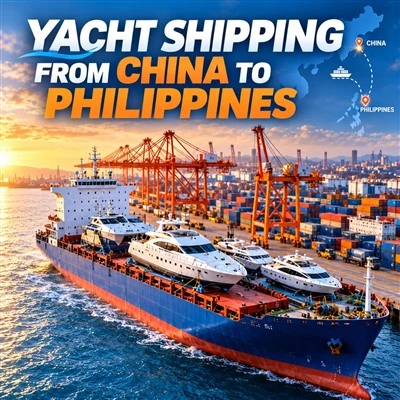
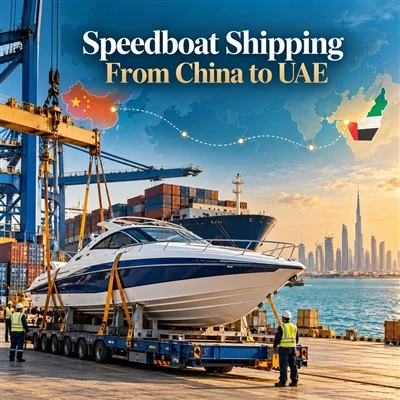
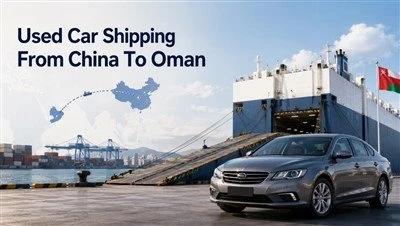
As maritime trade between China and Oman continues to expand under the Belt and Road Initiative, the demand for professional yacht and speedboat shipping services along this corridor has grown steadily. Whether you are exporting a newly built speedboat from a Chinese shipyard to Sohar or Salalah, or importing a pre-owned yacht from Oman back to China for refit or resale, the logistics involved are fundamentally different from standard container freight. Yachts, speedboats, small boats, patrol boats, and other high-value vessels are oversized, fragile, and irreplaceable cargo that require purpose-built transport solutions.
At Zhejiang Wilson Supply Chain Management Co., Ltd., we specialize in international freight forwarding and supply chain management, with dedicated expertise in yacht and high-value vessel logistics. Headquartered in Ningbo with branches in Shanghai, Shenzhen, and Hong Kong, our team has spent over a decade building a global transportation network that covers the Middle East, Southeast Asia, Africa, Europe, and the Americas.
We offer Flat Rack, Open Top, Breakbulk, and-where vessel dimensions permit-Container Shipping from major Chinese ports including Ningbo, Shanghai, Shenzhen, Guangzhou, Tianjin, and Qingdao to Oman's key ports of Sohar, Salalah, and Duqm. Estimated freight rates typically range from USD 2,000 to USD 4,500 depending on transport method, vessel size, and port pair, with transit times of approximately 18 to 30 days.
Our service scope covers yachts, speedboats, small boats, patrol boats, and other high-value vessels of varying sizes and configurations. Every shipment begins with a detailed feasibility assessment of your vessel's dimensions, weight, hull material, and destination port conditions, followed by a tailored transport plan that addresses cradle design, lifting operations, hull protection, and lashing reinforcement.
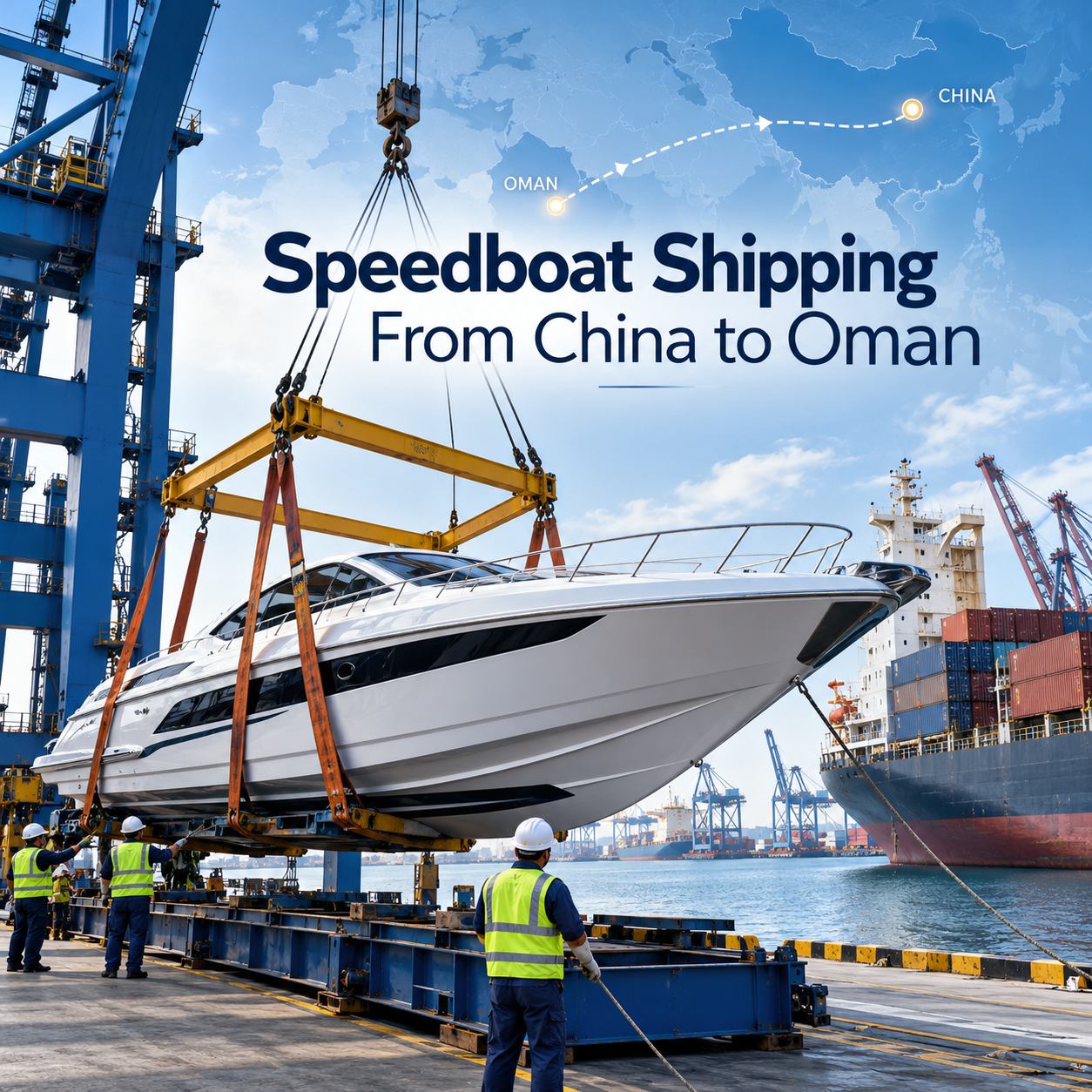
If you are planning to ship a yacht or speedboat between China and Oman, contact our team today for a customized transport quotation and real-time sailing schedule.
Get a Customized Shipping Quote
Cost of Shipping a Yacht From China to Oman
The cost of transporting a yacht or speedboat from China to Oman depends on multiple variables that go well beyond a simple per-container rate. Because yachts are oversized and often non-stackable cargo, the shipping method selected-Flat Rack, Open Top, Breakbulk, or Container Shipping-directly determines the base freight structure and the supplementary charges that follow.
The table below provides estimated freight cost ranges for different transport methods on the China-to-Oman route. These figures reflect typical market conditions for vessel shipments of varying sizes and are intended for preliminary budgeting only.
Estimated Yacht Shipping Costs From China to Oman by Transport Method
| Transport Method | Suitable Vessel Size | Estimated Cost Range (USD) | Key Cost Drivers |
|---|---|---|---|
| Flat Rack (40FR) | Up to approx. 12m L × 4m W × 4m H | 2,500–4,500 | Over-dimensional surcharges, lashing, cradle |
| Open Top (40OT) | Up to approx. 12m L × 2.3m W × 4m H | 2,200–4,000 | Height over-limit, tarpaulin coverage, loading method |
| Breakbulk | Vessels over 12m or exceeding container limits | 3,500–8,000+ | Deck space, port handling, heavy-lift crane, stevedoring |
| Container Shipping (40HC) | Small boats, dinghies, dismantled vessels under 6m | 1,800–3,200 | Standard FCL rate, stuffing, dismantling/reassembly |
Several factors influence the final shipping cost beyond the base ocean freight.
Vessel dimensions (Length, Width, Height) are the primary cost determinant. A speedboat measuring 8 meters in length may fit on a single 40-foot Flat Rack, while a 15-meter yacht will likely require Breakbulk shipping or a multi-rack configuration. Any dimension exceeding standard container limits triggers over-dimensional surcharges that can add 30 to 60 percent to the base rate.
Weight affects crane capacity requirements, road transport permits for inland moves, and port handling fees. Heavier vessels may require specialized heavy-lift equipment at both origin and destination ports, increasing stevedoring costs.
Transport method selection is driven by the vessel's physical characteristics. Flat Rack shipping is the most common choice for mid-sized speedboats and yachts up to approximately 12 meters, as it allows top-loading with a custom cradle. Open Top containers suit vessels that are tall but narrow. Breakbulk is necessary for large yachts that exceed all container dimensions. Container Shipping is viable only for small boats or vessels that can be partially dismantled.
Lifting and loading requirements include crane rental, spreader bars, soft slings, and specialized lifting frames designed to distribute pressure evenly across the hull. Improper lifting can cause structural deformation, so each lift plan must be engineered to the vessel's specific hull geometry.
Support and reinforcement costs cover custom-built cradles or steel frames that cradle the hull, shock-absorbing padding, and the lashing materials-typically high-tensile steel wire rope, chains, and tensioners-that secure the vessel against longitudinal and lateral forces during ocean transit.
Origin and destination ports also factor into pricing. Shipping from Ningbo or Shanghai to Sohar may carry different base rates and transit routes compared to shipments from Tianjin to Salalah or Duqm. Port congestion, canal transit fees, and seasonal peak surcharges imposed by carriers further affect the total cost.
The basic calculation method for yacht shipping cost can be summarized as:
Total Cost = Base Ocean Freight + Over-Dimensional Surcharges + Cradle and Lashing + Port Handling (Origin and Destination) + Customs and Documentation + Insurance + Inland Transport (if door-to-door).
Each component is quoted based on the vessel's actual specifications and the selected service scope.
All freight rates and cost estimates provided above are for reference only. Actual pricing is subject to vessel specifications, carrier availability, market conditions, and real-time sailing schedules.
Please contact us for a detailed quotation tailored to your shipment.
Get Latest Ocean Freight Rates Now
Transit Time for Shipping a Yacht From China to Oman
Transit time for yacht and speedboat shipments from China to Oman varies based on the origin port, destination port, shipping method, and whether the route involves direct sailing or transshipment.
Most container and Flat Rack shipments from China to Oman involve transshipment through regional hubs such as Jebel Ali (UAE) or other Gulf ports, as direct services to Omani ports are limited.
The table below summarizes estimated transit times from major Chinese departure ports to Oman's principal ports.
Estimated Transit Times From Major Chinese Ports to Oman
| Origin Port | Destination Port | Estimated Transit Time | Route Characteristics |
|---|---|---|---|
| Shanghai | Sohar | 20–28 days | Transshipment via UAE or regional hub |
| Ningbo | Sohar | 20–28 days | Transshipment, weekly sailings available |
| Shenzhen | Salalah | 18–25 days | Direct or single transshipment; Salalah is a major transshipment hub |
| Guangzhou | Sohar | 22–30 days | Transshipment via Gulf ports |
| Tianjin | Duqm | 25–32 days | Longer route, transshipment required |
| Qingdao | Salalah | 22–30 days | Transshipment via Middle East hubs |
Several factors influence the actual transit time.
Sailing schedules vary by carrier and route. Major carriers including COSCO, Maersk, MSC, Hapag-Lloyd, and Evergreen operate services connecting China to the Gulf region, but not all sail weekly to Omani ports. Vessel space for oversized cargo such as Flat Rack and Breakbulk shipments is more limited than standard container space, which can extend the waiting time for the next suitable sailing.
Routing and transshipment add time. Most shipments to Sohar transit through Jebel Ali or other UAE ports before feeder vessels relay cargo to Oman. Salalah, as one of the region's largest transshipment hubs, may offer more direct connections for certain routes. Each transshipment adds 3 to 7 days for port handling and feeder connection.
Port operations at both origin and destination affect the timeline. Oversized cargo such as yachts requires special handling-dedicated crane slots, stevedore teams experienced in vessel lifting, and sometimes specific weather windows for safe lifting. These requirements can add 1 to 3 days at each port.
Lifting and loading of yachts is weather-dependent and requires careful coordination. High winds or heavy seas can delay crane operations, particularly for Breakbulk shipments loaded on deck.
Customs clearance at the destination port typically takes 1 to 3 working days for properly documented shipments, but can extend if additional inspections, permit verifications, or duty assessments are required.
All transit times provided above are for reference only. Actual schedules are subject to carrier routing, vessel availability, port conditions, and customs processing. Contact us for real-time sailing schedules and a transit plan tailored to your shipment.
Yacht Shipping Services From China to Oman
We provide comprehensive yacht and vessel logistics services designed to handle the full spectrum of high-value watercraft shipments between China and Oman. Our service capabilities cover every stage from domestic pickup through to destination port handover, with specialized attention to the unique requirements of oversized, fragile, and high-value marine cargo.
Vessel types we transport include yachts, speedboats, small boats, patrol boats, rigid inflatable boats (RIBs), and other high-value vessels. Whether shipping a recreational yacht for private use in Muscat, a patrol boat for government or security clients, or a commercial vessel for tourism operators in Salalah, we tailor the transport method and protection plan to each vessel's characteristics.
Transport Methods We Offer
Flat Rack Shipping
The most widely used method for mid-sized vessels, where the yacht is secured on a custom cradle atop a 40-foot flat rack container, allowing top-loading by crane and open-air stowage on deck.
Open Top Shipping
Suitable for vessels that are tall but fit within standard container width, loaded from above with tarpaulin or soft-top coverage.
Breakbulk Shipping
Necessary for large yachts exceeding container dimensions, where the vessel is loaded directly onto the ship's deck or into the hold as non-containerized cargo, secured with heavy-duty lashing systems.
Container Shipping
Applicable for small boats, dinghies, or vessels that can be partially dismantled to fit within standard 40-foot high-cube containers, offering the most economical option when feasible.
Full-Service Logistics Capabilities
Domestic pickup and inland transport from shipyards, marinas, or warehouses to the departure port, using low-bed trailers and specialized vehicle configurations for oversized loads.
Warehousing and pre-shipment storage at port-side facilities, providing a secure staging area for cradle fabrication, hull inspection, and loading preparation.
Loading and lifting supervision, with our team coordinating crane operations, spreader bar setup, soft sling placement, and lift sequencing to ensure the hull is never subjected to point loads or uneven pressure.
Hull protection, including custom-fitted padding, foam cradle liners, shrink wrapping, and protective film application to guard against salt spray, UV exposure, and surface abrasion during transit.
Professional support and cradle design, with engineered steel or timber cradles built to match the vessel's hull shape, distributing weight evenly and preventing stress concentration at the keel or chines.
Lashing and securing, using certified high-tensile wire rope, turnbuckles, chains, and tensioners applied in cross-pattern and symmetric configurations to prevent longitudinal sliding, lateral shifting, or vertical lift during ocean transit.
Anti-scratch, anti-collision, and anti-shifting measures, including fender pads between the vessel and cradle, buffer materials at contact points, and redundant securing points verified by load calculation.
Export customs declaration, with our in-house customs team handling all documentation, HS code classification, vessel value declaration, and coordination with China Customs for export clearance.
International shipment tracking, providing customers with status updates at key milestones-vessel departure, transshipment ports, estimated arrival, and destination port readiness.
Destination port coordination, working with our agent network in Oman to arrange import customs clearance, duty payment, unloading supervision, and inland delivery to the final marina or facility.
Every vessel is different. A 9-meter speedboat shipping on a Flat Rack requires a fundamentally different loading plan than a 20-meter yacht moving via Breakbulk.
Our approach begins with a detailed assessment of each vessel's length, beam, draft, height, weight, hull material, engine configuration, and any protruding structures such as flybridges, outriggers, or radar arches. From this assessment, we develop a personalized logistics plan that specifies the transport method, cradle design, lifting plan, lashing scheme, and protection measures appropriate to that specific vessel.
Yacht Shipping Process From China to Oman
Our yacht shipping process follows a structured sequence designed to ensure that every critical decision is made before cargo moves, and that each stage is executed with the precision that high-value vessel transport demands.
Step 1: Inquiry and Transport Requirement Submission
The process begins when you provide us with your shipping requirements-origin and destination, desired timeline, and basic vessel information.
You can reach us at +86 195 5809 8285 or via email at gm@wilson-cargo.com.
Step 2: Vessel Information Confirmation
We work with you to collect detailed specifications of the vessel to be shipped. The following information is essential for us to design an accurate transport plan:
| Information Category | Details Required |
|---|---|
| Vessel brand and model | Manufacturer, model name/number, year of build |
| Dimensions | Length overall (LOA), beam (width), height from keel to highest point |
| Weight | Total displacement weight, including engines and permanent fixtures |
| Hull photos | Clear images from all sides-port, starboard, bow, stern, top, and bottom if accessible |
| Hull material | Fiberglass (FRP), aluminum, steel, wood, or composite |
| Engine information | Engine type, number, fuel type, and whether engines remain installed or are shipped separately |
| Declared value | Commercial invoice value or insured value for customs and insurance purposes |
| Pickup address | Shipyard, marina, warehouse, or current vessel location |
| Ownership and trade documents | Bill of sale, certificate of origin, registration documents, export/import licenses |
Step 3: Transport Feasibility Assessment
Our technical team reviews the vessel specifications against transport method constraints, port infrastructure capabilities at both origin and destination, road transport clearances for inland moves, and any regulatory requirements specific to Oman or China.
This assessment identifies potential challenges-such as height restrictions on bridge routes, crane capacity limits at destination ports, or customs documentation gaps-before they become problems.
Step 4: Transport Plan Design
Based on the feasibility assessment, we develop a detailed transport plan specifying the recommended shipping method, container or deck space requirements, cradle or support frame design, lifting plan with equipment specifications, lashing and securing scheme, hull protection measures, port handling procedures, and the documentation timeline.
Step 5: Quotation and Booking
We provide a comprehensive quotation covering all cost components-ocean freight, surcharges, cradle and lashing, port handling, customs, insurance, and inland transport if required.
Upon your confirmation, we proceed with carrier booking, securing vessel space and confirming the sailing schedule.
Step 6: Domestic Pickup
We arrange inland transport from the vessel's current location to the departure port, using specialized low-bed trailers equipped for oversized marine cargo.
For vessels at inland shipyards, this may involve multi-day road transport with route surveys and permit applications.
Step 7: Loading Preparation
At the port, our team oversees cradle fabrication or installation, hull protection application, and pre-loading inspection. Photographs and condition reports are documented at this stage to establish the vessel's pre-shipment state.
Step 8: Lifting and Securing
The vessel is lifted onto the Flat Rack, into the Open Top container, or onto the Breakbulk vessel deck using crane equipment with appropriate spreader bars and soft slings.
Once positioned on the cradle, the lashing team applies the securing system-wire rope, turnbuckles, chains, and tensioners-following the engineered lashing plan. A final securing inspection is conducted and signed off before the cargo is released for loading aboard the vessel.
Step 9: Export Customs Declaration
Our customs team files the export declaration with China Customs, including vessel classification, value declaration, and all supporting documents.
Export clearance is typically completed within 1 to 2 working days for properly documented shipments.
Step 10: International Ocean Transport
The vessel departs on the scheduled sailing, with tracking updates provided at key milestones-departure, transshipment ports if any, and estimated time of arrival at the destination port.
Step 11: Destination Port Coordination
Upon arrival at Sohar, Salalah, or Duqm, our destination agent handles import customs clearance, duty and VAT payment arrangements, unloading supervision, and coordination of inland delivery to the final marina or facility.
For door-to-door shipments, we manage the entire last-mile delivery including any special permits required for oversized road transport in Oman.
Why Choose Wilson for Your Yacht Shipping
Choosing the right freight forwarder for yacht and high-value vessel transport is a decision that directly affects the safety of your asset and the reliability of your delivery timeline. The following advantages define our position as a trusted partner for China-Oman vessel logistics.
International Freight Forwarding Experience
Founded in 2011 and headquartered in Ningbo, Wilson has grown into a comprehensive supply chain company with over a decade of operational experience.
Our team of 26 industry professionals processes approximately 56,000 TEU annually, serving clients across chemical, automotive, construction equipment, energy, food, and marine sectors. This breadth of experience informs our approach to complex, high-value shipments.
Specialized Yacht and High-Value Vessel Transport Capability
We have actual project experience in vessel logistics, including a recent yacht and speedboat shipment to Malaysia that required custom cradle design, Flat Rack loading, and full hull protection.
This hands-on experience means we understand the practical challenges of lifting, securing, and protecting marine vessels-not just the theoretical framework.
Complex Cargo Transport Solution Design
Our core competency extends beyond standard freight to include oversized and out-of-gauge (OOG) cargo, project logistics, heavy equipment, and special container operations.
We routinely design transport solutions for excavators, drilling rigs, buses, and industrial equipment weighing tens of tons-capabilities directly transferable to vessel transport.
Professional Lifting and Loading Planning
Every vessel shipment includes an engineered lift plan that accounts for hull geometry, weight distribution, crane capacity, sling configuration, and weather conditions.
We coordinate with port stevedores and crane operators to ensure that each lift is executed safely and efficiently.
Hull Protection and Lashing Reinforcement
We apply a multi-layer protection system-foam cradle liners, padding at all contact points, shrink wrapping or protective film, and certified lashing materials in engineered patterns-to prevent scratching, impact damage, and shifting during transit.
Our lashing plans are designed to withstand the forces of ocean transport including roll, pitch, and heavy weather.
Global Carrier Partnerships
We maintain long-term working relationships with major shipping lines including COSCO, Hapag-Lloyd, Maersk, MSC, and Evergreen.
These partnerships give us access to stable vessel space, flexible sailing schedules, and competitive rates-even for oversized cargo bookings that require special equipment and deck space allocation.
Professional Logistics Team
Our team includes specialists in customs declaration, dangerous goods handling, special container operations, and project cargo management.
We hold FIATA, IATA, Customs AEO, ISO, and NVOCC certifications, supporting compliant execution of international transport operations.
Digital Shipment Tracking
We provide milestone-based tracking updates throughout the transport process, from domestic pickup through port departure, transshipment, arrival, and destination delivery.
Customers receive timely information on vessel status, estimated arrival, and any schedule changes that may affect their operations.
One-Stop Supply Chain Service
Beyond ocean transport, we offer warehousing, distribution, DDP delivery, customs brokerage, insurance arrangement, and inland transport at both origin and destination.
For yacht shipments, this means a single point of contact managing the entire door-to-door process-from shipyard pickup in China to marina delivery in Oman.
For a precise quote tailored to your specific cargo, origin, and delivery terms, reach out to our team for a detailed breakdown.
Get Latest Ocean Freight Rates Now
China-Oman Yacht and Boat Trade Overview
China and Oman share a maritime trading history stretching back over 1,200 years, from the voyage of Omani navigator Abu Obaida from Sohar to Guangzhou in the 8th century to Admiral Zheng He's four visits to Oman in the 15th century.
In the modern era, this relationship has deepened significantly. China is Oman's largest trading partner, and Oman is China's fourth-largest trading partner among Arab nations.
Bilateral trade reached approximately USD 40.5 billion in 2022, USD 36.7 billion in 2024, and USD 32.9 billion in 2025. In the first quarter of 2026, bilateral trade totaled USD 8.31 billion, with Chinese exports reaching USD 1.76 billion.
China's exports to Oman are primarily mechanical and electrical products, steel and steel products, high-tech products, and textiles-categories that encompass marine engines, vessel components, and boat-building materials. While comprehensive bilateral trade statistics specifically isolating yacht and pleasure boat categories are not publicly available at the country-pair level, broader trade patterns and industry data provide useful context.
China's yacht and boat manufacturing sector has been growing steadily. In 2024, China's yacht manufacturing output value reached approximately RMB 12.8 billion, with export value of approximately USD 600 million.
While China's global market share in yacht manufacturing remains under 5 percent-dominated by Italy, the Netherlands, and Germany in the premium segment-Chinese shipyards have established competitive positions in small and mid-sized speedboats, patrol boats, rigid inflatable boats, and commercial vessels.
The Middle East, including Oman, represents a growing destination for these products, driven by tourism development, maritime security needs, and coastal economic expansion.
Oman's maritime sector has seen significant infrastructure investment. Oman's ports handled 5.18 million TEU in 2025, a 21.6 percent increase from 4.26 million TEU in 2024.
Salalah Port, ranked second globally in the World Bank's Container Port Performance Index, processed 4.3 million TEU and 26.4 million tons of general cargo in 2025.
Sohar Port continues to expand as a major industrial and logistics hub on the Gulf of Oman. Duqm Port, serving the Special Economic Zone at Duqm (SEZAD)-the largest economic zone in the Middle East and North Africa at 1,777 square kilometers-is attracting increasing Chinese investment in industrial, energy, and logistics projects.
Chinese exports to Oman in the vessel and marine equipment category include speedboats, small pleasure craft, patrol boats, fishing vessels, marine engines, outboard motors, and boat-building materials such as fiberglass resin and marine-grade aluminum.
Chinese-made speedboats and small craft are competitive in the Omani market due to favorable pricing and improving build quality, particularly for commercial tourism operators and government procurement.
Omani exports to China in this category are limited but include pre-owned vessels, marine equipment, and fishing industry products. Oman's wild fishery products have been approved for export to China under a bilateral agreement registered with China Customs, and the broader fisheries and maritime equipment trade continues to develop.
Oman's tourism strategy under its Vision 2040 economic diversification plan emphasizes coastal and marine tourism development, which is expected to drive demand for pleasure craft, speedboats, and marina equipment.
The cruise sector alone brought approximately 416,000 tourists to Omani ports in 2024 across 114 cruise vessel calls. This tourism growth, combined with Oman's strategic location outside the Strait of Hormuz, positions the country as an emerging market for yacht and boat imports-including vessels sourced from Chinese shipyards.
The trade flow in both directions-Chinese-built vessels exported to Oman, and occasionally pre-owned or specialized vessels imported from Oman to China-creates ongoing demand for professional yacht transport services on this route.
Our China-Oman yacht shipping service is designed to serve both directions of this trade, with transport methods, documentation, and compliance procedures adapted to each flow.
Regulations and Policies for Yacht Import and Export Between China and Oman
Shipping a yacht or speedboat between China and Oman involves compliance with customs regulations, maritime administration requirements, and tax obligations in both countries.
The following information is based on publicly available official sources and is provided for general guidance. Specific requirements may vary depending on the vessel's type, intended use, ownership structure, and whether the shipment is a permanent import, temporary import, or export.
We strongly recommend verifying current requirements with the relevant authorities before shipment.
Oman Import Regulations
Customs Classification and Duty
Oman applies the GCC Common External Tariff. Under this framework, most imported goods are subject to a standard customs duty of 5 percent ad valorem, calculated on the CIF value (cost, insurance, and freight).
Certain product categories may carry different rates, generally not exceeding 10 percent for most non-GCC, non-U.S. origin goods.
Yachts and pleasure boats are classified under Harmonized System Chapter 89 (Ships, boats, and floating structures), with specific subheadings depending on vessel type and propulsion.
The exact HS code and applicable rate should be confirmed with Oman Customs (Royal Oman Police, Directorate General of Customs) at the time of import.
Value Added Tax (VAT)
Oman introduced VAT at a standard rate of 5 percent effective April 16, 2021, applicable to most imported goods.
Import VAT is calculated on the customs value, typically CIF, plus customs duty and any other charges levied at import.
The VAT registration threshold is OMR 38,500 for mandatory registration and OMR 19,250 for voluntary registration. Importers should confirm whether their shipment triggers VAT registration obligations.
Import Permits and Restrictions
Oman maintains restrictions on certain imported goods, including military equipment, animal products, and hazardous materials.
Yachts and pleasure boats for civilian use are generally not subject to import prohibition, but commercial vessels, patrol boats, or vessels with government or security end-use may require specific permits from the relevant Omani authorities.
Importers should verify permit requirements based on the vessel's intended use.
Vessel Registration
Yachts intended for use in Omani waters must be registered with the appropriate maritime authority.
Oman's maritime administration, operating under the Ministry of Transport, Communications and Information Technology, oversees vessel registration and safety compliance.
Registered vessels must meet applicable safety, equipment, and environmental standards. Foreign-flagged vessels may operate in Omani waters under certain conditions but should confirm requirements with the maritime authority.
Technical and Safety Standards
Vessels imported into Oman should comply with applicable safety standards, which may include life-saving equipment, fire protection systems, navigation lights, and communication equipment requirements.
Engine emissions and environmental compliance, including anti-fouling system requirements under international conventions to which Oman is a party, may also apply.
Temporary Import
Oman may permit temporary importation of yachts for tourism, exhibitions, or racing events under customs bond or ATA Carnet arrangements, allowing duty-free entry for a specified period with re-export required.
This is distinct from permanent import, where full duties and taxes apply. Importers should confirm temporary import procedures and bond requirements with Oman Customs.
Destination Port Clearance
At Sohar, Salalah, or Duqm, the destination agent handles import customs declaration, duty and VAT payment, and coordination with port authorities for vessel unloading.
Proper documentation-including commercial invoice, packing list, bill of lading, certificate of origin, and any required permits-must be submitted for clearance.
China Export and Import Regulations
Export Customs Declaration
Exporting a vessel from China requires filing an export customs declaration with China Customs, including the vessel's HS classification, declared value, and supporting documents such as the commercial invoice, sales contract, and vessel ownership proof.
Our in-house customs team handles this process as part of our service.
Yacht Safety Management
China's Maritime Safety Administration (MSA) regulates yacht safety under the Yacht Safety Management Regulations, as amended.
Vessels exported from China must comply with applicable inspection and certification requirements. For newly built vessels, shipyard inspection certificates and construction compliance documents should accompany the shipment.
Import to China
For vessels imported from Oman to China, China Customs applies import duties, VAT, and-where applicable-consumption tax based on the vessel's HS classification.
Under China's tariff structure, yacht imports have historically been subject to a composite tax including customs duty, VAT, and consumption tax, resulting in a significant total tax burden.
However, the Hainan Free Trade Port offers zero-tariff treatment for yachts imported by qualified enterprises engaged in transportation or tourism, which has enabled duty-free yacht imports through Hainan.
Importers should confirm the applicable tax treatment based on the import destination, vessel use, and entity qualifications.
Ownership and Registration
Vessels imported into China must undergo ownership registration and vessel nationality certification with the MSA or its local branches.
Technical inspection by an authorized classification society, such as CCS, may be required to obtain safety certificates.
The import process for used yachts may also require an automatic import license for used mechanical and electrical products.
Engine and Environmental Requirements
Engines installed on imported or exported vessels should comply with applicable emission standards.
Anti-fouling systems on vessel hulls must meet requirements under the IMO Anti-Fouling Systems Convention, to which both China and Oman are parties.
Regulatory requirements are subject to change. The information above is based on publicly available official sources as of the date of writing and does not constitute legal or tax advice.
We recommend confirming current requirements with Oman Customs, Oman's maritime authority, China Customs, and the China MSA before finalizing any shipment. Our team can assist in coordinating with the relevant authorities and preparing compliant documentation.
FAQ
Q: 1. How much does it cost to ship a yacht from China to Oman?
A: The cost depends on the vessel's dimensions, weight, transport method, and service scope. For a mid-sized speedboat, approximately 8–12 meters, shipped on a 40-foot Flat Rack, estimated ocean freight ranges from USD 2,500 to USD 4,500. Larger yachts requiring Breakbulk shipping may cost USD 3,500 to USD 8,000 or more. The total cost includes base freight, over-dimensional surcharges, cradle and lashing, port handling, customs, insurance, and inland transport if door-to-door service is required. All estimates are for reference only-contact us for a quotation based on your vessel's specifications.
Q: 2. How long does yacht shipping from China to Oman take?
A: Estimated transit time ranges from 18 to 30 days depending on the origin port, destination port, and whether transshipment is required. Shipments to Salalah may be faster due to its role as a major transshipment hub, while shipments to Duqm typically take longer. Transshipment through UAE ports adds 3 to 7 days. Port handling for oversized cargo and customs clearance add additional time at both ends. Actual schedules vary by carrier and sailing date.
Q: 3. What is the difference between Flat Rack and Breakbulk shipping for yachts?
A: Flat Rack shipping places the yacht on a 40-foot flat rack container-a steel platform with end walls that can be folded-loaded by crane from above and stowed on deck. It is suitable for vessels up to approximately 12 meters in length that fit within flat rack dimensional limits. Breakbulk shipping loads the vessel directly onto the ship's deck or into the hold as non-containerized cargo, without any container structure. It is used for larger yachts that exceed flat rack dimensions or require special deck positioning. Breakbulk generally costs more but accommodates larger vessels.
Q: 4. How are oversized yachts transported if they exceed container limits?
A: Yachts that exceed the dimensions of Flat Rack or Open Top containers are transported via Breakbulk shipping. The vessel is loaded directly onto the vessel's deck using heavy-lift cranes, secured on a custom-built steel cradle, and lashed with heavy-duty wire rope, chains, and tensioners. For extremely large yachts, transport may also involve semi-submersible vessels or float-on/float-off methods. We assess each vessel's dimensions and recommend the appropriate method.
Q: 5. How is the yacht protected during lifting and transport?
A: We apply a multi-layer protection system: custom-fitted foam cradle liners matching the hull shape, padding at all contact points between the vessel and cradle, shrink wrapping or protective film for surface protection, and fender pads to prevent collision damage. Lifting uses soft slings with spreader bars to distribute load evenly. During ocean transit, the lashing system prevents shifting, and additional weather protection-tarpaulin or shrink wrap-guards against salt spray and UV exposure.
Q: 6. What documents do I need to provide for yacht shipping?
A: You will need to provide:
- Vessel brand and model
- Dimensions: length, beam, and height
- Weight
- Hull photos
- Hull material
- Engine information
- Declared value
- Pickup address
- Ownership and trade documents, including bill of sale, certificate of origin, and registration
For customs purposes, a commercial invoice and packing list are required. Additional permits may be needed depending on the vessel type, end-use, and import country requirements. Our team will provide a complete document checklist after the initial assessment.
Q: 7. Is yacht insurance available for the shipment?
A: Yes. We can arrange marine cargo insurance covering the vessel during inland transport, port handling, and ocean transit. Insurance is typically based on the vessel's declared value and covers all-risk perils subject to policy terms. We recommend insuring any high-value vessel shipment. Our team can coordinate insurance arrangements as part of the service.
Q: 8. What import duties and taxes apply when importing a yacht into Oman?
A: Under the GCC Common External Tariff, Oman applies a standard customs duty of 5 percent on the CIF value for most imported goods. VAT at 5 percent is also applicable on imported goods, calculated on the customs value plus duty and other charges. Specific rates for yachts and pleasure boats depend on the HS classification and should be confirmed with Oman Customs. Temporary import under bond may be available for vessels intended for re-export.
Q: 9. Do you offer door-to-door yacht shipping service?
A: Yes. We provide door-to-door service that includes domestic pickup from the shipyard or marina in China, inland transport to the departure port, ocean shipping, destination port customs clearance and unloading in Oman, and inland delivery to the final marina or facility. Door-to-door service requires coordination of road transport permits for oversized loads in both countries, which our team manages.
Q: 10. Can I ship a used yacht from Oman back to China?
A: Yes. We handle both export shipments from China to Oman and import shipments from Oman to China. Importing a used yacht into China involves additional requirements including customs duty, VAT, and potentially consumption tax based on the HS classification, as well as ownership transfer and vessel registration with the MSA. Used mechanical and electrical products may require an automatic import license. The Hainan Free Trade Port may offer zero-tariff treatment for qualifying entities. Contact us to discuss the specific requirements for your import shipment.
Hot Tags: Speedboat Shipping From China To Oman