Shipping goods from China to Chile requires careful coordination across a long-distance Pacific trade route. Importers must consider the departure port, Chilean destination port, container type, sailing schedule, customs requirements, import taxes and final delivery arrangements before making a booking.
Sea freight remains one of the most practical transportation methods for commercial cargo such as machinery, electronics, vehicle parts, furniture, construction materials, textiles, chemicals and wholesale consumer goods. Importers can choose Full Container Load shipping for larger shipments, Less than Container Load shipping for smaller volumes, or special containers for oversized, temperature-controlled or non-standard cargo.
For standard container shipments, port-to-port sea freight from China to Chile typically takes approximately 30 to 45 days. Reference ocean freight may range from approximately USD 3,800 to USD 5,300 for a 20GP container and USD 4,500 to USD 6,500 for a 40GP container, depending on the departure port, destination port, carrier, cargo type, season and services included.
Zhejiang Wilson Supply Chain Management Co., Ltd. provides FCL, LCL, special-container, chemical, dangerous-goods and oversized-cargo shipping from major Chinese ports to San Antonio, Valparaíso, Iquique and other destinations in Chile.
Founded in 2011 and headquartered in Ningbo, Wilson also has operations in Shanghai, Shenzhen and Hong Kong. We coordinate factory pickup, supplier consolidation, export customs declaration, ocean booking, documentation, cargo tracking, destination clearance support and inland delivery.
To receive an accurate quotation, please provide:
- Product name and HS code, when available
- Number and type of packages
- Total gross weight and cargo volume
- Package dimensions
- Pickup address in China
- Destination port or final delivery address in Chile
- Expected shipping date
- Preferred Incoterm
- FCL or LCL requirement
- Details of any dangerous, chemical, oversized or temperature-sensitive cargo
Contact Wilson for a customized China-to-Chile shipping plan, estimated transit time and freight quotation.
Get Latest Ocean Freight Rates Now
Sea Freight Cost from China to Chile
The cost of shipping from China to Chile depends on more than the basic ocean freight rate. The final amount may include Chinese inland transportation, export handling, customs declaration, carrier surcharges, destination terminal charges, Chilean customs clearance, taxes and final delivery.
The following figures are general port-to-port market estimates. They are not fixed quotations.
Estimated FCL and LCL Shipping Rates
| Shipping option | Estimated ocean freight | Suitable cargo |
|---|---|---|
| LCL sea freight | USD 100–220 per CBM | Small shipments that do not fill a complete container |
| 20GP FCL | USD 3,800–5,300 | Dense cargo, machinery and smaller full-container shipments |
| 40GP FCL | USD 4,500–6,500 | High-volume commercial cargo |
| 40HQ FCL | USD 4,800–6,800 | Lightweight, bulky or high-volume cargo |
| Reefer container | Custom quotation | Temperature-controlled goods |
| Open-top container | Custom quotation | Over-height cargo and machinery |
| Flat-rack container | Custom quotation | Oversized, heavy or irregular cargo |
Actual rates may fall outside these ranges when carrier capacity, seasonal demand, equipment availability or port conditions change.
Dangerous goods, chemicals, batteries, refrigerated products, vehicles, oversized machinery and high-value equipment must be assessed separately.
Sea Freight Transit Time from China to Chile
Standard port-to-port sea freight from China to Chile generally takes approximately 30 to 45 days.
The final schedule depends on the carrier, departure port, Chilean destination port, intermediate port calls, transshipment connections and port operating conditions.
Estimated Port-to-Port Transit Times
| Route or service | Estimated transit time |
|---|---|
| Shanghai to San Antonio | 32–40 days |
| Ningbo to San Antonio | 32–40 days |
| Shenzhen or Guangzhou to San Antonio | 35–42 days |
| Shanghai or Ningbo to Valparaíso | 32–42 days |
| Shenzhen or Guangzhou to Valparaíso | 35–45 days |
| China to Iquique | 35–45 days |
| Faster FCL service | 30–38 days |
| Standard FCL service | 35–45 days |
| Transshipment FCL service | 38–48 days |
| LCL sea freight | 38–50 days |
| Door-to-door sea freight | 42–58 days |
These periods are estimates rather than guaranteed delivery times.
Direct and Transshipment Services
A direct service may mean that the container remains on the same vessel, although the vessel may still call at intermediate ports.
A transshipment service means that the container is transferred to another vessel at an intermediate port.
Direct or single-carrier services can provide:
- Shorter transit times
- Fewer container transfers
- More predictable scheduling
- Lower risk of missing a connecting vessel
Transshipment services may provide:
- More departure options
- Access from additional Chinese ports
- Competitive freight rates
- Greater route flexibility
The best option depends on the shipment deadline, available space, price and carrier schedule.
Port-to-Port vs. Door-to-Door Transit Time
Port-to-port transit time normally refers to the period between vessel departure from China and vessel arrival in Chile.
It does not necessarily include:
- Factory pickup
- Warehouse receiving
- Container loading
- Export customs clearance
- Waiting for vessel departure
- Chilean customs clearance
- Port release
- Inland delivery
Door-to-door lead time includes these additional stages and is therefore longer.
Factors That May Cause Delays
Vessel Schedule Changes
Carriers may adjust departure times, port rotations or vessel assignments.
Port Congestion
Congestion at the Chinese loading port, transshipment port or Chilean destination port can delay loading, connection or discharge.
Weather and Sea Conditions
Storms, strong winds and difficult sea conditions may affect vessel schedules and port operations.
Missed Transshipment Connections
If the first vessel arrives late, the container may miss its scheduled connecting vessel.
Peak Shipping Periods
Limited vessel space and equipment shortages may increase booking lead time.
Customs Documentation Problems
Incorrect descriptions, inconsistent quantities, inaccurate values or missing certificates may delay cargo release.
Customs Inspection
Physical inspection, document verification or product-specific checks may add time to the clearance process.
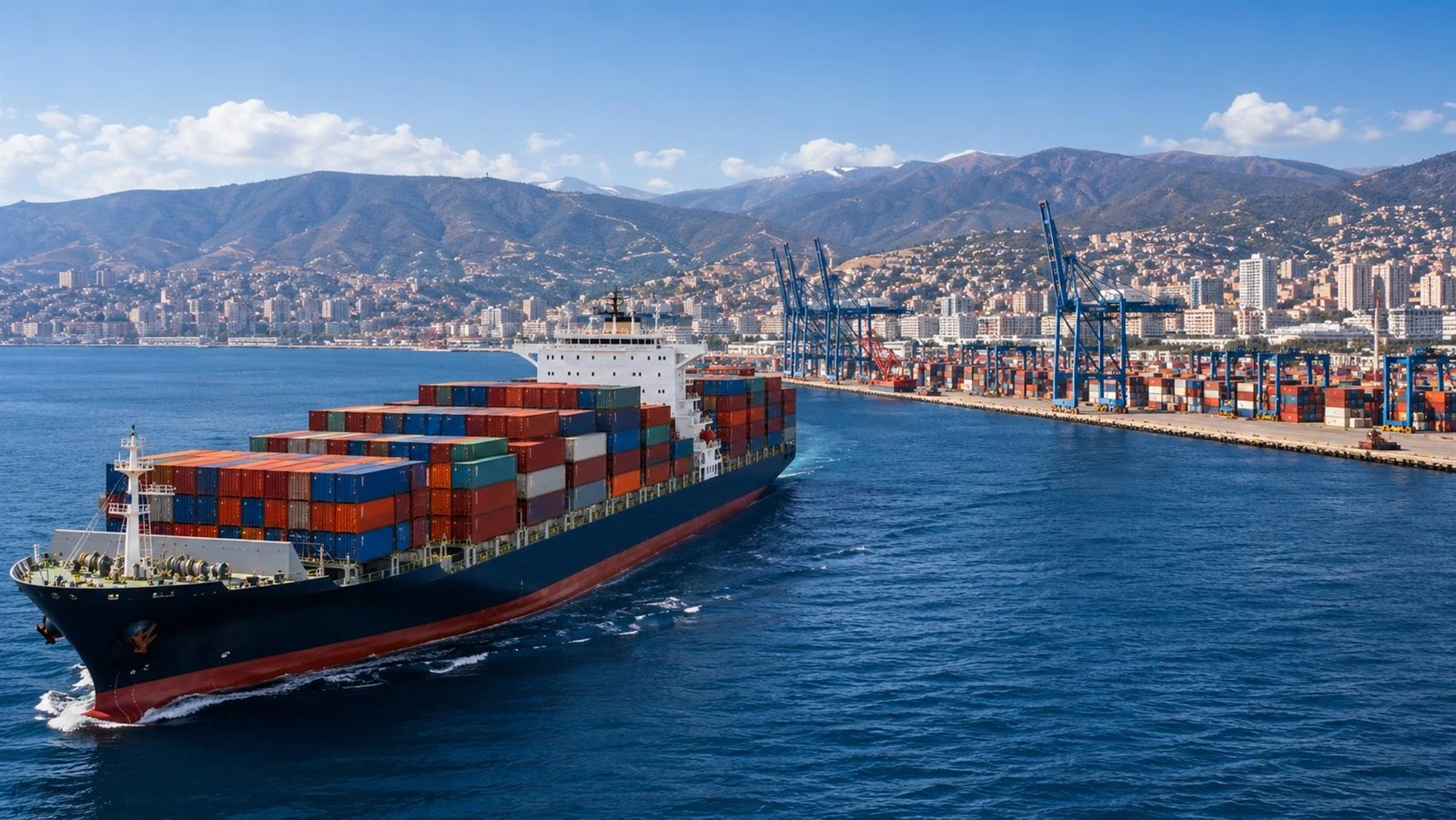
Major Ports for Shipping from China to Chile
Main Chinese Departure Ports
Ningbo-Zhoushan
Ningbo is Wilson's headquarters and a major departure point for cargo from Zhejiang and nearby manufacturing regions.
The port is suitable for machinery, chemicals, household products, industrial materials, auto parts and general container cargo.
Shanghai
Shanghai is frequently used for cargo originating in eastern China and the Yangtze River Delta.
It offers a wide range of carrier services, container equipment and international connections.
Shenzhen
Yantian and Shekou serve the Pearl River Delta and are commonly used for electronics, consumer goods, appliances and high-tech products.
Guangzhou
Nansha is an important option for manufacturers in Guangzhou, Foshan, Dongguan and surrounding areas.
Qingdao
Qingdao is suitable for cargo originating in Shandong and other northern Chinese manufacturing regions.
Main Chilean Destination Ports
San Antonio
San Antonio is one of Chile's most important container gateways and is commonly used for cargo serving Santiago and central Chile.
It is suitable for:
- Consumer goods
- Electronics
- Machinery
- Vehicle parts
- Industrial products
- General commercial cargo
Its location makes it a practical option for many shipments with final delivery in the Santiago metropolitan area.
Valparaíso
Valparaíso is another major container gateway serving central Chile.
It may be selected based on:
- Carrier schedule
- Freight rate
- Terminal arrangements
- Customs planning
- Final delivery location
San Antonio and Valparaíso should be compared using total logistics cost rather than ocean freight alone.
Iquique
Iquique is located in northern Chile and may be suitable for cargo destined for the northern regions.
Common cargo may include:
- Mining equipment
- Heavy machinery
- Industrial supplies
- Vehicle parts
- Regional commercial goods
Selecting Iquique can reduce inland transportation distance for northern destinations, depending on the available sailing service.
Our Sea Freight Services from China to Chile
Wilson supports both ordinary commercial cargo and shipments requiring special equipment, documentation or handling.
FCL Shipping
Full Container Load shipping is suitable when the customer uses an entire container.
Available options include:
- 20GP
- 40GP
- 40HQ
- Open-top container
- Flat-rack container
- Refrigerated container
- Other special equipment subject to availability
FCL is often selected for:
- Machinery
- Furniture
- Building materials
- Textiles
- Household appliances
- Auto parts
- Plastic products
- Wholesale goods
- Sensitive cargo that should not be mixed with other shipments
FCL reduces consolidation and deconsolidation handling and gives the shipper greater control over loading.
LCL Shipping
Less than Container Load shipping allows cargo from several shippers to share one container.
It is suitable when the shipment does not justify the cost of a complete container.
Wilson can arrange:
- Pickup from one or several suppliers
- Warehouse receiving
- Cargo measurement
- Package and label checks
- Cargo consolidation
- Export customs declaration
- LCL booking
- Shipment tracking
- Destination deconsolidation coordination
- Inland delivery support
Before booking LCL cargo, customers should confirm:
- Chargeable volume
- Minimum freight charge
- Origin warehouse fees
- Destination deconsolidation fees
- Delivery arrangements
- Whether the product is accepted for consolidation
Door-to-Port Shipping
Door-to-port service begins at the supplier's factory or warehouse in China and ends at the Chilean destination port.
It may include:
- Supplier coordination
- Factory pickup
- Warehousing
- Consolidation
- Export customs clearance
- Ocean freight
- Shipping documents
- Cargo tracking
The importer or its appointed broker handles customs clearance and final delivery in Chile.
Door-to-Door Shipping
Door-to-door service can cover the shipment from the Chinese supplier to the final delivery address in Chile.
Depending on the cargo and destination, the service may include:
- Chinese factory pickup
- Export documentation
- Customs declaration
- Ocean transportation
- Destination customs coordination
- Port pickup
- Container unloading
- Empty-container return
- Final delivery
Door-to-door transportation simplifies coordination, but the parties must clearly define who acts as the Chilean importer, who pays import taxes and which destination charges are included.
Special Container Shipping
Open-Top Containers
Suitable for cargo that is too high to pass through a standard container door or must be loaded from above.
Typical cargo includes:
- Industrial machinery
- Large components
- Construction equipment
- Irregularly shaped goods
Flat-Rack Containers
Suitable for cargo exceeding standard container width, height or loading dimensions.
Typical cargo includes:
- Heavy machinery
- Vehicles
- Steel structures
- Industrial equipment
- Project cargo
Flat-rack shipments may require lifting plans, lashing, blocking, bracing and special port handling.
Refrigerated Containers
Reefer containers are used for temperature-sensitive goods.
The customer must confirm:
- Required temperature
- Ventilation
- Humidity requirements
- Pre-cooling conditions
- Packaging
- Monitoring requirements
Oversized and Project Cargo
Wilson can plan transportation for machinery, vehicles, industrial equipment and other non-standard cargo.
The planning process may include:
- Cargo dimension review
- Weight and center-of-gravity assessment
- Container or equipment selection
- Loading method
- Lifting arrangements
- Lashing and securing
- Port handling
- Route survey
- Inland delivery planning
Chemical and Dangerous Goods Shipping
Wilson has practical experience in chemical and dangerous-goods logistics, including Class 2 and Class 5.1 cargo.
Products previously handled by the company include:
- Ammonium sulfate
- Calcium chloride
- Hydrogen peroxide
- Potassium nitrate
- Refrigerants
Every chemical or dangerous-goods shipment is subject to review.
Customers may need to provide:
- Accurate product name
- Chemical composition
- MSDS
- UN number
- Dangerous-goods class
- Packing group
- Package type
- Net and gross weight
- Emergency contact information
- Product and transport declarations
Final acceptance depends on the cargo, carrier, departure port, destination port and current regulatory requirements.
Cargo Insurance
Wilson can assist with cargo transportation insurance and logistics liability insurance.
Insurance is especially worth considering for:
- High-value goods
- Fragile cargo
- Machinery
- Chemical products
- Oversized equipment
- Multi-stage transportation
- Cargo exposed to theft, water or handling risks
Insurance coverage remains subject to policy terms, limits, deductibles and exclusions.
Customs and Documentation Support
Wilson can assist with the preparation or review of:
- Commercial invoices
- Packing lists
- Sales contracts
- Shipping instructions
- Bills of lading
- Certificates of origin
- Export declaration documents
- Product descriptions
- Technical specifications
- MSDS and dangerous-goods documents
- Insurance documents
Early document review helps reduce avoidable corrections and customs delays.
How Our Sea Shipping Service Works
Step 1: Cargo Consultation
The customer provides the product name, shipment quantity, dimensions, weight, volume, supplier address and Chilean destination.
Special cargo information should be disclosed at the beginning.
Step 2: Compliance Review
Wilson reviews:
- Cargo category
- Proposed HS code
- Export requirements
- Packaging
- Dangerous-goods status
- Special handling requirements
- Required certificates or permits
The Chilean importer or appointed customs broker should confirm the final import classification and local requirements.
Step 3: Route and Container Planning
We compare:
- Chinese departure ports
- Chilean destination ports
- FCL and LCL
- 20GP, 40GP and 40HQ
- Standard and special containers
- Direct and transshipment services
- Port-to-port and door-to-door options
The objective is to balance cost, transit time, cargo safety and final delivery requirements.
Step 4: Quotation and Booking
The quotation identifies:
- Shipping route
- Container or service type
- Estimated transit time
- Included charges
- Excluded charges
- Quotation validity
- Documentation requirements
- Payment terms
After confirmation, Wilson arranges the booking with the selected carrier.
Step 5: Pickup and Consolidation
Wilson can coordinate:
- Supplier communication
- Factory pickup
- Warehouse receiving
- Multiple-supplier consolidation
- Packing and marking checks
- Palletization
- Container loading
Step 6: Export Customs Clearance
The export declaration is prepared according to the product, trade terms and shipping documents.
The information on the invoice, packing list, customs declaration and bill of lading should be consistent.
Step 7: Ocean Transportation and Tracking
Wilson provides milestone updates such as:
- Booking confirmation
- Cargo pickup
- Warehouse receipt
- Container loading
- Customs release
- Gate-in
- Loaded on board
- Vessel departure
- Transshipment status
- Estimated arrival
Step 8: Chilean Customs Coordination
Before arrival, the importer or local broker should receive the required documents.
The clearance process may involve:
- Customs declaration
- Document review
- Tariff classification
- Customs valuation
- Certificate-of-origin review
- Duty and IVA payment
- Inspection
- Cargo release
Wilson can coordinate with the customer and local service providers to reduce avoidable delays.
Step 9: Final Delivery
After customs release, the shipment can be collected from the port or deconsolidation warehouse.
The final stage may include:
- Container pickup
- Inland trucking
- Unloading
- LCL distribution
- Empty-container return
- Delivery status reporting
Why Choose Wilson for China-to-Chile Sea Freight?
More Than a Decade of Logistics Experience
Wilson was established in 2011 and has developed experience in international freight forwarding, supply chain management, customs services and special-cargo logistics.
Operations in Major Chinese Logistics Hubs
Wilson has operations in:
- Ningbo
- Shanghai
- Shenzhen
- Hong Kong
This network supports cargo pickup, supplier coordination and export arrangements in major manufacturing regions.
Cooperation With Major Ocean Carriers
Wilson maintains working relationships with major carriers such as:
- COSCO
- Hapag-Lloyd
- Maersk
- MSC
- Evergreen
This allows our team to compare schedules, routes, equipment availability and market freight levels.
Carrier space, rates and transit times remain subject to the actual booking conditions.
Experience With Complex Cargo
Wilson handles more than standard general cargo.
Our service capabilities include:
- Chemicals
- Dangerous goods
- Vehicles
- Heavy machinery
- Oversized cargo
- Open-top containers
- Flat-rack containers
- Refrigerated containers
- Project logistics
Integrated Supply Chain Services
Wilson has operated as an integrated supply chain service provider since 2015.
Our service scope may include:
- Supplier coordination
- Factory pickup
- Warehousing
- Consolidation
- Customs declaration
- International transportation
- Import coordination
- Distribution
- Cargo insurance
- Claims assistance
- Logistics compliance support
Experienced Professional Team
Wilson has a professional team of 26 employees with an average of more than eight years of industry experience.
This experience supports:
- Route planning
- Documentation
- Customs coordination
- Special-cargo assessment
- Risk identification
- Exception handling
Substantial Operating Capacity
According to company operating data, Wilson handles approximately 56,000 TEU annually and reports annual revenue of approximately RMB 150 million.
These figures reflect the company's operating scale across international freight and supply chain services.
Compliance and Industry Qualifications
Wilson's qualifications and industry credentials include:
- NVOCC
- AEO
- FIATA
- IATA
- ISO-related certification
These credentials support standardized operations, compliance management and international logistics services.
Shipment Visibility
Wilson uses logistics management and cargo-tracking systems to monitor important shipment milestones.
Customers receive updates throughout the transportation process, helping them manage inventory, production and delivery planning.
Insurance, Claims and Logistics Legal Support
Wilson can assist with:
- Cargo insurance
- Logistics liability insurance
- Claims documentation
- Cargo-loss coordination
- Compliance guidance
- Logistics-related legal consultation
China–Chile Trade and Commonly Shipped Goods
China and Chile maintain substantial trade flows across manufactured goods, industrial materials, minerals, agricultural products and consumer products.
The cargo moving in each direction has different transport, packaging and compliance requirements.
Common Goods Shipped from China to Chile
Typical China-to-Chile shipments include:
- Machinery and industrial equipment
- Electrical equipment
- Electronics
- Vehicle parts
- Home appliances
- Furniture
- Textiles and apparel
- Plastic products
- Construction materials
- Solar and renewable-energy equipment
- Tools and hardware
- Consumer products
Common Goods Shipped from Chile to China
Typical Chile-to-China cargo includes:
- Copper and copper ore
- Lithium and other minerals
- Wood pulp
- Fruit
- Wine
- Seafood
- Agricultural products
- Other raw materials
How Cargo Type Affects the Shipping Plan
Machinery and Industrial Equipment
Heavy machinery may require a 20GP, open-top container, flat rack or project-cargo solution.
Accurate dimensions, weight and lifting points are essential.
Furniture and Bulky Consumer Goods
Furniture, plastic products and other lightweight cargo may be more economical in a 40HQ.
Chemicals and Batteries
These products require early classification and carrier review.
The customer should provide complete technical and safety documents before booking.
Temperature-Sensitive Cargo
Food, agricultural products and selected chemicals may require refrigerated equipment and temperature-control planning.
Small Commercial Shipments
LCL may be suitable for small volumes, but destination charges should be checked before booking.
How to Import Goods from China to Chile
Step 1: Confirm That the Product Can Be Imported
Before purchasing or shipping, confirm whether the goods are:
- Freely importable
- Subject to a permit
- Subject to product registration
- Subject to inspection
- Subject to sanitary or agricultural controls
- Restricted
- Subject to trade-remedy measures
Controlled products may include chemicals, food, agricultural goods, batteries, medical products, used goods and certain electrical products.
Step 2: Confirm the HS Code
The HS code affects:
- Customs duty
- IVA
- Import permits
- Product standards
- Inspection requirements
- Certificate requirements
The Chilean importer or customs broker should confirm the final import classification.
Step 3: Check Duty and IVA
Chile generally applies an import duty according to the product classification and customs treatment.
Qualifying Chinese-origin products may receive reduced or zero customs duty under the China–Chile Free Trade Agreement when the applicable rules of origin and documentation requirements are satisfied.
Imported goods are generally also subject to Chile's 19% IVA.
The final duty and tax calculation should be confirmed using the current HS code, customs value and Chilean import rules.
Step 4: Check FTA Eligibility
To claim preferential tariff treatment, the product must satisfy the relevant origin rules.
A valid China–Chile FTA Certificate of Origin may be required.
The parties should confirm:
- Product origin
- Applicable origin rule
- Certificate format
- Exporter information
- Consignee information
- Invoice details
- Shipment route
- Transshipment evidence, when relevant
Preferential duty treatment is not automatic for every product made in China.
Step 5: Choose the Incoterm
Common Incoterms include:
EXW
The buyer assumes responsibility from the supplier's premises, including pickup and export arrangements.
FOB
The seller normally delivers the cargo on board at the named Chinese port. The buyer arranges the main international transportation.
CIF
The seller pays the ocean freight and minimum insurance to the named destination port. Import clearance, duties and final delivery normally remain the buyer's responsibility unless otherwise agreed.
DDP
The seller assumes extensive responsibility through delivery at the agreed destination, including import clearance and applicable taxes.
Before using DDP, the parties must confirm who can legally act as the importer in Chile and how local tax and customs obligations will be handled.
Incoterms divide costs, risks and responsibilities. They do not automatically define every logistics charge.
Step 6: Choose FCL, LCL or Special Equipment
The decision should consider:
- Cargo volume
- Weight
- Dimensions
- Product value
- Required delivery time
- Handling sensitivity
- Dangerous-goods status
- Temperature requirements
Step 7: Prepare Shipping Documents
Common documents include:
- Commercial invoice
- Packing list
- Bill of lading
- Sales contract
- Certificate of origin
- Product description
- Import permit, when required
- Insurance certificate, when applicable
- MSDS, when applicable
- Dangerous-goods declaration, when applicable
Step 8: Arrange Packaging and Labeling
Packaging should withstand:
- Long-distance ocean transport
- Container loading
- Port handling
- Vibration
- Humidity
- Stacking
- Inland transportation
Labels may need to show:
- Shipper
- Consignee
- Package number
- Gross and net weight
- Dimensions
- Country of origin
- Handling instructions
- Hazard labels
- Compliance marks
Step 9: Complete Chinese Export Procedures
The shipment must be prepared before the applicable customs and terminal cut-off times.
Late cargo or incomplete documentation may cause the shipment to miss the planned vessel.
Step 10: Prepare for Chilean Customs Clearance
The importer or customs broker should receive the documents before vessel arrival.
Early review helps identify:
- Classification differences
- Missing certificates
- Valuation questions
- Permit requirements
- Origin-document problems
Step 11: Pay Applicable Duties and Taxes
The importer pays the applicable customs duty, IVA and other charges according to the clearance arrangement and Incoterm.
Step 12: Arrange Final Delivery
After release, the cargo can be collected and transported to the final destination.
For FCL cargo, the consignee must also manage container free time and return the empty container within the allowed period.
Chilean Import Rules and Professional Shipping Terms
Import Duty
Import duty is calculated according to the tariff classification, customs value, origin and applicable trade agreement.
A general rate may apply when no preferential treatment is available.
The final rate should be confirmed before shipment.
Chilean IVA
IVA is Chile's value-added tax.
Imported goods are generally subject to a 19% IVA rate. The applicable tax base may include the customs value, customs duty and other items according to Chilean rules.
Certificate of Origin
A Certificate of Origin confirms where the goods originate.
For qualifying goods, the China–Chile FTA Certificate of Origin may support an application for preferential duty treatment.
ISPM 15 and IPPC Mark
Solid-wood pallets, crates and dunnage may need to comply with ISPM 15.
Compliant wood packaging normally carries a valid IPPC mark showing that the material has received approved treatment.
Untreated or incorrectly marked wood packaging may be inspected, treated, rejected or delayed.
FCL
Full Container Load means one shipper uses the container for its own cargo.
LCL
Less than Container Load means cargo from several shippers is consolidated into one container.
CBM
CBM means cubic meter and is a standard volume measurement for LCL freight.
TEU
TEU means Twenty-foot Equivalent Unit. One standard 20-foot container represents approximately one TEU.
HS Code
The Harmonized System code is used to classify goods for customs, tax and regulatory purposes.
Bill of Lading
The bill of lading is the main sea transportation document issued by the carrier or freight forwarder.
It records shipment details and may also perform receipt, contract and title-related functions.
Customs Value
Customs value is the value used to calculate import duty and taxes.
It may include the value of the goods, freight, insurance and other applicable items.
BAF
BAF means Bunker Adjustment Factor. It is a carrier surcharge related to fuel costs.
LSS
LSS means Low Sulphur Surcharge. It may be applied by carriers to recover costs associated with low-sulphur fuel requirements.
Transshipment
Transshipment means the cargo is transferred from one vessel to another at an intermediate port.
Free Time
Free time is the period allowed before demurrage or detention charges begin.
Demurrage
Demurrage is generally charged when a container remains inside the terminal beyond the allowed free period.
Detention
Detention is generally charged when the container remains outside the port or terminal longer than the permitted period before being returned.
Port-to-Port
Port-to-port service covers transportation from the origin port to the destination port.
Door-to-Door
Door-to-door service covers transportation from the agreed pickup location to the agreed final delivery address, subject to the defined service scope.
Incoterms
Incoterms define how transportation costs, risks and responsibilities are divided between the seller and buyer.
Frequently Asked Questions
How much does sea freight from China to Chile cost?
LCL sea freight may cost approximately USD 100–220 per CBM.
A 20GP container may cost approximately USD 3,800–5,300, while a 40GP may cost approximately USD 4,500–6,500 in port-to-port ocean freight.
The actual rate depends on the route, carrier, cargo, shipping date and services included.
How long does sea freight from China to Chile take?
Port-to-port transportation typically takes approximately 30–45 days.
Transshipment, LCL handling, customs clearance and inland delivery can extend the total lead time.
How much does a 20ft container from China to Chile cost?
A 20GP may cost approximately USD 3,800–5,300 for reference port-to-port ocean freight.
The quotation may exclude pickup, customs charges, destination fees, taxes and delivery.
How much does a 40ft container cost?
A 40GP may cost approximately USD 4,500–6,500.
A 40HQ may cost approximately USD 4,800–6,800.
Rates change according to carrier capacity and market conditions.
Is a 40ft container more economical than a 20ft container?
A 40GP or 40HQ often offers better cost per cubic meter when the cargo volume is sufficient.
A 20GP may still be more suitable for dense or heavy cargo.
Should I use FCL or LCL?
Use LCL when the shipment is too small to justify a complete container.
Use FCL for larger shipments, sensitive cargo, heavy products or goods that should not be mixed with other shipments.
Wilson can compare the total cost of both options.
Which Chinese ports can ship cargo to Chile?
Common departure ports include Ningbo, Shanghai, Shenzhen, Guangzhou, Qingdao, Xiamen and Tianjin.
Wilson can arrange pickup from other Chinese cities and move the cargo to a suitable port.
Should I ship to San Antonio or Valparaíso?
Both ports serve central Chile and may be suitable for cargo destined for Santiago.
The best choice depends on the carrier schedule, ocean rate, destination charges, customs arrangements and inland delivery cost.
Can Wilson ship cargo to Iquique?
Yes, subject to available carrier services.
Iquique may be suitable for cargo destined for northern Chile.
What documents are required for Chilean customs clearance?
Common documents include:
- Commercial invoice
- Packing list
- Bill of lading
- Certificate of origin
- Sales contract
- Product description
- Import permit, when applicable
Additional documents may be required according to the product and HS code.
Do Chinese products qualify for zero import duty?
Some qualifying Chinese-origin products may receive reduced or zero customs duty under the China–Chile FTA.
The goods must meet the applicable origin rules and documentation requirements.
What is Chile's 19% IVA?
IVA is Chile's value-added tax.
Imported goods are generally subject to 19% IVA, calculated according to the applicable customs tax base.
Is IVA included in Wilson's ocean freight quotation?
Not normally, unless the quotation specifically states that taxes are included.
Import duty and IVA should be confirmed separately.
Does wooden packaging need an IPPC mark?
Solid-wood pallets, crates and dunnage may need to comply with ISPM 15 and carry a valid IPPC mark.
Engineered wood and other processed materials may be treated differently.
Can Wilson consolidate goods from multiple Chinese suppliers?
Yes.
Wilson can coordinate supplier pickups, warehouse receiving, cargo checks, consolidation and combined shipping.
Can Wilson ship chemicals and dangerous goods?
Yes, subject to cargo review, carrier approval and regulatory requirements.
The customer must provide accurate technical and dangerous-goods documents.
Can Wilson ship oversized machinery?
Yes.
Depending on the dimensions and weight, Wilson can arrange standard containers, open-top containers, flat racks or project-cargo solutions.
Does Wilson provide door-to-door shipping?
Door-to-door shipping may be arranged for eligible cargo and delivery locations.
The final scope depends on the importer arrangement, customs requirements and local delivery conditions.
Is DDP shipping available from China to Chile?
DDP may be available in selected situations.
Before using DDP, the parties must confirm who will act as the Chilean importer and how duties, IVA and local compliance obligations will be handled.
Can Wilson arrange cargo insurance?
Yes.
Cargo transportation insurance may be arranged according to the cargo value, route, packaging and required coverage.
How early should I book sea freight?
Booking two to four weeks in advance is generally advisable.
More time may be required during peak seasons or for refrigerated, dangerous-goods or special-container shipments.
What causes customs delays in Chile?
Common causes include:
- Incorrect HS codes
- Incomplete invoices
- Inconsistent documents
- Missing certificates
- Incorrect cargo values
- Permit problems
- Product inspections
- Origin-document issues
How can demurrage and detention charges be avoided?
Prepare customs documents before arrival, monitor free time, arrange timely pickup and return the empty container within the allowed period.
Can I track my shipment?
Yes.
Wilson provides updates at major milestones, including booking, pickup, customs release, vessel departure, transshipment and estimated arrival.
Get a Sea Freight Quote from China to Chile
Every shipment has different cost, timing and compliance requirements.
To prepare an accurate proposal, Wilson needs:
- Product name
- HS code, when available
- Package quantity
- Gross weight
- Cargo volume
- Package dimensions
- Pickup address
- Destination port or delivery address
- Shipping date
- Preferred Incoterm
- Special handling information
Zhejiang Wilson Supply Chain Management Co., Ltd. will review the cargo and compare suitable ports, carriers, container types and service options.
Contact Wilson today for a customized sea freight solution from China to Chile.
Hot Tags: Sea Freight From China To Chile [Updated September 2026]