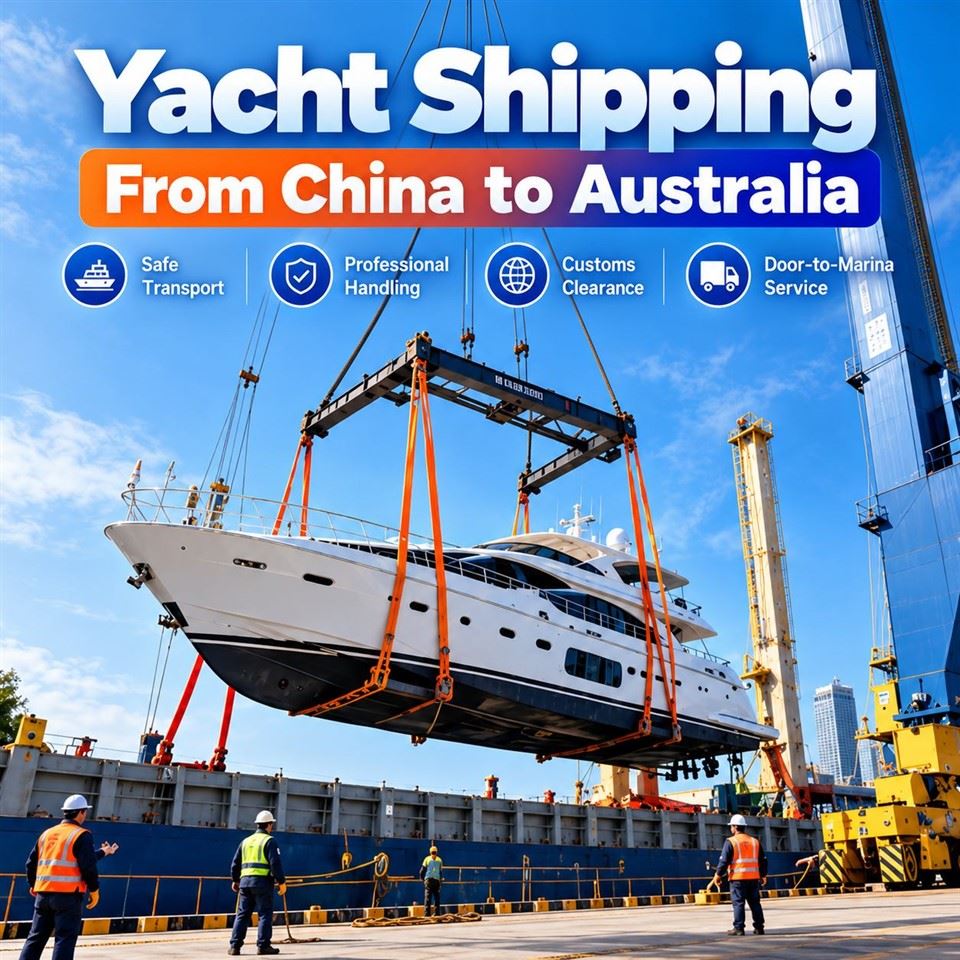
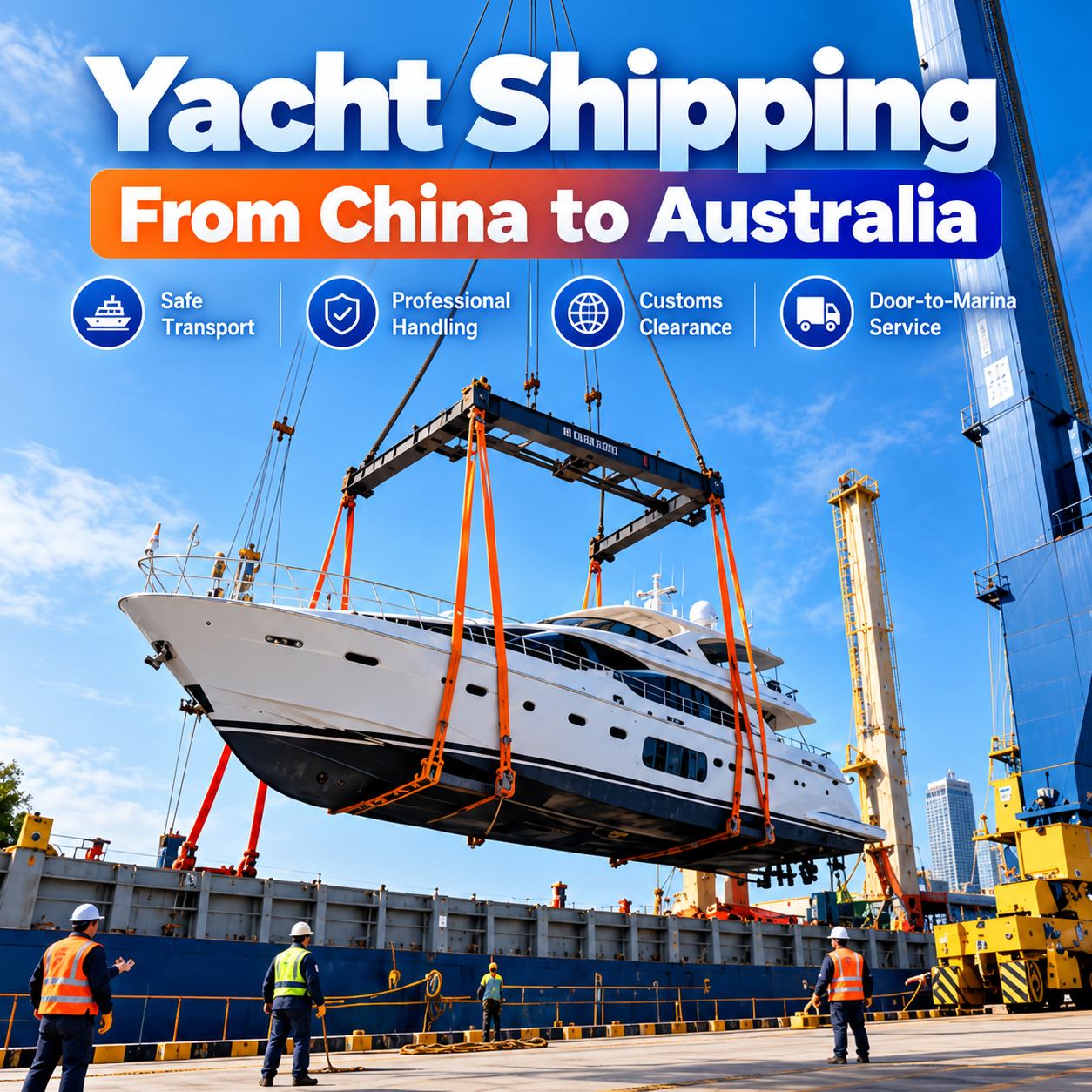
China and Australia share a robust and steadily expanding trade relationship in yachts, speedboats, and other marine vessels. Australian buyers increasingly source yachts, patrol boats, and small craft from Chinese shipyards, attracted by competitive manufacturing costs and improving build quality, while Chinese buyers also import premium Australian-built and European-brand yachts transshipped through Australia.
Whether you are exporting a newly built motor yacht from a Guangdong shipyard to Sydney or importing a second-hand cruiser from Brisbane to a Chinese marina, the logistics requirements for high-value, oversized marine cargo demand a reliable freight forwarder in China with genuine specialist expertise.
At Zhejiang Wilson Supply Chain Management Co., Ltd., we provide end-to-end yacht and boat shipping services between China and Australia using Flat Rack, Open Top, Breakbulk, and-where the vessel dimensions permit-Container Shipping. Our service covers the full range of watercraft, including yachts, speedboats, small boats, patrol boats, and other high-value vessels.
Overview of China–Australia Yacht and Boat Shipping
Estimated shipping costs typically range from USD 3,500 for a small speedboat on a Flat Rack to USD 25,000 or more for a large yacht shipped via Breakbulk, with transit times of approximately 18 to 35 days depending on the routing and port pair.
All rates and timelines quoted on this page are for reference only. Actual costs depend on vessel specifications, market conditions, and your specific requirements.
Contact us today with your vessel details for a tailored shipping quotation and a real-time transport plan.
Request a Yacht Shipping Quote
Cost of Shipping a Yacht from China to Australia
Shipping cost is the question every client asks first, and the honest answer is that no two yacht shipments carry the same price tag.
The table below provides estimated cost ranges for the principal shipping methods we arrange between major Chinese ports-including Shanghai, Ningbo, Shenzhen, Guangzhou, and Qingdao-and key Australian ports such as Sydney, Melbourne, Brisbane, and Fremantle.
Table 1. Estimated Shipping Costs by Method - China to Australia
| Shipping Method | Suitable Vessel Size | Estimated Cost Range (USD) | Key Characteristics |
|---|---|---|---|
| Flat Rack (20FR / 40FR) | Up to approx. 12 m LOA, within 2.4 m width | USD 3,500–8,500 | Steel frame supports hull; cradles bolted to platform; most common for mid-size yachts and speedboats |
| Open Top (20OT / 40OT) | Up to approx. 10 m LOA, height within 2.5 m | USD 4,000–9,000 | Top-open for crane loading; tarpaulin weather protection; suits vessels with flybridge or T-top |
| Breakbulk / RoRo | Over 12 m LOA, oversized beam or draft, large motor yachts | USD 12,000–30,000+ | Vessel loaded directly on deck or in cargo hold; no container constraints; suitable for large or multi-yacht shipments |
| Container Shipping (40HQ) | Small boats, RIBs, inflatable craft, dismantled vessels under 6 m | USD 2,800–6,500 | Standard container; lowest cost; only for vessels fitting within internal dimensions or partially disassembled |
All prices are for reference only. Actual quotations depend on vessel specifications, season, carrier availability, and port conditions.
Factors That Influence Yacht Shipping Cost
Several variables drive the final freight rate, and understanding them helps you anticipate where costs can be controlled.
| Factor | Impact on Cost |
|---|---|
| Length, Width, Height (LOA, Beam, Draft) | Larger dimensions can push the shipment from Flat Rack to Breakbulk. Oversized beam may require a special permit and a wider Flat Rack platform. |
| Weight (Displacement) | Heavier vessels require higher-capacity cranes and reinforced cradles and may trigger overweight surcharges at the terminal. |
| Shipping Method | Flat Rack is generally the most economical for mid-size yachts. Breakbulk costs more but removes dimensional limits. Container shipping is usually the cheapest but is size-restricted. |
| Lifting and Loading Requirements | Crane hire, spreader bars, soft lifting slings, and specialised strops can add approximately USD 500–2,000 depending on vessel weight and port crane capacity. |
| Support and Securing (Cradle, Lashing) | Custom steel or timber cradles, sea-fastening chains, ratchet straps, and anti-friction padding typically cost approximately USD 800–3,000. |
| Origin Port and Destination Port | Port handling charges, THC, and documentation fees vary between Shanghai, Ningbo, Shenzhen, and Australian ports. Fremantle generally costs less than East Coast ports. |
| Season and Market Conditions | Peak season from July to October and carrier rate restorations can raise base freight by approximately 15%–30%. |
| Insurance | Marine cargo insurance for high-value yachts typically runs approximately 0.3%–0.5% of the declared vessel value. |
How Yacht Freight Is Calculated
For Flat Rack and Open Top shipments, the base ocean freight is quoted as a lump-sum rate per unit-such as per 20FR or 40FR-plus applicable surcharges including BAF (Bunker Adjustment Factor), PSS (Peak Season Surcharge), THC (Terminal Handling Charge), and documentation fees.
For Breakbulk shipments, freight is calculated either by the vessel's length overall, based on the linear metres of deck space occupied, or by a negotiated lump-sum rate depending on the carrier and stowage plan.
Container shipping follows standard FCL pricing per 40HQ. For businesses that also require container equipment sourcing or related services, Wilson provides dedicated Shipping Container Trade solutions.
The total door-to-door cost adds origin trucking, crane loading, cradle fabrication, export customs, ocean freight, destination THC, import customs, quarantine, and delivery to the final marina.
Get Latest Ocean Freight Rates Now
Transit Time for Yacht Shipping from China to Australia
Transit time depends primarily on the port pair, the shipping line's schedule, and whether the service is direct or involves transshipment.
The table below shows estimated transit times for the most common China–Australia port combinations.
Table 2. Estimated Transit Times by Port Pair
| Origin Port - China | Destination Port - Australia | Estimated Transit Time | Service Type |
|---|---|---|---|
| Shanghai | Sydney | 20–28 days | Direct or one transshipment |
| Ningbo | Melbourne | 22–30 days | Direct or one transshipment |
| Shenzhen (Yantian / Shekou) | Brisbane | 18–25 days | Mostly direct |
| Guangzhou (Nansha) | Sydney | 20–28 days | Direct or one transshipment |
| Qingdao | Fremantle | 25–35 days | Usually via Singapore transshipment |
| Shenzhen | Fremantle | 22–30 days | Direct or via Singapore |
All transit times are for reference only. Actual schedules depend on carrier timetables, routing, and operational conditions.
Factors Affecting Shipping Time
| Factor | Effect on Transit Time |
|---|---|
| Vessel Schedule (Sailing Frequency) | China–Australia services typically sail weekly. Missing a cutoff can push departure back by one week. |
| Direct vs. Transshipment | Direct services are faster. Transshipment via Singapore or Kaohsiung can add approximately 5–10 days. |
| Port Operations | Crane availability, berth congestion, and special cargo handling slots at both ports can add approximately 2–5 days. |
| Lifting and Securing | Loading a yacht by crane takes longer than container loading. Some ports require a dedicated lifting window. |
| Customs Clearance | Export customs in China and import customs plus quarantine in Australia typically take approximately 2–5 business days each. |
| Weather and Seasonal Disruptions | Cyclone season from November to April in Australian waters and heavy fog at Chinese ports can cause delays. |
Freight rates and transit times quoted above are for reference only. Contact us with your vessel specifications and preferred schedule for a real-time shipping plan and confirmed quotation.
Yacht and Boat Shipping Services from China to Australia
We handle the complete logistics chain for yacht and boat transport between China and Australia, covering both export and import directions. As part of our broader Sea Freight from China services, yacht transport requires more specialised planning, equipment selection, lifting, and cargo protection than standard container freight.
Our services are built around the understanding that every vessel is unique in size, weight, hull structure, and transport requirements.
Vessel Types We Transport
| Vessel Category | Typical Examples | Common Shipping Method |
|---|---|---|
| Yachts | Motor yachts, sailing yachts, flybridge cruisers, luxury yachts | Flat Rack, Open Top, or Breakbulk depending on size |
| Speedboats | High-performance boats, sport boats, rigid inflatable boats (RIBs) | Flat Rack or 40HQ Container |
| Small Boats | Dinghies, tenders, aluminium fishing boats, small cabin cruisers | Container or Flat Rack |
| Patrol Boats | Government and commercial patrol vessels, work boats | Flat Rack or Breakbulk with special securing |
| Other High-Value Vessels | Catamarans, houseboats, commercial tour boats, custom-built craft | Method determined by feasibility assessment |
Transport Methods and Equipment
We arrange the full spectrum of specialised shipping equipment to match each vessel's dimensions and structural characteristics.
Flat Rack (20FR / 40FR)
Flat Rack is the most widely used method for yachts up to approximately 12 metres.
The hull rests on a custom cradle bolted to the Flat Rack platform, with the vessel secured by chains and ratchet straps. Foldable end walls allow stacking and multi-point lashing.
Open Top (20OT / 40OT)
Open Top containers are suited for vessels with elevated structures such as flybridges or T-tops that exceed standard container height but remain within width limits.
The open top permits crane loading from above, while a tarpaulin provides weather protection during transit.
Breakbulk
For yachts and vessels exceeding 12 metres in length or with beams too wide for Flat Rack, we arrange Breakbulk shipping, where the vessel is loaded directly onto the cargo ship's deck or into its hold.
This method has no container dimensional constraints and is the standard choice for large motor yachts, multi-yacht shipments, and commercial vessels.
For suitable vessel types and port pairs, RoRo transport may also be evaluated as an alternative, depending on vessel configuration, trailer availability, carrier acceptance, and route conditions.
Container Shipping (40HQ)
Container shipping is reserved for small boats, inflatables, and vessels that can be partially disassembled to fit within a standard 40-foot high-cube container.
The approximate internal dimensions of a 40HQ are 12.03 m × 2.35 m × 2.69 m.
This is the most economical option but is strictly limited by size.
Full-Service Logistics Coverage
Our yacht shipping service is not limited to booking ocean freight. We manage the entire door-to-marina chain.
| Service Stage | What We Handle |
|---|---|
| Domestic Pickup | Trucking from shipyard, factory, marina, or dealer yard to the departure port using low-bed trailers and escort vehicles for oversized loads |
| Warehousing and Storage | Short-term covered storage at origin or destination port if the vessel arrives ahead of its shipping window |
| Loading and Lifting | Crane operations with soft slings, spreader bars, and lifting strops designed to distribute pressure evenly across the hull |
| Hull Protection | Anti-scuff padding, foam cradle liners, shrink-wrap, and protective film applied to gelcoat, windows, and vulnerable fittings |
| Custom Cradle and Support | Fabrication of steel or timber cradles engineered to the vessel's hull shape, keel angle, and centre of gravity |
| Lashing and Securing | Sea-fastening using chains, turnbuckles, ratchet straps, and timber chocks to prevent shifting, sliding, and tipping in heavy seas |
| Anti-Collision and Anti-Displacement | Blocking and bracing at bow, stern, and beam contact points, with friction mats under the cradle base |
| Export Customs Declaration | HS code classification, export licence coordination, vessel ownership documentation, and customs filing at the origin port |
| International Transport Tracking | Real-time vessel tracking and milestone reporting from departure to arrival |
| Destination Port Connection | Coordination with Australian port agents for discharge, import customs, quarantine inspection, and delivery to the final marina |
Where temporary storage is required before loading or after discharge, our warehousing services can be integrated into the transport plan to reduce coordination between multiple service providers.
We do not apply a one-size-fits-all approach. A 9-metre speedboat and a 20-metre motor yacht require fundamentally different transport plans, and we design each solution around the specific vessel.
Yacht Shipping Process from China to Australia
A structured process ensures that nothing is left to chance when shipping a high-value vessel across the Pacific.
Below is the complete workflow we follow for every yacht and boat shipment, whether exporting from China to Australia or importing from Australia to China.
Step-by-Step Shipping Workflow
| Step | Action | Details |
|---|---|---|
| 1 | Inquiry and Requirement Submission | Client provides vessel details, intended shipping direction, origin and destination, and preferred timeline. |
| 2 | Vessel Information Confirmation | We review the vessel's brand, model, dimensions including LOA, beam and height, weight, hull material, engine type, and current condition. |
| 3 | Transport Feasibility Assessment | We evaluate whether the vessel fits Flat Rack, Open Top, or Breakbulk; check port crane capacity; and confirm route and carrier availability. |
| 4 | Transport Plan Design | We design the loading method, cradle specification, lifting plan, lashing scheme, and port-to-port or door-to-door routing. |
| 5 | Quotation and Booking | We issue a detailed quotation. Upon confirmation, we book vessel space and confirm the sailing schedule. |
| 6 | Domestic Pickup | We arrange specialised trucking from the vessel's current location to the departure port. |
| 7 | Loading Preparation | Cradle fabrication, hull protection application, and pre-loading inspection with photographic documentation are completed. |
| 8 | Lifting and Securing | Crane loading onto Flat Rack, Open Top, or Breakbulk deck is carried out, followed by final lashing and sea-fastening under supervision. |
| 9 | Export Customs Declaration | Export customs declarations, vessel ownership documents, and any required export permits are filed. |
| 10 | International Ocean Transport | The vessel sails under tracked conditions. We provide milestone updates at departure, transshipment if applicable, and arrival. |
| 11 | Destination Port Connection | Discharge at the Australian port, import customs clearance, quarantine inspection, and final delivery to the marina or designated location are coordinated. |
Our Export Customs Clearance service can support the preparation and review of export declarations, commercial documentation, and other customs-related requirements before departure.
At destination, our Import Customs Clearance capabilities can be incorporated into the overall logistics solution where the agreed service scope includes destination clearance support.
Information and Documents You Need to Provide
To design an accurate transport plan and prepare customs documentation, we ask clients to supply the following information.
| Category | Required Information |
|---|---|
| Vessel Identification | Brand, model, year of manufacture, hull identification number (HIN), or IMO number |
| Dimensions | Length overall (LOA), beam (width), height from keel to highest point, and draft |
| Weight | Displacement or dry weight; trailer weight if applicable |
| Hull Material | Fibreglass (FRP), aluminium, steel, wood, or composite |
| Engine Information | Engine brand, model, fuel type (petrol/diesel), number of engines, and outboard/inboard configuration |
| Vessel Photos | Clear photos of port side, starboard side, bow, stern, deck, flybridge if applicable, and underwater hull |
| Declared Value | Commercial invoice value or insured value for customs and insurance purposes |
| Pickup Address | Exact location of the vessel, such as shipyard, marina, dealer yard, or private residence |
| Ownership and Trade Documents | Bill of sale, registration certificate, builder's certificate, and any import/export licences already obtained |
| Destination Details | Delivery address in Australia, or China for the import direction, marina name, and contact person |
Why Choose Wilson for Your Yacht Shipping
Choosing the right freight partner for a high-value yacht is not about finding the cheapest rate. It is about finding a team that can handle the complexity, protect the vessel, and deliver it intact.
Here is what sets us apart.
| Core Advantage | What It Means for Your Shipment |
|---|---|
| International Freight Forwarding Experience | Years of operation across major global trade lanes with established carrier relationships and port agent networks |
| Specialist Yacht and High-Value Vessel Capability | Dedicated experience handling yachts, speedboats, patrol boats, and other premium watercraft-not general cargo repurposed |
| Complex Cargo Transport Plan Design | Every shipment begins with a feasibility assessment and a customised loading, lifting, and securing plan tailored to the vessel |
| Professional Lifting and Loading Planning | Crane capacity matching, sling and spreader selection, and supervised loading by experienced rigging teams |
| Hull Protection and Lashing Expertise | Custom cradles, anti-scuff padding, shrink-wrap, and sea-fastening chains engineered to withstand open-ocean conditions |
| Global Carrier Partnerships | Long-standing relationships with COSCO, Maersk, MSC, Hapag-Lloyd, Evergreen, and other major lines for priority space and competitive rates |
| Professional Logistics Team | A team that understands vessel dimensions, hull structures, and the operational requirements of marine cargo |
| Digital Transport Tracking | Real-time milestone reporting from pickup through ocean transit to destination delivery |
| One-Stop Supply Chain Service | Domestic trucking, warehousing, customs, ocean freight, destination clearance, and marina delivery under a single point of contact |
For multi-supplier projects involving spare parts, marine accessories, trailers, or supporting cargo from different locations in China, consolidation and distribution can also be incorporated into the broader supply chain arrangement.
For a precise quote tailored to your specific cargo, origin, and delivery terms, reach out to our team for a detailed breakdown.
Get Latest Ocean Freight Rates Now
China–Australia Yacht and Boat Trade in Recent Years
The trade in yachts, pleasure boats, and related marine equipment between China and Australia has grown steadily, supported by China's expanding shipbuilding capacity and Australia's strong recreational boating market.
Australia has one of the highest rates of boat ownership per capita in the world, with an estimated registered recreational vessel fleet exceeding 900,000 boats.
China, meanwhile, has developed a significant small-to-mid-size boat manufacturing sector, with production concentrated in Guangdong, Shandong, and Zhejiang provinces.
China's Exports to Australia
China exports a range of vessels and marine products to Australia, with the principal categories falling under HS code 8903-yachts and other vessels for pleasure or sports, rowing boats, and canoes.
Key export categories include:
| HS Code | Product Category | Typical Exports to Australia |
|---|---|---|
| 8903.91 | Inflatable boats, rowing boats, and canoes | RIBs, inflatable tenders, rescue boats, PVC and Hypalon inflatables |
| 8903.92 | Motorboats other than outboard-engine | Small to mid-size motor yachts, cabin cruisers, fibreglass speedboats |
| 8903.99 | Other pleasure and sports vessels, length over 7.5 m | Larger motor yachts, sailing yachts, catamarans, patrol boats |
Chinese-built fibreglass speedboats, RIBs, and small motor yachts are particularly competitive in the Australian market due to favourable pricing relative to European and domestic brands.
Chinese shipyards in Guangdong and Shandong have also begun producing larger motor yachts of approximately 12–20 metres that are increasingly exported to Australian dealers and private buyers.
In addition to complete vessels, China exports significant volumes of marine parts and equipment to Australia, including outboard and inboard engines, marine electronics, trailers, and fittings.
Australia's Exports to China
While Australia is not a major yacht manufacturing nation, Chinese buyers do import vessels from or through Australia, particularly:
| Category | Typical Imports to China |
|---|---|
| Premium Second-Hand Yachts | European-brand motor yachts and sailing yachts previously registered in Australia and purchased by Chinese buyers at favourable prices |
| Commercial and Patrol Vessels | Australian-built aluminium work boats, patrol craft, and commercial tour vessels for Chinese maritime operators |
| Marine Equipment and Parts | Australian marine electronics, safety equipment, and specialised fittings |
The import of second-hand yachts into China is subject to specific regulatory requirements, including pre-shipment inspection and import permits, which we help clients navigate as part of the shipping service.
Trade Development and Transport Demand
The bilateral vessel trade is supported by the China–Australia Free Trade Agreement (ChAFTA), which entered into force in December 2015 and has progressively reduced tariffs on many goods.
Under ChAFTA, most goods of qualifying origin enjoy preferential or zero tariff rates, though the specific treatment of pleasure boats under HS 8903 depends on the vessel type, origin certification, and applicable tariff concession schedules.
The growing volume of vessel trade between the two countries has driven consistent demand for specialised marine logistics services capable of handling oversized, high-value cargo across the Pacific.
Latest Regulations and Policies for Yacht Import and Export Between China and Australia
Shipping a yacht across borders involves compliance with customs, maritime, and environmental regulations in both the exporting and importing countries.
The following outlines the key regulatory requirements based on current official sources. Policies are subject to change; we recommend confirming the latest requirements with the relevant authorities before finalising any shipment.
Australian Import Requirements
When importing a yacht or boat into Australia, the following regulatory framework applies:
| Requirement | Details |
|---|---|
| Customs Classification | Yachts and pleasure boats are classified under HS 8903. The specific subheading depends on vessel type, length, and propulsion. |
| Import Declaration | Vessels with a customs value exceeding AUD 1,000 require a formal import declaration lodged through the Australian Border Force (ABF) Integrated Cargo System (ICS). |
| Customs Duty | General duty rates apply to vessels under HS 8903. Under the China–Australia Free Trade Agreement (ChAFTA), goods with a valid Certificate of Origin may qualify for preferential or zero rates. Australia announced tariff reforms effective 1 July 2024 removing certain "nuisance" tariffs on close to 500 tariff lines, although the specific impact on HS 8903 categories should be verified with ABF. |
| Goods and Services Tax (GST) | GST of 10% applies to most imported goods. GST is calculated as (customs value + duty + freight + insurance) × 10% and is collected by the ABF at import. |
| Temporary Import | Australia allows temporary importation of vessels for up to 12 months duty-free under a carnet or security deposit, suitable for yachts visiting for racing, exhibitions, or short-term use. The Australian Border Force administers this through the ICS. |
| Vessel Registration and Ownership | Vessels intended for use in Australian waters must be registered with the relevant state maritime authority. Proof of ownership, such as a bill of sale or previous registration, is required. |
| Maritime Safety Standards | Vessels must comply with standards set by the Australian Maritime Safety Authority (AMSA). Commercial vessels require additional certification. |
| Engine and Environmental Requirements | Engines must meet emission and noise standards. Inboard and outboard engines are subject to environmental compliance verification. |
| Biosecurity and Quarantine | The Department of Agriculture, Fisheries and Forestry (DAFF) requires all arriving vessels to undergo biosecurity inspection. Hull fouling, ballast water, and organic material on the vessel or cradle are inspected and treated if necessary. |
| Temporary vs. Permanent Import | Temporary import for up to 12 months allows duty-free entry under security. Permanent import requires payment of applicable duty and GST and full customs clearance. |
Chinese Export Requirements
For yachts and boats exported from China, the following requirements apply:
| Requirement | Details |
|---|---|
| Customs Classification | Vessels are classified under HS 8903 with specific subheadings, including 8903.10 for inflatable vessels, 8903.91 for sailboats, 8903.92 for motorboats, and 8903.99 for other vessels over 7.5 m. |
| Export Customs Declaration | Filed through China Customs via the Single Window system. Documentation includes a commercial invoice, packing list, vessel specification, and export contract. |
| Export Licence | Certain vessel types may require an export licence depending on the category and destination. Most commercial pleasure boat exports do not require a special licence. |
| Vessel Ownership Documentation | Builder's certificate, registration certificate, or bill of sale proving the exporter's right to ship the vessel. |
| Inspection and Certification | New vessels may require a classification society certificate or factory inspection certificate. Second-hand vessels for export must meet destination-country requirements. |
Chinese Import Requirements for Australia-to-China Shipments
For clients importing yachts from Australia into China, additional requirements apply:
| Requirement | Details |
|---|---|
| Import Permit | Second-hand vessels require an import permit issued by the relevant Chinese authority. Pre-shipment inspection by a designated inspection agency in the country of export is mandatory. |
| Customs Duty and VAT | Import duty and value-added tax apply based on HS classification. Rates vary by vessel type and whether the vessel is new or second-hand. |
| Registration | Imported vessels must be registered with the Chinese maritime administration before use in Chinese waters. |
| Technical and Safety Standards | Vessels must meet Chinese national standards for construction, stability, and safety equipment. |
The above regulatory information is based on publicly available official sources as of the date of writing. Policies and rates are subject to change.
We recommend verifying current requirements with the Australian Border Force, the Australian Maritime Safety Authority, the Department of Agriculture, Fisheries and Forestry, and China Customs before finalising any shipment.
FAQ
Q: 1. How much does it cost to ship a yacht from China to Australia?
A: Shipping cost depends on the vessel's dimensions, weight, and the chosen transport method. A small speedboat on a Flat Rack typically starts at around USD 3,500, while a large motor yacht shipped via Breakbulk can cost USD 25,000 or more. The total door-to-marina cost includes ocean freight, crane loading, cradle fabrication, lashing, customs, and destination delivery. All rates are for reference only. Contact us with your vessel specifications for an accurate quotation.
Q: 2. How long does yacht shipping take from China to Australia?
A: Transit time ranges from approximately 18 to 35 days depending on the port pair and whether the service is direct or involves transshipment. Shenzhen to Brisbane is among the fastest routes at approximately 18–25 days, while Qingdao to Fremantle via Singapore transshipment can take approximately 25–35 days. Allow an additional 2–5 business days each for export and import customs clearance. All transit times are for reference only.
Q: 3. What is the difference between Flat Rack and Breakbulk shipping for yachts?
A: Flat Rack uses a steel platform container, usually a 20FR or 40FR, with foldable end walls. The yacht sits on a cradle bolted to the platform and is secured with chains and straps. It is the most economical method for vessels up to approximately 12 metres. Breakbulk means the yacht is loaded directly onto the cargo ship's deck or into its hold with no container constraints. It is used for vessels over 12 metres, oversized beams, or multi-yacht shipments. Breakbulk costs more but accommodates vessels that cannot be transported within container equipment limitations.
Q: 4. How do you ship an oversized yacht that does not fit in a container?
A: Oversized yachts that exceed standard container dimensions are shipped via Flat Rack, if they remain within platform limits, or Breakbulk for larger vessels. We begin with a feasibility assessment of the vessel's LOA, beam, height, and weight, then determine the appropriate shipping method, crane capacity, and port compatibility. For very large yachts, we may arrange a dedicated charter vessel.
Q: 5. How is the yacht protected during lifting and transport?
A: We use soft lifting slings and spreader bars to distribute pressure evenly across the hull and avoid point loading. The hull is protected with anti-scuff padding, foam cradle liners, and shrink-wrap over gelcoat surfaces, windows, and vulnerable fittings. The vessel rests on a custom-engineered cradle matched to its hull shape, while sea-fastening chains, turnbuckles, and ratchet straps prevent movement during ocean transit.
Q: 6. What documents do I need to provide for yacht shipping?
A: You need to provide the vessel's brand, model, dimensions-including LOA, beam, and height-weight, hull material, engine information, vessel photos, declared value, pickup address, and ownership documents such as a bill of sale, registration certificate, and builder's certificate. For import into Australia, a formal import declaration is required for vessels valued over AUD 1,000. For import into China of second-hand vessels, an import permit and pre-shipment inspection certificate are required.
Q: 7. Do I need marine insurance for yacht shipping?
A: Marine cargo insurance is strongly recommended for all yacht shipments. Premiums typically run approximately 0.3%–0.5% of the declared vessel value. We can arrange all-risk marine insurance covering loading, ocean transit, and discharge, or you may use your own insurer. Given the high value of yachts and the specialised handling involved, insurance is a prudent investment.
Q: 8. What import duties and taxes apply when importing a yacht into Australia?
A: Australia applies customs duty, with rates varying by HS classification. ChAFTA may provide preferential rates for qualifying Chinese-origin goods. GST of 10% is calculated on the customs value plus duty, freight, and insurance. Vessels valued under AUD 1,000 do not require a formal import declaration. Temporary imports for up to 12 months can enter duty-free under a security deposit. We recommend confirming current rates with the Australian Border Force.
Q: 9. Do you offer door-to-door yacht shipping service?
A: Yes. Our service covers the full chain from domestic pickup at the shipyard, marina, or dealer yard in China through port handling, ocean freight, Australian import customs, quarantine, and final delivery to your designated marina or address. For customers who require a broader door-to-door arrangement with defined destination responsibilities, our DDU and DDP shipping services can also be considered according to the shipment, destination, and agreed Incoterms. For the Australia-to-China direction, we arrange pickup from Australian locations and delivery to Chinese destinations with full import clearance.
Q: 10. Can you ship a second-hand yacht from Australia to China?
A: Yes. Importing a second-hand yacht into China requires an import permit and pre-shipment inspection by a designated inspection agency in Australia before export. We coordinate the inspection, export customs in Australia, ocean freight, Chinese import customs, duty payment, and vessel registration. Contact us early in the process, as permit and inspection arrangements take time.
Ready to Ship Your Yacht Between China and Australia?
Send us your vessel details-including brand, model, dimensions, weight, and intended shipping direction-and we will provide a tailored transport plan and quotation within one business day.
Zhejiang Wilson Supply Chain Management Co., Ltd.
Email: lucy@ylls.net | gm@wilson-cargo.com | jy@wilson-cargo.com
Phone: +86 195 5809 8285
Get a Customized Yacht Shipping Quote
Hot Tags: Yacht Shipping From China To Australia