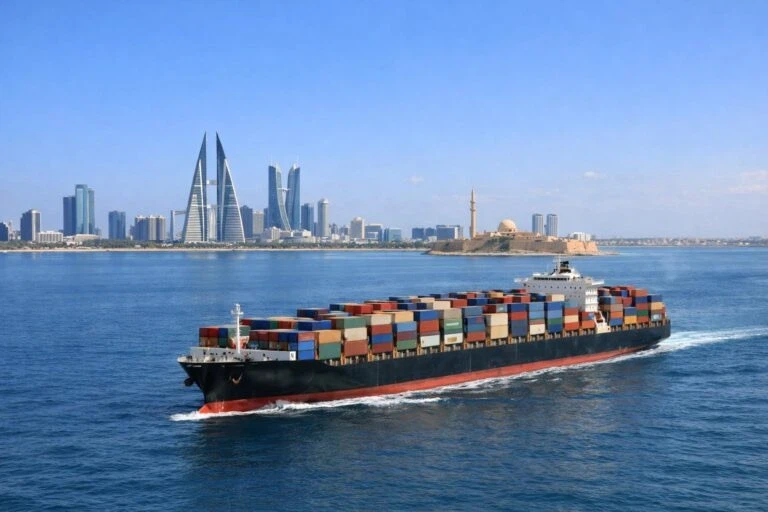
Bahrain has long been an important trade gateway in the Arabian Gulf. Although the country is smaller than some neighboring Gulf markets, its strategic location, modern port infrastructure, and close connection with Saudi Arabia make it a practical destination for importers, wholesalers, manufacturers, and regional distributors.
China remains one of the world's largest manufacturing centers, supplying Bahrain with a wide range of products, including machinery, building materials, electronics, furniture, consumer goods, automotive parts, chemicals, packaging materials, and industrial supplies. For companies importing from China to Bahrain, sea freight is usually the most cost-effective shipping method, especially when the shipment volume is large, the cargo is heavy, or the delivery schedule allows for a longer transit time than air freight.
At Zhejiang Wilson Supply Chain Management Co., Ltd., we provide professional sea freight services from major Chinese ports to Bahrain, covering FCL, LCL, special container shipping, customs documentation support, cargo insurance, and door-to-door logistics solutions. With offices in Ningbo, Shanghai, Shenzhen, and Hong Kong, we help importers build a reliable shipping plan from China to Bahrain with competitive freight rates and stable sailing schedules.
If you are planning to ship goods from China to Bahrain, Wilson can help you compare routes, estimate shipping costs, prepare documents, and manage the shipment from supplier pickup to final delivery.
Get Latest Ocean Freight Rates Now

Main Ports and Route Options for Shipping from China to Bahrain
Sea freight from China to Bahrain usually departs from major Chinese container ports and arrives at Khalifa Bin Salman Port, the main container port in Bahrain.
Main Ports of Loading in China
Wilson can arrange sea freight from most major ports in China, including:
Shanghai Port
Shanghai is one of the busiest container ports in the world. It is suitable for shipments from suppliers in East China, including Shanghai, Jiangsu, Zhejiang, and Anhui.
Ningbo Port
Ningbo is Wilson's headquarters location and one of our strongest operating ports. It is a good choice for exporters and importers dealing with industrial goods, machinery, chemicals, textiles, consumer products, and general cargo from Zhejiang and nearby provinces.
Shenzhen Port
Shenzhen is a major shipping hub in South China, especially suitable for electronics, e-commerce goods, consumer products, lighting, furniture accessories, and manufactured goods from Guangdong.
Guangzhou / Nansha Port
Nansha is often used for cargo from Guangzhou, Foshan, Dongguan, and other manufacturing areas in the Pearl River Delta.
Qingdao Port
Qingdao is a practical option for cargo from Shandong and North China, especially machinery, tires, chemicals, equipment, and industrial materials.
Tianjin Port
Tianjin serves the Beijing-Tianjin-Hebei region and many northern industrial zones. It is commonly used for heavy cargo, machinery, steel products, building materials, and project cargo.
Xiamen Port
Xiamen is suitable for goods from Fujian and nearby areas, including stone products, sanitary ware, garments, consumer goods, and light industrial products.
Main Destination Port in Bahrain
Khalifa Bin Salman Port
Khalifa Bin Salman Port, often referred to as KBSP, is the primary container port in Bahrain. It handles most containerized imports and is equipped with modern port facilities, container yards, warehousing areas, and road connections for inland distribution.
One of the key advantages of Bahrain is its access to the wider Gulf region. After cargo arrives at KBSP, it can be delivered to local destinations in Bahrain or moved onward to nearby GCC markets, depending on the importer's distribution plan.
Other ports such as Mina Salman and Port of Manama may also be relevant for certain cargo types, but for standard containerized sea freight, Khalifa Bin Salman Port is usually the main destination.
Route Options from China to Bahrain
There are two common route types for sea freight from China to Bahrain:
Direct or More Direct Services
Some sailings connect major Chinese ports with Bahrain through relatively efficient routes. These options are usually preferred when the importer needs better schedule stability and shorter transit time.
Transshipment Routes
Some shipments may be transshipped through major hub ports such as Singapore or Jebel Ali in Dubai before arriving in Bahrain. Transshipment services may offer more sailing frequency or better pricing, but they can also add several days to the total transit time if the connection is delayed.
At Wilson, we do not recommend a route only because it is cheap. We compare freight rate, sailing date, transit time, carrier reliability, cargo type, and destination delivery requirement before choosing the route. For time-sensitive shipments, a slightly higher freight rate may be more economical than a delayed shipment that interrupts your sales or production schedule.
When Should You Choose Sea Freight from China to Bahrain?
Sea freight is not always the fastest option, but it is often the most practical and economical option for China-Bahrain trade.
You should consider sea freight when:
1. Your shipment is large or heavy
If your cargo volume is high or the weight is heavy, sea freight normally provides a much lower unit cost than air freight. This is especially true for machinery, furniture, building materials, hardware, packaging materials, and bulk commercial goods.
2. Your cargo is not extremely urgent
Ocean shipping from China to Bahrain usually takes several weeks. If your delivery schedule allows enough lead time, sea freight can save a large amount of logistics cost compared with air freight.
3. You need to ship full containers
FCL shipping is suitable when your cargo can fill most of a 20ft or 40ft container, or when you want better cargo security and less handling. For importers with regular orders, FCL is often the most efficient solution.
4. Your cargo volume is small but not suitable for air freight
LCL shipping allows you to share container space with other shipments. It is suitable for small and medium cargo volumes that are not urgent enough for air freight but too large or heavy for courier shipping.
5. You are importing commercial goods for resale or production
Sea freight is commonly used by importers, distributors, wholesalers, factories, construction companies, and trading companies that purchase goods from Chinese suppliers.
6. You need better control over total landed cost
For many importers, the real concern is not only freight cost. It is the total landed cost, including origin charges, sea freight, destination charges, customs duty, VAT or taxes if applicable, clearance fees, inland delivery, insurance, and possible inspection costs. Sea freight gives importers more room to plan and control these costs.
7. You are shipping special cargo
Wilson can handle not only general cargo, but also special containers, oversized cargo, chemical products, certain dangerous goods, refrigerated cargo, open-top containers, flat-rack containers, and project shipments. For these cargo types, sea freight is usually the most suitable transport mode.
How Our Sea Shipping Service Works
A successful shipment from China to Bahrain is not just about booking a container. It requires cargo checking, route planning, document control, customs compliance, carrier coordination, and delivery management. Wilson provides a structured sea freight process to reduce delays and avoid unnecessary costs.
Step 1: Shipment Consultation and Cargo Information Review
We first collect the basic shipment details, including:
- Product name and cargo description
- HS Code if available
- Cargo volume and weight
- Number of packages
- Supplier location in China
- Required port of loading
- Destination in Bahrain
- Preferred shipping term, such as FOB, EXW, CIF, DAP, or DDP
- Cargo value for insurance and customs reference
- Special requirements, such as dangerous goods, oversized cargo, temperature control, or fragile packaging
This step helps us understand whether your shipment is suitable for FCL, LCL, special container shipping, or door-to-door delivery.
Step 2: Route Planning and Freight Quotation
After reviewing the cargo information, we compare available shipping routes and provide a quotation based on your needs. The quotation may include:
- Pickup from supplier if needed
- Export customs declaration in China
- Origin port charges
- FCL or LCL sea freight
- Destination port charges
- Customs clearance support in Bahrain
- Cargo insurance
- Inland delivery to warehouse, office, factory, or project site
We consider not only the lowest freight rate, but also vessel schedule, carrier performance, transshipment risk, port congestion, cargo type, and your required delivery time.
Step 3: Booking and Space Confirmation
Once the shipping plan is confirmed, Wilson books space with the carrier. We work with major shipping lines such as COSCO, HPL, Maersk, MSC, EMC, and other global carriers, which helps us secure more stable space and competitive rates, especially on Middle East routes.
For FCL shipments, we arrange container release, trucking, loading schedule, and cut-off time control.
For LCL shipments, we coordinate cargo delivery to the warehouse, cargo measurement, consolidation, and loading into shared containers.
Step 4: Supplier Coordination and Cargo Pickup
If your supplier is located in China, we can coordinate directly with the factory or trading company. This is especially helpful when the importer is overseas and cannot manage the daily shipping details.
Our team can help confirm:
- Cargo readiness date
- Packing condition
- Shipping marks
- Carton or pallet details
- Pickup appointment
- Warehouse receiving instructions
- Export documents required from the supplier
For multi-supplier shipments, we can help consolidate goods from different factories before shipping to Bahrain.
Step 5: Export Customs Declaration in China
Wilson supports export customs declaration and document checking in China. Before shipment, we review commercial documents to reduce the risk of incorrect declaration or customs delay.
Common export documents may include:
- Commercial invoice
- Packing list
- Sales contract
- Export declaration documents
- Product description
- MSDS for chemical cargo if required
- Dangerous goods documents if applicable
- Certificate of Origin if requested
For sensitive, chemical, dangerous, oversized, or regulated cargo, our team checks compliance requirements in advance.
Step 6: Container Loading and Port Operation
For FCL shipments, the empty container is picked up and delivered to the factory or warehouse for loading. After loading, the container is returned to the port before the cut-off time.
For LCL shipments, goods are delivered to the consolidation warehouse, where they are checked, measured, and loaded with other cargo.
We monitor key operational points, including:
- Container pickup
- Factory loading
- Cargo photos if required
- Container sealing
- Port gate-in
- Customs release
- Vessel departure
This helps the importer clearly understand where the shipment is in the process.
Step 7: Ocean Freight Tracking
After the vessel departs, Wilson continues tracking the shipment during ocean transit. We provide updates on vessel departure, transshipment status if any, estimated arrival date, and possible schedule changes.
For China to Bahrain sea freight, the normal port-to-port transit time is often around 15–30 days, depending on the departure port, carrier, route type, and whether transshipment is involved.
Step 8: Pre-Arrival Document Preparation
Before the cargo reaches Bahrain, documents must be checked carefully. Incorrect documents are one of the most common reasons for customs clearance delays.
Typical documents for Bahrain import clearance may include:
- Bill of Lading
- Commercial invoice
- Packing list
- Certificate of Origin if required
- HS Code information
- Import license or approval for regulated goods if required
- Insurance certificate if purchased
- Product certificates or inspection documents for certain cargo
Wilson helps clients identify missing or inconsistent information before arrival, so the consignee or customs broker can prepare clearance more efficiently.
Step 9: Bahrain Customs Clearance Support
Bahrain uses HS Code classification for tariff purposes. For many imported goods from outside the GCC, customs duty is commonly calculated based on CIF value. The exact duty rate and import requirement depend on the product classification and local regulations.
The general clearance process in Bahrain may include electronic customs declaration, document submission, payment of duties and fees, risk assessment, possible inspection, and cargo release.
Wilson can coordinate with destination agents or customs brokers to support the clearance process and help importers prepare the required documentation.
Step 10: Final Delivery in Bahrain
After customs release, the cargo can be delivered to the final destination in Bahrain, such as:
- Importer warehouse
- Retail distribution center
- Factory
- Construction site
- Commercial address
- Free zone or logistics facility
For door-to-door shipments, we coordinate port pickup, local trucking, delivery appointment, and final proof of delivery.
Advantages of Our Sea Freight from China to Bahrain
Choosing a freight forwarder is not only about comparing one freight rate with another. A low quote is not useful if the shipment is delayed, documents are incorrect, cargo is mishandled, or the consignee faces unexpected destination charges. Wilson focuses on practical shipping solutions that balance cost, transit time, compliance, and cargo safety.
Strong Experience on Middle East Routes
Wilson provides sea freight services across the Middle East, Southeast Asia, India-Pakistan region, Africa, Europe, and the Americas. The China to Bahrain route belongs to one of our key service regions. We understand the route characteristics, common transshipment hubs, carrier options, and operational risks involved in Gulf shipments.
This allows us to recommend a shipping plan based on real cargo needs instead of offering a generic price.
Offices in Ningbo, Shanghai, Shenzhen, and Hong Kong
Many China-Bahrain shipments depart from East China or South China. Wilson has offices in Ningbo, Shanghai, Shenzhen, and Hong Kong, which gives us strong local coordination ability with factories, warehouses, ports, customs declaration teams, and shipping lines.
For overseas importers, this local presence is important. It means you do not need to manage every supplier by yourself. Our team can communicate with Chinese suppliers, check cargo readiness, arrange pickup, and control export procedures.
Competitive Freight Rates with Major Carriers
Wilson maintains long-term cooperation with major shipping lines, including COSCO, HPL, Maersk, MSC, EMC, and other global carriers. This helps us obtain competitive sea freight rates and stable space, especially during peak season or when vessel capacity becomes tight.
We can compare different carrier options and sailing schedules, then recommend the most suitable plan according to your budget and deadline.
FCL, LCL, and Special Container Capability
We support different sea freight modes from China to Bahrain:
- FCL for full container shipments
- LCL for small and medium-volume cargo
- Open-top containers for over-height cargo
- Flat-rack containers for oversized machinery or project cargo
- Reefer containers for temperature-sensitive goods
- Special cargo handling for chemicals and certain dangerous goods
This is useful for importers whose cargo cannot be treated as ordinary general cargo. Wilson has experience in chemical logistics, oversized cargo, special containers, and dangerous goods transportation, which helps reduce risk before the shipment starts.
Professional Customs and Compliance Support
Customs issues often begin before the cargo leaves China. Wrong HS Codes, incomplete documents, unclear product descriptions, missing certificates, or inconsistent invoice details may cause problems at destination.
Wilson provides document checking and compliance guidance from the early stage. Our team can help review the cargo description, HS Code information, commercial invoice, packing list, Bill of Lading details, certificate requirements, and special cargo documents.
We hold FIATA, IATA, AEO, ISO, and NVOCC qualifications, supporting reliable freight forwarding and customs-related operations.
Door-to-Door Shipping Options
Some importers only need port-to-port shipping. Others need a complete logistics solution from Chinese supplier to final address in Bahrain.
Wilson can provide flexible service options, including:
- EXW pickup from Chinese supplier
- FOB port handling
- CIF sea freight arrangement
- DAP delivery to Bahrain address
- DDP-style logistics planning where applicable, depending on cargo type and local regulations
- Customs clearance coordination
- Cargo insurance
- Warehouse and distribution support
This is especially useful for importers who buy from multiple suppliers or lack their own logistics team in China.
Cargo Tracking and Process Visibility
Wilson uses logistics management software and cargo tracking systems to improve shipment visibility. During the shipment, we update clients on key milestones such as booking confirmation, container loading, customs release, vessel departure, transshipment, estimated arrival, customs clearance, and final delivery.
This reduces uncertainty and allows importers to plan inventory, sales, production, and warehouse receiving more accurately.
Risk Control for Sensitive and High-Value Cargo
For cargo such as chemicals, machinery, automotive-related goods, industrial equipment, refrigerated goods, and high-value products, shipping risk must be controlled carefully.
Wilson can help with:
- Cargo classification review
- Packaging advice
- Insurance arrangement
- Dangerous goods documentation
- Special container planning
- Route risk comparison
- Inspection coordination when needed
- Claims and logistics legal support if problems occur
Our goal is not only to move the cargo, but to help customers avoid preventable logistics losses.
Scalable Capacity for Regular Importers
Wilson handles approximately 56,000 TEU per year and serves clients in container trade, chemical trade, automotive trade, and industrial supply chains. For regular importers from China to Bahrain, we can support stable shipping programs instead of one-time shipment handling.
This includes monthly shipping plans, supplier coordination, multi-port consolidation, freight cost review, and route optimization.
Practical Cost Control, Not Blind Low Pricing
The cheapest route is not always the best route. A delayed transshipment, incorrect documentation, port storage, customs inspection, or missed delivery window can cost far more than the initial freight saving.
Wilson helps clients control total logistics cost by choosing suitable container type, comparing FCL and LCL options, planning cargo consolidation, avoiding unnecessary destination charges, checking documents early, and selecting routes with a reasonable balance between cost and reliability.
Cost & Time Estimates of Sea Freight China to Bahrain
Sea freight costs from China to Bahrain are affected by the port of loading, destination port, container type, shipping line, cargo nature, season, fuel adjustment, port charges, and whether you need port-to-port or door-to-door service.
For most shipments, Khalifa Bin Salman Port is the main destination port in Bahrain. The following estimates are for general reference only. Final rates should be quoted case by case based on cargo details and the current shipping market.
Estimated Sea Freight Cost from China to Bahrain
|
Shipping Mode |
Suitable Cargo Volume |
Estimated Cost Range |
Best For |
|
LCL Shipping |
1–10 CBM |
USD 50–150 per CBM |
Small shipments, sample orders, mixed supplier cargo |
|
20ft FCL |
Around 20–28 CBM depending on cargo type |
USD 1,500–2,200+ per container |
Medium-volume cargo, heavy goods, commercial imports |
|
40ft FCL |
Around 50–58 CBM depending on cargo type |
USD 2,000–3,500+ per container |
Large-volume cargo, furniture, building materials, wholesale goods |
|
40HQ FCL |
Around 60–68 CBM depending on cargo type |
USD 2,200–4,000+ per container |
Light but bulky cargo, retail goods, household products |
|
Special Container |
Depends on cargo dimensions and type |
Quoted case by case |
Oversized cargo, machinery, open-top, flat-rack, reefer, dangerous goods |
These rates are general market references. The actual quotation may be higher or lower depending on the shipping date, port pair, carrier, container availability, cargo type, and destination service requirements.
For example, shipments from Shenzhen, Ningbo, Shanghai, Guangzhou, Qingdao, or Tianjin to Bahrain may have different rates even if the destination port is the same. A direct or faster sailing may also cost more than a transshipment route, but it can reduce the risk of delay.
Estimated Transit Time from China to Bahrain
|
Route / Service Type |
Estimated Port-to-Port Transit Time |
|
Shanghai / Ningbo to Khalifa Bin Salman Port |
18–28 days |
|
Shenzhen / Guangzhou to Khalifa Bin Salman Port |
16–25 days |
|
Qingdao / Tianjin to Khalifa Bin Salman Port |
20–30 days |
|
LCL Shipping from China to Bahrain |
20–30 days |
|
FCL Shipping from China to Bahrain |
15–25 days |
|
Transshipment via Singapore or Jebel Ali |
20–30+ days |
|
Door-to-Door Sea Freight |
25–40+ days |
The total shipping time is not only the ocean transit time. A complete China-to-Bahrain shipment may include supplier pickup, export customs declaration, port operation, sea freight, transshipment if any, destination customs clearance, and local delivery.
【Note】: Transit times may vary slightly based on weather conditions, customs processing, and port congestion. Prices listed are indicative and subject to change based on market fluctuations. For precise quotations and schedules, please contact our team today for an accurate quote tailored to your goods and a better offer! ( gm@wilson-cargo.com )

Sea Freight from China to Bahrain
Get in touch with our sea freight experts immediately to discuss your requirements and get a quick quote.
How Wilson Helps Reduce Shipping Costs
Wilson does not reduce costs by simply choosing the cheapest route. We reduce avoidable costs through better planning.
First, we help customers choose the correct shipping mode. If the cargo volume is too small for a full container, LCL may be more economical. If the cargo is close to half a container or more, FCL may offer better unit cost, less handling, and lower damage risk. For regular buyers, we can also consolidate cargo from multiple suppliers into one shipment to reduce repeated origin and destination charges.
Second, we compare different ports of loading. Sometimes shipping from the nearest port is not always the cheapest or most reliable choice. For example, cargo from Zhejiang may usually move through Ningbo, but depending on space, rate, and sailing schedule, Shanghai may also be considered. For South China cargo, Shenzhen, Guangzhou, or Nansha may offer different cost and schedule options.
Third, we work with major shipping lines and long-term carrier partners, including COSCO, HPL, Maersk, MSC, EMC, and other global carriers. This gives us better access to freight options, especially for Middle East routes.
Fourth, we reduce document and customs-related cost risks. Incorrect invoices, unclear cargo descriptions, wrong HS Codes, or missing certificates can lead to customs inspection, storage charges, amendment fees, and delivery delays. Our team checks documents before shipment so that problems can be corrected early.
Finally, we help customers purchase cargo insurance when needed. Insurance does not reduce the freight rate, but it protects the shipment value and reduces financial exposure if cargo damage, loss, or other covered risks occur during transit.
How Wilson Helps Ensure Transit Time
Shipping time depends on the carrier and route, but good forwarder control can reduce many avoidable delays.
Wilson helps protect the schedule by:
- Planning the shipment before the cargo ready date
- Checking the vessel schedule and cut-off time in advance
- Booking space with suitable shipping lines
- Coordinating pickup and container loading with suppliers
- Monitoring export customs declaration
- Tracking vessel departure and transshipment status
- Preparing destination documents before arrival
- Coordinating with destination agents or customs brokers for Bahrain clearance
- Arranging timely final delivery after cargo release
For time-sensitive cargo, we usually recommend choosing a more stable route rather than the lowest-rate route. If a shipment must arrive before a certain date, we can also prepare alternative sailing options in advance.
What May Cause Shipping Delays?
Sea freight from China to Bahrain can be delayed by several factors. Some are market-related, while others can be prevented through better preparation.
Common delay reasons include:
- Port congestion in China or at transshipment ports
- Vessel schedule changes or blank sailings
- Weather conditions during ocean transit
- Late cargo readiness from the supplier
- Missing or incorrect shipping documents
- Customs inspection in China or Bahrain
- Incorrect HS Code or unclear product description
- Delay in duty and fee payment at destination
- Transshipment delay at Singapore, Jebel Ali, or other hub ports
- Special cargo approval delays, especially for chemicals, dangerous goods, food-related products, medical products, or regulated items
- Peak season space shortage before holidays or major sales seasons
Wilson helps reduce these risks by checking cargo information early, preparing documents before shipment, selecting suitable carriers, and maintaining communication with suppliers, shipping lines, and destination partners.
Important Legal and Professional Terms When Importing from China to Bahrain
Importing from China to Bahrain involves more than paying the supplier and booking a shipment. Importers should understand several legal, customs, and logistics terms before placing an order.
HS Code
HS Code is the international customs classification code used to identify products. Bahrain uses HS Code classification for customs tariff and regulatory purposes. The HS Code affects customs duty, required documents, import restrictions, inspection requirements, and clearance procedures.
Incorrect HS Code classification may lead to customs delay, additional duty, penalties, or cargo hold.
CIF Value
CIF means Cost, Insurance, and Freight. In many customs systems, import duty is calculated based on the CIF value of the goods. This means the customs value may include the product value, international freight cost, and insurance cost.
For Bahrain imports, customs duty is commonly calculated on the CIF value, depending on the product category and applicable regulations.
GCC Common External Tariff
Bahrain is a member of the Gulf Cooperation Council, also known as the GCC. Many goods imported from outside the GCC, including China, may be subject to a common external tariff. A common rate is around 5% for many general goods, but the actual rate depends on the HS Code and product category.
Some goods may be duty-free, while others may require special approval or have different tax treatment. Importers should confirm the exact duty rate before shipping.
Bill of Lading
The Bill of Lading, often called B/L, is one of the most important shipping documents. It acts as a transport document and may also serve as a document of title depending on the type issued.
For sea freight from China to Bahrain, the Bill of Lading usually includes shipper, consignee, notify party, vessel details, port of loading, port of discharge, container number, seal number, cargo description, package quantity, and freight terms.
Commercial Invoice
The commercial invoice is used for customs declaration and duty calculation. It should clearly show the seller, buyer, product description, quantity, unit price, total value, currency, trade term, and country of origin.
An unclear or undervalued invoice can create customs problems.
Packing List
The packing list shows how the goods are packed. It usually includes carton quantity, pallet quantity, gross weight, net weight, dimensions, and package details.
For customs inspection, warehouse receiving, and delivery planning, the packing list must match the real cargo.
Certificate of Origin
A Certificate of Origin may be required to prove where the goods were manufactured. Some importers need it for customs clearance, duty treatment, banking requirements, or buyer compliance.
For China-origin goods, this document is usually issued before or after shipment depending on the exporter's process.
Import License
Some products may require an import license or special approval before entering Bahrain. This may apply to certain chemicals, food products, medical products, cosmetics, telecom equipment, dangerous goods, or regulated industrial items.
The importer should check local requirements before the cargo is shipped.
Customs Broker
A customs broker is a licensed party that helps submit import declarations and clear goods through customs. In Bahrain, import declaration is generally completed electronically by the importer, representative, or authorized customs broker.
Wilson can coordinate with destination agents or brokers to help prepare the customs clearance process.
FCL
FCL means Full Container Load. Your goods use the full container, even if the container is not fully loaded. FCL is suitable for larger shipments, high-value goods, fragile cargo, or shipments where the importer wants less handling and better security.
LCL
LCL means Less than Container Load. Your cargo shares container space with other shipments. LCL is suitable for smaller shipments, but it usually requires extra time for consolidation in China and deconsolidation at destination.
EXW, FOB, CIF, DAP, and DDP
These are common Incoterms used in international trade.
EXW means the buyer is responsible for almost all logistics from the supplier's location.
FOB means the supplier usually handles export delivery to the Chinese port, and the buyer controls international freight.
CIF means the seller pays for cost, insurance, and freight to the destination port, but the buyer usually handles destination clearance and charges.
DAP means the seller or forwarder arranges delivery to the destination address, but import duty and taxes are usually paid by the buyer.
DDP means the seller or logistics provider handles delivery including duty and tax responsibility, where legally and operationally applicable.
For importers, FOB and EXW are commonly used when they want more control over freight cost and shipping schedule.
FAQ
Q: How long does sea freight from China to Bahrain take?
A: Port-to-port sea freight from China to Bahrain usually takes around 15–30 days, depending on the port of loading, shipping line, vessel schedule, and whether the cargo moves by direct service or transshipment.
For door-to-door shipping, the total time is usually longer because it includes supplier pickup, export customs, port handling, destination customs clearance, and final delivery in Bahrain.
Q: What is the main destination port for sea freight to Bahrain?
A: The main container port in Bahrain is Khalifa Bin Salman Port. It is the primary destination for most containerized cargo shipped from China to Bahrain.
For some specific cargo or logistics arrangements, other ports such as Mina Salman or Port of Manama may be relevant, but standard container shipments usually move through Khalifa Bin Salman Port.
Q: How much does it cost to ship a container from China to Bahrain?
A: As a general reference, a 20ft container from China to Bahrain may cost around USD 1,500–2,200+, while a 40ft container may cost around USD 2,000–3,500+. LCL shipping may cost around USD 50–150 per CBM.
These are only estimated ranges. The final cost depends on the departure port, destination service, shipping line, season, cargo type, container availability, and whether you need customs clearance or door delivery.
Wilson provides case-by-case quotations after checking the cargo details.
Q: What documents are needed for Bahrain customs clearance?
A: Common documents may include:
Bill of Lading
Commercial invoice
Packing list
Certificate of Origin if required
HS Code information
Import license or permit for regulated goods if applicable
Insurance certificate if applicable
Product certificates or inspection documents for certain goods
The exact requirement depends on the product type and Bahraini customs regulations. Wilson helps clients check document consistency before shipment to reduce clearance delays.
Q: What is the customs duty rate when importing from China to Bahrain?
A: Bahrain is part of the GCC customs framework. Many goods imported from outside the GCC, including China, are commonly subject to around 5% customs duty based on CIF value.
However, the actual duty rate depends on the HS Code and product category. Some products may have different duty rates, exemptions, restrictions, or approval requirements. Importers should confirm the duty rate before shipping.
Wilson can help review HS Code information and coordinate with local customs brokers for clearance preparation.
Q: Can Wilson handle customs clearance in Bahrain?
A: Wilson can coordinate Bahrain customs clearance support through destination agents or customs brokers. We help prepare and review shipping documents, check cargo information, and communicate with relevant parties before the cargo arrives.
For door-to-door shipments, we can also coordinate destination handling and final delivery after customs release.
Q: Can Wilson arrange door-to-door sea freight from China to Bahrain?
A: Yes. Wilson can arrange door-to-door sea freight depending on cargo type, shipping term, and destination requirements.
A door-to-door service may include pickup in China, export customs declaration, sea freight, destination customs clearance coordination, duty and tax guidance, port pickup, and final delivery to the consignee's address in Bahrain.
For regulated goods, dangerous goods, chemicals, or special cargo, we need to check the documents and local import requirements before confirming the service.
Q: Can Wilson ship dangerous goods or chemical products from China to Bahrain?
A: Wilson has experience in chemical logistics and certain dangerous goods transportation. We have handled cargo such as ammonium sulfate, calcium chloride, hydrogen peroxide, potassium nitrate, refrigerants, and other chemical-related shipments.
For dangerous goods or chemical products, we need to review MSDS, UN number, class, packing group, packaging method, cargo photos, HS Code, and carrier acceptance before confirming the booking.
Not all carriers accept all dangerous goods, so early planning is necessary.
Q: Why did my sea freight shipment get delayed at Bahrain customs?
A: Common reasons include incorrect HS Code, missing invoice or packing list, inconsistent document details, unclear cargo description, unpaid duties or fees, product inspection, import permit issues, or customs risk assessment.
Wilson helps reduce these risks by checking documents before arrival, coordinating with customs brokers, and advising importers on possible clearance requirements in advance.
Q: Can I ship goods from Alibaba suppliers to Bahrain through Wilson?
A: Yes. Many importers buy from Alibaba, Made-in-China, Global Sources, or direct factories and use Wilson to manage the shipping.
We can contact your suppliers, collect cargo, check basic shipping documents, arrange consolidation if needed, and ship the goods by LCL or FCL to Bahrain.
This is especially helpful if you are buying from several suppliers and want one forwarder to manage the entire logistics process.
Hot Tags: sea freight from china to bahrain, price, cheap, cost, quote, service, provide, forwarder, company